10 smart, small-space layouts for long, narrow living rooms. Fix traffic flow, choose the right sofa setup, and place your TV without turning the room into a...
Space Ovo
The Golden Ratio for Tiny Room Furniture Scale
Make your small apartment feel bigger by choosing furniture that fits the room, not just the vibe. Learn golden-ratio-inspired sizing tips, visual weight tricks, and renter-friendly layout moves.

Maya Brooks
Maya Brooks is an interior stylist and layout enthusiast who believes square footage should never dictate your home's style. After a decade of navigating cramped city studios, she shares practical, renter-friendly decorating and storage solutions to help others maximize their tiny spaces.
Created October 17, 2026
Updated October 17, 2026
In my first San Francisco studio, my sofa was technically “apartment-sized.” It was also technically eating my entire apartment. That was the day I learned a tiny-space truth: it is not just about what fits. It is about what looks like it fits.
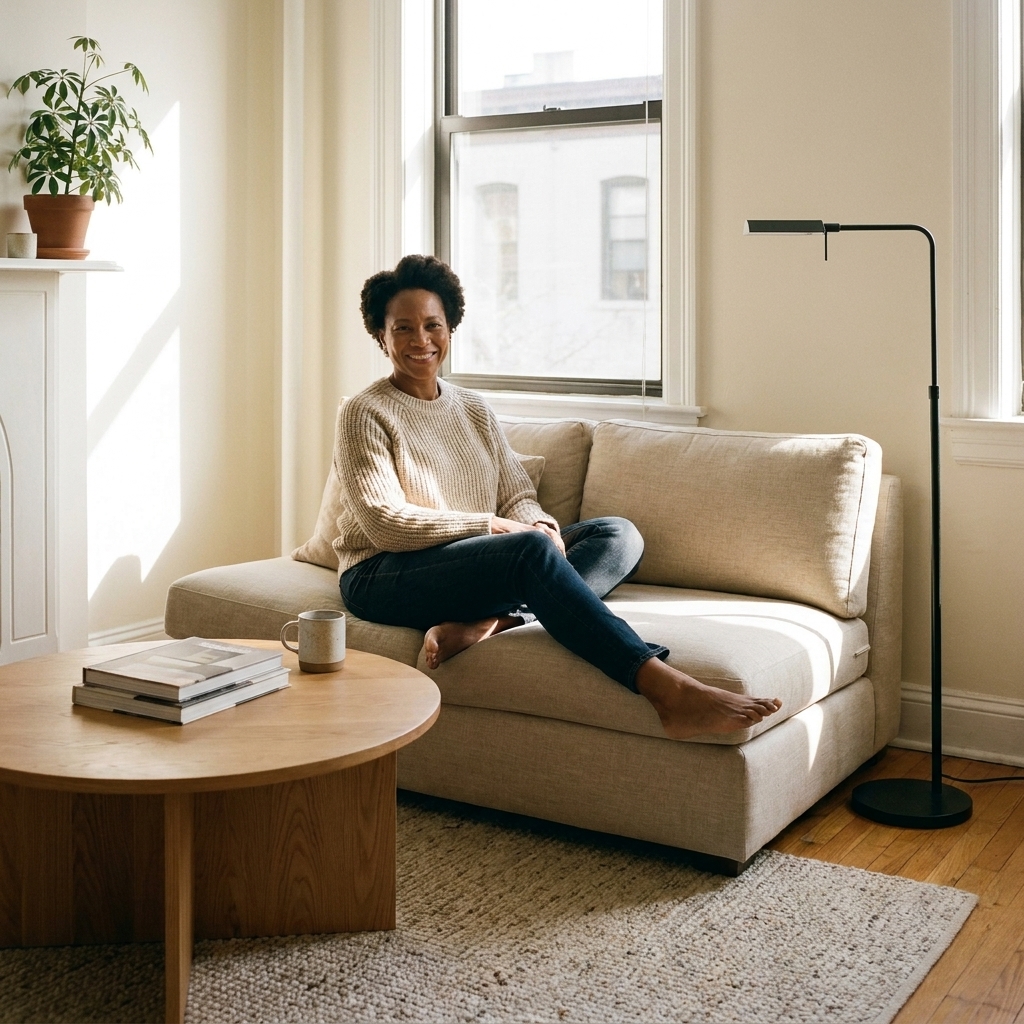
That is where the golden ratio comes in. Not in a scary, math-class way. More like a golden-ratio-inspired sanity-check you can use to choose furniture with the right scale and visual weight so your rooms feel spacious instead of stuffed.
Golden ratio, tiny-room edition
The golden ratio is often described as a pleasing proportion found in nature and design. In this article, I am using it as a design mindset, not a strict 1:1.618 formula: balance big and small elements so nothing overwhelms the room.
In practice, that means you want:
- One main anchor (sofa, bed, dining table) that clearly “belongs” in the room.
- Supporting pieces that step down in size instead of competing.
- Breathing room so the negative space does its job and makes the whole place feel calmer.
If you only take one thing from this article, let it be this: scale is not about inches alone. It is about proportion plus visual weight.
Start with one anchor
Tiny rooms fall apart when every piece is trying to be the star. Pick one anchor and let everything else support it.
Living room anchor
Usually the sofa or loveseat. In very small spaces, it might be a pair of chairs or a daybed.
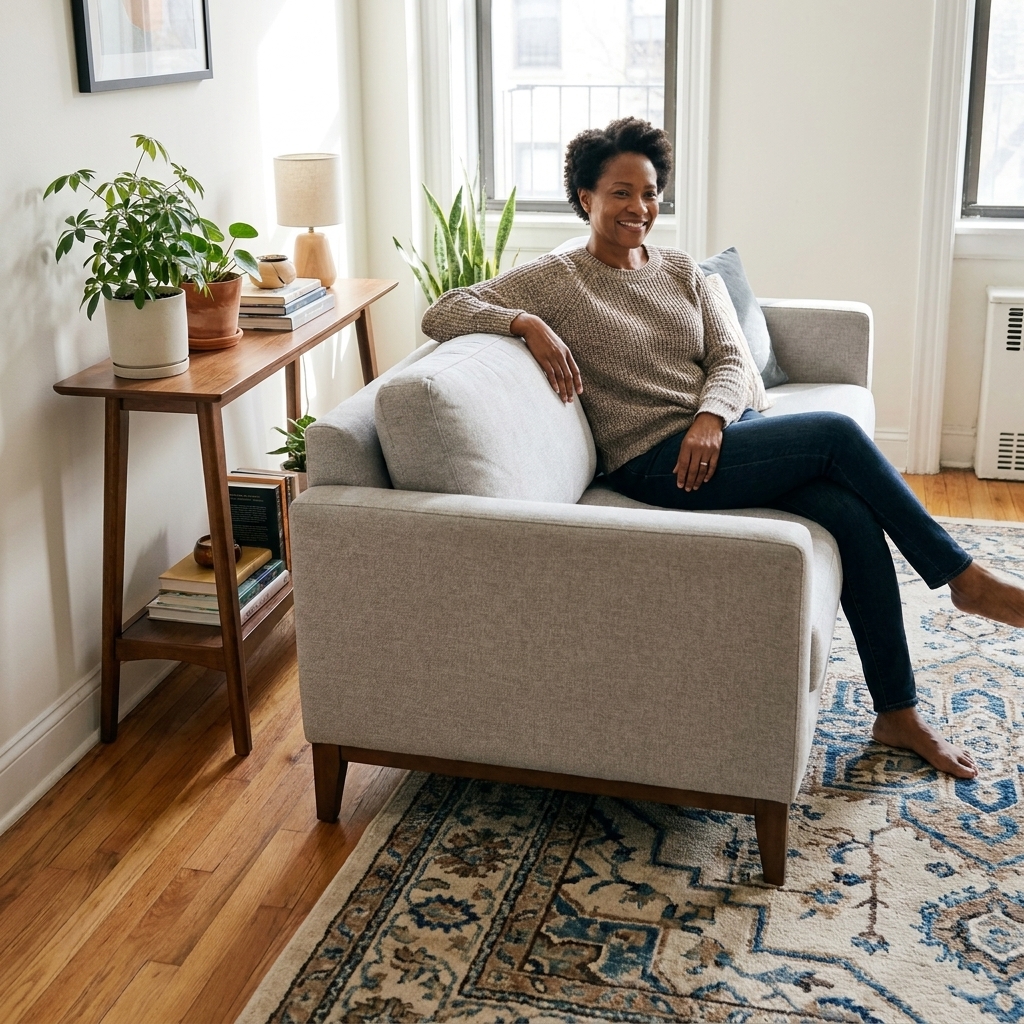
- Choose low and leggy when possible. A sofa with visible legs and a lower back reads lighter than a tall, skirted, overstuffed one.
- Keep the depth honest. Honest to your room’s width and your walkway needs. Deep lounge sofas are dreamy, but a 40-inch-deep seat in a narrow room can steal the path and make the whole space feel pinched.
Bedroom anchor
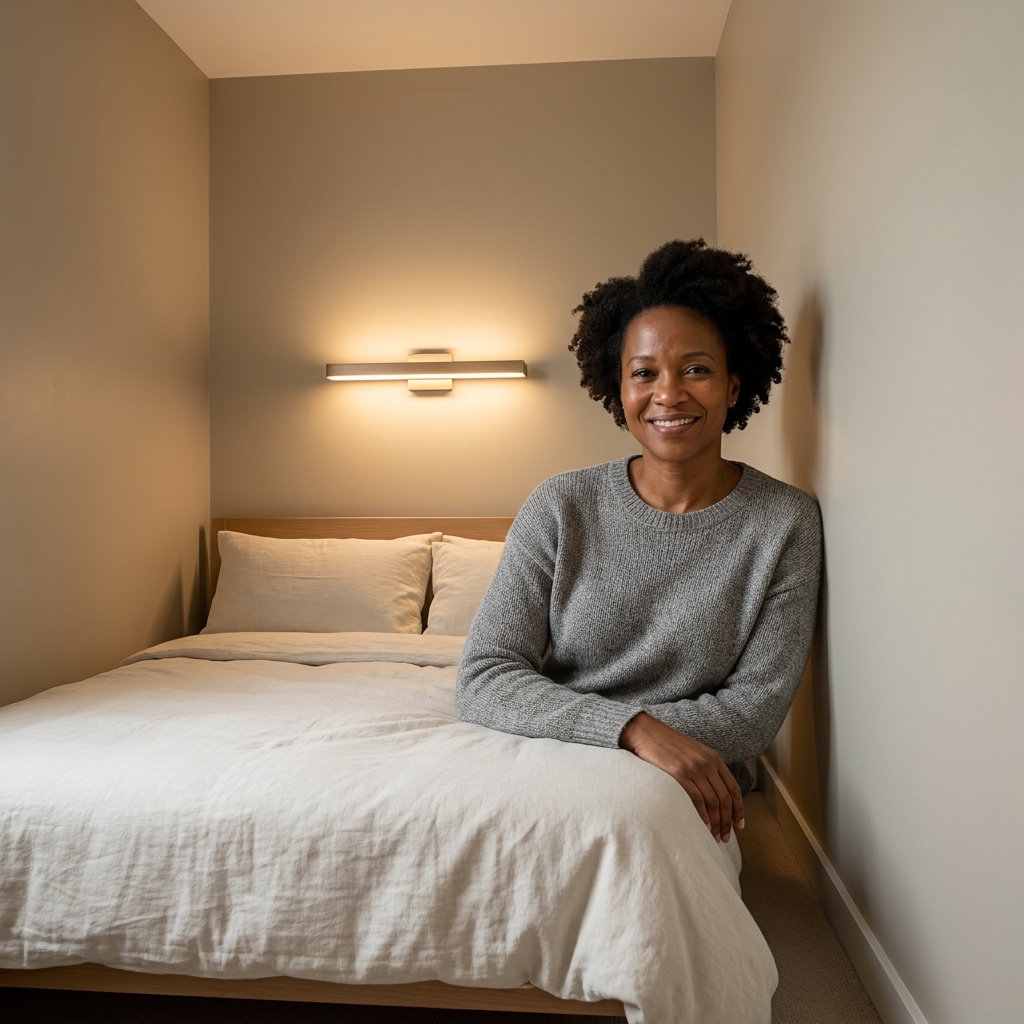
It is the bed. If the bed dominates the room, everything else will feel like clutter even if it is “organized.”
- Skip bulky footboards. In small rooms, they visually shorten the space and physically block circulation.
- Pick a headboard with a slim profile. Upholstered is fine, but avoid oversized wingbacks unless your room is unusually wide.
Dining anchor
The table. For small apartments, round tables often play nicer with traffic flow.
- Prioritize a pedestal base. More leg room makes the whole set feel lighter.
- Consider a drop-leaf or extendable. Tiny-room luxury is a surface that can change sizes on demand.
60 30 10, for weight
When your square footage is limited, your eyes become extra sensitive to imbalance. One of my favorite ways to keep things visually calm is borrowing the classic 60/30/10 color guideline and applying it to furniture “weight.”
- 60%: your biggest piece and the main volume (sofa, bed, table plus chairs).
- 30%: medium pieces (coffee table, nightstands, dresser, accent chair).
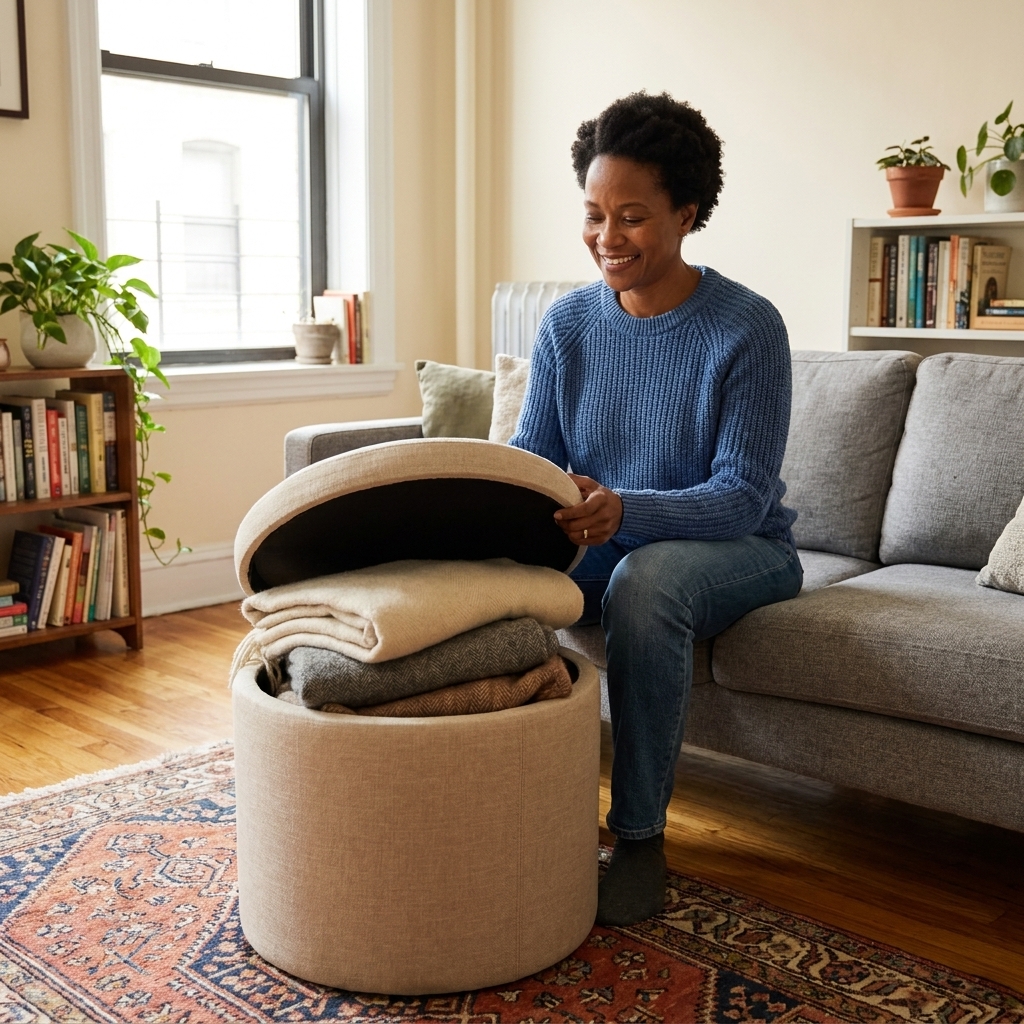
- 10%: small accents (ottoman, stool, side table, lamp, plant stand).
If your room feels cramped, it is often because you have too many items competing in that 60% category. Two bulky bookcases plus a bulky sofa plus a blocky media console equals a room that looks like it is holding its breath.
Step down on purpose
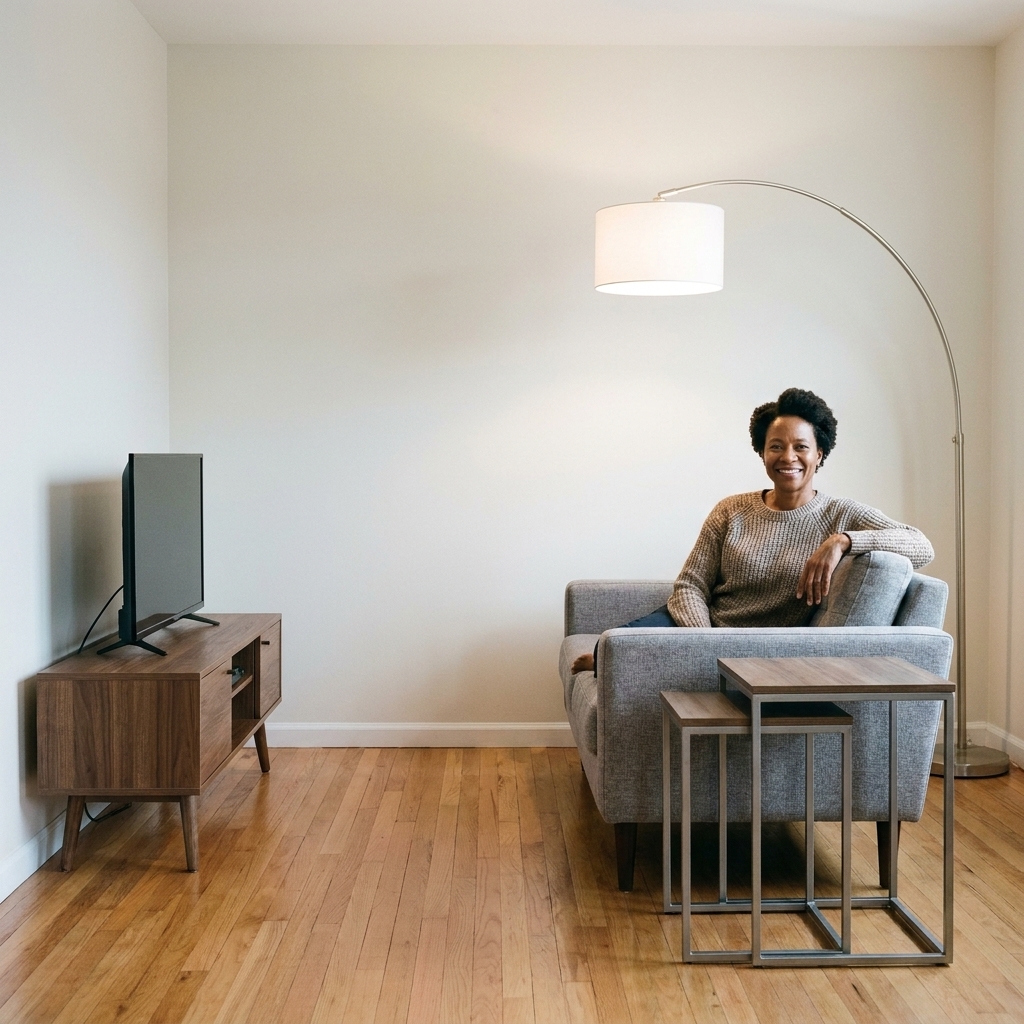
Here is the ratio move that changes everything: make each supporting piece noticeably smaller than the anchor.
In real life, that looks like:
- A loveseat paired with a smaller round coffee table, not a giant rectangle that matches it in mass.
- A bed paired with floating shelves or slim nightstands, not two large dressers pretending to be nightstands.
- A compact dining table paired with armless chairs, not chunky captain’s chairs that visually widen the whole setup.
The goal is contrast. When everything is the same scale, your brain reads it as a wall of furniture.
One quick buying shortcut: a coffee table that is about two-thirds the length of your sofa or loveseat usually looks “right” without swallowing the room. For example, if your loveseat is about 66 inches long, a coffee table around 44 inches long tends to land nicely.
Measure for flow
I am a proud Tetris master, but even I have learned that squeezing is not the same as planning. In small rooms, circulation is the difference between “cozy” and “why am I bruised.”
Spacing targets that usually work
- Main walkways: aim for about 30 to 36 inches when you can.
- Tight pass-throughs: 24 inches can work as a minimum in a pinch (like beside a bed), but it will feel tight. Avoid it for high-traffic routes if you can.
- Sofa to coffee table: about 14 to 18 inches is a comfy reach zone.
- Dining chair pull-back space: aim for roughly 30 to 36 inches behind chairs when it is a frequent-use dining spot and there is a wall or obstacle behind you.
Do not panic if your apartment cannot hit every number perfectly. The point is to choose furniture that supports movement. If you love hosting, protect your pathways. If you live solo and rarely use the dining table, you can cheat a little and reclaim space elsewhere.
If you have accessibility needs (wheelchair, walker, stroller life, a dog that treats hallways like a racetrack), plan for wider clearances where you can. Comfort and safety beat “perfect” proportions every time.
Think in height too
Small-space folks often focus on width because that is what hits the walls. But height is what hits your eye line.
When to go low
- Low sofa backs keep sightlines open and make a room feel wider.
- Low media consoles reduce the “blocky” effect under a TV.
- Platform beds can make ceilings feel taller because the top of the mattress sits lower, especially when bedding and headboards stay visually streamlined.
When to go tall
- One tall vertical piece can make the room feel higher, like a slim bookcase or a tall storage cabinet.
- Floor-to-ceiling curtains draw the eye up, even if your windows are small.
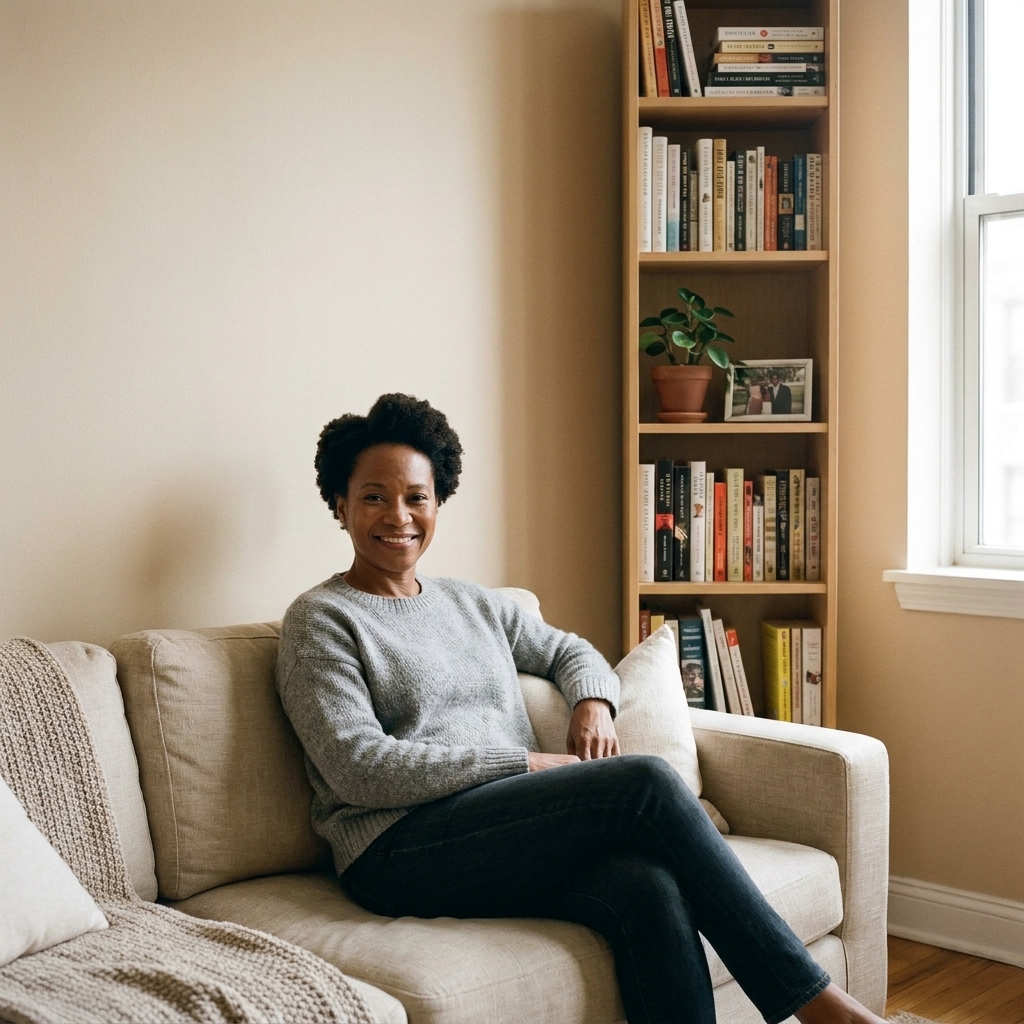
My favorite balance in a tiny living room is: low anchor + one tall accent. Think low sofa, then one tall plant or a slim shelf. It reads intentional, not crowded.
Pick pieces with air
Two pieces can have identical dimensions and feel totally different. Visual weight matters.
Lighten the look with these details
- Legs: visible legs show more floor, which instantly feels roomier.
- Open bases: open shelving and open-frame tables keep visual clutter down.
- Arms: armless or slim-arm seating reads smaller than rolled arms.
- Thin tops: a thin coffee table top feels lighter than a thick slab.
- Glass and acrylic: great in moderation for “disappearing” surfaces.
If your room feels heavy, swap one bulky closed piece for an open or leggy alternative. You often do not need to replace everything. One smart change can reset the whole ratio.
Scale cheat sheet
Living room
- Pick one: sofa or sectional. In tiny rooms, a loveseat plus chair often beats a small sectional.
- Match the table to the seating: round or oval coffee tables soften tight pathways.
- Keep side tables slim: C-tables and pedestal side tables save inches.
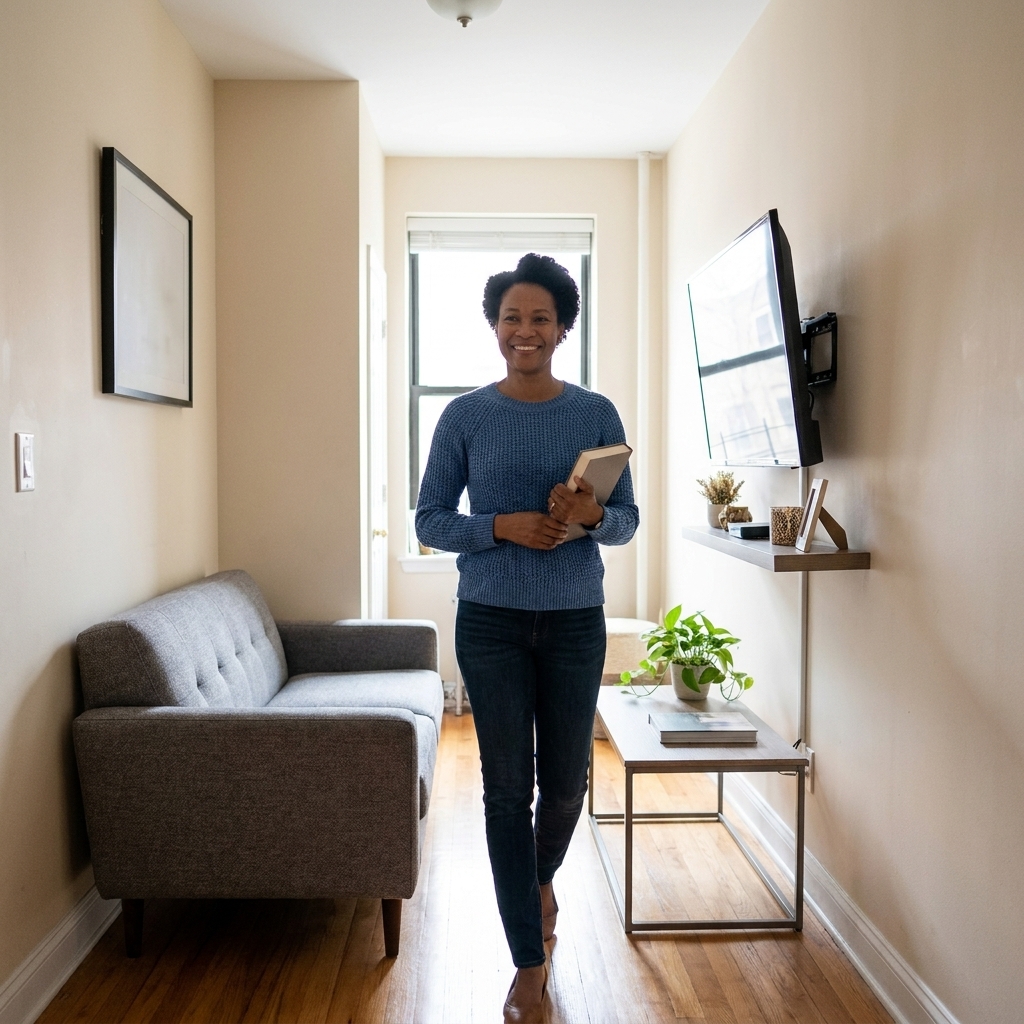
- Go narrow on storage: a media console that is less deep can free up your main walkway. In narrow rooms, a console depth around 16 to 18 inches (or less) can feel noticeably easier to live with.
Bedroom
- Nightstands: slim is beautiful. Wall-mounted shelves count.
- Dressers: consider a taller, narrower dresser instead of a wide low one if wall length is limited.
- Under-bed clearance: if storage is needed, choose a bed that allows bins. If you hate visual clutter, choose a bed that hides storage cleanly.
Entry and hallways
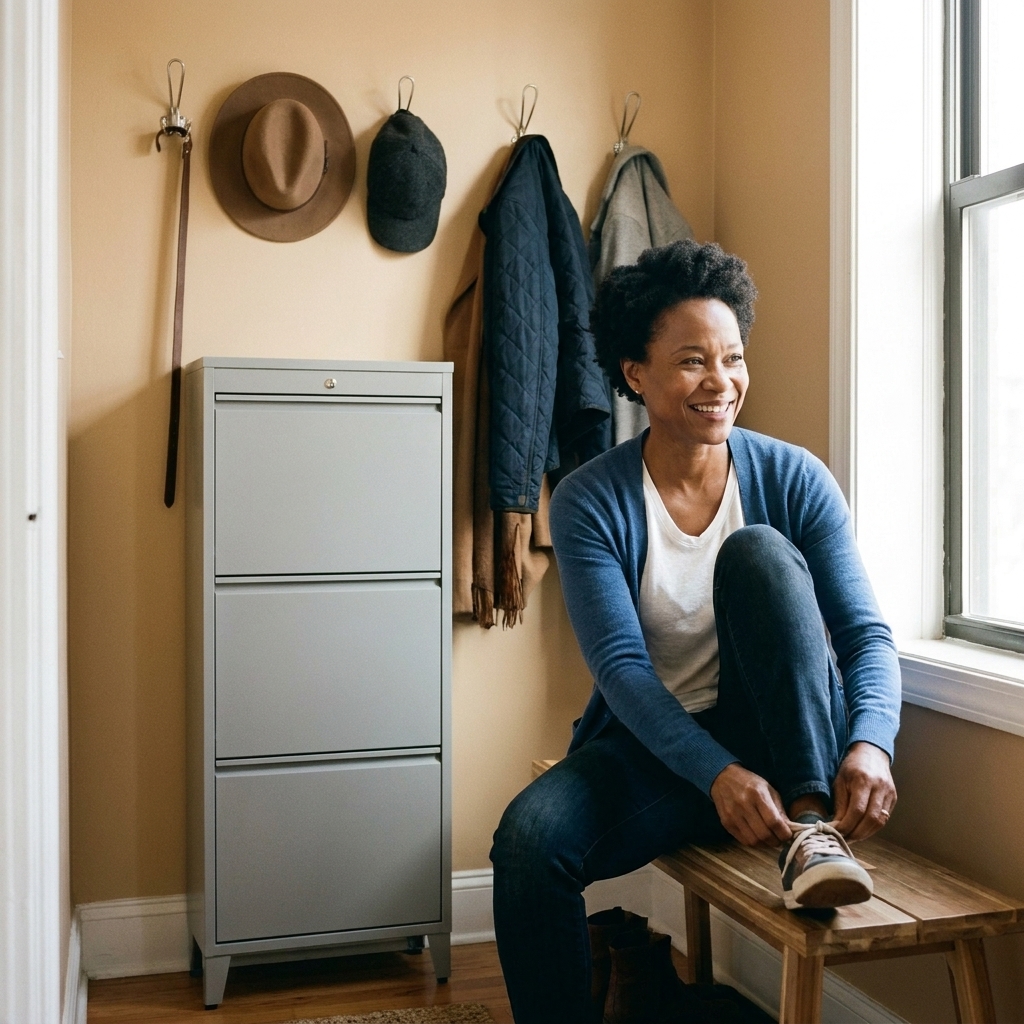
- Shoe storage: shallow cabinets are your best friend.
- Bench: choose a narrow bench that still lets the door swing freely.
- Hooks: vertical storage is practically a lease-compliant superpower.
5-minute test
When you are debating a furniture purchase, do this quick test before you fall in love with the listing photos.
1) Tape it out
Use painter’s tape to mark the footprint on the floor. Walk around it. Open doors. Pull out drawers. Pretend to carry laundry through the space.
2) Check the step-down
Ask: Are my supporting pieces clearly smaller than the anchor? If everything is roughly the same size, the room will feel visually flat and crowded.
3) Look at the legs-to-floor ratio
Does the piece show floor underneath? If not, can you balance it with lighter pieces nearby?
4) Confirm the everyday path
Identify your top two daily routes, like bed to bathroom, sofa to kitchen. Protect those paths. Tiny spaces become livable when movement is effortless.
Common mistakes
Buying “small” furniture that is still bulky
An “apartment sofa” can still have huge arms and a tall back. Look for slim arms, visible legs, and a low-profile build.
Matching sets that double the heaviness
Two chunky nightstands plus a chunky bed frame can overwhelm a room fast. Mix in a lighter element, like a wall shelf nightstand, an open metal table, or one floating shelf.
Too many medium pieces
Medium pieces are sneaky. A room can handle one big anchor, but five medium items can feel like clutter. Consolidate: one larger storage piece often looks calmer than multiple small ones.
Ignoring depth
Depth steals your walkway. If a room feels tight, consider replacing one deep piece with a shallower version, especially consoles, dressers, and bookcases.
FAQ
Do I need to use the exact golden ratio to design a room?
No. Think of it as a design instinct you can borrow: create pleasing proportion by stepping down in sizes and balancing visual weight. Your goal is comfort and flow, not perfect math.
Is it better to buy fewer larger pieces or more smaller pieces in a tiny apartment?
Usually fewer, better-scaled pieces wins. One right-sized sofa and one right-sized storage piece often looks calmer than several small items scattered around.
What is the easiest way to make a small room feel bigger without renovating?
Choose low-profile seating, keep pathways clear, and use furniture with legs or open bases. Also, hang curtains high and keep your largest piece from blocking natural light.
How do I know if a rug is the right size in a tiny living room?
A rug that is too small makes everything feel like it is floating. Aim to fit at least the front legs of your seating on the rug, or use a larger rug that visually “zones” the room so it reads more expansive.
Final pep talk
Your space is not “too small” for style. It just needs pieces that speak the same proportional language. When your anchor is right-sized, your supporting pieces step down, and your pathways stay clear, your apartment starts to feel less like a storage unit and more like a sanctuary.
And yes, you are allowed to bring your measuring tape to every furniture decision like it is a cute accessory. I do.