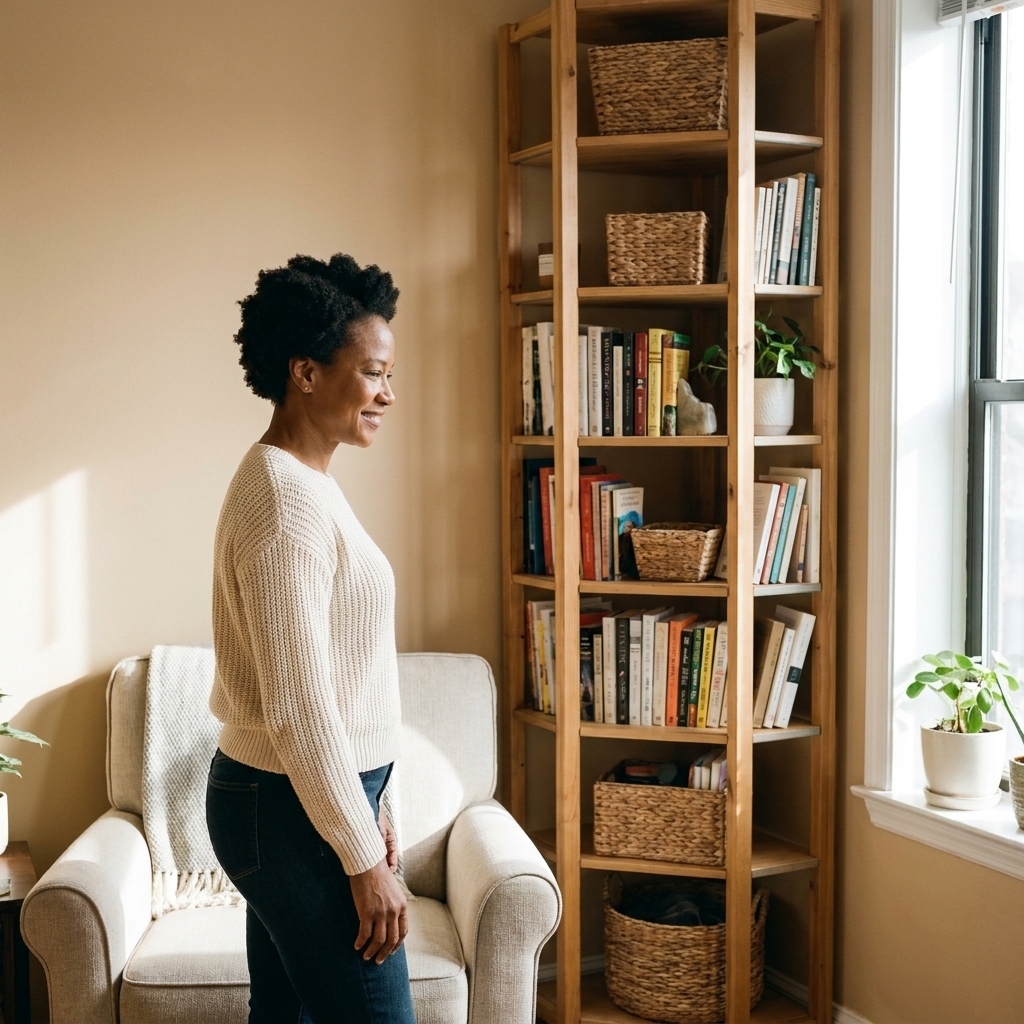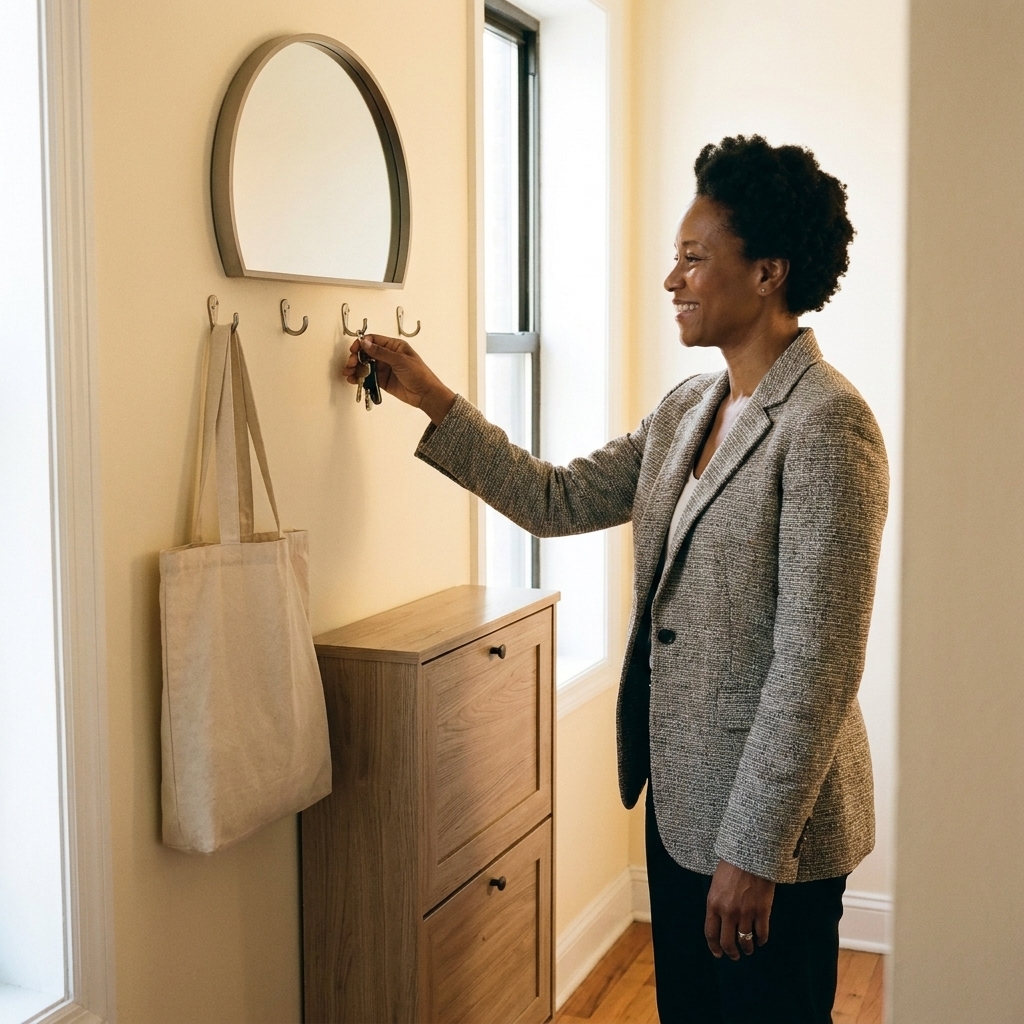
Create a functional entryway in a tiny apartment with slim shoe storage, pegboards, floating shelves, and smart wall hooks that keep clutter off the floor.
Space Ovo
Multi-Functional Furniture With Hidden Storage
Storage ottomans, lift-top coffee tables, and storage benches can hide clutter without stealing floor space. Here’s how to choose, measure, and style hidden-storage furniture for small apartments.

Maya Brooks
Maya Brooks is an interior stylist and layout enthusiast who believes square footage should never dictate your home's style. After a decade of navigating cramped city studios, she shares practical, renter-friendly decorating and storage solutions to help others maximize their tiny spaces.
Created October 17, 2026
Updated October 17, 2026
If you live in a small apartment, you already know the truth: the clutter is not the problem. The lack of places to put it is. After years of shuffling my life between San Francisco studios and Brooklyn railroad apartments, I became obsessed with one category of furniture that makes tiny spaces feel instantly calmer: pieces that do their job in plain sight while secretly swallowing the chaos.
This is your no-fluff guide to multi-functional furniture with hidden storage, especially the holy trinity for renters: storage ottomans, lift-top coffee tables, and storage benches (also called hollow benches, shoe benches, and entry benches depending on the design). I’ll walk you through what to look for, what to measure, and the little details that separate “cheap storage box” from “why does your place look so put together?”
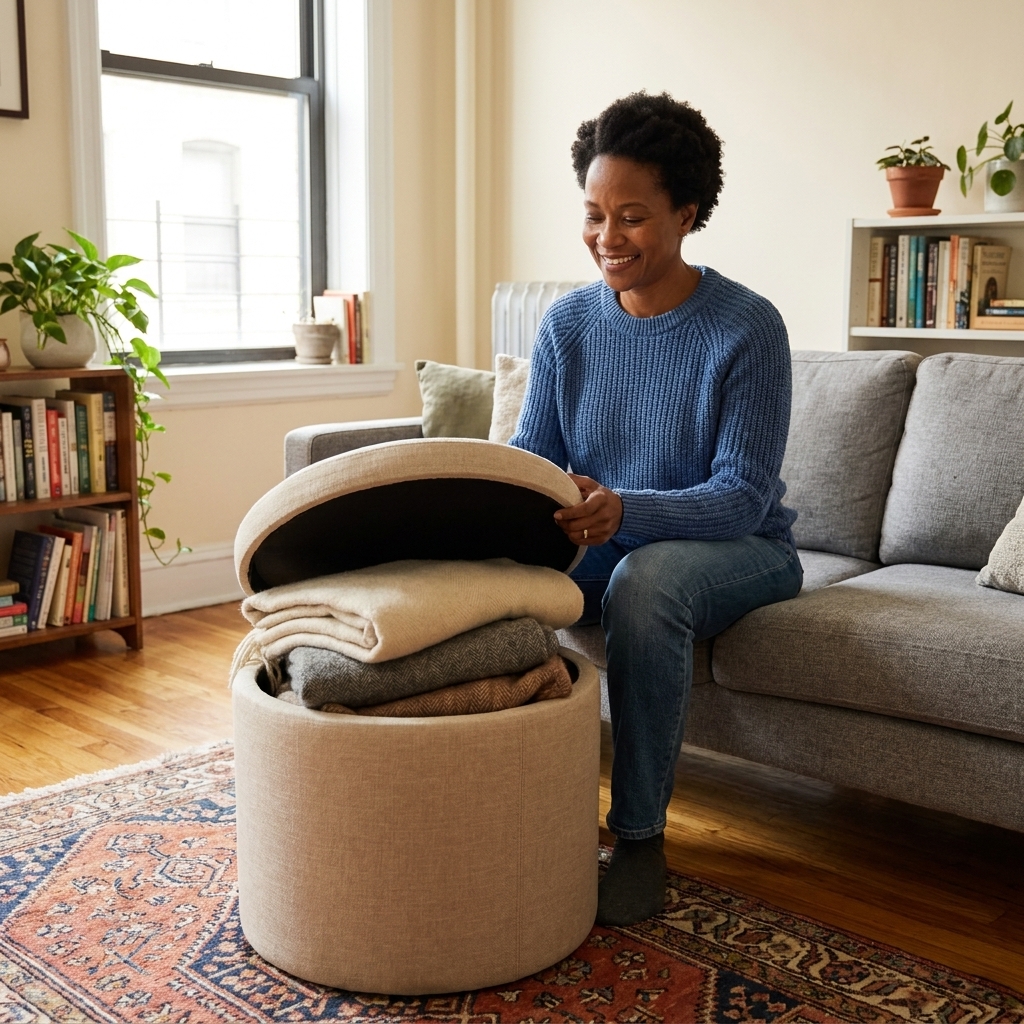
What counts as hidden-storage furniture?
Hidden-storage furniture is any piece that serves a normal everyday purpose but includes an enclosed compartment that disappears when it is closed. The key word is enclosed. Open shelves are useful, but they are not invisible. Hidden storage is what gives a room that breathable, “I swear I don’t own much” feeling.
- Best for living rooms: storage ottomans, lift-top coffee tables, storage side tables, sofa arms with compartments
- Best for entryways: storage benches, hollow benches with lift lids, shoe benches with hidden bays
- Best for bedrooms: storage beds, storage headboards, upholstered benches at the foot of the bed
In small spaces, this furniture is basically permission to own the messy stuff (throws, cables, board games, tools, extra toiletries) without seeing it all day.
Before you buy: my small-space measuring checklist
I love a good impulse purchase as much as the next person, but hidden-storage pieces can backfire if the lid hits the wall, the top is too high to use comfortably, or the hinge makes that ominous squeak that tells you it will betray you in month three.
Measure these three things first
- Footprint: tape off the width and depth on the floor with painter’s tape. Walk around it like you live there.
- Clearance for opening: lift-tops and hinged lids need space behind or above them. Measure the “open” position, not just the closed size.
- Comfort height: for ottomans and benches, aim for a top surface close to your sofa’s seat height. Many sofas land around 16 to 19 inches, but measure yours because modern seats can run taller.
Decide what you want it to hide
Make a quick list of what you actually need to store. Not “blankets,” but “two chunky throws and my heating pad.” This helps you choose the right interior depth, and it keeps you from buying a massive piece that eats the room.
Look for these quality signals
- Soft-close or lid-support hinges: look for language like soft-close hinges, torsion hinges, gas struts, or friction stays. Translation: the lid is less likely to slam and more likely to stay open while you are rummaging, which matters if you have kids, pets, or easily distracted fingers.
- Sturdy base: legs or a solid plinth beat flimsy fiberboard corners that bow over time.
- Easy-to-clean surfaces: performance fabric, tightly woven poly blends, wipeable vinyl, or leather-look materials if you eat on the sofa (no judgment, I do too). Bonus points for removable, washable covers.
- Interior lining: a simple fabric lining keeps stored items from snagging on raw wood or staples.
- Hardware and build that can take repeat use: metal hinge hardware is a good sign, and for lid pieces, plywood panels generally hold screws better than particleboard over the long haul.
Quick safety check
Any lid you will open weekly should open smoothly, stay open without you holding it, and close without slamming. Watch for pinch points at the hinge line, and do not lean your full weight on a lift-top surface unless the mechanism feels stable and secure when raised.
Storage ottomans: the tiny-apartment MVP
If I could recommend only one hidden-storage item to a renter, it would be a storage ottoman. It can be a footrest, a coffee table (with a tray), an extra seat, and a linen closet you don’t have.
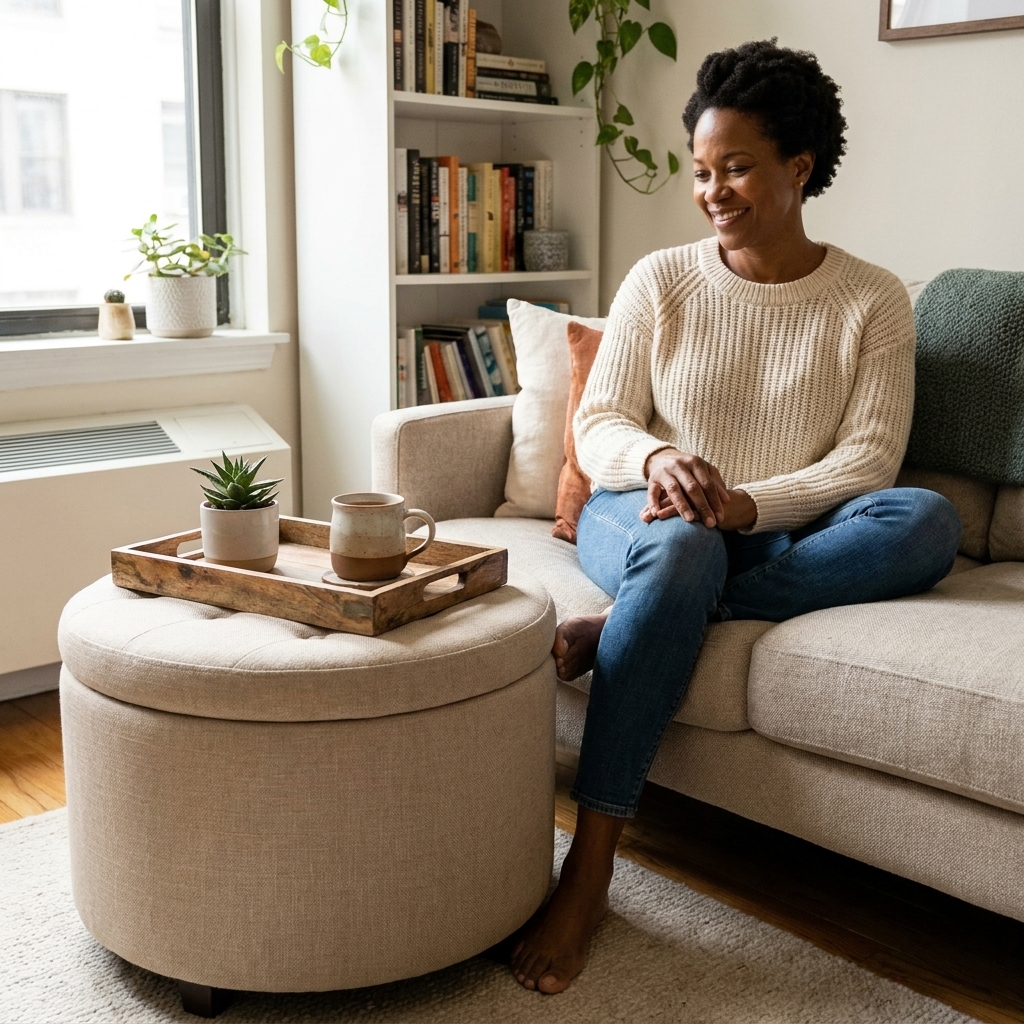
Best uses for a storage ottoman
- Throws, extra pillow covers, and seasonal textiles
- Video game controllers, remotes, and charging cords
- Board games and card decks
- Work-from-home extras like a laptop stand or headset
Pick a shape that fits your traffic flow
- Round: great for tight walkways and awkward floor plans because you are less likely to hip-check a sharp corner.
- Rectangular: best when you want it to function like a true coffee table or when your sofa is long and you want visual balance.
- Cube: best for flexibility. Two small cubes can tuck under a console, then pull out as seating when friends come over.
My styling rule: tray = instant coffee table
If you want your ottoman to act like a coffee table, add a rigid tray. It creates a stable surface for drinks, and it visually signals “intentional design choice” instead of “I didn’t have a table.”
Durability and safety notes
- Check the weight capacity: not just for sitting, but for real life. Some people stand on an ottoman to reach a shelf. If you know you are that person, buy accordingly.
- Press-test the lid: if it feels bendy under your hands, it will not get sturdier with time.
- Mind the lid mechanism: a supported lid (soft-close, torsion hinge, gas strut) is easier to live with than a floppy top you have to hold open.
What to avoid
- Overly plush tops if you plan to use it as a table. Your glass will wobble, and your stress level will rise.
- Weak lids that bow when someone sits on them.
- Too much visual bulk in a tiny room. If your sofa is already chunky, consider an ottoman with legs so you can see a little floor under it.
Lift-top coffee tables: living room storage that works harder
A lift-top coffee table is what you buy when you are tired of leaning forward like a question mark to eat dinner on the couch. The top rises to meet you, and underneath is a hidden compartment that can hold more than you would expect for its footprint.
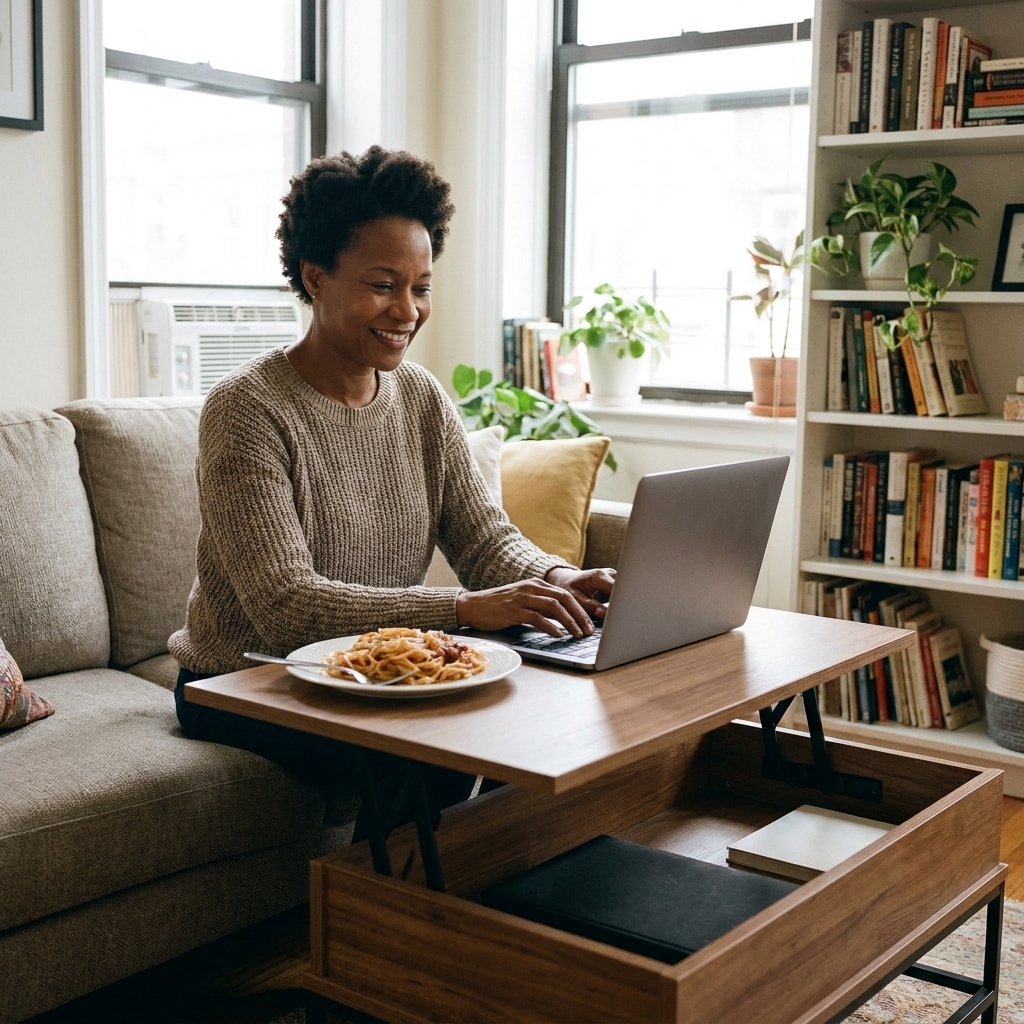
Why lift-tops are so good in small apartments
- They can replace a dining table for day-to-day meals if you are a couch eater. If you do this a lot, prioritize a supportive sofa and consider a back pillow so your spine does not file a complaint.
- They create a pop-up desk for laptop work without committing to a full-time workstation.
- They hide daily clutter like mail, candles, chargers, and coasters.
What to measure for lift-tops
- Open height: make sure the raised surface will clear your knees when you sit on the sofa.
- Rear clearance: some tops lift up and back. Others rise more straight up or forward. Look in the specs for an “up-and-back” mechanism versus a more “straight up” lift so you do not end up with a table that cannot open fully where you want it.
- Rug interaction: if the base drags on a thick rug when you shift it, you will hate it. Consider low-pile rugs under lift-tops, and add felt pads under the legs.
Storage strategy: organize the compartment or it becomes a junk drawer
I like to treat the inside like a mini dresser. Use small bins or pouches for categories:
- Tech: chargers, HDMI cable, spare batteries
- Comfort: hand cream, lip balm, eye mask
- Entertainment: cards, small games, a notebook
Material and finish tips
- Light wood tones can visually open a room, especially if your sofa is dark.
- Matte finishes hide fingerprints better than high gloss.
- Rounded corners are your shins’ best friend in tight layouts.
- Hinge-friendly construction: since lift-tops put stress on hardware, sturdier panels (like plywood) and solid attachment points tend to outlast flimsy particleboard joints.
Use it safely
Lift-tops have pinch points and moving parts. Keep fingers clear when closing, do not let the top slam, and make sure the lift mechanism feels steady and supported before you lean on it.
Storage benches: entryway sanity in one piece
If your apartment has an entryway that is basically a slice of wall near the door, a storage bench is a game changer. It gives you a place to sit for shoes and a hiding spot for all the “leaving the house” clutter that loves to pile up.
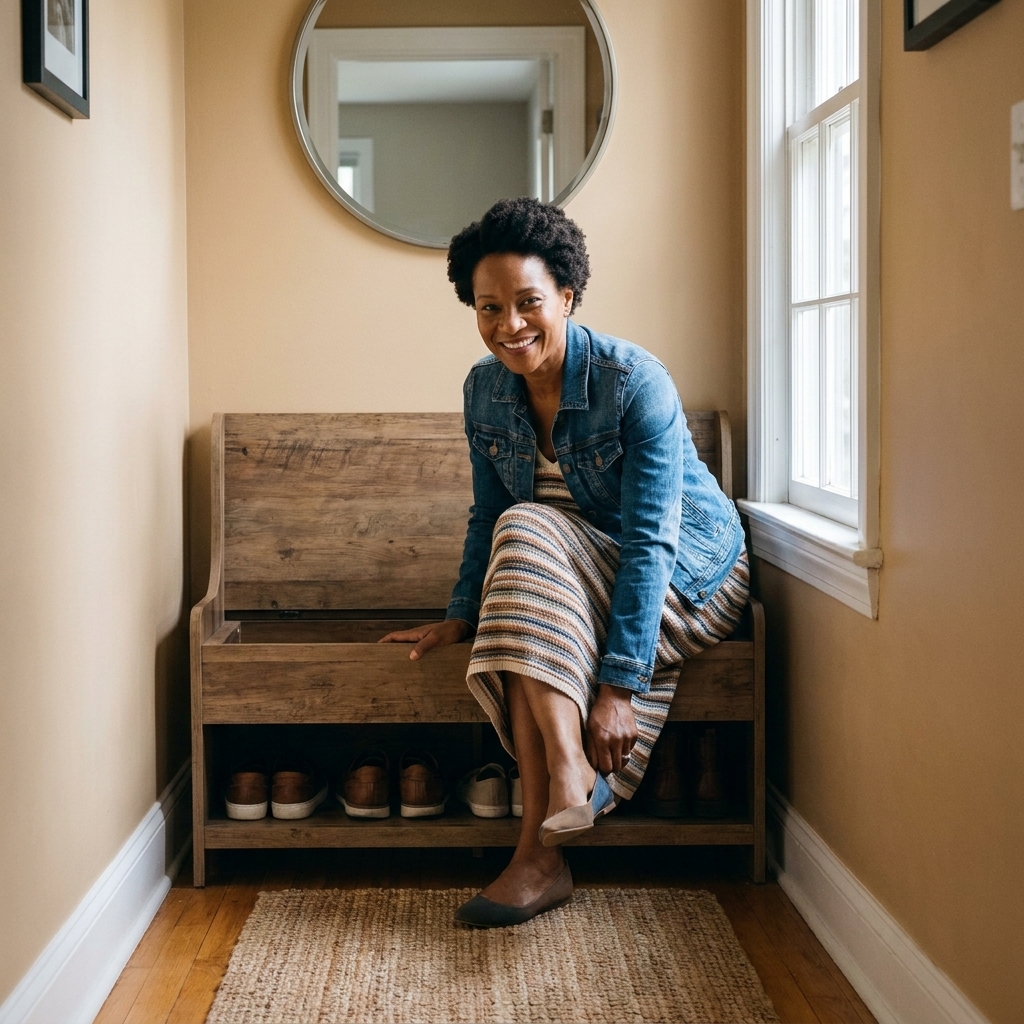
Where benches work best
- Entryway: store shoes, umbrellas, reusable bags, pet leashes
- End of bed: store extra bedding, off-season clothes, workout gear
- Under a window: create a reading perch with secret storage for books and throws
Choose the right opening style
- Lift lid: easiest construction and usually the most storage volume. Best if you have clearance above.
- Flip-down front: great for shoes and tighter spaces because the lid does not need to swing upward as far.
- Drawers: excellent for organization, but check that drawers can open fully without hitting a rug or nearby furniture.
Bench buying reality check
- Depth matters: in narrow entryways, too much depth is what turns “cute moment by the door” into “obstacle course.” If you are tight on space, go slimmer and keep storage more curated.
- Check capacity if you might stand on it: I am not endorsing it, but people do it. Buy for the life you actually live.
- Look at the hinges and lid support: a supported lid is calmer, quieter, and less likely to slam.
Make it look built-in
Two easy tricks make a bench look custom, even in a rental:
- Anchor it with a runner: a slim runner defines the “entry zone” and makes the bench feel like it belongs.
- Add one elevated element: a wall mirror or a pair of hooks above it gives the bench a purpose and pulls the eye upward.
How to keep hidden storage from becoming hidden chaos
Hidden storage is only magical if you can find things quickly. If you have to empty the ottoman to locate a lint roller, you will stop using it and the clutter will creep back out.
Use the zones method
- Living room ottoman: comfort items (throws, slippers), entertainment (games), tech (remotes)
- Lift-top table: daily-use items (chargers, coasters), work items (notebook), candles or matches
- Entry bench: out-the-door items (shoes, bags, pet gear)
Contain within the container
Drop in two or three small bins, even shoebox-sized. It prevents that bottomless-pit effect and makes tidying up a 30-second habit.
Do a one-minute reset
My favorite tiny-apartment ritual: once a day, toss the visible clutter into the correct hidden-storage piece. Not forever. Just for tonight. Your nervous system will notice.
Small-space mistakes I see all the time
- Buying storage furniture that is too deep: depth is what kills walkways. When in doubt, go narrower and taller, or use two smaller pieces.
- Choosing pieces with no air: in a tight room, furniture with legs often feels lighter than a solid box on the floor.
- Ignoring lid mechanics: if it is annoying to open, you will not use it. Test hinges, lift action, and hand placement.
- Letting hidden storage replace decluttering: it should store the things you use, not become a time capsule of random stuff.
Quick buying guide
If you are building your hidden-storage lineup from scratch, start with the piece that solves your biggest daily pain point.
- You lack linen closet space: get a storage ottoman or bedroom bench.
- You eat and work on the couch: get a lift-top coffee table.
- Your entryway is a shoe disaster: get a storage bench.
- You host often in a small living room: get two small storage ottomans that can act as extra seating.
FAQ
Are storage ottomans actually sturdy enough to sit on?
Many are, but not all. Check the listed weight capacity and look for a firm lid structure. If it feels bendy when you press down with your hands, it will not improve over time.
Can I use a storage ottoman as a coffee table every day?
Yes, with a tray. Choose a flatter top (less tufting and less squish) and use a rigid tray large enough for your daily essentials.
Do lift-top coffee tables damage rugs?
They can snag, pill, or compress rugs over time, especially if the table is heavy and you slide it often. Pair lift-tops with low-pile rugs, add felt pads under the legs, and try to lift (not drag) when you reposition it.
What is the most renter-friendly option?
Ottomans and benches win because they add storage without needing wall anchors, drilling, or permanent changes. They move with you easily, which matters if you have ever had to haul furniture down a fifth-floor walk-up.
Final pep talk
Square footage does not dictate style. It dictates strategy. Hidden-storage furniture is one of the smartest strategies because it lets your home look calm without asking you to own less, live less, or pretend you do not need practical stuff.
If you want one next step: pick one clutter category that annoys you daily, measure the space where a storage piece could live, and solve that one problem first. Your apartment will feel bigger, not because it grew, but because it can finally breathe.