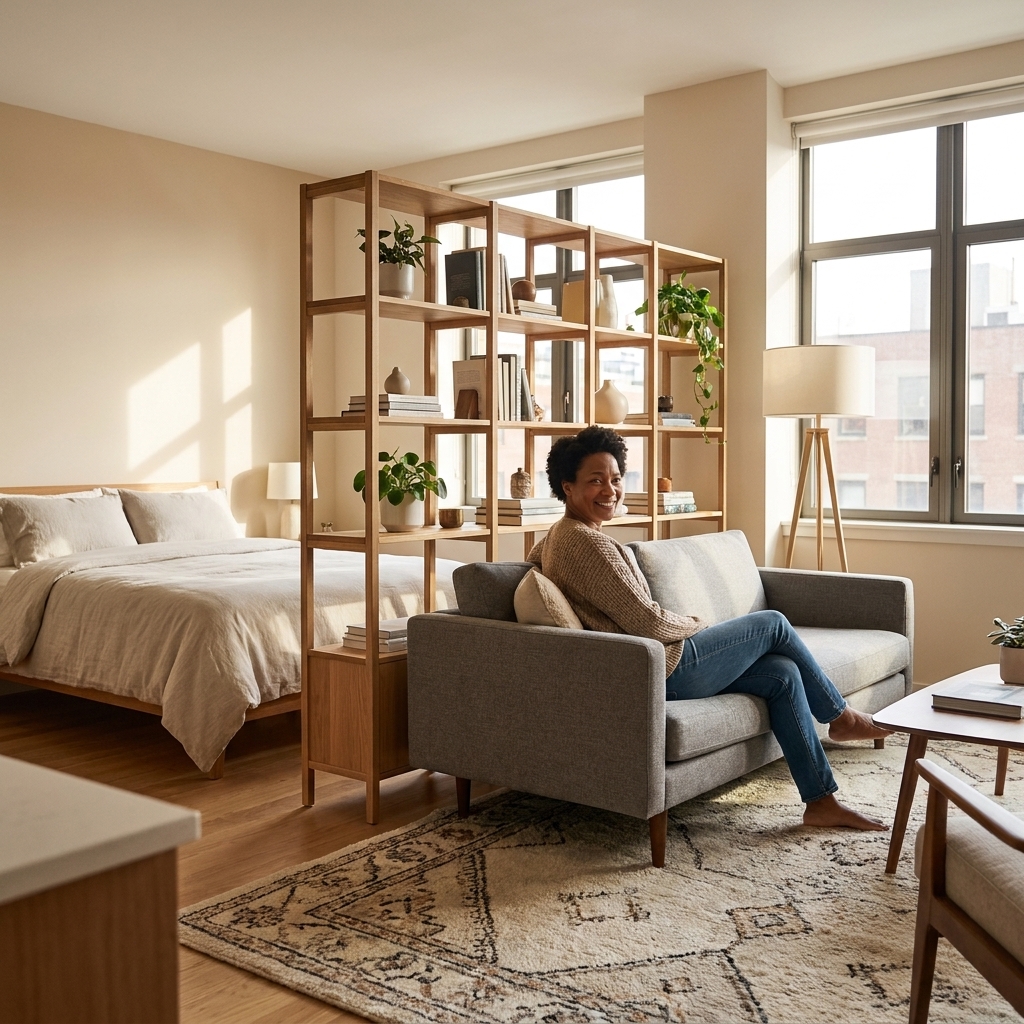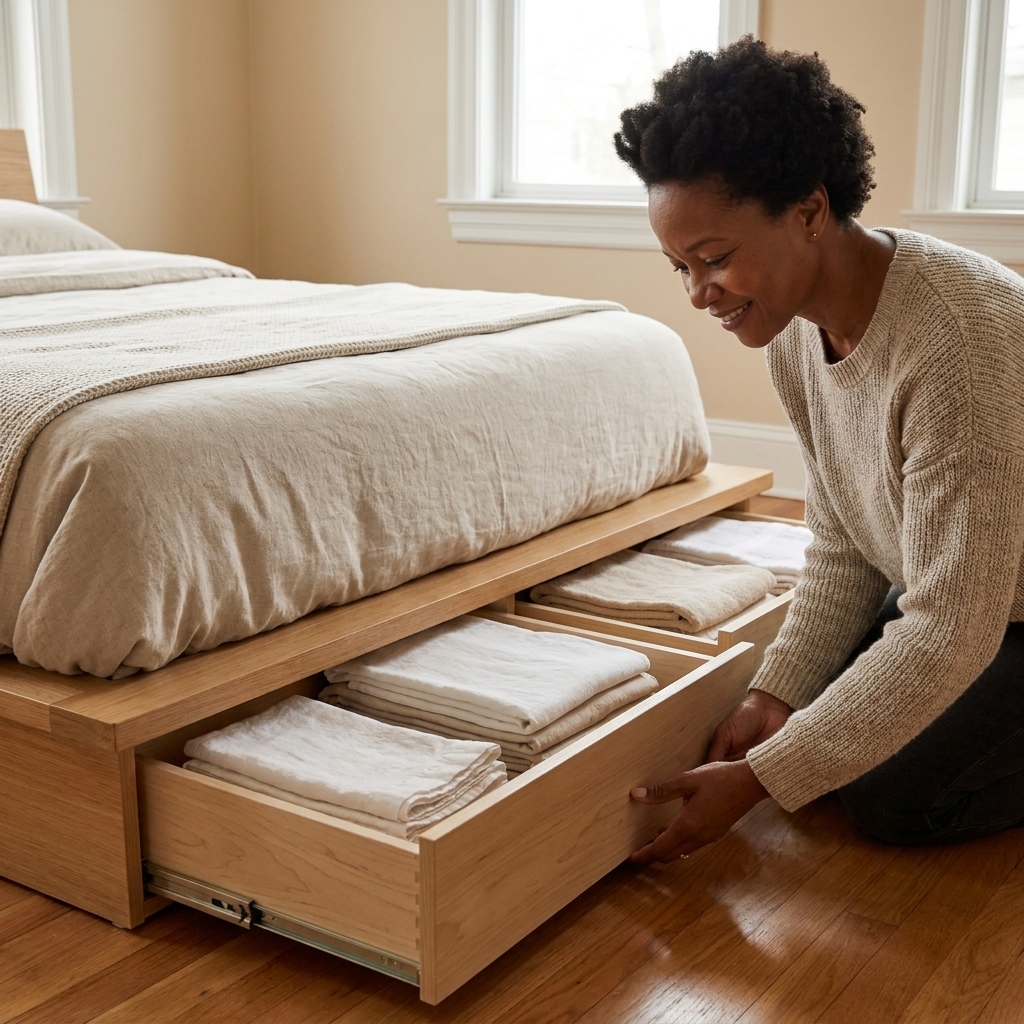
Clever under-bed storage picks for small bedrooms: rolling bins, slim drawers, vacuum bags, and more, plus tips to measure and keep it looking tidy.
Space Ovo
Where to Put Your Bed When the Room Is Barely Bigger Than the Mattress
Tiny bedroom, big problem: bed placement. Try corners, one-side walkways, floating layouts, daybed setups, lofting, and storage-forward tricks to keep your room breathable.

Maya Brooks
Maya Brooks is an interior stylist and layout enthusiast who believes square footage should never dictate your home's style. After a decade of navigating cramped city studios, she shares practical, renter-friendly decorating and storage solutions to help others maximize their tiny spaces.
Created October 17, 2026
Updated October 17, 2026
If your bedroom is basically “mattress plus vibes,” welcome. I have lived this life. In my Brooklyn years, I once had a “bedroom” that was technically a nook, and I still made it feel intentional. The secret is not finding the perfect bed placement. It is choosing the least-annoying one for your room’s doors, windows, radiator, and closet, then designing around it like a cheerful little furniture Tetris champion.
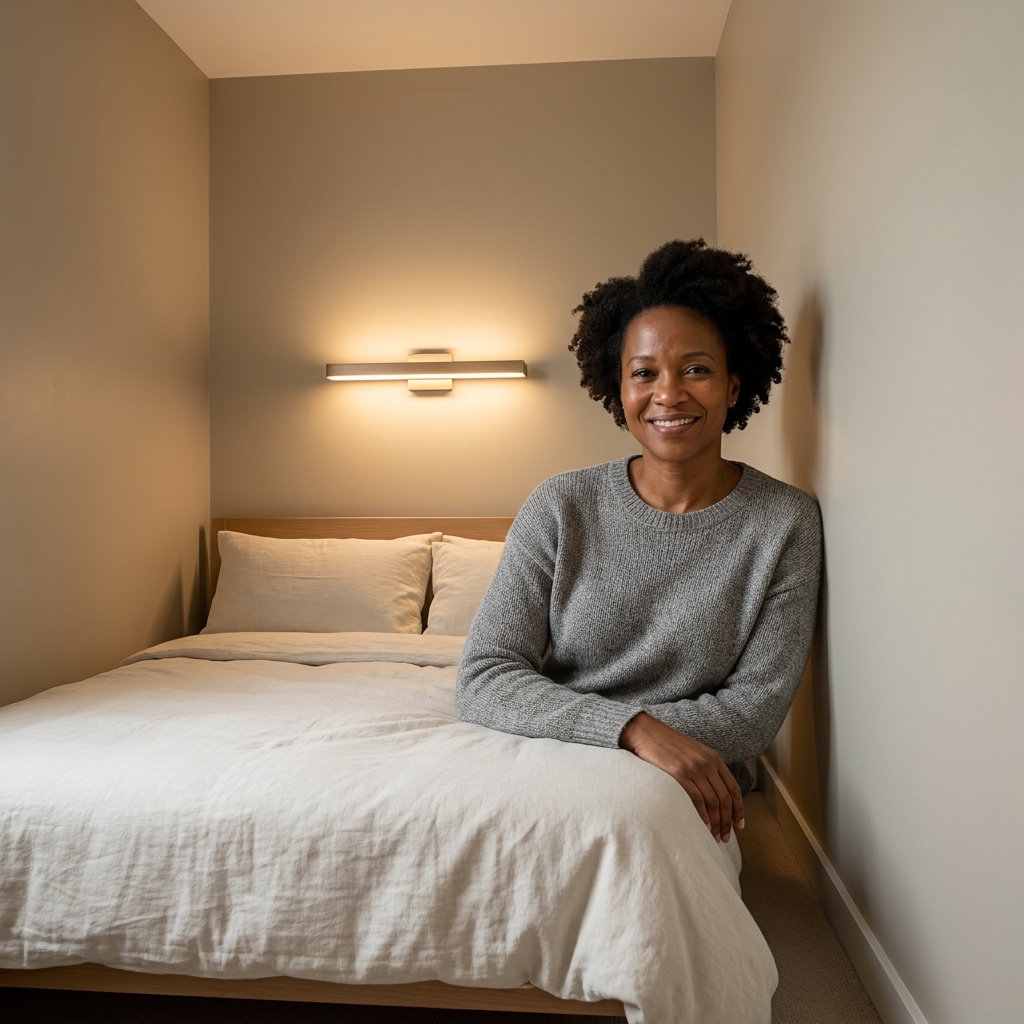
Below are the layouts that actually work when your room is barely bigger than the mattress, plus renter-friendly tricks to make each option feel less cramped and more calm.
Start with three measurements
Before you drag your bed around for three hours (I have been there), grab a tape measure and note these:
- Door swing: how far the door opens into the room.
- Closet access: how much clear space you need to stand and slide doors open, or to open a hinged door fully.
- Walkway width: think in tiers. 30 to 36 inches feels comfortable for a main path. 18 to 24 inches is a common small-room rule of thumb and can be totally livable. 12 to 16 inches is true micro-room survival mode and best reserved for low-traffic spots.
Then check your bed’s true footprint. A “full bed” can become “full bed plus knuckles” once you add a frame, headboard, and bedding overhang. If you are fighting for inches, you want to know exactly where they went. As a rough guide, a frame can add 1 to 3 inches per side, and chunky bedding can steal a little more.
Quick bed-size math (widths): Twin 38 inches, Twin XL 38, Full 54, Queen 60. If your room is about 96 inches wide and you put a 60-inch queen in there, that leaves about 36 inches total to split between both sides, which tells you immediately how “two-walkways” is going to go.
Layout 1: Bed in a corner
Corner placement gets a bad rap because it is not hotel-symmetrical. But in a micro-bedroom, symmetry is a luxury. Corners are efficient, they free up floor area, and they create a clear zone for dressing or storage.
Best for
- Rooms that are around 8 feet wide or less, especially if your bed is a full or queen and you cannot realistically get two walkways
- Anyone who needs a small open patch of floor for a hamper, yoga mat, or “I can breathe here” space
Make it feel intentional
- Skip the bulky nightstand and use a wall shelf or a narrow ledge.
- Do sconces (plug-in is renter-friendly) so you do not lose surface area to lamps.
- Anchor the bed with one large piece of art above it, or a pair of smaller frames in a simple grid.
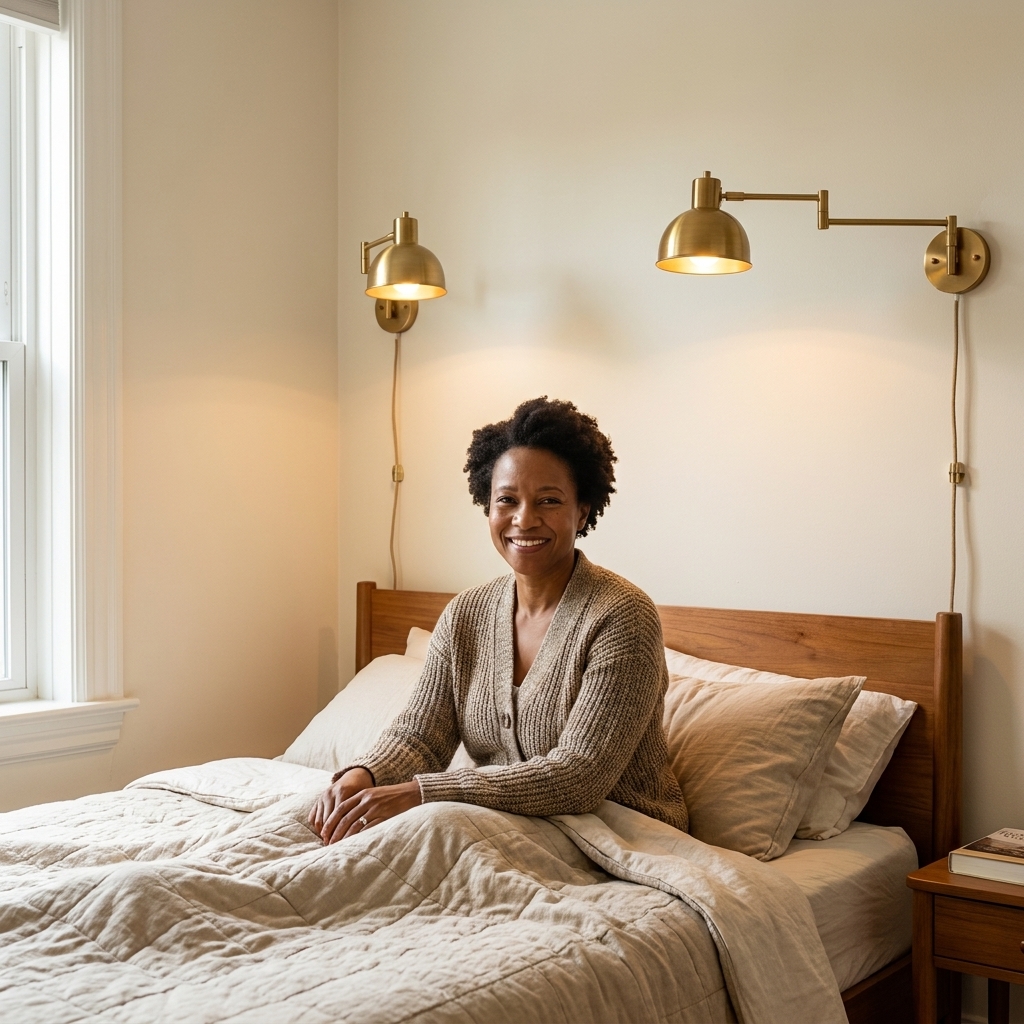
Corner pro tip: If making the bed is miserable, consider a slightly smaller bed or a low-profile frame. A queen that ruins your daily life is not a flex.
Layout 2: One-side walkway
This is the classic micro-bedroom move: the bed goes against one wall, leaving a single walkway on the open side. It feels more “normal” than the corner while still saving space.
Best for
- Couples who want one accessible side
- Rooms where a corner placement blocks a window, radiator, or vent
Make it work
- Use a slim nightstand (10 to 14 inches deep is a sweet spot).
- Choose a bed without a footboard to reduce visual bulk and avoid shin injuries.
- Place a runner in the walkway to make the narrow path feel deliberate.
If the wall-side sleeper is climbing like a gymnast every night, consider a daybed-style setup (see below) or a mattress on a platform that is easier to scoot around.
Layout 3: Float the bed
Floating a bed sounds insane in a small room, but it can solve one specific problem: you need the wall space for wardrobes, dressers, or a desk. In some rooms, the best use of the “long wall” is storage, not bed.
Best for
- Rooms with one good wall that should be dedicated to closets or tall shelving
- Studio sleepers creating a sleeping zone with furniture
Rules so it does not look chaotic
- Create a headboard moment: a freestanding headboard, a bookcase headboard, or even a tension-rod curtain behind the bed.
- Give it an edge: a very narrow console table behind the head of the bed acts like a “wall” and catches your phone, glasses, and water. Look for something around 6 to 10 inches deep.
- Keep the under-bed clean: visible clutter under a floating bed reads messier than almost anything.
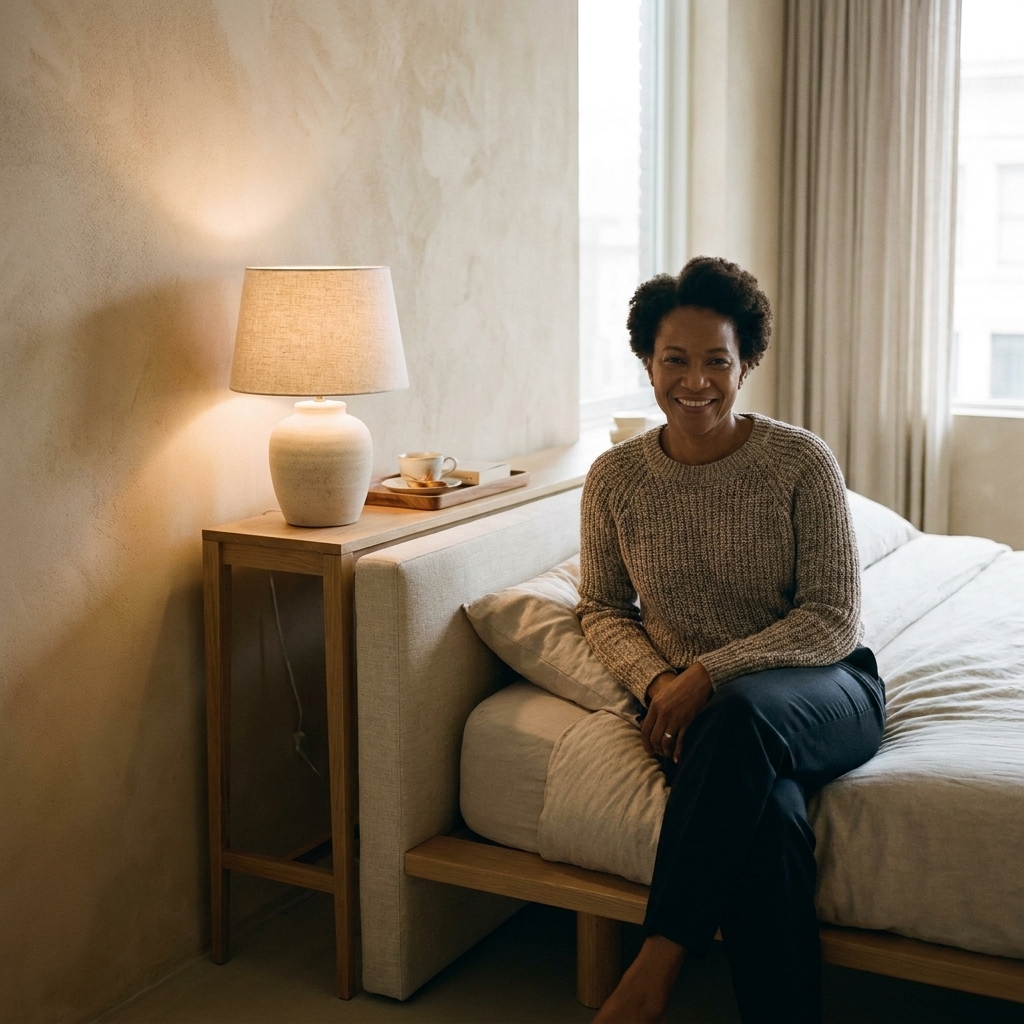
Reality check: Floating layouts need more clearance. If you cannot keep at least a slim passage behind or beside the bed, this one becomes a daily stub-toe festival.
Layout 4: Bed under a window
Sometimes the only wall that fits a bed is the window wall. It is not my first choice, but it can be totally fine if you do it thoughtfully.
Best for
- Rooms with awkward door and closet placements that eat the solid walls
- Low windows or windows centered on the wall
Do this, not that
- Use a low headboard or no headboard to avoid blocking light.
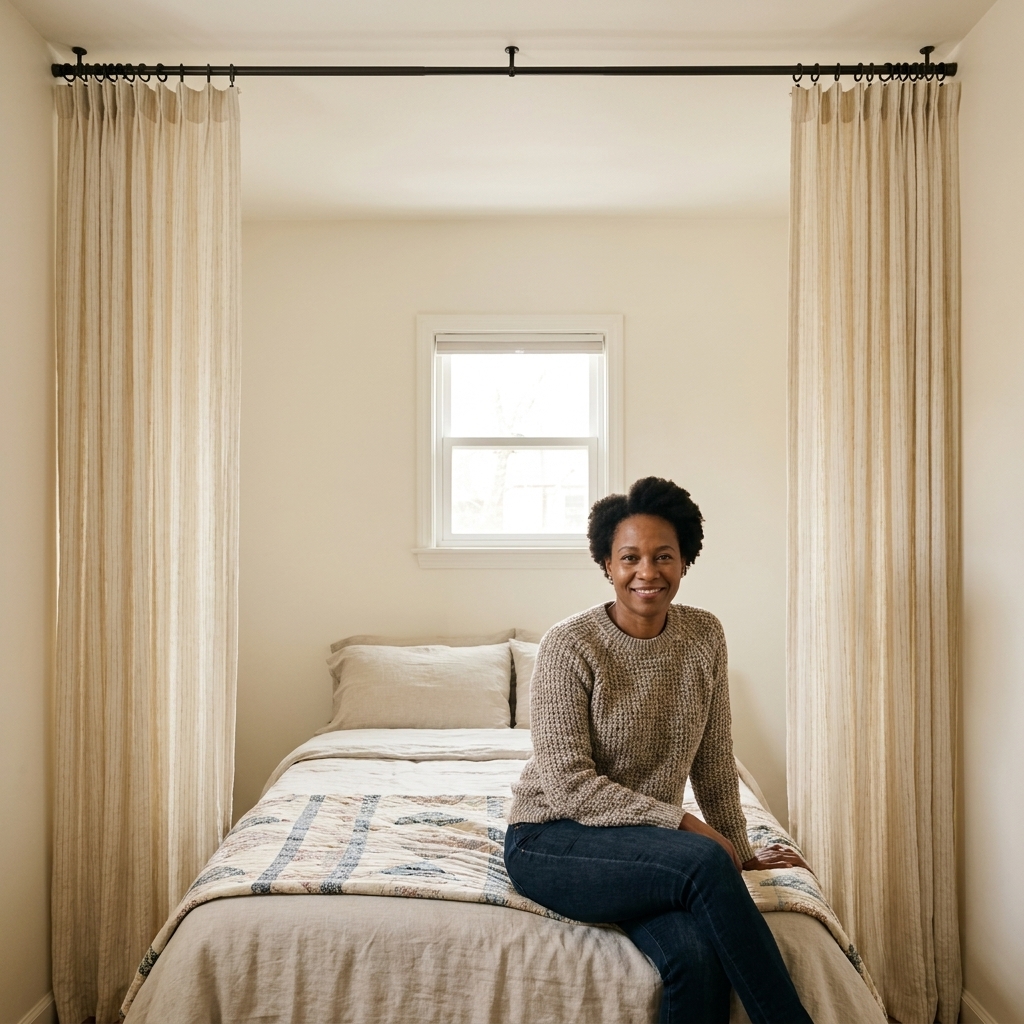
- Protect the curtains with a rod that sits wider than the bed, so fabric falls to the sides instead of bunching behind your pillow.
- Respect heat and airflow: avoid pressing a bed directly against a radiator, baseboard heater, or vent. Leave breathing room and follow any manufacturer guidance.
If the window is drafty, add a draft stopper and consider thermal curtains. Cozy is great. Waking up cold because your pillow is in a breeze is not.
Also: do not block a window that is meant to function as emergency egress. If your bed makes the window hard to access or open quickly, pick a different wall or shrink the bed.
Layout 5: Do the daybed thing
If your bedroom has to do double duty as office, dressing room, and laundry staging area, a daybed setup can change your life. You place the bed lengthwise along a wall and style it like a sofa during the day.
Best for
- Micro-bedrooms that feel like they have no floor space
- Anyone working from home in the same room as their bed
How to avoid dorm energy
- Use two sleeping pillows plus 2 to 4 back pillows to create a “couch back.”
- Add a washable cover (a simple slipcover or a fitted daybed cover) so it always looks tidy.
- Place a small side table at one end, not the middle, to keep the silhouette clean.
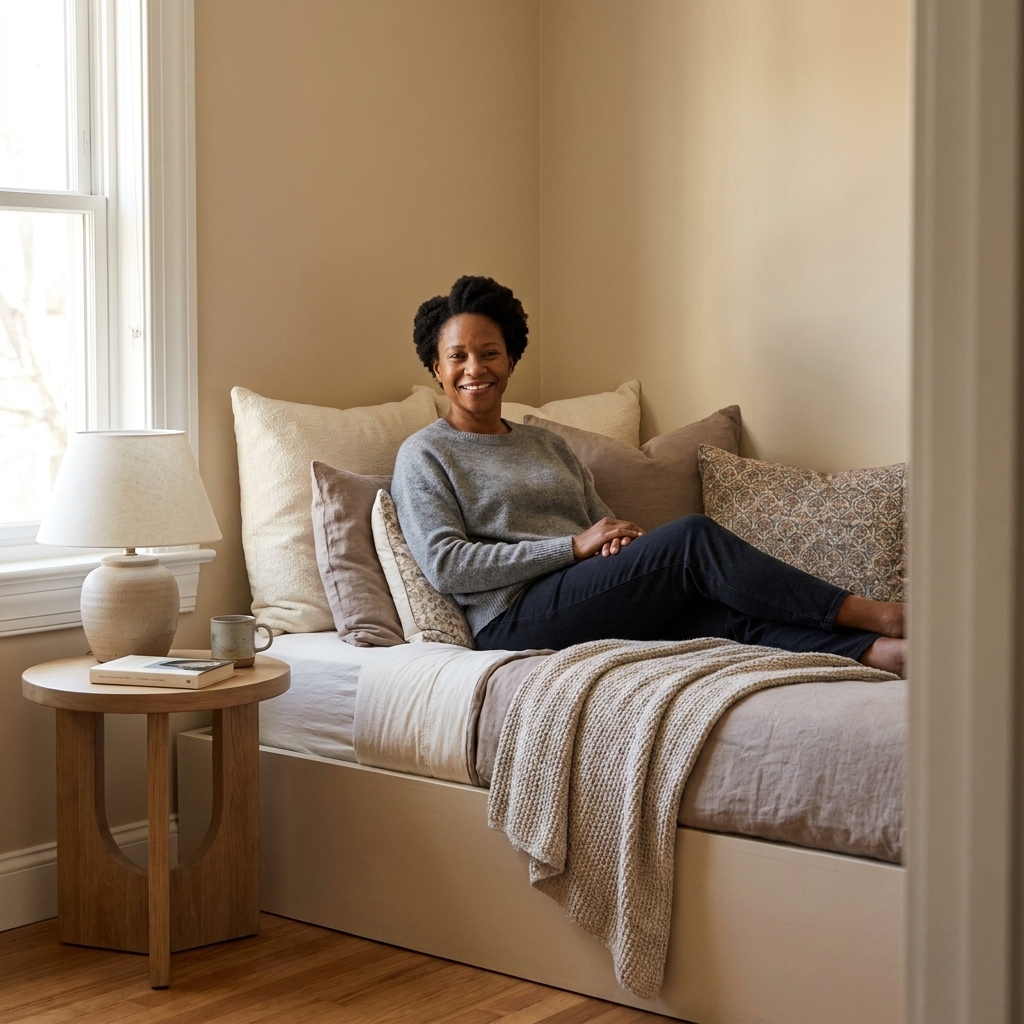
If you already own a standard bed, you can mimic the daybed vibe by pushing it against the wall and styling the open side with pillows. It is not cheating. It is adapting.
Layout 6: Loft it
Lofting is the big swing: you lift the bed up to reclaim the floor. In the right room, it is magic. In the wrong room, it is a nightly climb you resent by Tuesday.
Best for
- High ceilings (you want comfortable sitting room on the mattress)
- Anyone who needs a desk or seating area in the same footprint
Make it feel grown-up
- Choose a sturdy, simple frame that does not wobble.
- Add wall-mounted lighting up top so you are not relying on a dangling clip lamp.
- Create a “room” below: a rug, a compact desk, or a reading chair makes it feel intentional, not improvised.
Safety note: Check the frame’s weight rating, use a stable ladder, and do not skip guardrails. If you are renting, get written permission before any major anchors or drilling into masonry, brick, concrete, or anything you are not sure about. A freestanding loft frame is usually the renter-friendliest option.
Make any layout feel bigger
Once you pick the least-annoying bed placement, these are the finishing moves that make the room feel breathable.
Go vertical, not wide
- Wall shelves instead of wide nightstands
- Tall, narrow dressers instead of low, long ones
- Over-the-door hooks for bags and robes
Use under-bed space on purpose
- Matching bins look calmer than a random assortment of boxes.
- If you hate dust, choose containers with lids or zip covers.
Swap bulky lighting for wall-mounted
- Plug-in sconces, swing-arm lamps, or a pendant swagged from the ceiling
Choose one visual stretch trick
- Hang curtains high (close to the ceiling) to make the room feel taller.
- Use a large mirror opposite a window to bounce light.
- Keep bedding simple and low-contrast for a calmer, less crowded look.
Common problems
“I cannot open my closet with the bed there.”
Try a corner placement that shifts the bed away from the closet line, or switch to a slim bed frame that reduces depth. If the closet has hinged doors, replacing them with a tension-rod curtain (with landlord approval) can buy you precious inches.
“My door hits the bed.”
A simple fix is a hinge pin door stop that limits the swing without damaging the floor. If the door still annoys you, consider asking your landlord about reversing the swing. Most renters will stick to the door stop.
“Two nightstands will not fit, but we both need stuff.”
Do one real nightstand plus a shared shelf mounted above the bed, or use two narrow wall shelves (one per person). A bedside caddy that slips between mattress and frame is also not glamorous but wildly effective.
“I hate climbing over my partner.”
If a queen forces a one-side walkway setup, consider whether a full bed with better access gives you a better daily life. In a small apartment, comfort is not just mattress size, it is how smoothly you move through the room.
Quick decision guide
- Need floor space more than symmetry? Put the bed in a corner.
- Want a normal feel but still compact? One-side walkway against a wall.
- Need the main wall for storage? Float the bed with a slim console behind it.
- Only the window wall works? Keep it low-profile, widen the curtain rod, and keep airflow clear.
- Room has to do more than sleep? Daybed-style setup.
- Ceilings are high and you need a desk area? Loft it.
Your bed does not have to be “perfect.” It just has to let you sleep well and move through the room without feeling like you are living inside a suitcase. And if your current setup makes you dread bedtime, that is your sign to rearrange this weekend.