Layout ideas that turn architectural quirks into storage, micro offices, and cozy nooks, with renter-friendly tips for small apartments.
Space Ovo
Awkward Corners to Extra Storage
Turn dead zones, sloped ceilings, and tight corners into hardworking storage with corner shelves, custom-fit units, and renter-friendly tricks that keep your apartment feeling open.

Maya Brooks
Maya Brooks is an interior stylist and layout enthusiast who believes square footage should never dictate your home's style. After a decade of navigating cramped city studios, she shares practical, renter-friendly decorating and storage solutions to help others maximize their tiny spaces.
Created October 17, 2026
Updated October 17, 2026
I have lived in enough "character-filled" rentals to know this truth: awkward corners are not design flaws. They are hidden storage budgets. That sliver beside the radiator, the dead triangle behind the door, the low wall under a slope, the useless notch by the closet, those are all chances to stash the stuff that currently lives on your only clear countertop.
This guide will help you size up those tricky spots, choose the right corner shelving or custom-fit unit, and set it up in a way that feels built-in, not crammed-in.
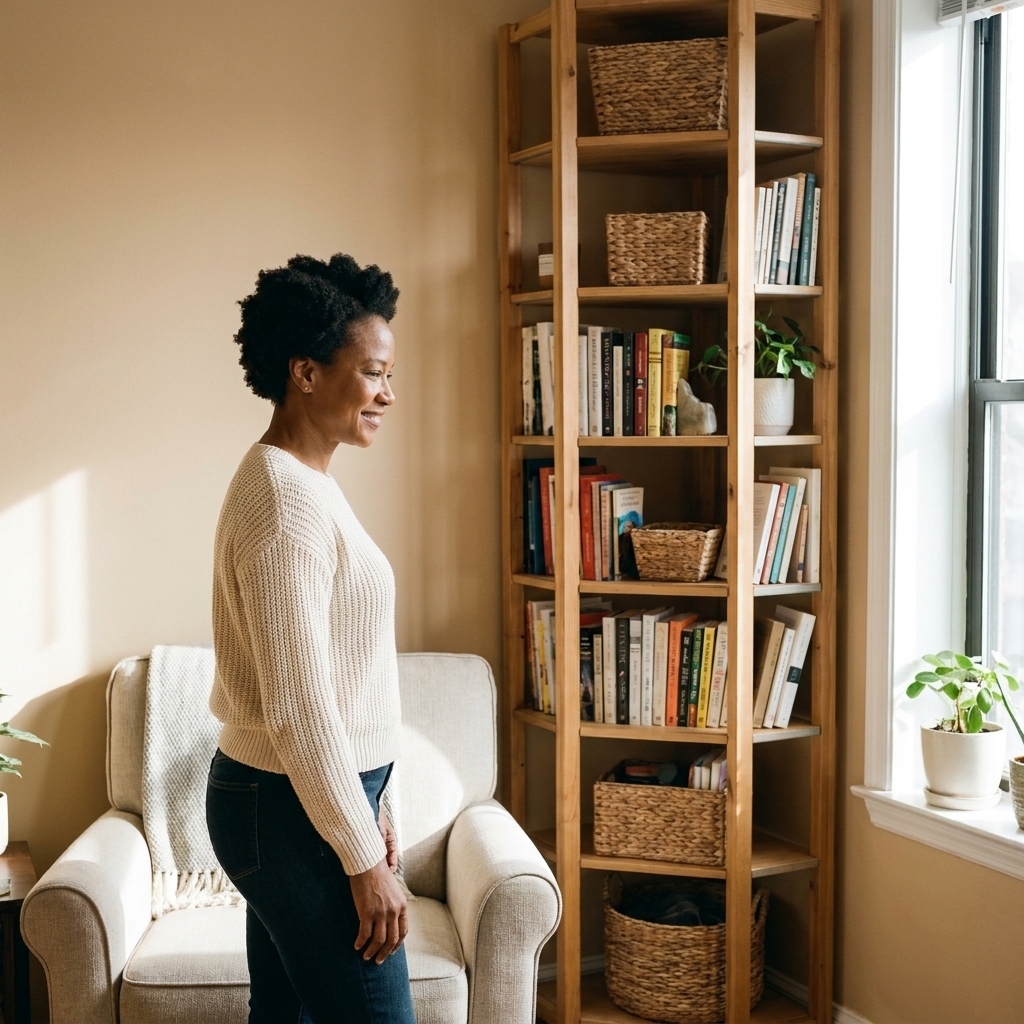
Measure the nook like a Tetris master
Before you buy anything, do a two-minute reality check. Corners are sneaky because the wall space looks generous until you try to open a drawer, swing a door, or walk past carrying laundry.
The 5 measurements that prevent regret
- Two wall lengths: Measure along the baseboard from the corner out on both walls to find your max footprint. Note whether the piece needs equal legs on both sides (many corner shelves do) or if it can be longer on one wall.
- Depth allowance: How far can storage stick out before it blocks a path? In tight walkways, shallow pieces are usually the move, often around 8 to 12 inches deep.
- Height: Go vertical when the floor footprint is tight. Measure to the ceiling, but also watch for vents, windowsills, and radiators.
- Clearances: Check door swing, cabinet doors, closet doors, and drawer pull-out space.
- Baseboards and trim: If you want a "built-in" look, note the baseboard height. A notch, scribe, or a slight gap can make a huge difference in how flush a unit sits.
My renter tip: Blue painter’s tape is your best friend. Tape the footprint on the floor and live with it for a day. If you keep stepping on it, the unit is too deep.
Pick the right corner solution
Not every corner needs the same kind of storage. The secret is matching the nook to the type of stuff you are storing and how often you need it.
1) Corner shelving for a lighter look
Corner shelves are ideal when you need storage but you do not want the corner to feel visually heavy. They are also great for renters because you can often do a freestanding unit, or use minimal wall hardware.
- Best for: Books, plants, baskets, small decor, folded towels, pantry extras.
- Look for: A slim profile, adjustable shelves, and the ability to anchor to the wall for safety.
- Style trick: Put matching lidded bins on the bottom shelves and keep the top shelves airy. This makes the whole corner feel intentional, not like a storage dump.
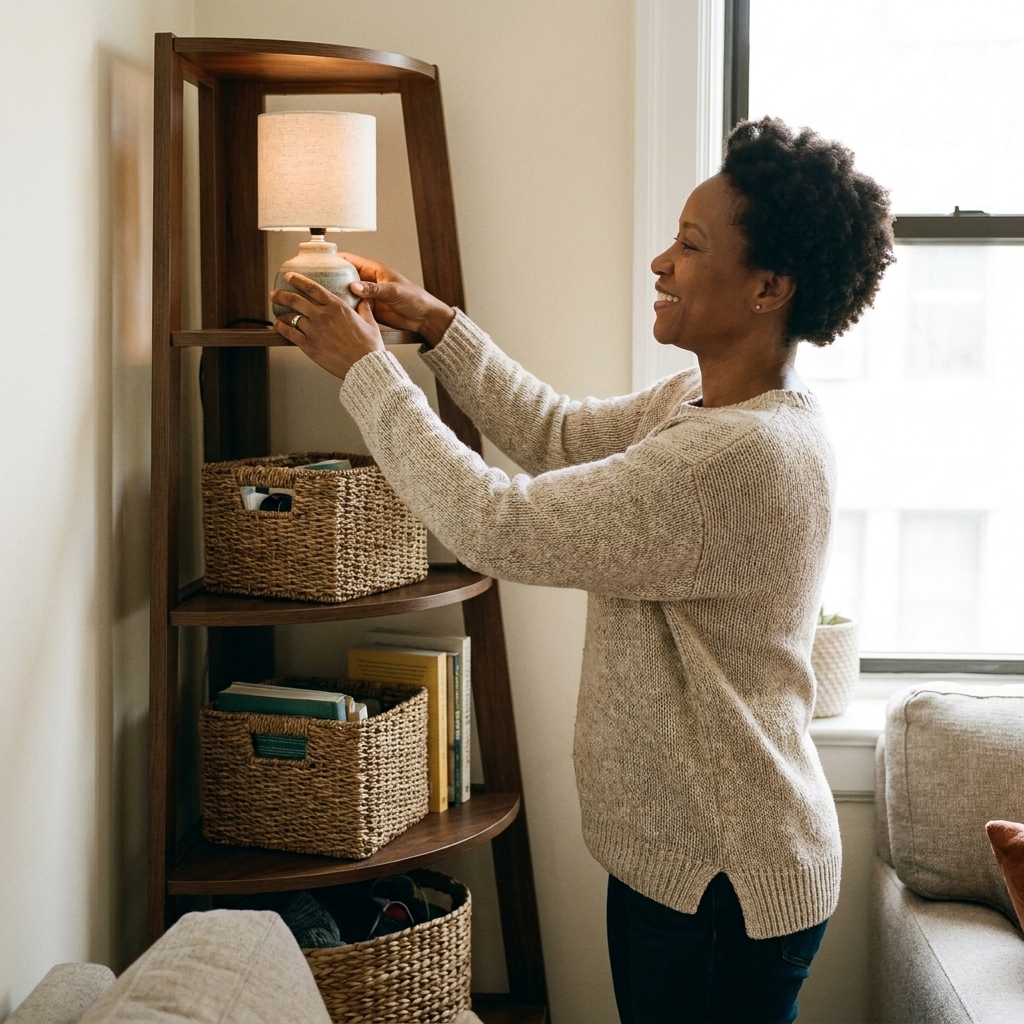
2) Triangle corner cabinets for hidden storage
If the corner is in a high-traffic visual area, closed storage can calm the room down instantly. A corner cabinet with a diagonal front is especially great because it uses depth without creating a sharp edge you bump into.
- Best for: Board games, cables, office supplies, cleaning products, extra linens.
- Look for: Doors that open fully without hitting adjacent furniture, and interior shelves you can adjust.
- Make it feel custom: Add a peel-and-stick knob upgrade and a slim battery puck light inside.
3) Custom-fit built-ins for weird voids
Some nooks are so oddly sized that off-the-shelf furniture will always look like it is "visiting". That is when a custom-fit approach shines. You do not always need a contractor either. You can hack a tight unit, use modular cubes, or commission a simple piece from a local carpenter.
- Best for: Under-stair triangles, shallow alcoves, spaces beside chimneys, sloped-ceiling knee walls.
- Smart approach: Think in modules. Two narrow units side-by-side often look more built-in than one too-wide unit that does not quite fit.
- Budget move: Use a basic bookshelf and add a fitted top, side filler strips, and a face trim. Painted to match the wall, it reads custom.
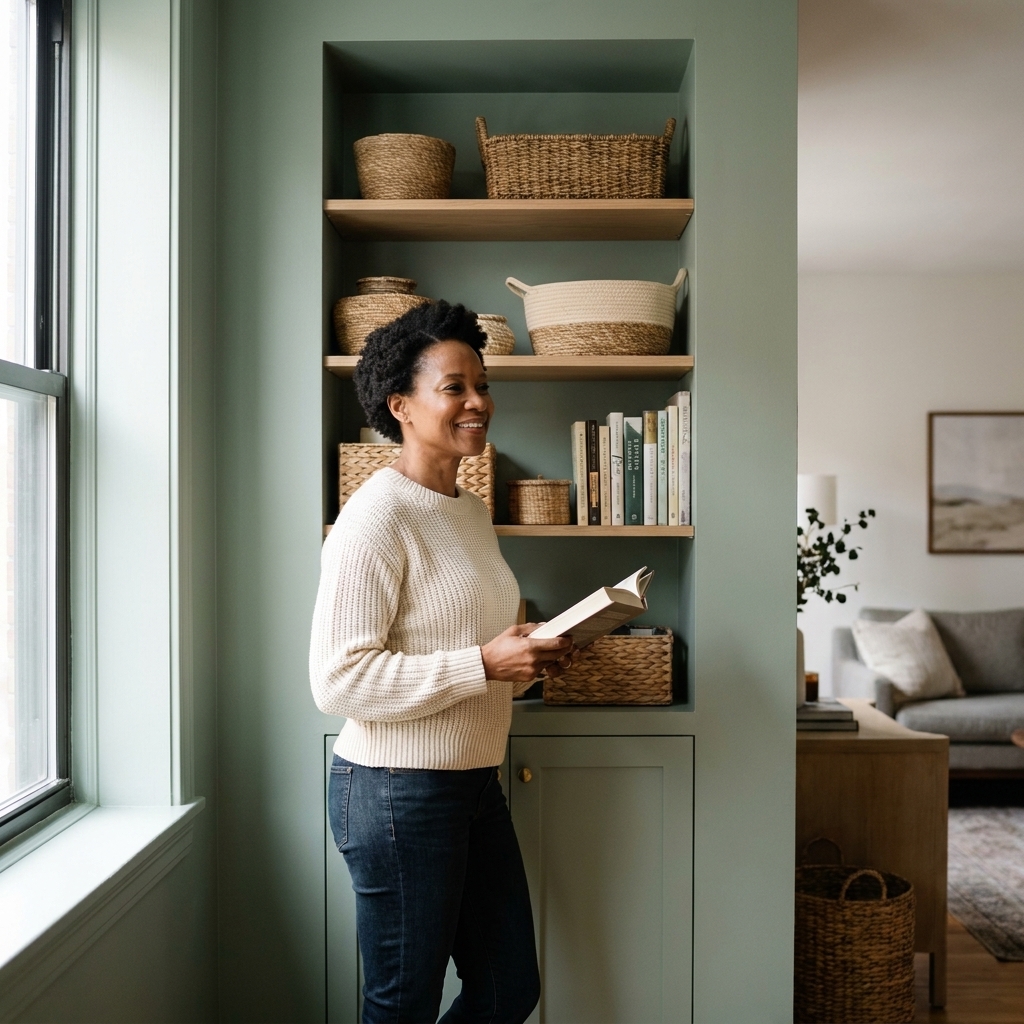
Dead zones you can steal back
Let’s talk about the classic awkward areas that show up in rentals, and what actually works in each one.
Behind-the-door corners
If the corner sits behind a door, bulky furniture will just get slammed into daily. Go for ultra-slim storage.
- Best fixes: About 4 to 6 inch deep picture ledges, slim wall shelves, over-the-door organizers, narrow rolling carts.
- What to store: Mail station, sunscreen and bug spray, umbrellas, cleaning refills, hair tools.
The triangle next to the sofa
This one is my favorite because it can become storage and lighting in one move.
- Best fixes: A corner etagere, a small triangular side table with a lower shelf, or a tall plant stand with a basket underneath.
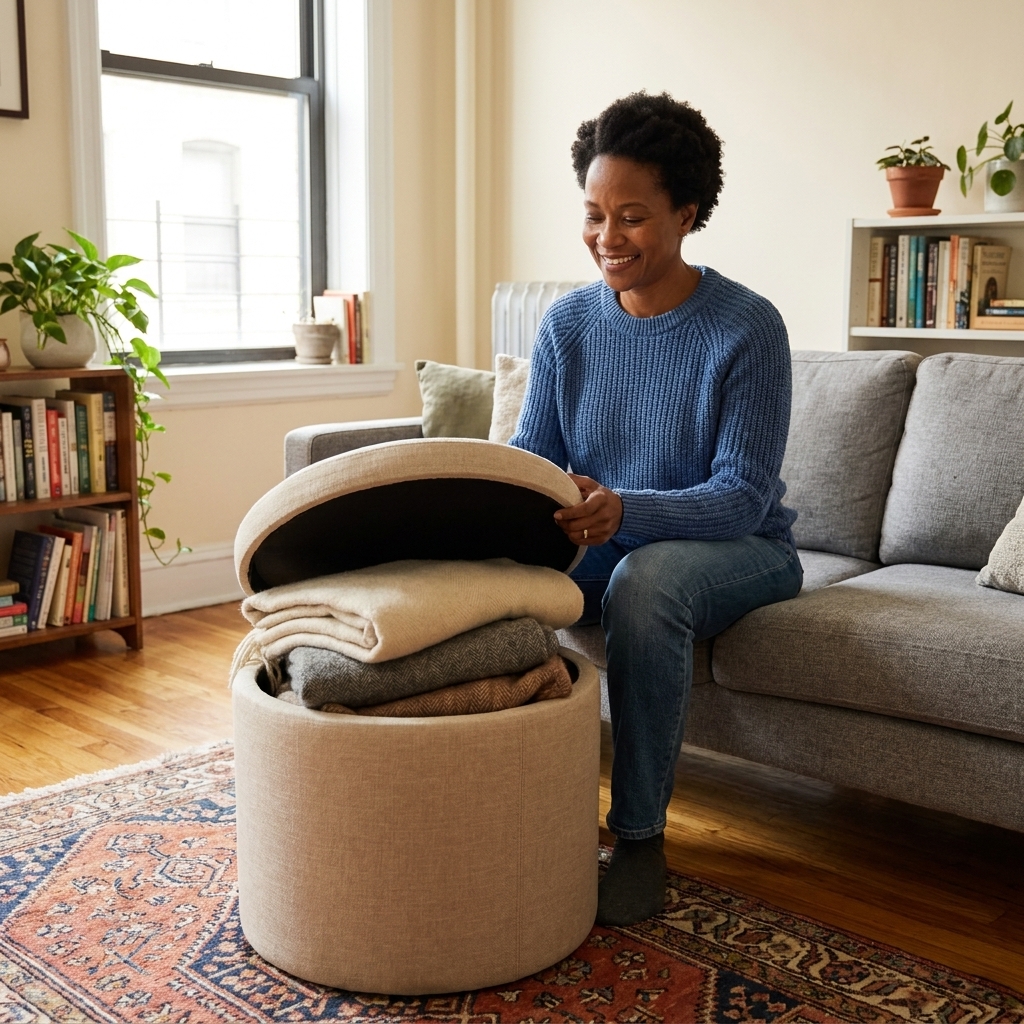
- What to store: Throws, magazines, remotes in a lidded box, extra candles.
Radiator and heater-adjacent nooks
Heat changes the rules. You need airflow and safe clearance. Different heater types have different safety needs, so follow your building rules and any manufacturer guidance first.
- Rule of thumb: Leave several inches of breathing room between storage and the heat source, and do not block vents or covers.
- Best fixes: A radiator cover with a shelf (if allowed), a freestanding open shelf set back from the heat, a heat-safe basket placed nearby rather than against it.
- What to store: Items that are not heat-sensitive, like extra blankets and slippers, plus books kept away from direct heat.
Entryway corners that collect clutter
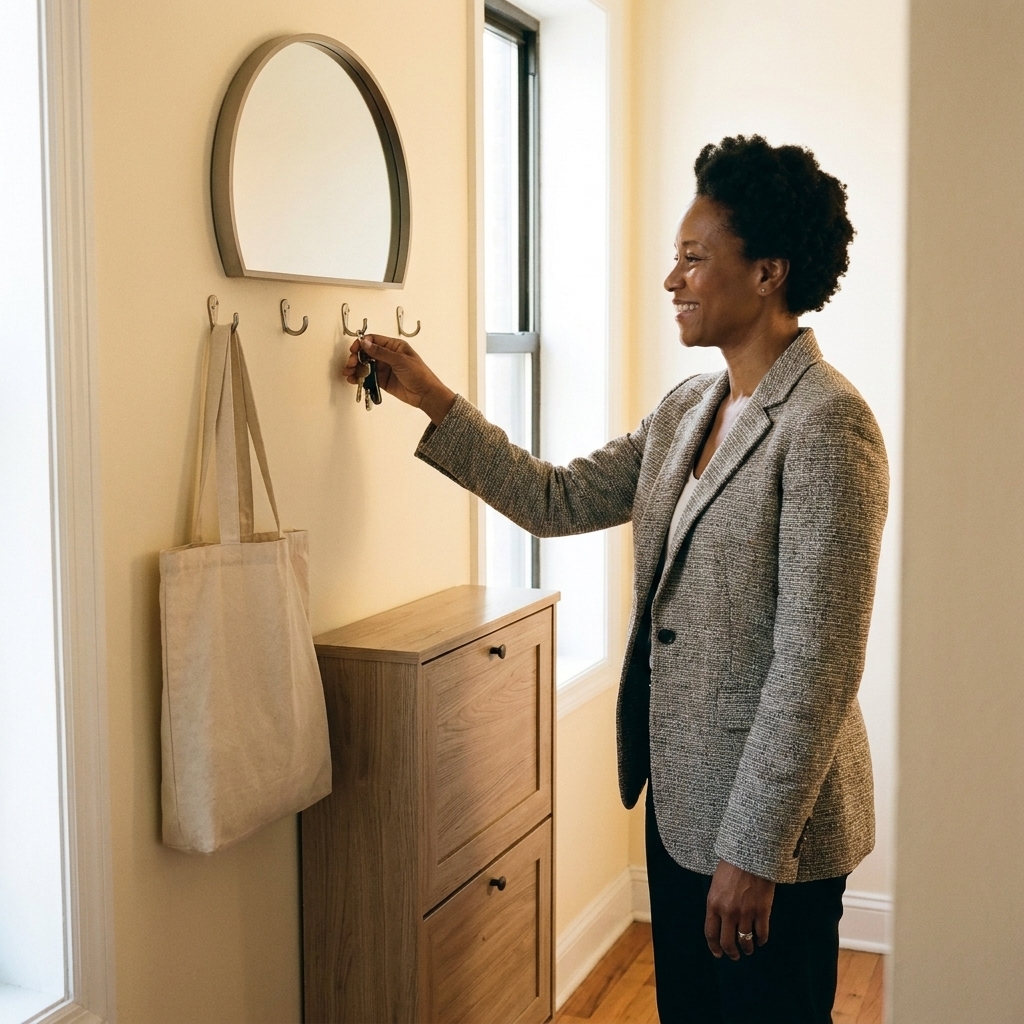
If your entry corner is where bags go to die, give it a job.
- Best fixes: A corner bench with a lift-top, a corner shelf with hooks above it, or a narrow tower plus a tray for keys.
- What to store: Shoes in bins, dog leash, reusable bags, hats and gloves.
Sloped ceilings and low walls
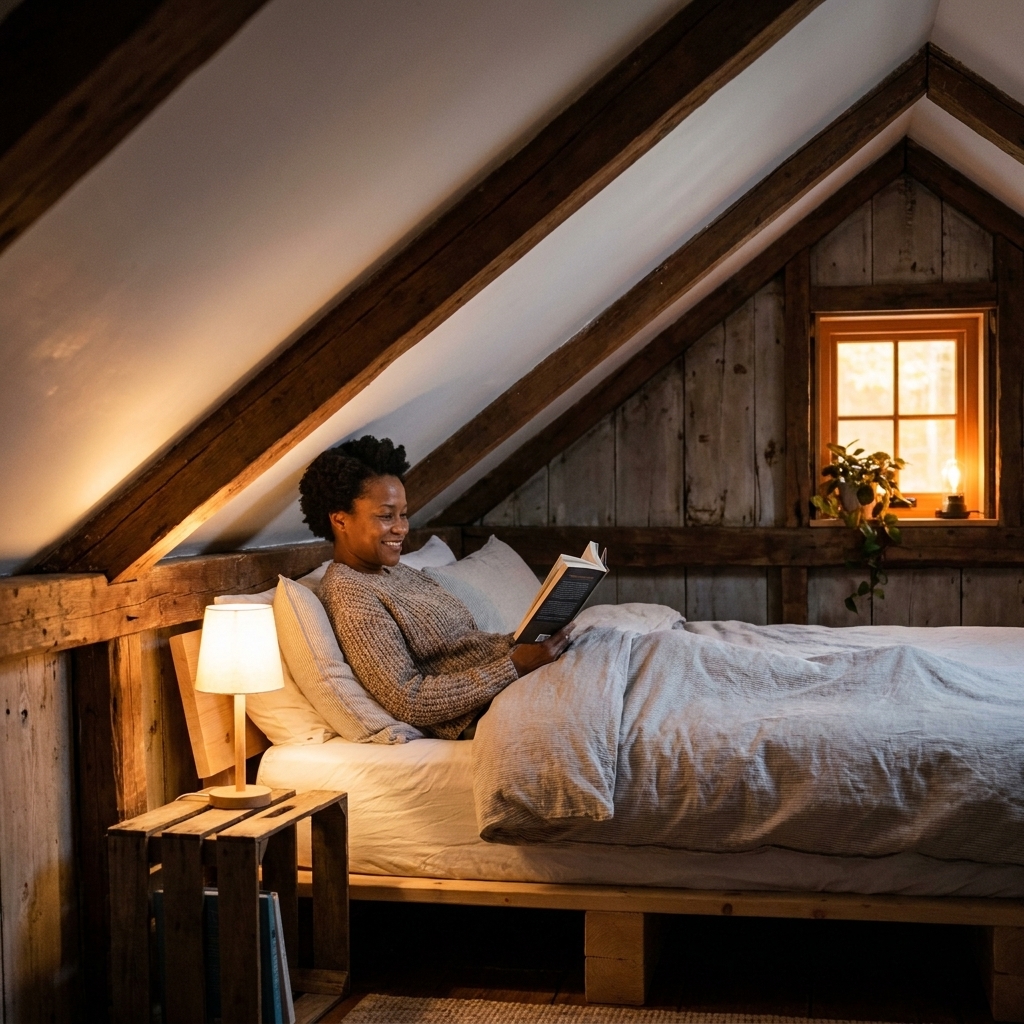
Sloped ceilings can feel like they are shrinking the room, but they also create perfect low-storage opportunities. The goal is to keep the line of sight clean and make the storage look designed, not improvised.
Go low and long
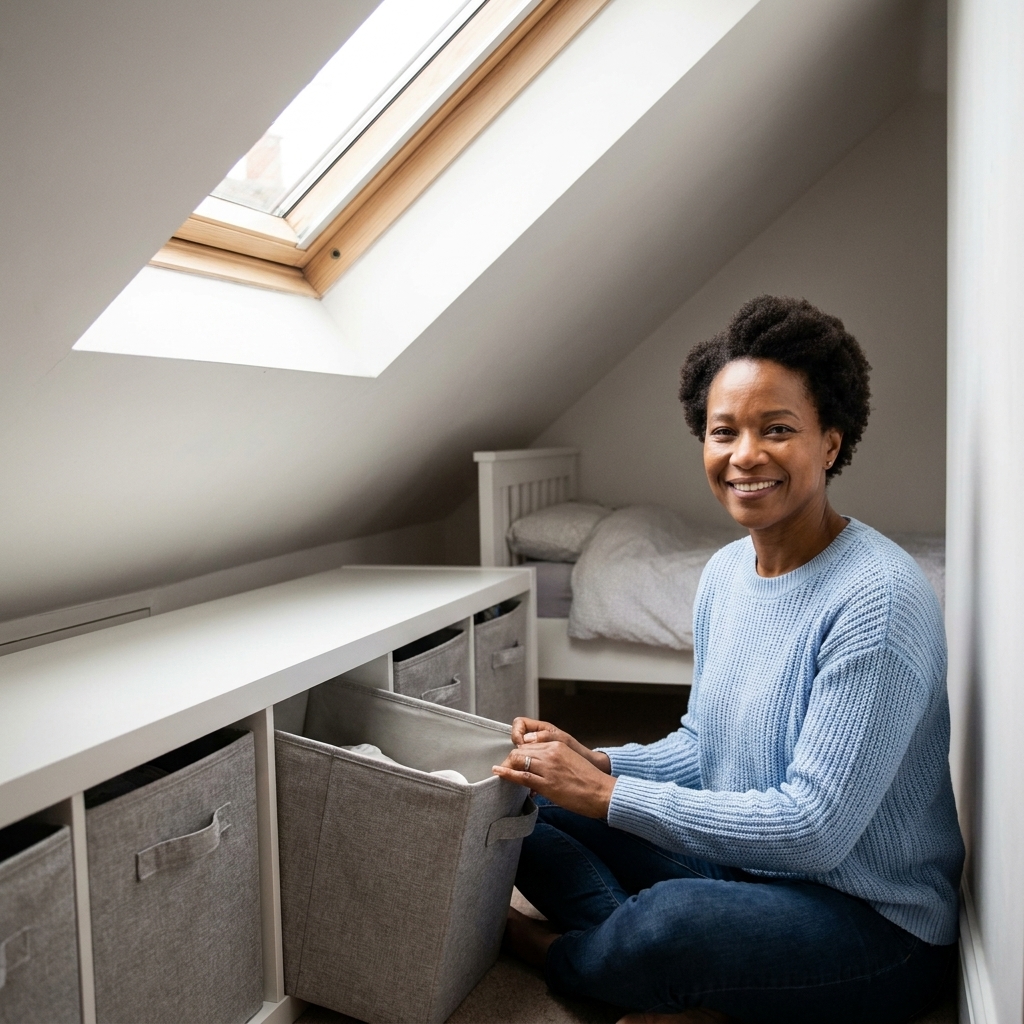
Instead of one tall piece that fights the slope, run a low unit along the shortest wall.
- Best fixes: Low bookcases, media consoles, modular cube systems laid horizontally, under-eave drawers.
- Make it look intentional: Treat the top like a ledge. Style it with a lamp, a stack of books, and one larger art piece leaning against the wall.
Use pull-out bins like drawers
Under slopes, deep storage becomes a black hole. Pull-out bins fix that.
- Best fixes: Matching handled bins or fabric boxes that slide, ideally labeled by category.
- Best for: Off-season clothes, wrapping paper, extra toiletries, backup pantry items.
Make corner shelving look planned
Corner storage can scream “I ran out of space.” Unless you style it like it was always meant to be there.
Follow the one-third rule
Aim for roughly one-third hidden storage and two-thirds open breathing room. In practice, that means baskets on the bottom shelves, and fewer, larger objects up top.
Repeat a material
If you have woven baskets in the closet, use one here too. If your kitchen has matte black hardware, pick shelves with black brackets. Repetition makes the corner feel connected to the room.
Anchor it with light
A small lamp on a corner shelf or cabinet makes the nook look like a purposeful zone, not a leftover. Bonus: softer lighting makes tight rooms feel calmer at night.
Keep daily-use items in reach
Put the things you grab all the time between waist and eye level. Save the highest and lowest shelves for backstock and rarely used items.
Custom-fit without a custom budget
“Custom” does not have to mean expensive millwork. It can mean “fits the space and solves the problem.” Here are renter-friendly ways to get that built-in feel.
Option 1: Modular units plus trim
Choose a modular bookshelf or cube system that is slightly smaller than the nook. Then close the gaps with simple filler panels and add peel-and-stick trim to the front edges. If your lease allows painting, painting it all one color can make it read as one unit. If painting is not allowed, matching the unit finish closely to your wall color still helps.
To keep it reversible, aim for friction-fit filler strips, removable adhesive where it makes sense, and minimal holes you can patch later.
Option 2: Tension-rod shelving in micro nooks
In tiny gaps, like between a vanity and wall, tension systems can hold narrow shelves without drilling into tile or plaster. Use them for light items only, respect the product’s weight rating, and skip this option anywhere a fall could hit kids, pets, or a high-traffic walkway.
Option 3: A “fitted” rolling cart
If the nook is awkward because of access, go mobile. A slim rolling cart can live in the corner and roll out when you actually need it.
- Best for: Pantry overflow, art supplies, bar cart setup, bathroom backup supplies.
Renter-friendly install tips
- Anchor tall pieces: Tall, narrow corner shelves tip more easily than you think, especially with kids, pets, or enthusiastic vacuuming. Use the included anti-tip hardware when provided, or choose a safer, lower unit if you cannot anchor.
- Use wall-safe anchors when needed: If you must drill, use appropriate anchors for your wall type and keep it minimal. For move-out, patch small holes with spackle and use landlord-approved touch-up paint only if it is provided or permitted.
- Choose freestanding when possible: Tall corner shelves can be anchored with a small bracket for safety but still feel renter-friendly.
- Try removable solutions first: Command-style hooks for light items, tension poles for vertical storage, and adhesive cable clips to keep cords tidy.
- Protect surfaces: Felt pads under furniture and a small clear floor mat under rolling pieces prevent scuffs in tight corners.
Quick corner ideas by room
Kitchen
- Corner floating shelves for mugs and everyday bowls
- Lazy Susan turntable inside a lower corner cabinet for oils and spices
- Narrow corner baker’s rack for microwave or pantry overflow
- Material note: In splash zones, look for sealed wood or metal finishes that wipe clean, and avoid swell-prone MDF where water is likely.
Bathroom
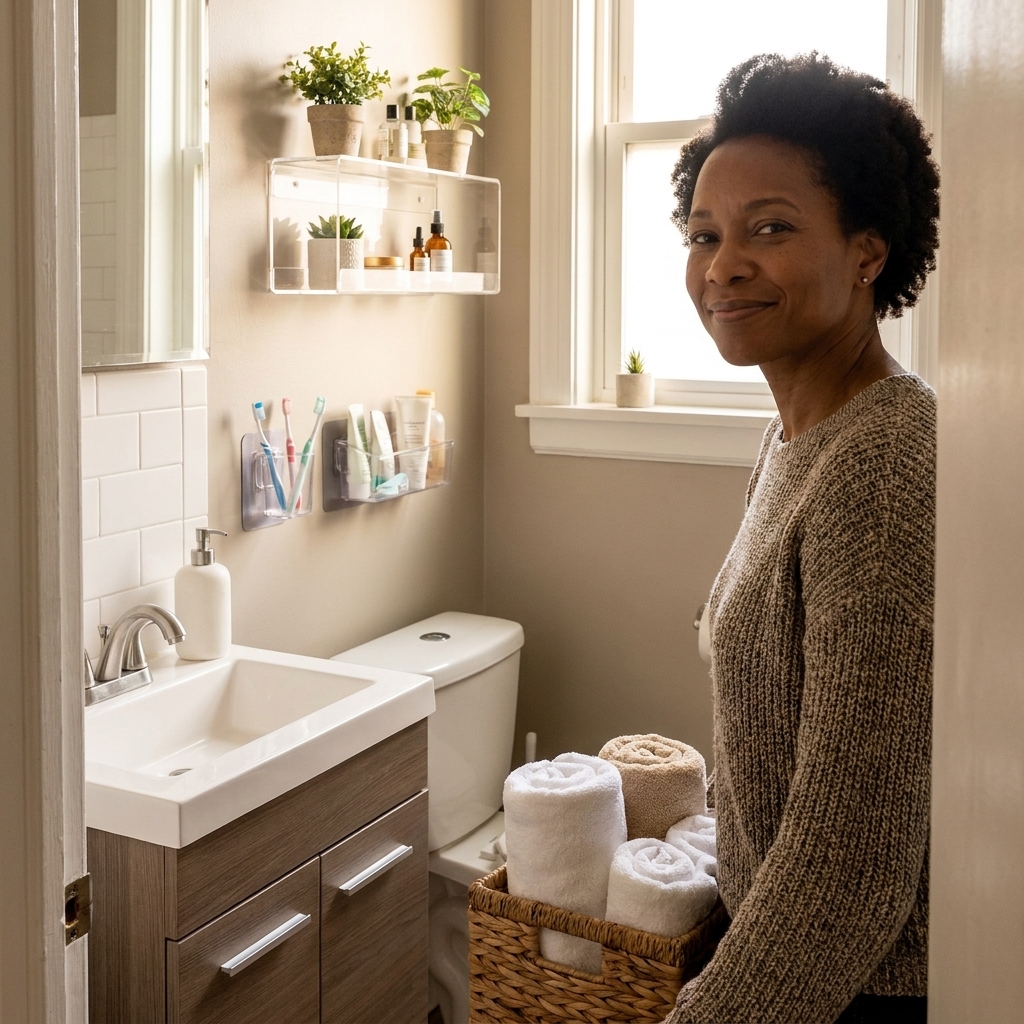
- Corner shelves above the toilet for towels
- Triangular corner caddy in the shower for bottles
- Freestanding corner tower for extra paper goods
- Material note: Pick rust-resistant finishes and ventilated baskets so your storage does not turn into a damp zone.
Bedroom
- Corner bookcase as a nightstand alternative
- Under-slope low drawers for off-season clothing
- Corner wall hooks with a small hamper below
Living room
- Corner cabinet for games and tech clutter
- Corner shelf styled with baskets and a lamp
- Floating corner shelves for books in a reading nook
FAQ
What depth of shelving works best in tight corners?
For small apartments, shallow shelves usually win. Around 8 to 12 inches deep is often enough for baskets, books, and pantry items without making the room feel pinched. If the corner is out of the walkway, you can go deeper, but tape it out first.
How do I make corner storage look built-in?
Match the unit color to the wall (or get as close as you can), minimize visual clutter with baskets, and keep the styling simple. A single lamp or one large framed art piece nearby helps the corner read as a designed zone.
What if my corner is uneven or the walls are not square?
Welcome to renting. Choose a slightly smaller piece and let it breathe, then hide gaps with a plant, a floor basket, or a narrow filler strip. If you are doing a semi-built-in hack, trim can disguise a lot.
Is it safe to put storage near a radiator?
Keep a clear buffer so heat can circulate, and avoid pressing flammable or heat-sensitive items against it. Safety varies by heater type, so follow building rules and manufacturer guidance. When in doubt, choose open shelving set back from the heat instead of sealed bins tight to it.
Your next move
Pick one awkward corner that annoys you weekly, not one you feel “should” be fixed. Measure it, tape out the footprint, and decide if you need open shelving (light and airy) or closed storage (calm and hidden). Once that dead zone starts working for you, you will spot three more corners that suddenly feel like opportunities.