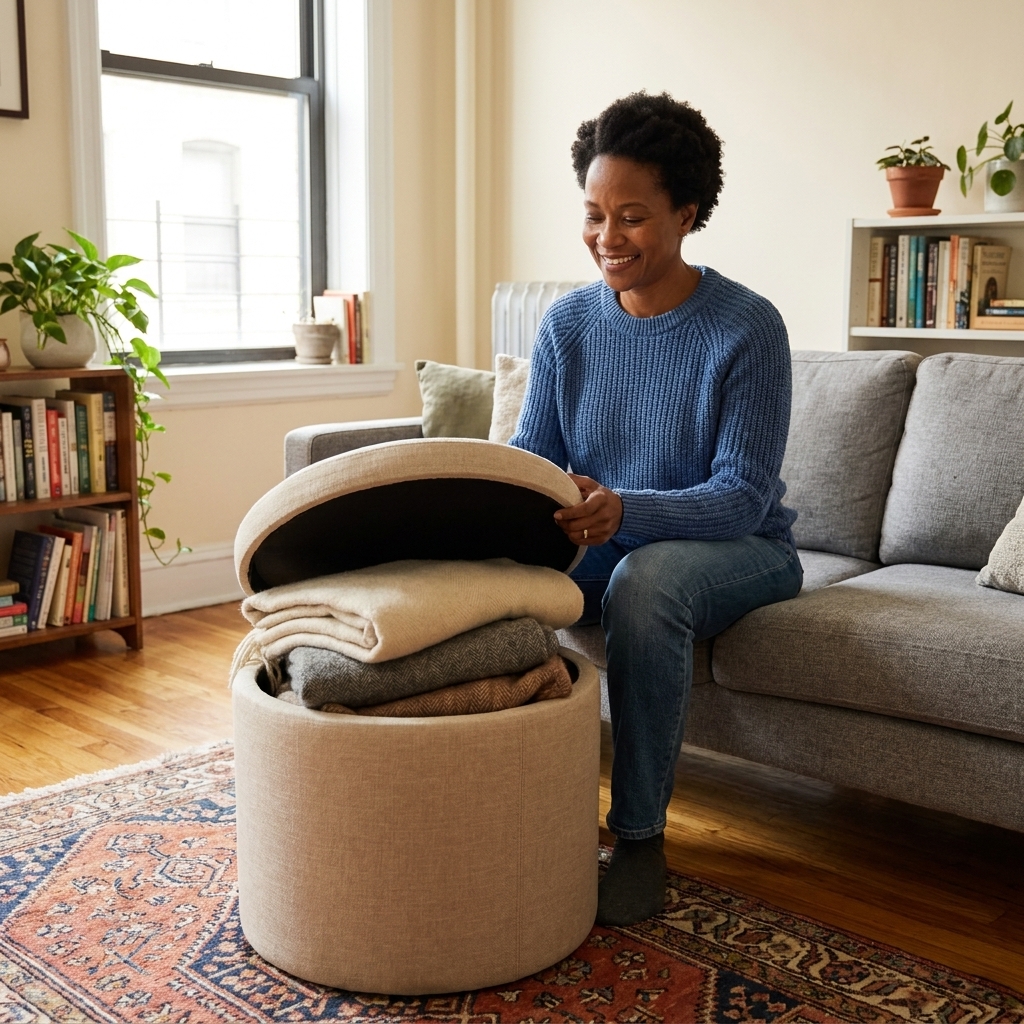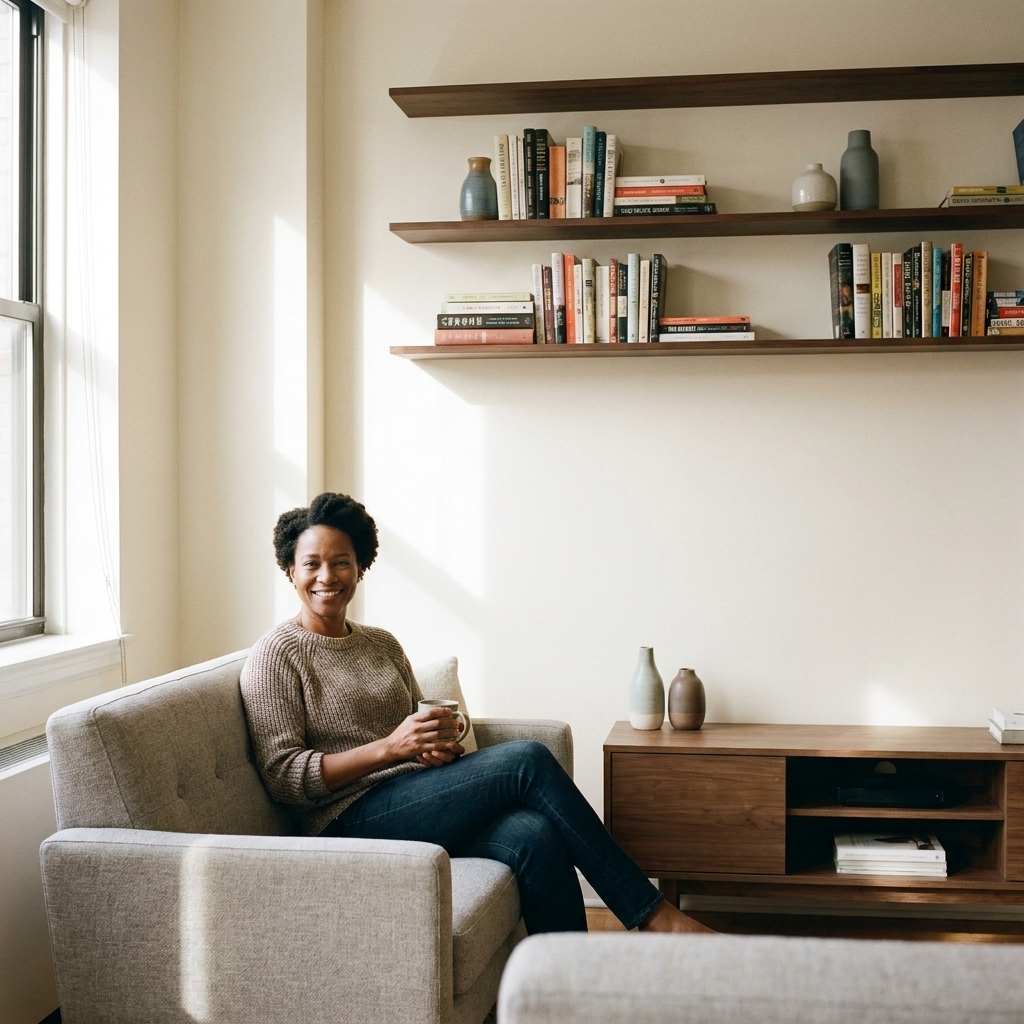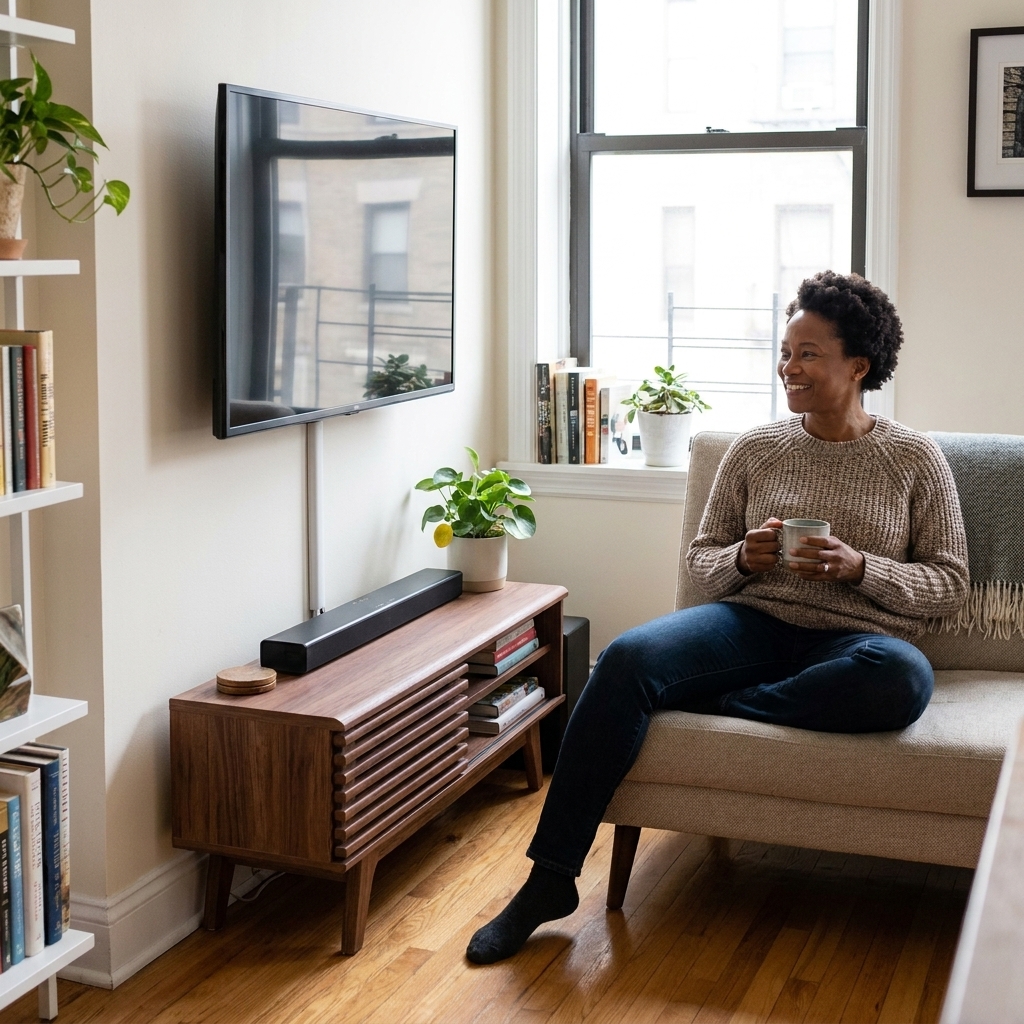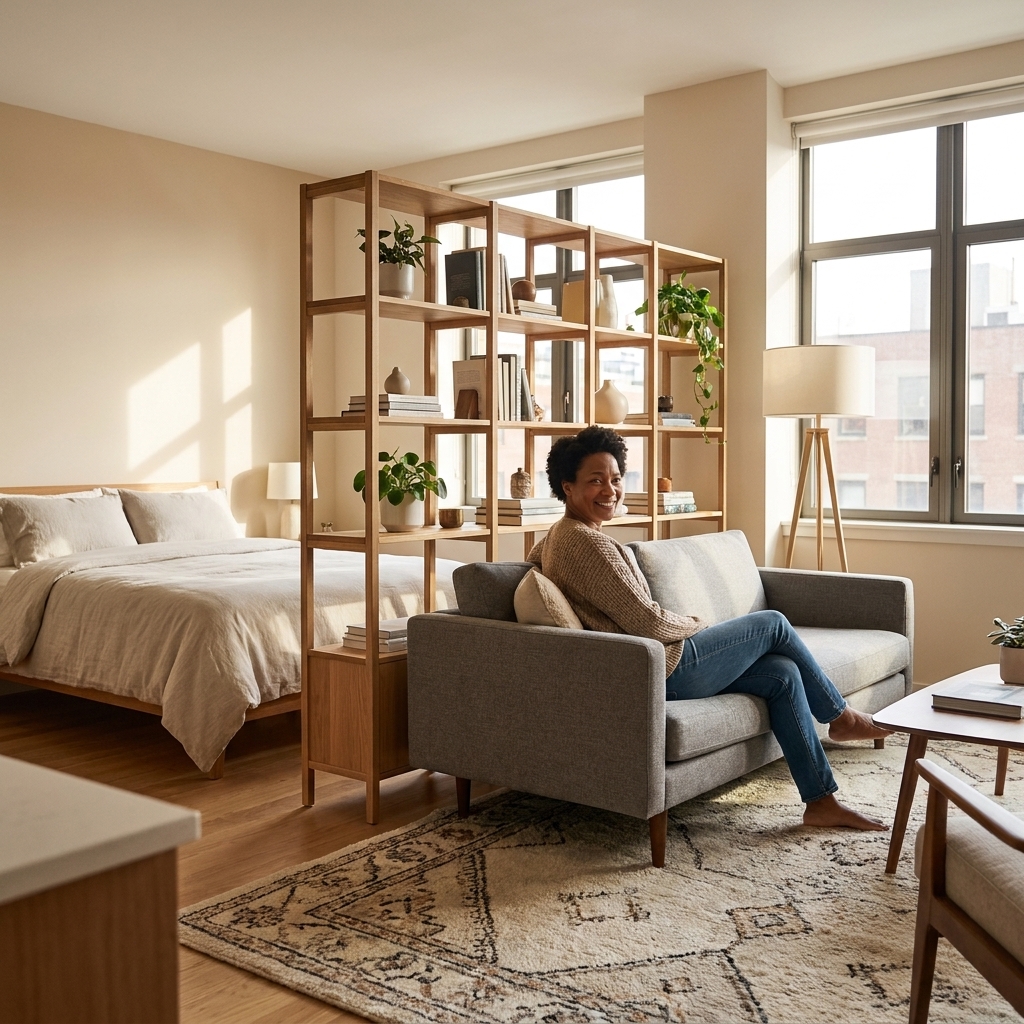
Create distinct zones in a one-room studio with renter-friendly dividers: rugs, curtains, shelving, and layout tricks that keep your space open and breathable.
Space Ovo
The Floating Furniture Technique
Stop pinning your sofa to the wall. Learn how “floating” furniture can improve traffic flow, create breathing room, and make small apartments feel larger, with renter-friendly steps, layouts, and practical measurements.

Maya Brooks
Maya Brooks is an interior stylist and layout enthusiast who believes square footage should never dictate your home's style. After a decade of navigating cramped city studios, she shares practical, renter-friendly decorating and storage solutions to help others maximize their tiny spaces.
Created October 17, 2026
Updated October 17, 2026
If you have ever pushed a sofa hard against the wall to “make the room look bigger,” you are in very good company. I did it for years in my San Francisco and Brooklyn micro-apartments because it felt logical: clear the middle, hug the perimeter, boom, more space.
Except it often does the opposite. When everything is glued to the walls, a room can feel like a waiting room: a big empty runway in the center with all the “life” pressed to the edges. The fix is the floating furniture technique, which simply means pulling key pieces slightly off the wall so the room breathes, circulation improves, and the layout looks intentional.
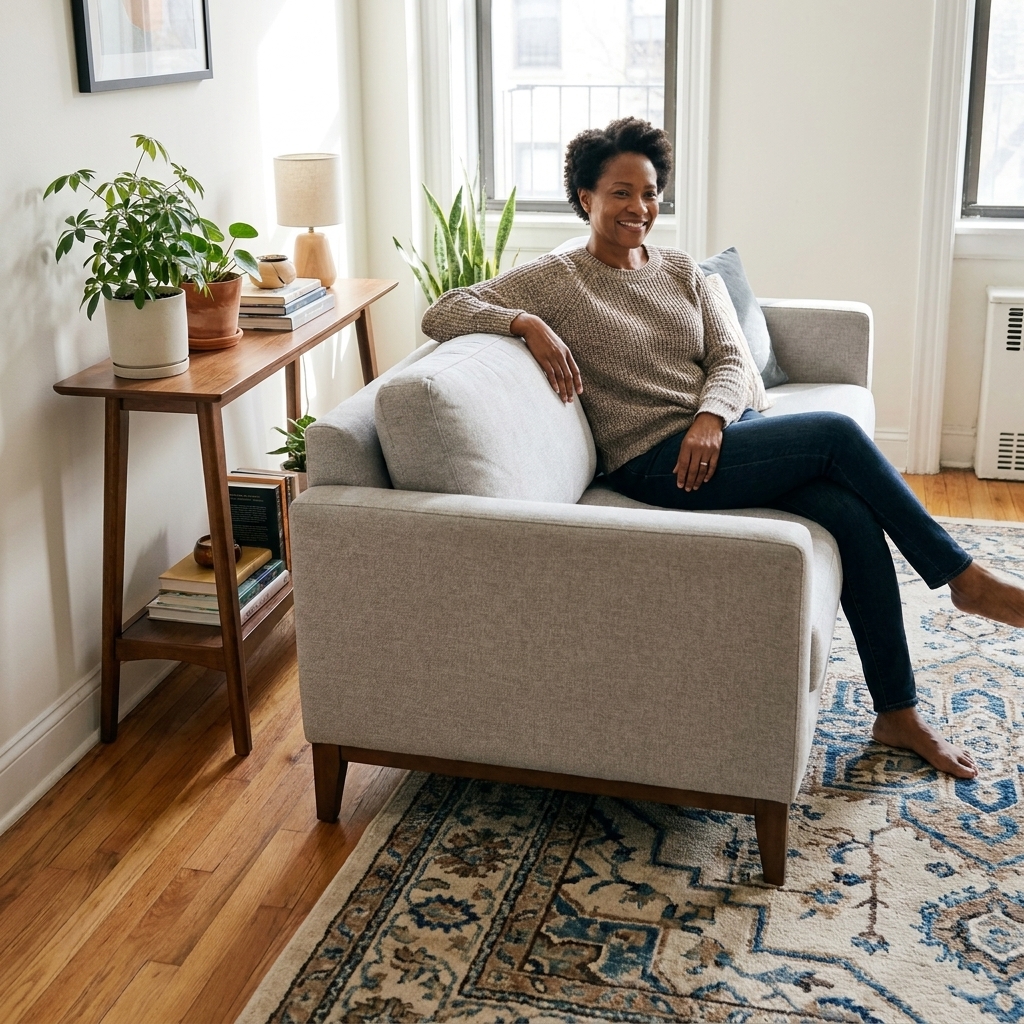
Why wall-hugging can shrink a room
Here is the counterintuitive truth: rooms feel bigger when they have clear zones, comfortable pathways, and visual depth. Wall-hugging layouts can chip away at all three.
You lose depth
When a sofa is plastered to the wall, your eye hits a hard boundary immediately. Pulling the sofa even 4 to 12 inches forward can create a shadow line and a sliver of negative space that adds dimension. Depth makes a room feel layered, not flat.
Traffic flow gets awkward
In many small apartments, the path from the entry to the kitchen or bedroom cuts through the living area. When all the furniture sits on the perimeter, you often end up walking through the middle of the room like it is a hallway. Pulling pieces off the wall lets you design a real walkway along the side, so the “living room” stays a living room.
The room reads like one big blob
Especially in studios, wall-to-wall placement can make the space feel like a single undifferentiated rectangle. Floating pieces help you define a conversation area, a reading nook, or a dining zone without adding a single wall.
Scale looks off
A sofa shoved to the wall can emphasize how long that wall is and how small your seating area feels. When you pull it forward and anchor it with a rug, the “room” becomes the rug zone, and it usually reads more proportionate.
What floating furniture means
Floating does not mean you park your sofa in the dead center of the room and sacrifice all circulation. It means you stop treating walls like magnets.
- Floating can be subtle. Even 2 to 6 inches off the wall counts.
- At least two front legs on the rug. This is the easiest visual trick for making a seating area feel grounded and intentional.
- Use the back of furniture as a tool. A sofa back can define a walkway or separate living from dining.
- Everything still needs pathways. The goal is easier movement, not an obstacle course.
Breathing room and anchoring
Floating works because it balances two things small rooms crave:
- Breathing room: little pockets of open space around furniture that keep the room from feeling jammed.
- Anchoring: a clear “this is where you sit” zone that feels cohesive, not scattered.
When you pull the sofa forward and anchor it with a rug, your brain reads a defined living area. That definition is what makes the rest of the room feel calmer and larger.
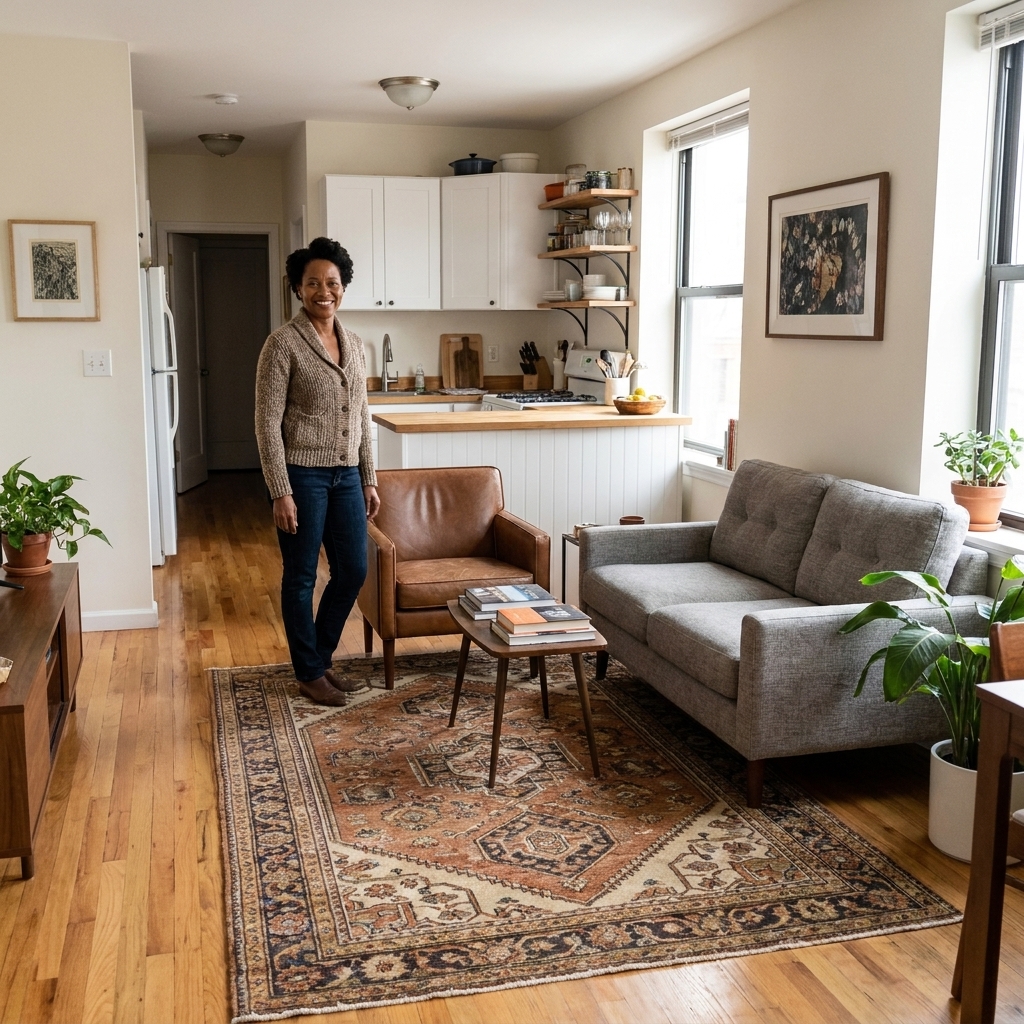
How to float a sofa
I am going to walk you through this like we are in socks sliding furniture around after dinner.
1) Start with the rug
Place your rug where you want the living zone to live. In tiny spaces, the rug is your “room within a room.” Then position the sofa so the front legs sit on the rug.
Quick rug sizing cheat: if your rug is small, it is still okay. Just get at least the sofa’s front legs on it, plus a coffee table if possible.
2) Pull it forward 4 to 12 inches
This is the easiest upgrade with the least risk. If you can only manage 4 inches because of a tight pass-through, do 4 inches. You are still creating depth.
3) Protect a real pathway
Pick your main circulation route, usually from entry to kitchen or bedroom. Designers often recommend aiming for:
- 30 to 36 inches for a comfortable main walkway
- 24 to 30 inches in very tight apartments
A note from real life: 24 inches can feel cramped for many adults, and it can be rough with kids, pets, laundry baskets, or anyone using a mobility aid. If your space allows, prioritize comfort and safety over hitting a number.
If the path currently runs through the center of the room, try moving it to the side by letting the sofa create the hallway.
4) Add a landing strip (optional)
If the sofa is floating with space behind it, you have options:
- Slim console table: storage plus a place for a lamp, keys, and a drink
- Picture ledge or shelf above: adds height without taking floor space
- Basket parking: one basket for throws, one for cords or toys
Renter-friendly note: a console table is your best friend when you cannot add built-ins.
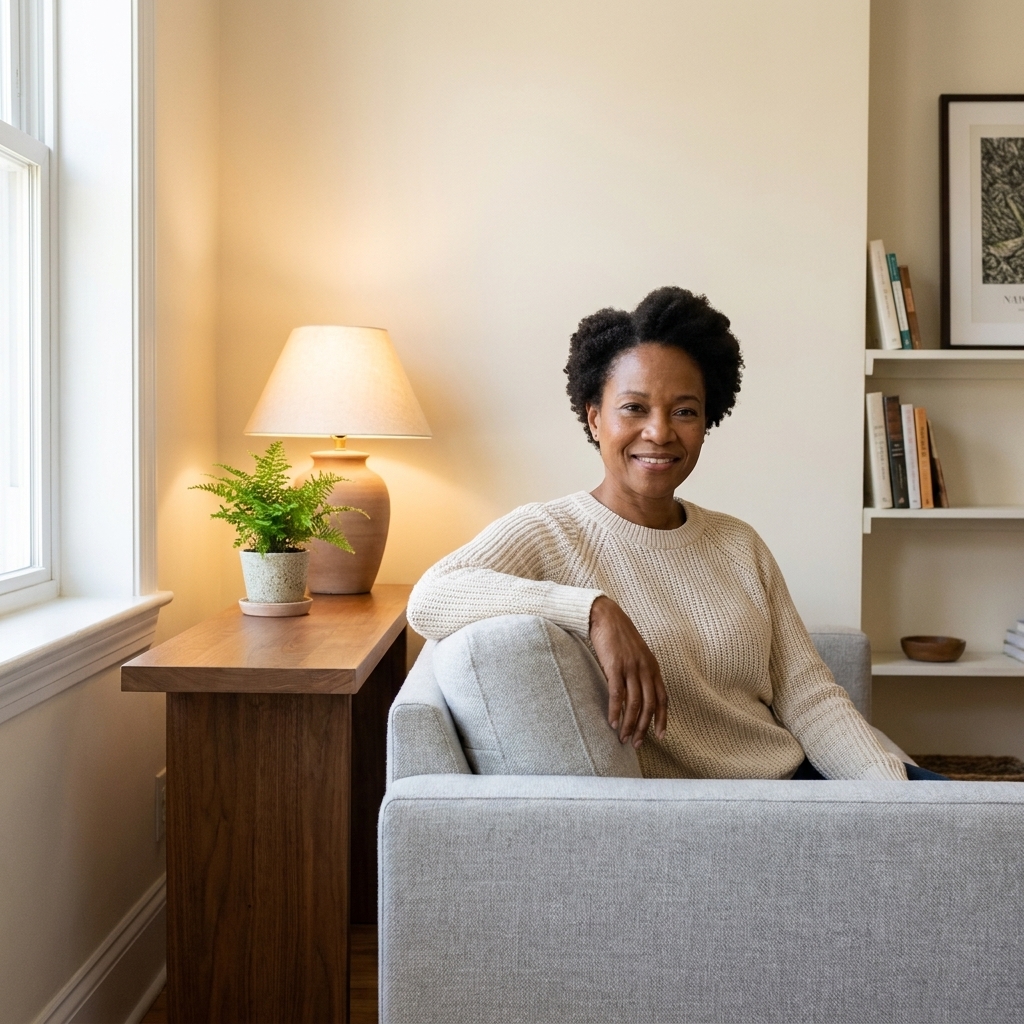
Layouts that work
Walkway wall
Best for: apartments where you naturally walk along one long wall to get somewhere.
- Pull the sofa a bit off the opposite wall.
- Create a clear walkway between the sofa and the wall.
- Place the TV or media console on the wall across from the sofa.
This keeps traffic out of the seating area and makes the living zone feel protected.
Sofa divider
Best for: studios that need a living zone and a sleeping zone without feeling like a furniture warehouse.
- Float the sofa with its back toward the bed area.
- Add a slim console behind it if you need a visual buffer.
- Use one consistent rug in the living zone only, so it reads as separate.
If you do this, keep the sofa back tidy. A clean line helps the whole studio feel more organized.
Two-point anchor
Best for: living rooms too narrow for a chair plus sofa combo.
- Pull a loveseat slightly forward.
- Add one small accent chair or an ottoman that can tuck under a console.
- Use a round coffee table or nesting tables to soften tight corners.
When to keep it on the wall
Floating is a tool, not a rule. Keeping the sofa against the wall can be the better call when:
- Your room is extremely narrow and pulling forward would pinch the only safe walkway.
- A door swing would hit the sofa if you move it.
- You need clear access to a radiator, baseboard heater, return vent, or built-in that should not be blocked.
- Outlets and cords would become a daily trip hazard without a plan.
If any of those are true, you can still steal the spirit of floating by shifting the rug, adding lighting, or creating a more intentional seating footprint without moving the sofa much.
Common worries
“If I pull it off the wall, I will lose space.”
You are not always losing usable space, you are often reassigning it. The few inches behind the sofa frequently become dead space anyway. Meanwhile, your seating zone can feel more comfortable and your walkway can get clearer. In many rooms, that is a net win.
“My room is too small to float anything.”
Floating is not all-or-nothing. Try one of these micro-moves:
- Pull the sofa forward 2 to 4 inches.
- Angle one piece slightly, like a chair, to break the wall line.
- Move the rug forward so the seating area reads as its own zone.
“It looks weird to see the back of my sofa.”
Totally normal at first. Make the back look intentional:
- Add a slim console table behind it.
- Drape one textured throw neatly over the back corner.
- Use a floor lamp beside the sofa to create a finished vignette.
“Where do I put the side tables?”
In small rooms, think smaller and lighter:
- C-table that slides under the sofa
- Wall-mounted shelf as a micro side table where appropriate for your walls
- Nesting tables that separate only when you need them
Details that make it look intentional
Match the rug to the footprint
A floating layout looks best when the rug clearly belongs to the seating area. If the rug is too far back under the sofa, it can look like an afterthought.
Use lighting to pin the zone
One floor lamp or a plug-in wall sconce near the sofa makes the layout feel designed. Lighting signals: this is where you relax.
Keep the perimeter lighter
When you pull furniture off the wall, resist the urge to then line the walls with tall, heavy pieces. Let at least one wall stay visually calm. A mirror, a single leaning frame, or a narrow bookcase is plenty.
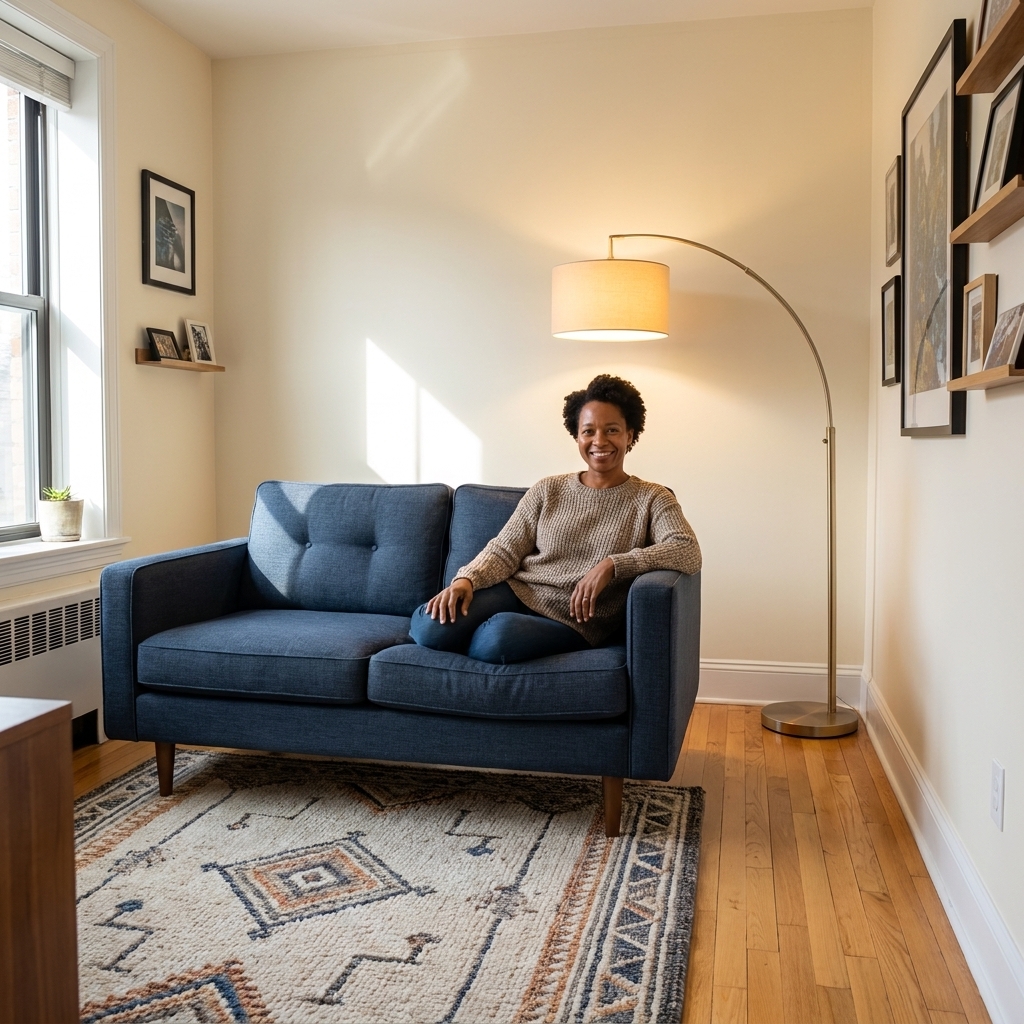
Quick measurements
- Walkways: 30 to 36 inches is a common comfort target; 24 to 30 inches can work in tight spots, but go wider whenever you can
- Coffee table distance from sofa: about 14 to 18 inches is a typical guideline, and 16 to 18 inches often feels more comfortable for everyday use
- Space behind a floating sofa: even 4 to 8 inches helps, 10 to 18 inches can fit a slim console
- TV viewing distance (optional rule of thumb): many guides land around 1.5 to 2.5 times the screen diagonal, but in small apartments comfort, glare, and neck angle matter more than perfect math
15-minute checklist
- Pull the sofa forward 6 inches.
- Shift the rug forward so the sofa’s front legs sit on it.
- Move the coffee table so it is about 14 to 18 inches from the sofa.
- Walk your main path. If it feels tight, slide the whole zone 2 inches at a time until it flows.
- Add one finisher behind or beside the sofa: a slim table, a floor lamp, or a plant.
If the room suddenly feels calmer and easier to move through, that is the floating furniture technique doing its thing.
FAQ
Does floating work with a sectional?
Yes. The easiest move is to pull the whole sectional forward a few inches and anchor it with a rug. If the chaise blocks traffic, rotate the sectional or swap sides if the piece is modular.
What if my sofa looks lost when it floats?
Give it backup: a larger rug, a floor lamp, and one substantial piece of wall art nearby. Pulling it forward can reveal that the room needs anchoring, not that your sofa is “too small.”
Can I do this in a rental?
Absolutely. Floating is just placement. If you add a console, lighting, or shelves, stick with plug-in lighting and renter-friendly mounting methods where appropriate, and keep cords tidy so your new walkway stays safe.