Create distinct zones in a one-room studio with renter-friendly dividers: rugs, curtains, shelving, and layout tricks that keep your space open and breathable.
Space Ovo
Feng Shui for Small Apartments
Tiny space, better flow. Use Feng Shui layout rules to place your bed, desk, and sofa for calmer energy, clearer pathways, and a home that feels bigger.

Maya Brooks
Maya Brooks is an interior stylist and layout enthusiast who believes square footage should never dictate your home's style. After a decade of navigating cramped city studios, she shares practical, renter-friendly decorating and storage solutions to help others maximize their tiny spaces.
Created October 17, 2026
Updated October 17, 2026
I love a good design challenge, and small apartments are basically my sport. Feng Shui is one of my favorite tools for tiny spaces because it's less about buying things and more about placing what you already have so your home supports you instead of stressing you out.
Traditional Feng Shui has a lot of layers, but for cramped, multi-functional layouts, you'll get the biggest payoff from three ideas: clear paths, commanding positions, and balanced zones. Below are the rules I actually use when I'm trying to fit a bed, desk, and sofa into one not-quite-room without making it feel like furniture Tetris gone wrong.
The small-space mindset
Flow first
In a tiny apartment, one blocked pathway can make the whole place feel tight. Feng Shui calls this chi flow. You can think of it as the ease of moving through your space without weaving around sharp corners, piles, or awkward furniture edges.
- Protect the main path: entry to kitchen, entry to bathroom, bed to bathroom, and (if applicable) bed to closet.
- Give yourself breathing room: even 18 to 24 inches of walkway is a win in a studio. Think of it as a small-space rule of thumb, not a universal standard.
- Declutter the pinch points: the area right inside the door, the side of the bed you use most, and the spot where you drop your bag.
Commanding position
In Feng Shui, the commanding position means you can see the door while you're in bed or at your desk, without being directly in line with it. It's about feeling safe and in control. In small apartments, you often can't hit the textbook version, so we aim for the spirit of it.
- See the door if possible, even diagonally.
- Avoid being directly aligned with the door (bed or desk straight in the doorway line) when you can.
- Create support behind you with a wall, headboard, or a tall, stable piece.
Bed placement
If your apartment is one room, your bed is basically your nervous system's headquarters. Get this right and everything else feels easier.
Best bed rules
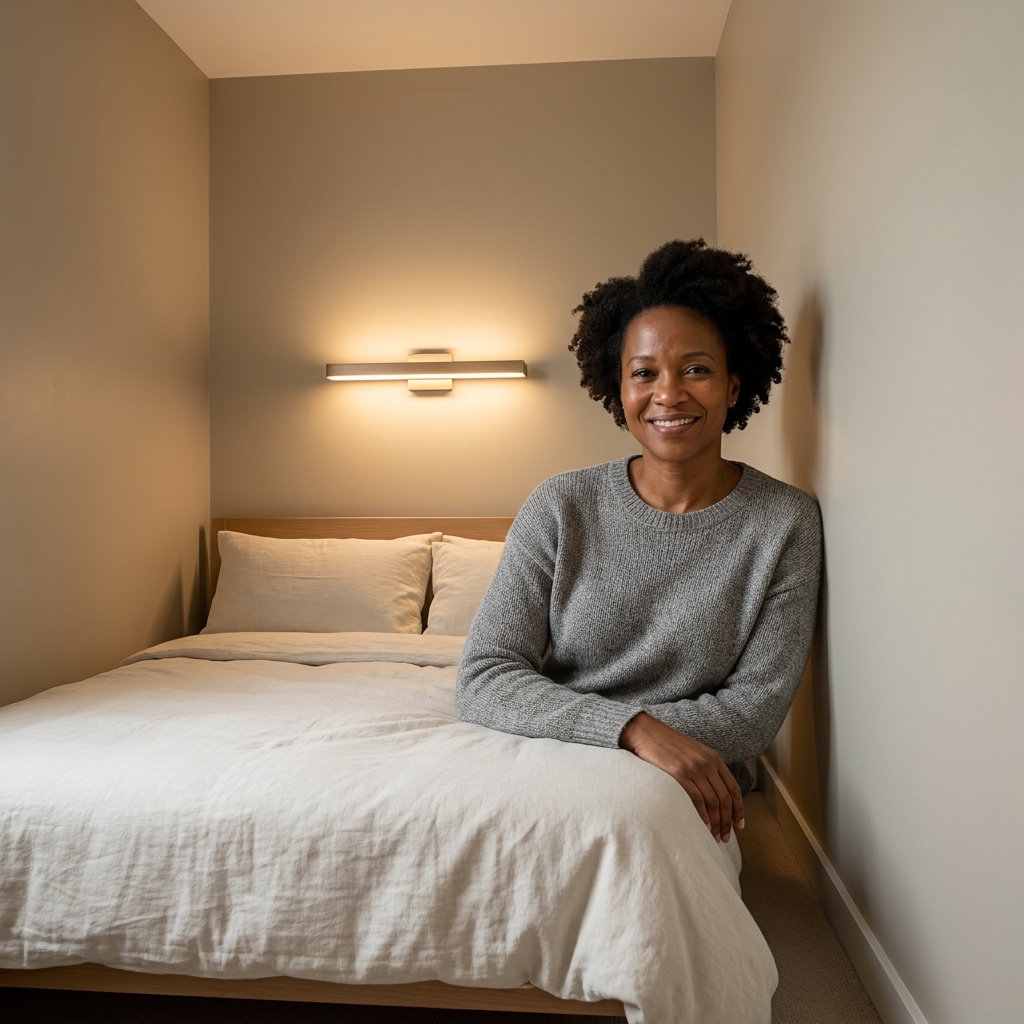
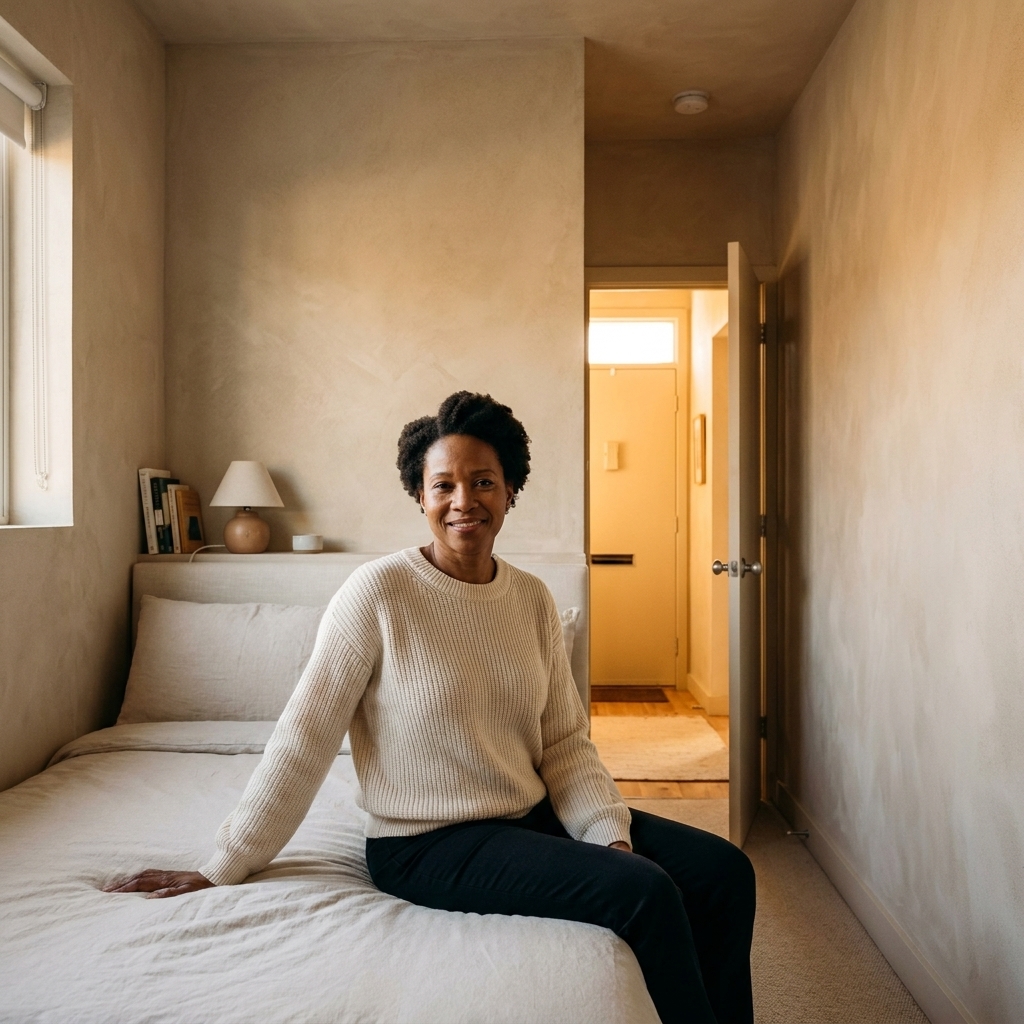
- Put the head of the bed against a solid wall. This classic “support” rule matters even more when your life is happening five feet away.
- Avoid feet pointing straight to the door if you can. If it's your only option, use a bench at the foot, a footboard, or a soft divider to slow the visual line.
- Skip the floating bed when possible. A bed in the center can look cool on Pinterest, but in a small space it often blocks flow and makes your sleep zone feel exposed.
- Balance both sides if you share the bed: two slim nightstands or two small shelves beat one crowded side.
If your bed shares the room
Most of us aren't working with a separate bedroom. These are my favorite Feng Shui-friendly ways to make a bed feel like a true rest zone:
- Create a headboard moment even if you don't own one. A wall-mounted ledge, a panel, or a large piece of art centered above the bed signals stability.
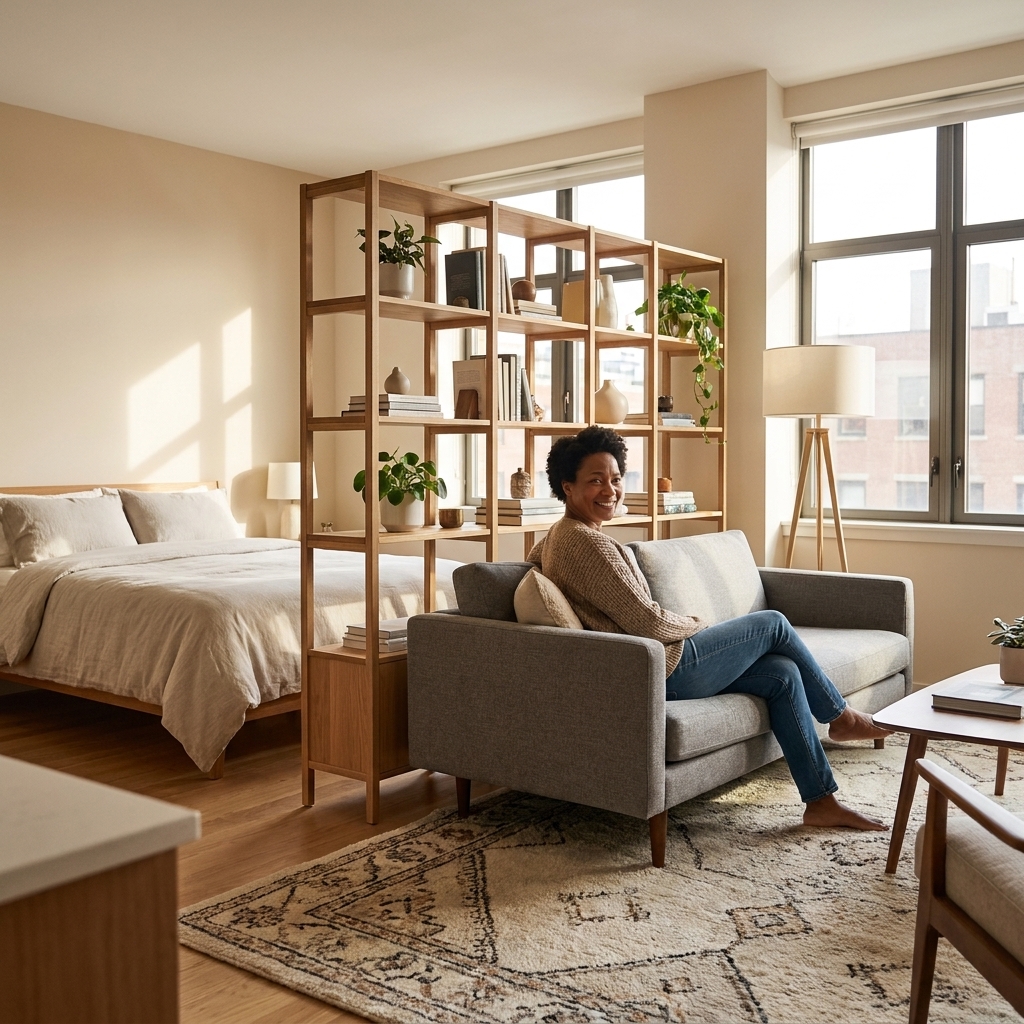
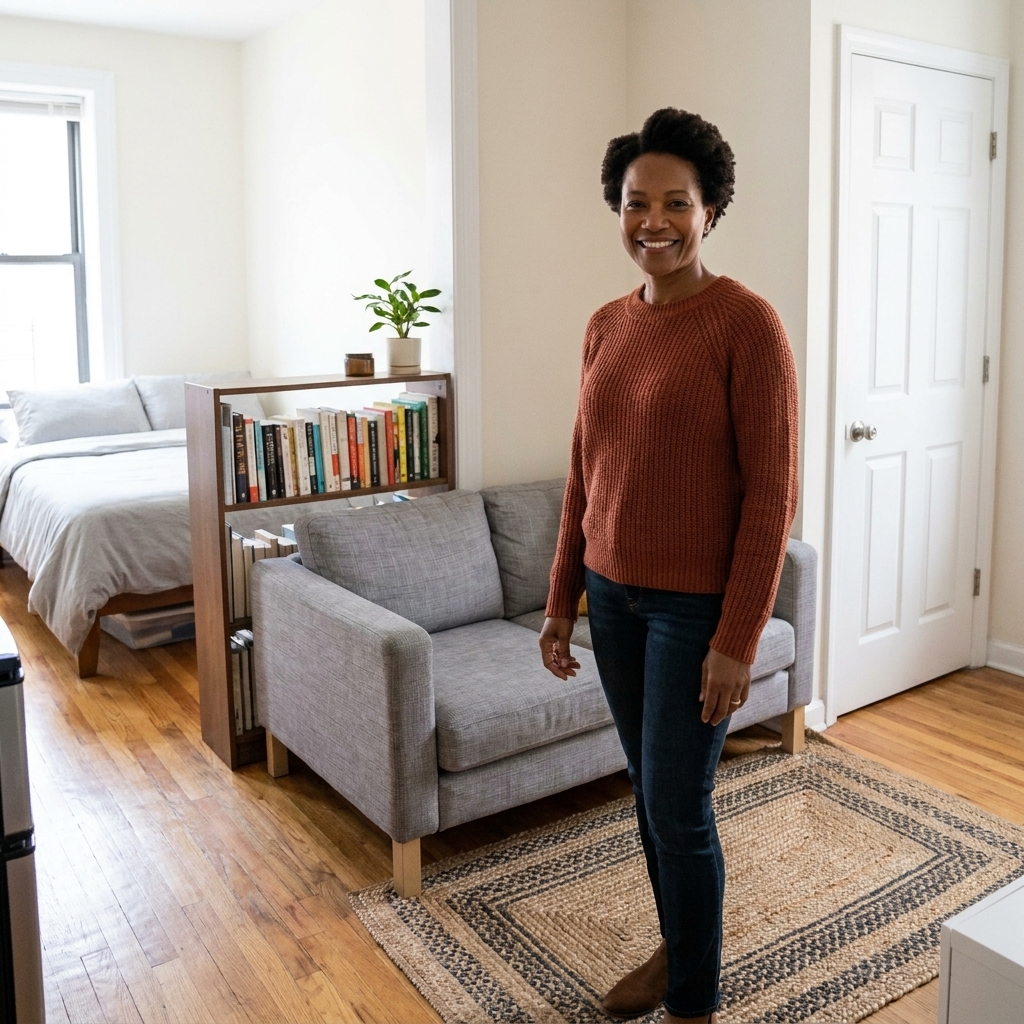
- Use a soft boundary: a curtain on a ceiling track, a tall open bookshelf, or a folding screen can visually separate sleep from work without making the room feel chopped up.
- Keep under-bed storage calm: bins with lids, matching containers, and nothing that spills out. Feng Shui-wise, many practitioners believe what you store under you can affect how rested you feel.
Desk placement
Working from a tiny apartment can feel like living at the office. Feng Shui can help you set your desk up so your brain can actually concentrate, then clock out.
Best desk setup
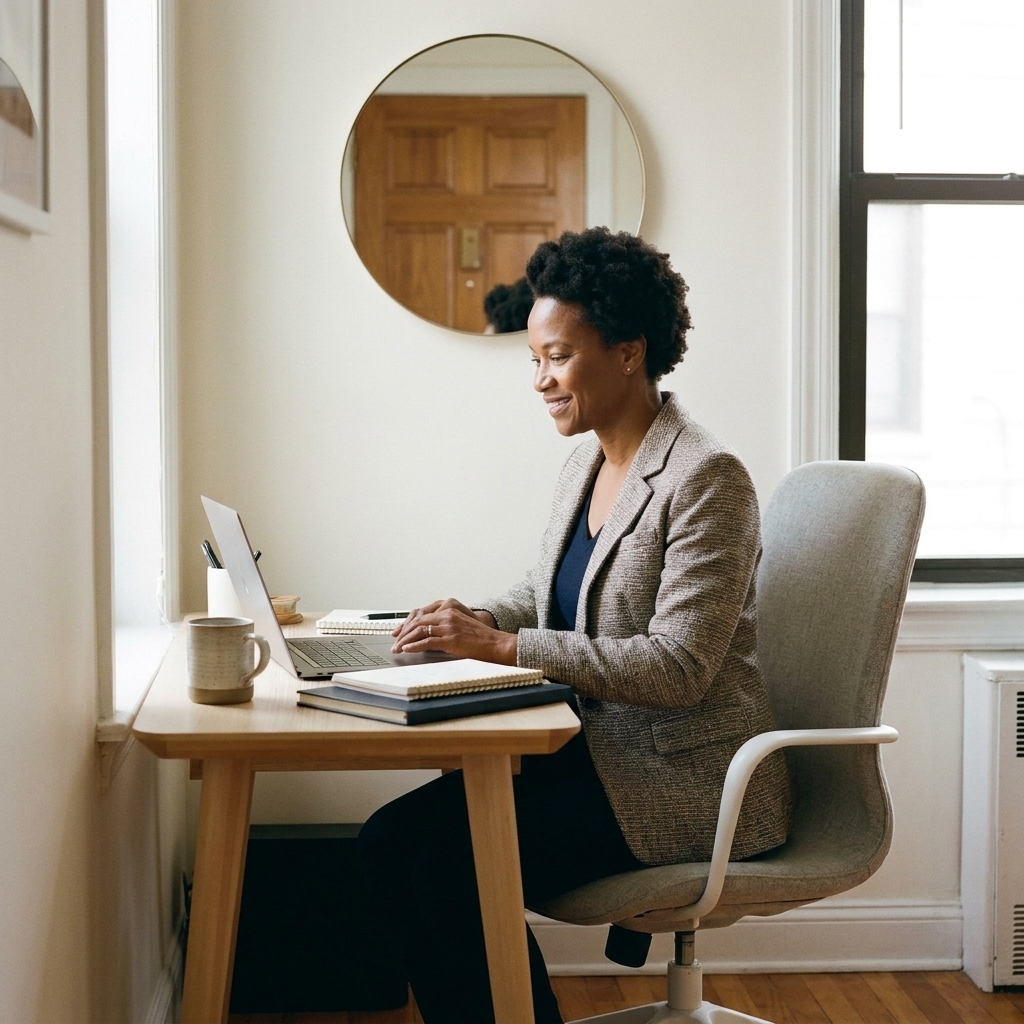
- Ideal: desk faces the room with a view of the door, with a wall behind you.
- Small-space compromise: desk perpendicular to the door so you can still glance up and see who's coming in.
- Last resort: if your desk has to face a wall, add a mirror positioned so you can see the door's reflection. It's a classic workaround when layout options are limited.
Create support
A desk with your back to an open room can feel subtly stressful, especially if you have roommates or a partner walking around behind you. If you can't move the desk, create “support” like this:
- Place a tall plant or a bookcase slightly behind and to the side of your chair.
- Use a high-back chair to get that grounded feeling.
- Avoid sitting with your back directly to the entry, if at all possible.
Quick work-zone reset
- Manage cords. Visual chaos tends to feel like mental chaos.
- Keep the surface mostly clear: think laptop, lamp, and one anchor item like a tray.
- Use lighting intentionally: a warm desk lamp helps draw a boundary between work mode and the rest of your space.
Sofa placement
Your sofa is where you decompress, host a friend, and probably eat at least one meal a week. In Feng Shui terms, it's a social anchor, so it needs good sightlines and a sense of support.
Sofa rules
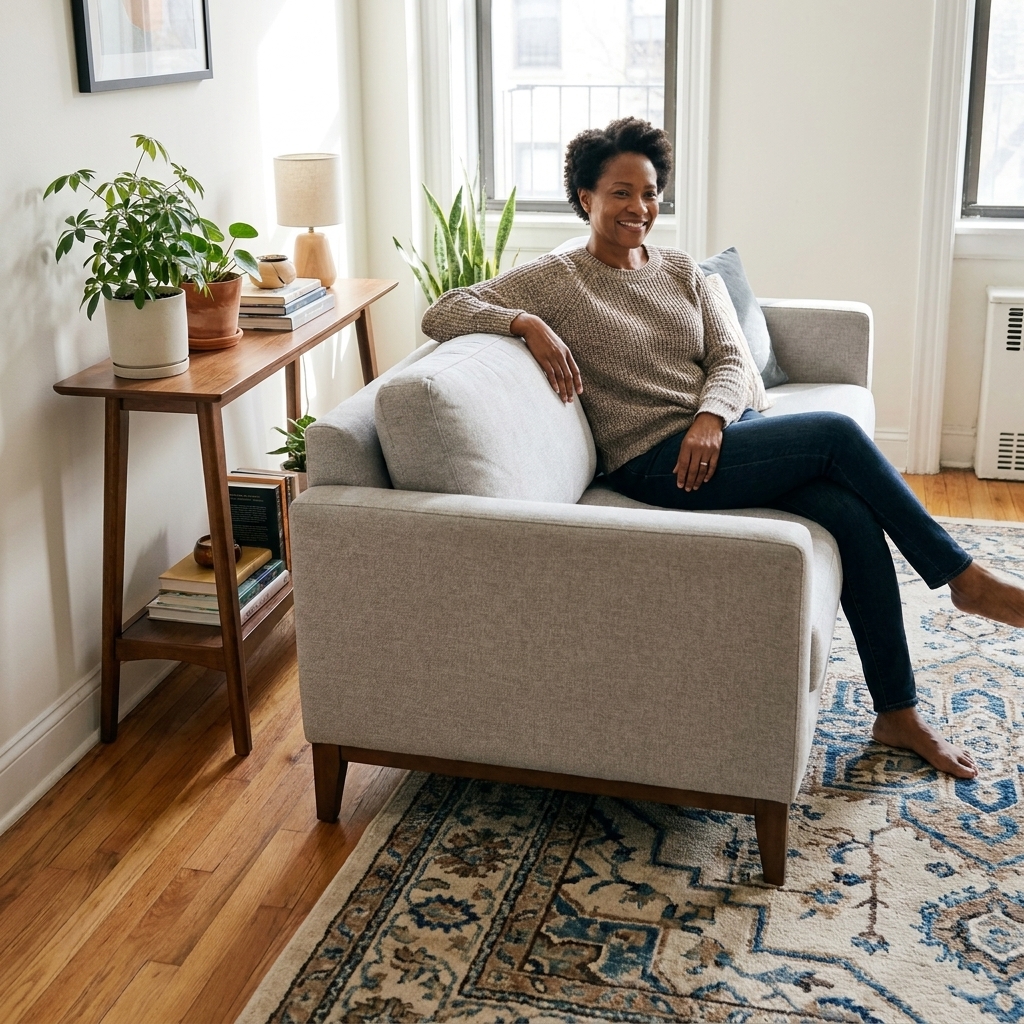
- Back to a wall is best. A sofa floating in the center can make the room feel like a maze unless the space is truly wide.
- Keep sightlines comfortable. You don't have to face the entry dead-on, but you shouldn't feel surprised every time someone walks in.
- Avoid blocking windows. Natural light is typically read as more yang, and it can make a small space feel alive and open.
- Keep a clear lane from the door to the main area. If you have to squeeze sideways past the sofa, the layout is fighting you.
When sofa and bed share a room
This is the studio classic. The goal is to prevent the bed from feeling like it's in the middle of the living room, and prevent the living room from feeling like it's in the bedroom.
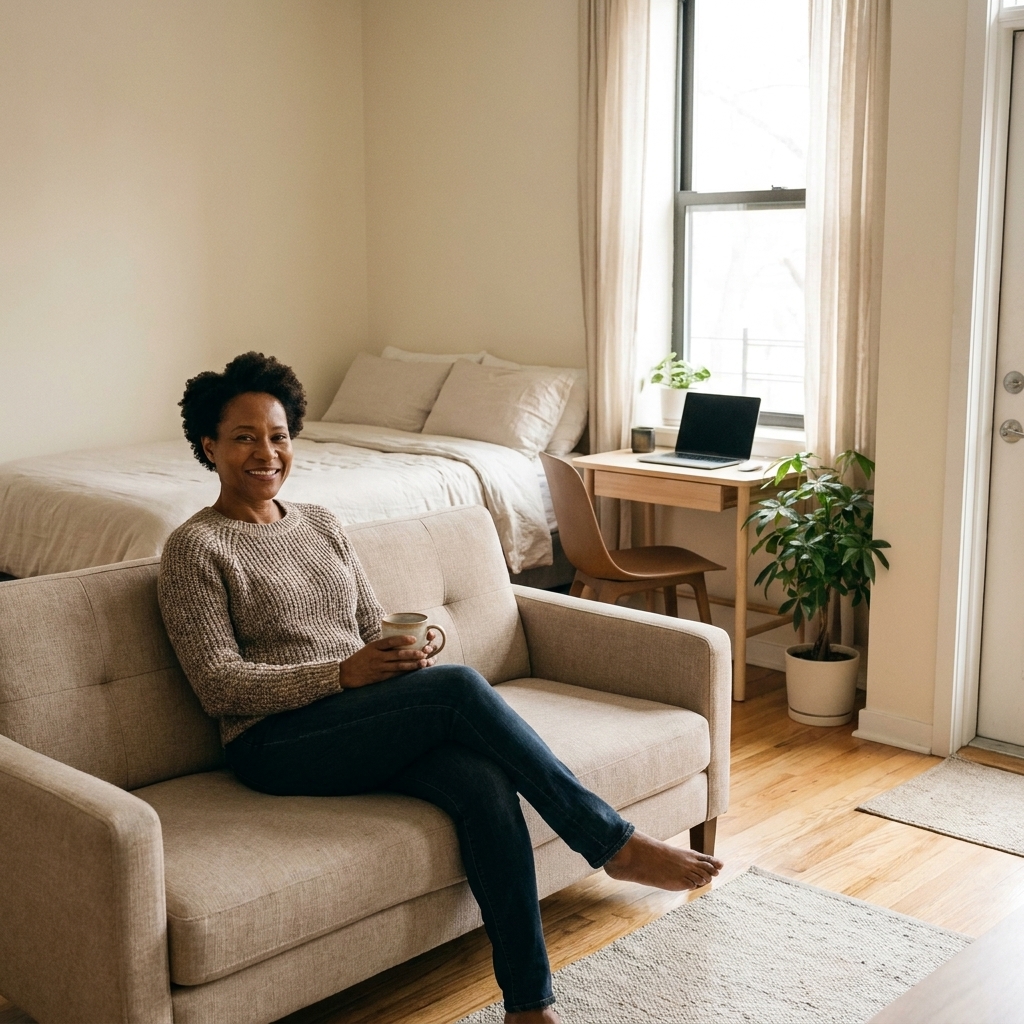
- Use the sofa as a soft divider: placing the sofa with its back toward the bed can create two zones, but only if you still keep a comfortable walkway.
- Anchor each zone: a rug under the sofa area, and bedding that looks intentionally finished so the bed doesn't read as a crash pad.
- Soften sharp corners: if the sofa arm or a shelf corner points right at your sleep zone, soften it with a throw, a plant, or a rounded side table.
Entryway energy
In Feng Shui, the entry is where energy enters your home. In small apartments, it's also where shoes, bags, and packages go to multiply overnight.
Easy entry fixes
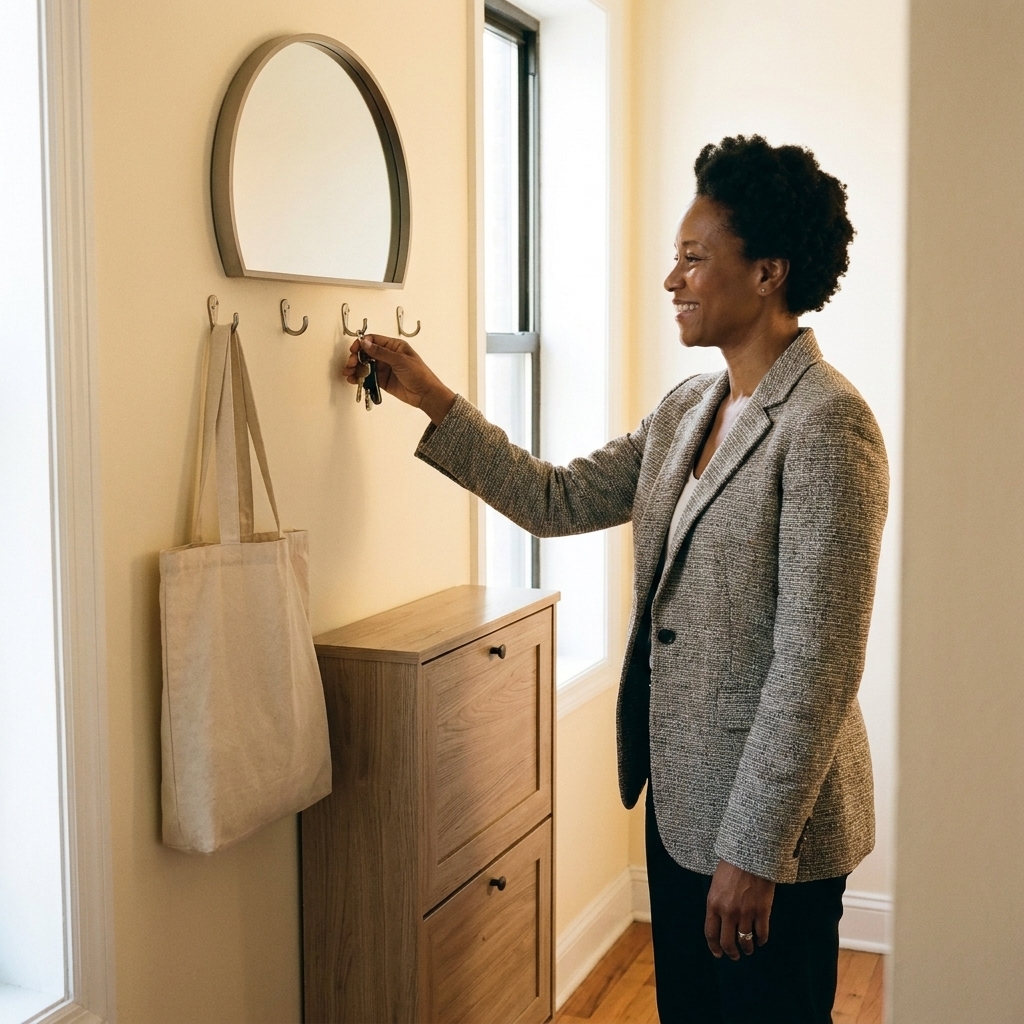
- Give clutter a job: a tray for keys, a hook for a bag, a closed bin for shoes.
- Light it: if your entry is dark, add a plug-in sconce or a small lamp. Bright entry, brighter mood.
- Add one welcoming element: a small plant, a runner, or a piece of art. One intentional choice beats five random ones.
Mirrors, without the drama
Mirrors are popular in Feng Shui, but they're also misunderstood. In a small apartment, mirrors are amazing for bouncing light and visually expanding space.
- If your mirror reflects something pleasant (a plant, light, art), it's doing its job.
- If it reflects a pile of shoes or a messy kitchen counter, it's doubling the chaos.
- Mirror facing the front door: some practitioners avoid a mirror directly facing the front door because it can feel like energy is being bounced back out. If that's your only spot, angle it slightly or place it where it reflects the room instead of the doorway.
Kitchen and bathroom basics
Stove placement in real life
If you can, avoid cooking with your back to the room or the door. If your layout forces it, a reflective backsplash or a small mirror tile can help you see what's happening behind you without turning your whole kitchen into a funhouse.
Bathroom in a tiny layout
When the bathroom is basically next to your bed, small habits go a long way. Keep it feeling contained and clean: close the door when you can, put the toilet lid down, and make sure the space is well-lit and well-ventilated.
Five-minute check
If you want a quick gut-check, walk through your place with this list. I do it every time I feel inexplicably restless at home.
- Can you enter without hitting something? If not, slim the entry zone or move a piece 2 to 6 inches. Tiny shifts count.
- Do your key spots have decent sightlines? Bed, desk, and sofa should feel oriented to the room, not like you're posted up in a corner. If you can't see the door, try a mirror, rotate the desk, or add stronger lighting for a sense of support.
- Is there one clear main path? If you have multiple narrow paths, simplify. One good path beats three awkward ones.
- Do you have at least one calm surface? Nightstand, desk corner, or coffee table. Your nervous system needs a visual exhale.
- Are your zones readable? Sleep looks like sleep, work looks like work, lounge looks like lounge. Rugs, lighting, and furniture orientation do the heavy lifting here.
Common problems
Bed in line with the door
- Add a bench or storage ottoman at the foot of the bed.
- Use a taller duvet fold and layered pillows to create a visual stop.
- If you have space, shift the bed a few inches off perfect alignment.
Desk near the bed
- Pack work away: a lidded box, rolling cart, or cabinet you can close at night.
- Change the light temperature: bright cool bulb for work, warm bulb for evening.
- Use a curtain or screen so your bed doesn't “see” the desk.
Sofa blocks the flow
- Swap to a slimmer depth sofa or armless loveseat if replacing is an option.
- Try a round coffee table or small nesting tables to soften the pathway.
- Pull the sofa one to two inches off the wall and re-center. Sometimes that tiny change is enough to make circulation feel less jammed.
Still feels chaotic
- Reduce visual noise: fewer exposed toiletries, fewer open shelves, fewer tiny decor items.
- Create repetition: matching hangers, matching storage bins, one metal finish.
- Add one grounding element: a larger rug, a larger piece of art, or a bigger plant.
Mini FAQ
Do I need a bagua map?
You can, but you don't have to. For most tiny apartments, the biggest improvements come from commanding positions, clear pathways, and reducing clutter in hot spots like the entry and bedside.
What if my layout is weird?
Welcome to the club. Aim for the best available commanding position, then use small-space fixes that create support: headboards, mirrors for sightlines, lighting, and intentional zoning. Perfect Feng Shui is rare in rentals, but better Feng Shui is very achievable.
Is it bad to have a bed under a window?
It's not ideal in classical terms, but it's common in city apartments. If it's your only option, use substantial curtains or shades and choose a headboard that feels protective and solid. The goal is to reduce that exposed feeling.
Final reminder
Feng Shui in a small apartment isn't about rigid rules. It's about noticing what makes you tense, what makes you relax, and then nudging the layout so your home works with your life. Start with one move, even if it's just rotating your desk or reclaiming the entryway. Your space will feel it immediately, and so will you.