Learn the high and wide curtain trick: where to mount the rod, how long your panels should be, and which fabrics boost natural light and perceived ceiling he...
Space Ovo
Styling the Vertical Void: 11 Ways to Decorate Above Eye Level
Make a small room feel taller and calmer with smart above-eye-level styling. Try high shelves, tall plants, vertical art stacks, and lighting tricks that work for renters.

Maya Brooks
Maya Brooks is an interior stylist and layout enthusiast who believes square footage should never dictate your home's style. After a decade of navigating cramped city studios, she shares practical, renter-friendly decorating and storage solutions to help others maximize their tiny spaces.
Created October 17, 2026
Updated October 17, 2026
In tiny apartments, there is a weird, neglected zone that can either make your home feel boxed in or beautifully breathable: the vertical void. That space above eye level is design gold. It is where you can create height, drama, and that “oh wow, this place is bigger than I thought” feeling without adding a single square foot.
I learned this the hard way in a 350-square-foot studio where my bed, sofa, and dining table were basically the same piece of furniture depending on the time of day. When the floor is doing the most, the walls need a job too.
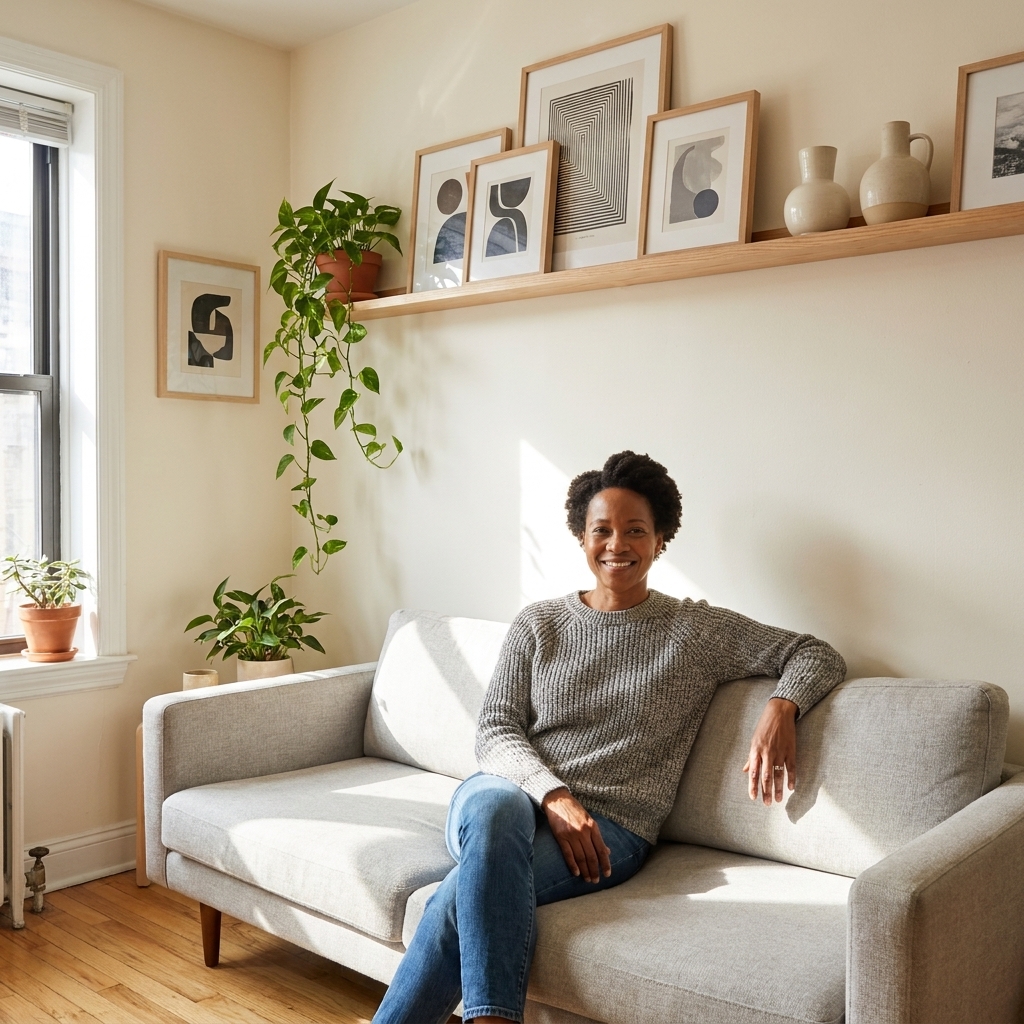
Before we start: always measure (yes, I am that friend). Most people hang everything too low. Your goal is to raise the sightline while keeping the room feeling balanced, not top-heavy.
Quick rules for going higher
- Keep the upper zone lighter. Use fewer, larger pieces up high instead of lots of tiny clutter.
- Repeat shapes and colors. Repetition reads as intentional and calming, especially when items are elevated.
- Anchor the middle. A lamp, mirror, or plant at eye level keeps the room from feeling like everything is floating near the ceiling.
- Weight goes low. Save darker colors and heavier-looking objects for lower zones. Keep higher areas airier and calmer.
- Mind the bonk zone. Anything near a bed or sofa should be secure and not positioned where a sleepy head can meet a hard corner.
11 ways to decorate up high
1) Add a picture ledge near the ceiling
A slim picture ledge is my favorite renter-friendly way to use height because it is flexible. You can rotate frames, add a trailing plant, and tweak the spacing whenever you get the itch to refresh.
- Where it shines: Above a sofa, above a bed headboard, or on the long wall in a narrow living room.
- Styling tip: Use 3 to 5 larger frames (not 17 small ones) and overlap slightly for depth.
- Rental note: If you cannot drill, use a lightweight ledge with damage-minimizing hardware where allowed, or go with very light frames on removable strips below the ledge line to create the same “high gallery” effect.
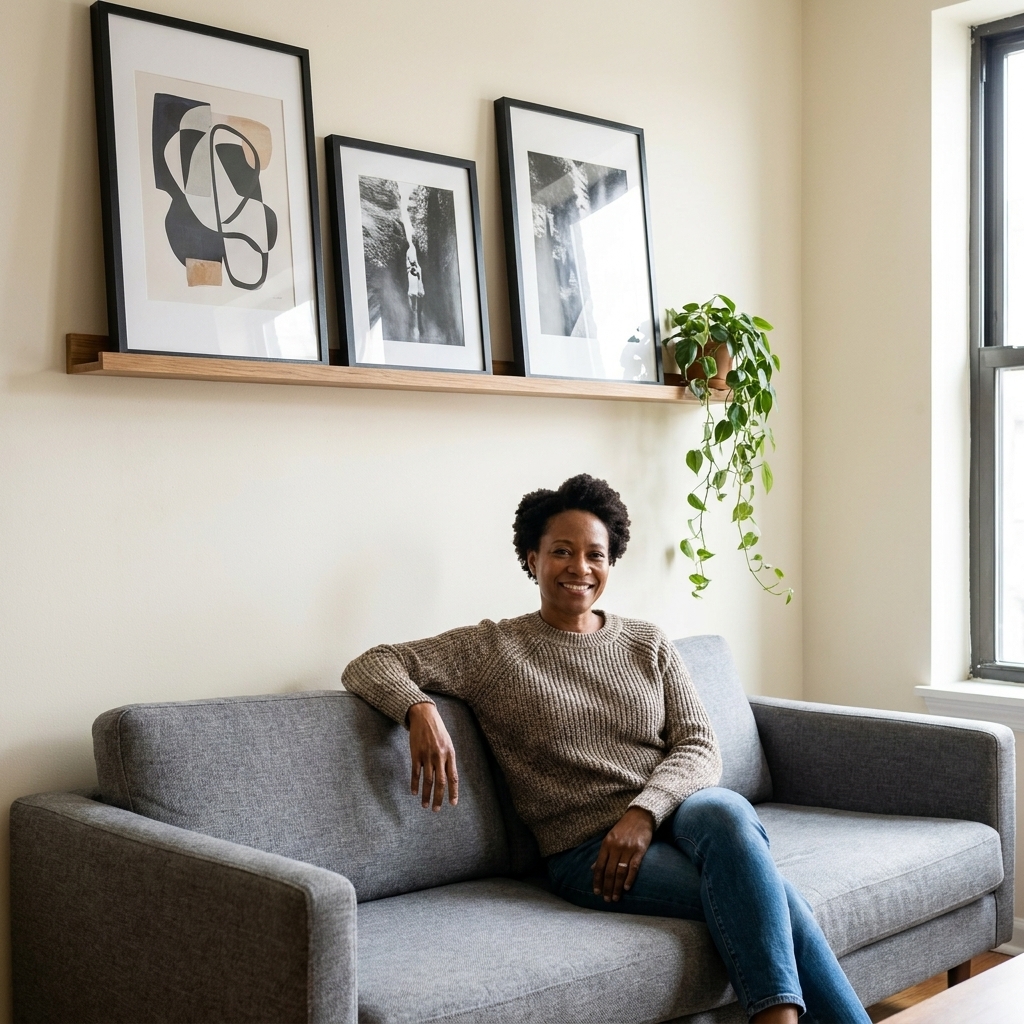
2) Stack art in a vertical column
If you have one narrow wall, treat it like a ladder. Stack 2 to 4 frames in a single column so the arrangement reads tall and architectural.
- Best for: Entryway slivers, between windows, or that awkward strip beside a closet.
- Proportion trick: Keep consistent spacing (around 2 to 3 inches) so it feels crisp, not scattered.
- My go-to move: Start the lowest frame at eye level, then climb up.
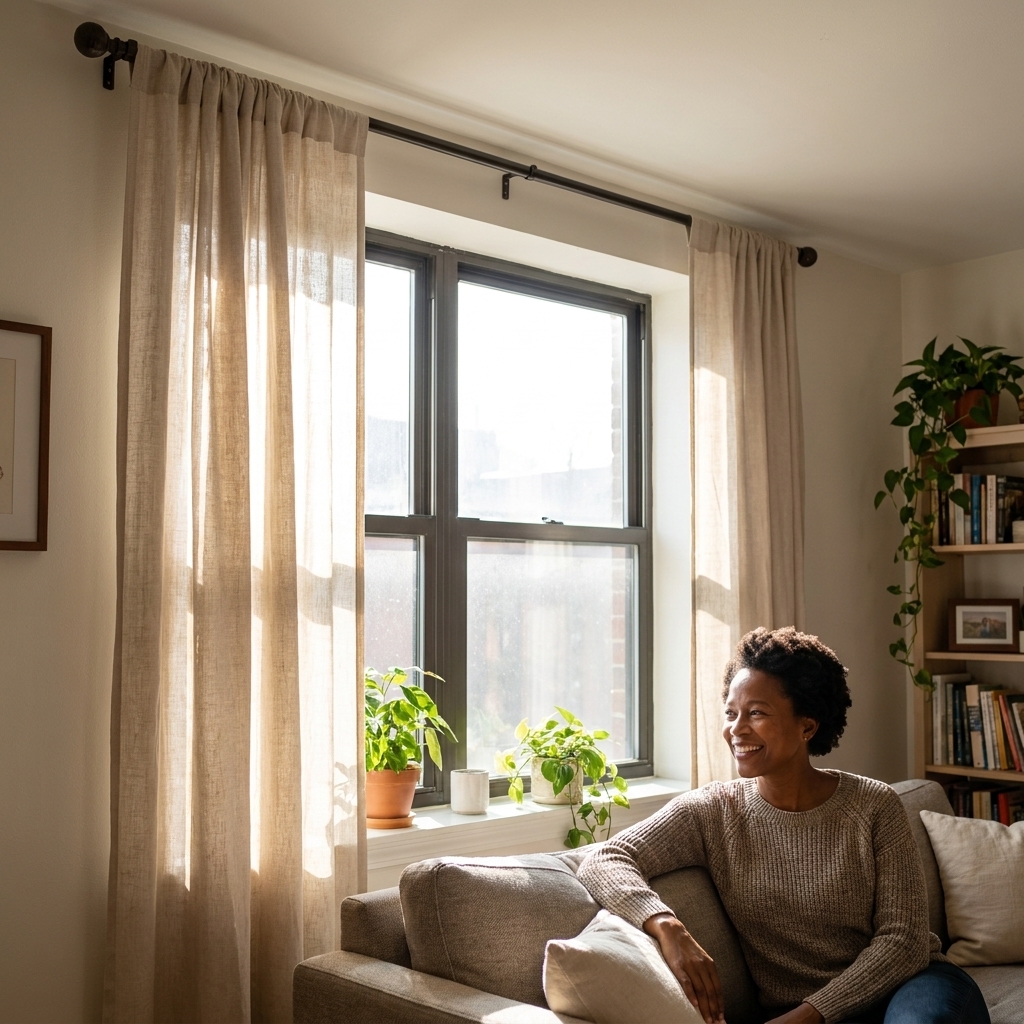
3) Hang curtains close to the ceiling
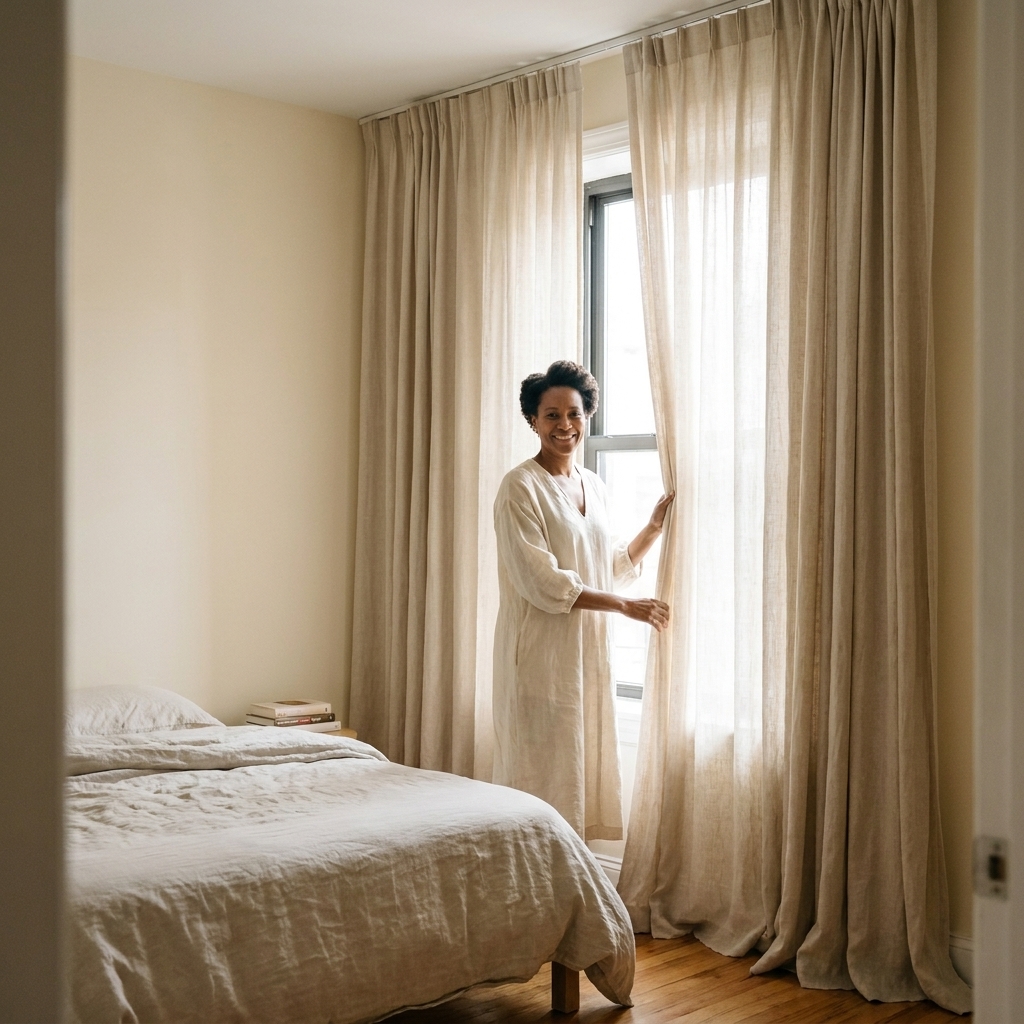
This is the fastest way to fake height. Mount your curtain rod typically 4 to 8 inches below the ceiling (or right under crown molding), depending on your trim and window height, and let panels fall to the floor. Your window instantly looks taller, and your room feels more vertical.
- Choose: Curtain panels that kiss the floor, not puddle in tight walkways.
- Keep it calm: In small rooms, solids or subtle textures read larger than busy patterns.
- Low-ceiling note: If your ceilings are on the lower side, go as high as you can without crowding your trim. Even a few inches makes a difference.
4) Use one tall plant to pierce the space
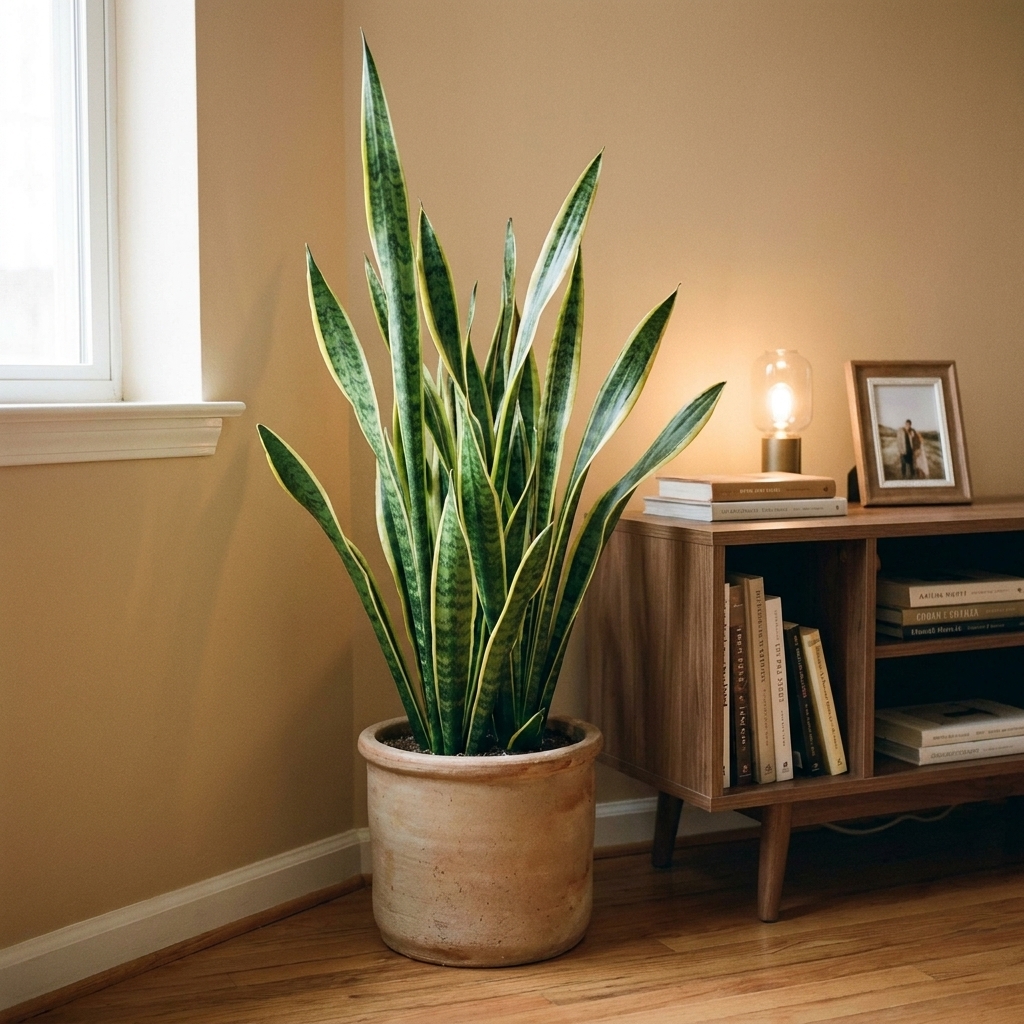
Plants are basically living height-makers. A tall, upright plant draws the eye upward without feeling like decor clutter.
- Great tall options: Snake plant, dracaena, rubber tree, or a slim fiddle leaf fig if you have brighter light and choose a size you can realistically maintain.
- Small-space placement: Corners, next to a media console, or beside a desk.
- Pot tip: Choose a pot that visually matches your room so the plant feels integrated, not like it is camping out.
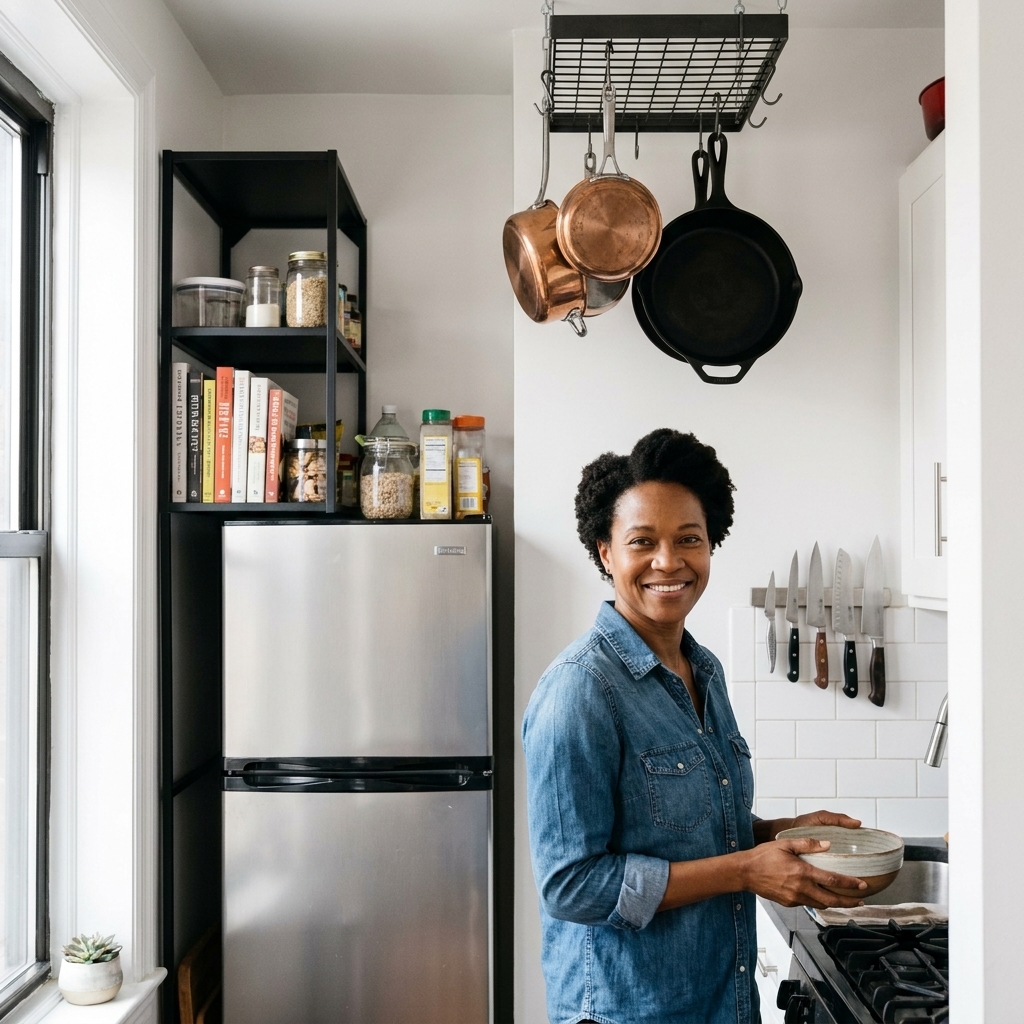
5) Install a high shelf as a quiet ledge
Think of a long shelf installed high enough that it does not compete with everyday furniture. It becomes a calm horizon line for books, baskets, and a couple of sculptural pieces.
- Best rooms: Kitchens, living rooms, and home office nooks.
- Placement shortcut: Start around 12 to 18 inches below the ceiling, then adjust based on trim, door heights, and what is already on that wall.
- Keep it airy: Leave negative space. Every inch does not need an object.
- Safety note: Use proper anchors for your wall type and follow the shelf’s weight rating. High shelves are not the place for “good luck and vibes” installation.
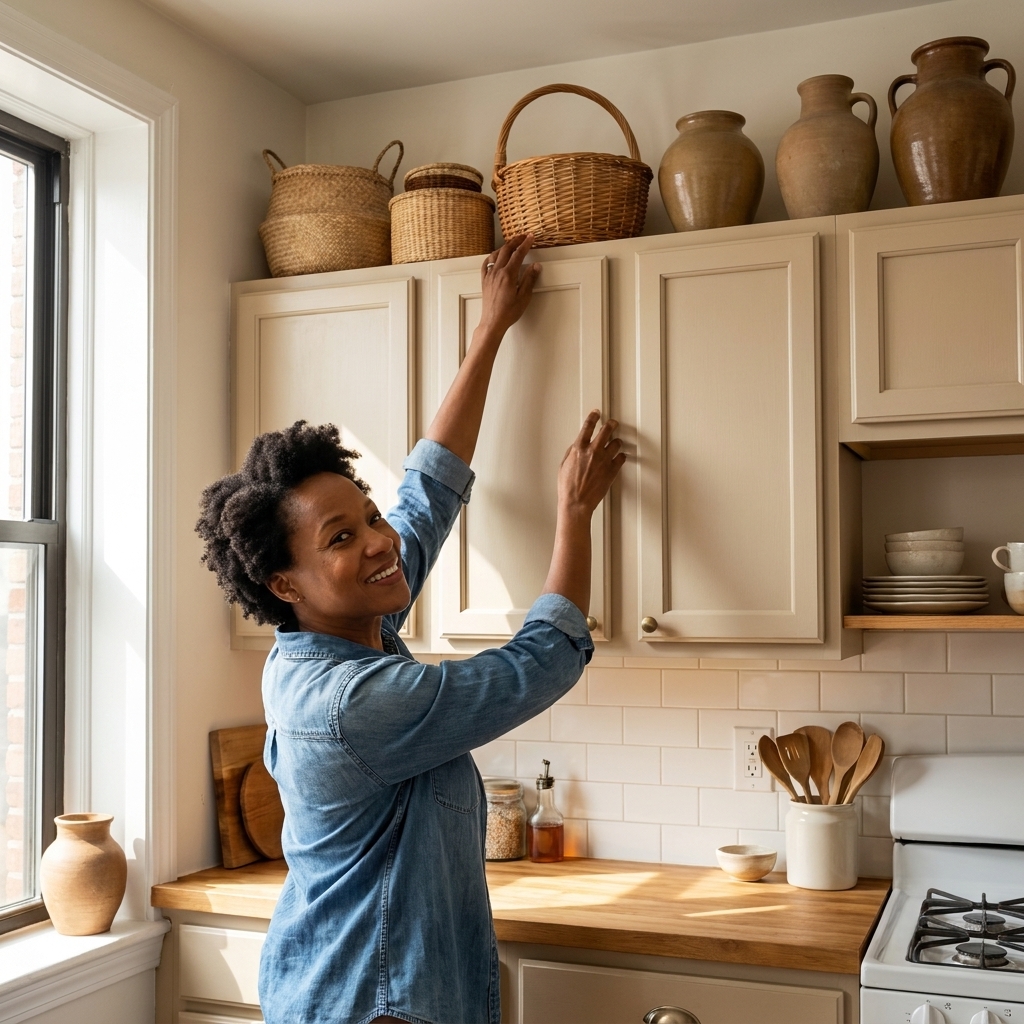
6) Style cabinet and wardrobe tops on purpose
That dusty strip above the kitchen cabinets? It is either visual noise or a design moment. The goal is to make it look intentional, not like storage overflow.
- Choose a set: Matching baskets, a few lidded boxes, or 2 to 3 oversized vases.
- Avoid: Random appliance boxes and mismatched clutter. If it is up there, it is part of the room visually.
- Dust strategy: Use closed containers up high so you are not washing everything constantly.
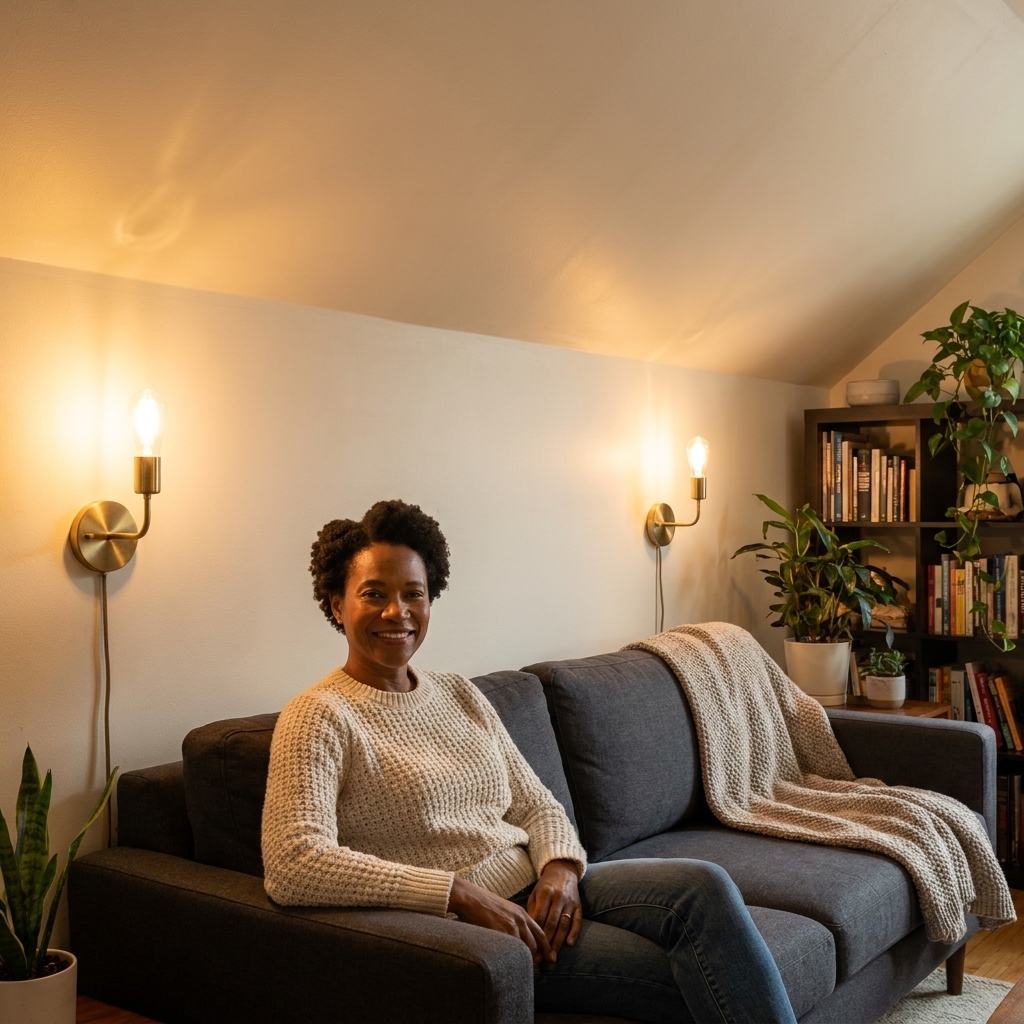
7) Go vertical with lighting
Lighting that throws glow upward makes ceilings feel taller. In rentals, plug-in sconces are a gift, especially flanking a bed or sofa.
- Look for: Plug-in wall sconces with cord covers for a clean line.
- Placement: About 6 to 12 inches above seated eye level, so the light feels intentional and not like it is spotlighting your forehead.
- Bonus: You free up nightstand space by moving light onto the wall.
8) Hang one oversized piece a touch higher
Small rooms often get peppered with small art, which can read busy. One larger piece, placed a little higher than your instincts, can make the wall feel more expansive.
- Easy guideline: For art above furniture, aim for 6 to 10 inches above the top of the piece. If you have higher ceilings, you can nudge it up slightly, then step back and check that it still feels connected.
- Size check: Over a sofa or bed, aim for art that spans roughly two-thirds the width of what is under it, so it looks intentional, not lonely.
- Keep it cohesive: Echo one color from the art elsewhere in the room (a pillow, a throw, a vase) so it feels tied in.
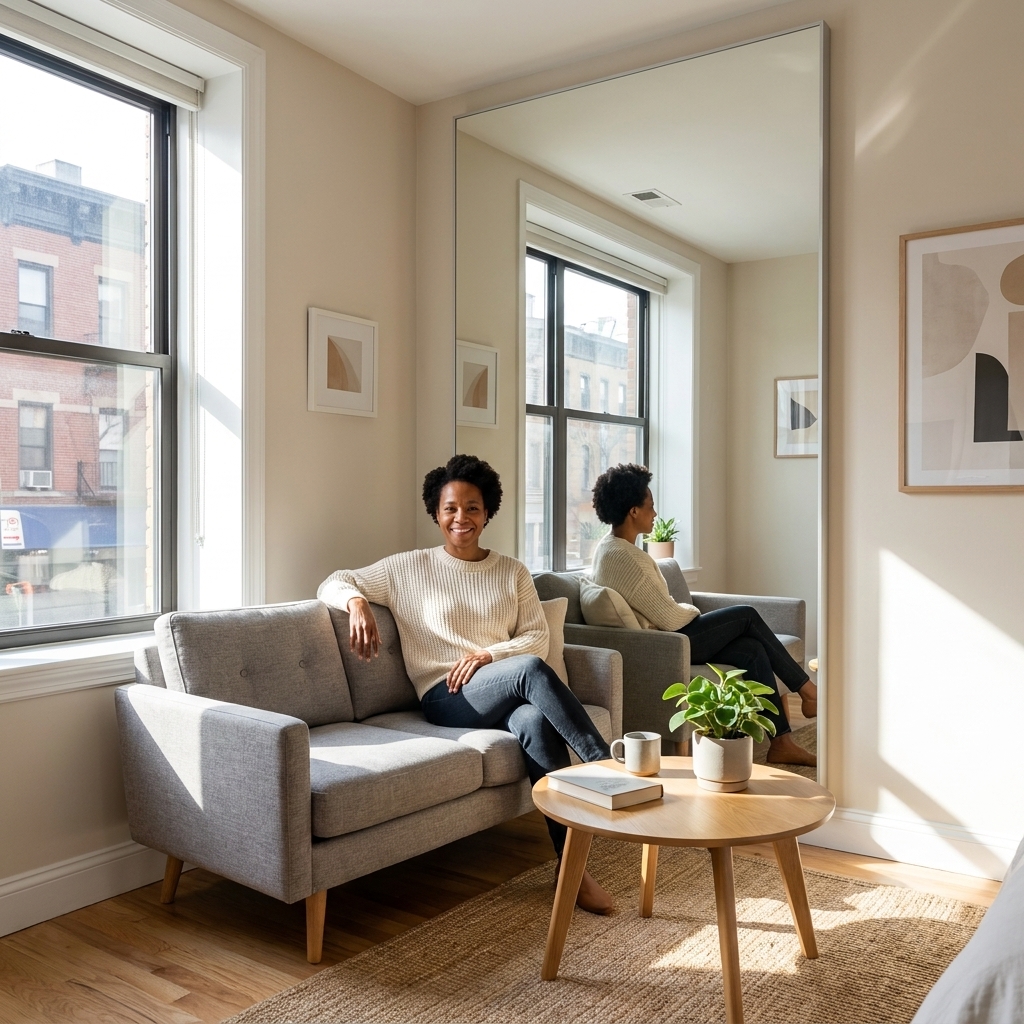
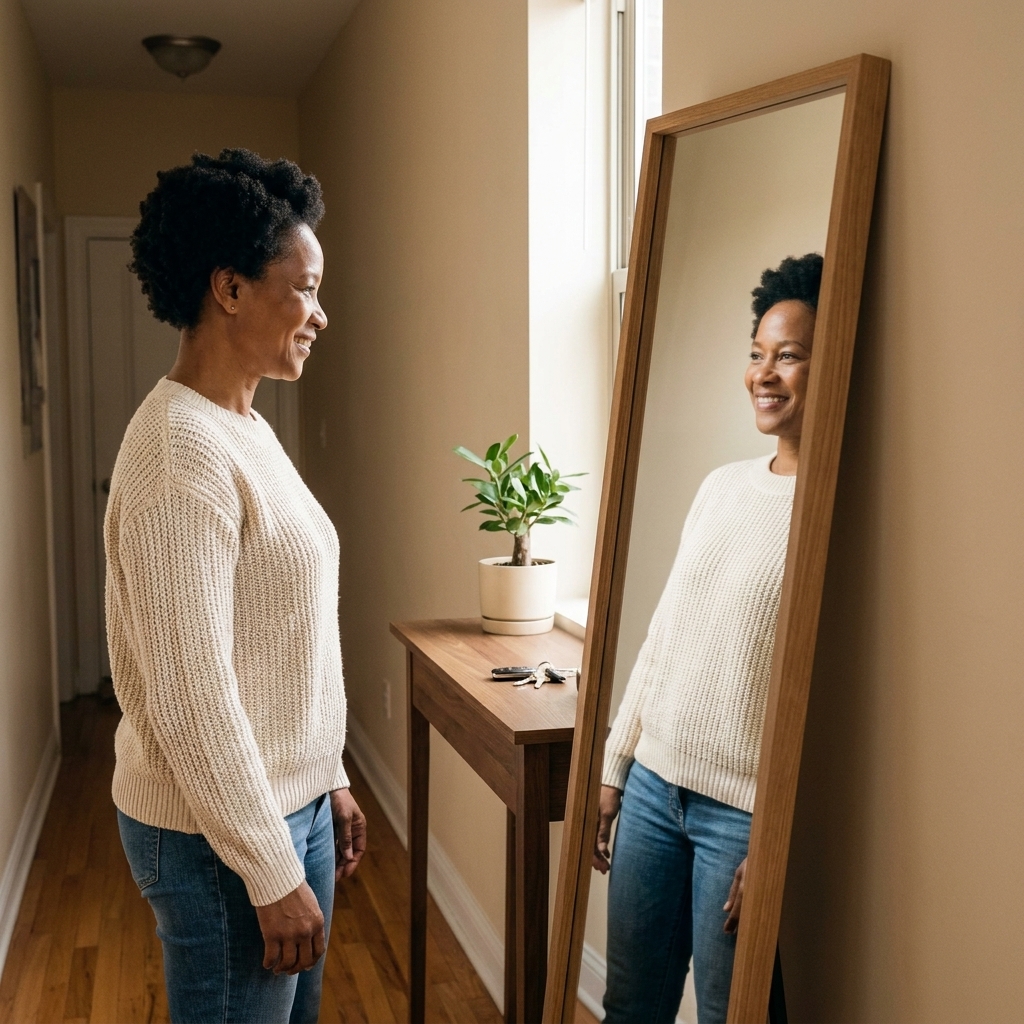
9) Use a tall mirror for instant lift
Mirrors bounce light, but a tall mirror also creates a strong vertical line that makes the room feel lifted.
- Where to place: Near a window, in an entryway, or leaning behind a slim console.
- Renter trick: Lean a full-length mirror instead of mounting. You still get the height, no holes required.
- Clearance note: Keep leaning mirrors out of tight walkways, and make sure the bottom edge sits flat and stable so it cannot slide.
10) Add color in the top third
This is a designer-y trick that is surprisingly doable: paint or wallpaper only the top portion of the wall. It pulls your eye up and can make ceilings feel taller when done thoughtfully.
- Try: A soft tint in the top third, a subtle stripe, or a tone-on-tone wallpaper above a picture-rail look.
- Keep it light: In very tight rooms, lighter colors up top prevent the ceiling from feeling lower.
- Rental approach: Removable wallpaper can work, but removal varies by paint finish and wall condition. Test a discreet spot first and follow the manufacturer removal directions slowly.
11) Stack storage up, then finish the top
Yes, this one is part storage, part styling. In micro spaces, you often need tall shelving units. The trick is to style the top 12 inches like decor, not like a supply closet.
- Use: A pair of matching baskets, one sculptural object, and one trailing plant.
- Leave breathing room: The top shelf should not be jammed edge-to-edge. Negative space reads like luxury.
- Stability first: Always anchor tall bookcases to the wall, especially in rentals where floors can be uneven. If you are drilling, use a stud finder or the right toggle anchors for your wall type.
Small-space combos
If you want a foolproof plan, here are three combinations I use constantly:
- Behind the sofa: High picture ledge + plug-in sconce nearby + one tall plant in the corner.
- Over the bed: Curtains hung high + two plug-in sconces + a simple vertical art stack on the closest narrow wall.
- In the kitchen: High shelf (or styled cabinet tops) + one oversized piece of art on the largest blank wall + warm under-cabinet lighting to keep it grounded.
Common mistakes and fixes
- Mistake: Everything climbs to the ceiling and nothing lives at eye level. Fix: Add one grounding element mid-wall, like a mirror, lamp, or medium art piece.
- Mistake: Tiny objects up high look like visual dust. Fix: Swap to fewer, larger silhouettes (big basket, big vase, big frame).
- Mistake: High shelves become clutter storage. Fix: Use matching bins with lids and leave a few inches of empty space on both ends.
- Mistake: Hanging art too high with no relationship to furniture. Fix: Keep it visually connected with a console, headboard, or plant below, and make sure the piece is wide enough for what it is hanging over.
- Mistake: Very tall ceilings make everything feel like it is floating. Fix: Work in layers: a mid-wall anchor (mirror or larger art) plus one higher element (ledge, shelf, or tall curtains), and scale up your pieces so they can hold their own.
FAQ
How high is above eye level?
A common art-hanging standard is to place the center of a piece around 57 to 60 inches from the floor. Above-eye-level decorating starts just above that, depending on your ceilings. For curtain rods and picture ledges, you are often working in the top 12 to 24 inches of wall space.
Will decorating high make my room feel smaller?
It can if you cram lots of small items near the ceiling. Aim for simple shapes, consistent colors, and some negative space. The goal is to increase perceived ceiling height, not create a clutter halo.
What is the most renter-friendly height trick?
Hanging curtains close to the ceiling and adding one tall plant are the two easiest, least-permanent height moves. Both are high impact, and both move with you to the next apartment.
Any safety basics for high decor?
Follow the weight limit for shelves and hardware, use anchors that match your wall type, and avoid putting heavy objects over beds or seating. If you live in an earthquake-prone area, use museum putty for light decor where appropriate and keep breakables lower.
One last measuring pep talk
If your small space feels flat, it probably is not missing more stuff. It is missing height. Pick one idea from this list and commit. Go a little higher than feels normal, step back, and let your eyes adjust. Your ceiling has been waiting for you to notice it.