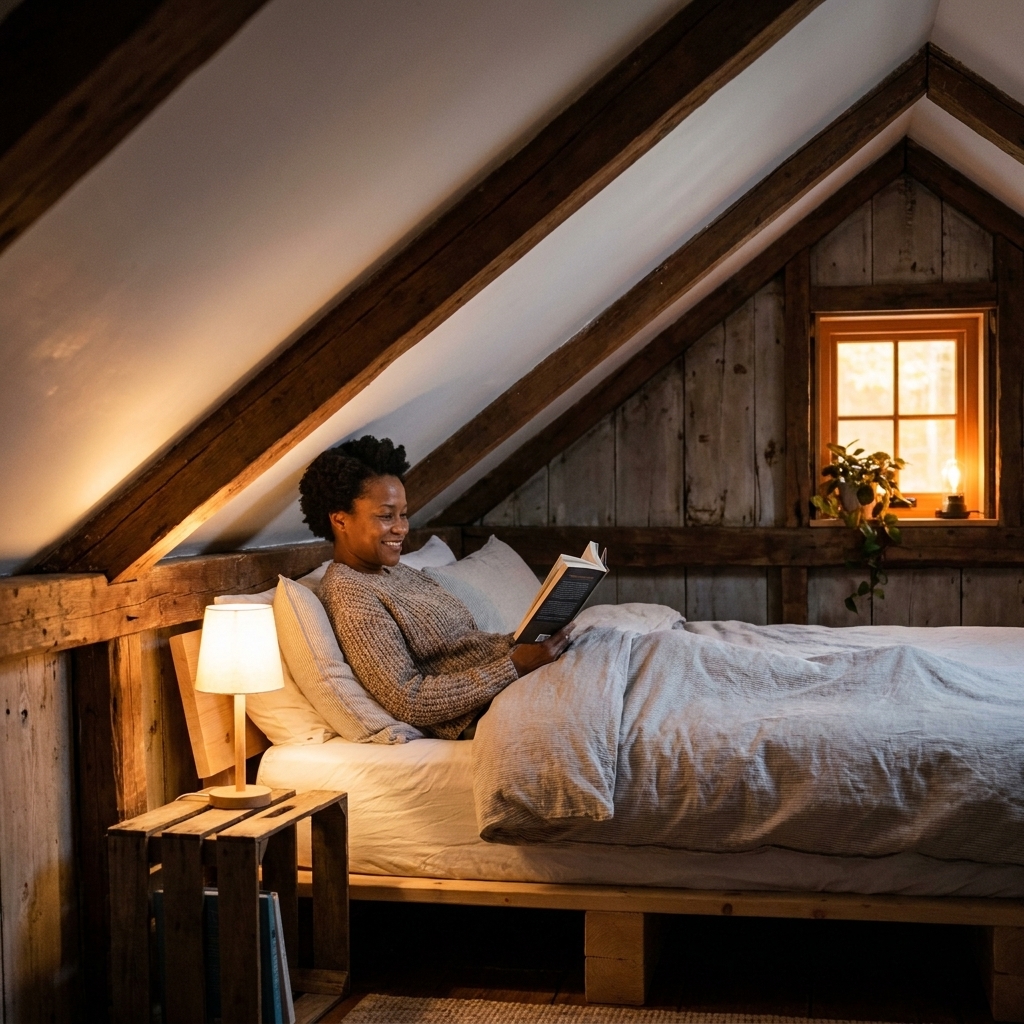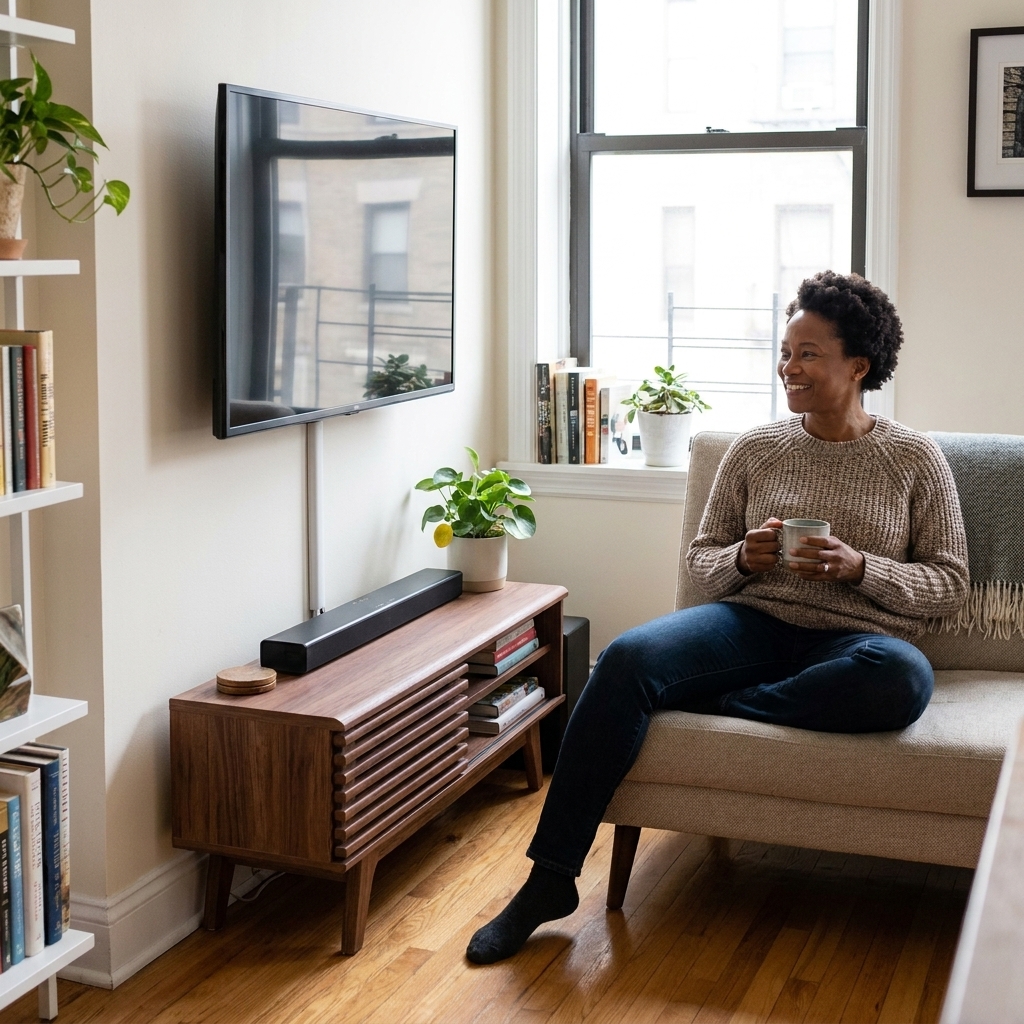
From cord covers to disguised router storage, these small-space cable management ideas cut visual clutter and make your living room feel instantly bigger.
Space Ovo
7 Lighting Tricks to Make Low Ceilings Feel Taller
Low ceiling? No problem. Use sconces, uplighting, layered light, and the right bulbs to pull the eye up and make your small apartment feel taller and airier.

Maya Brooks
Maya Brooks is an interior stylist and layout enthusiast who believes square footage should never dictate your home's style. After a decade of navigating cramped city studios, she shares practical, renter-friendly decorating and storage solutions to help others maximize their tiny spaces.
Created October 17, 2026
Updated October 17, 2026
If your ceiling feels like it is hovering a little too close to your head, you are not alone. I have lived in plenty of apartments where the overhead light made everything feel flatter, shorter, and somehow smaller. The good news is that you do not need recessed lighting, a renovation budget, or your landlord’s blessing to change the vibe. You just need a plan that directs light upward, reduces harsh shadows, and layers glow so your eyes move through the room instead of stopping at the ceiling line.
Here are seven strategic lighting tricks I use (and reuse) to make low ceilings feel taller in small rentals.
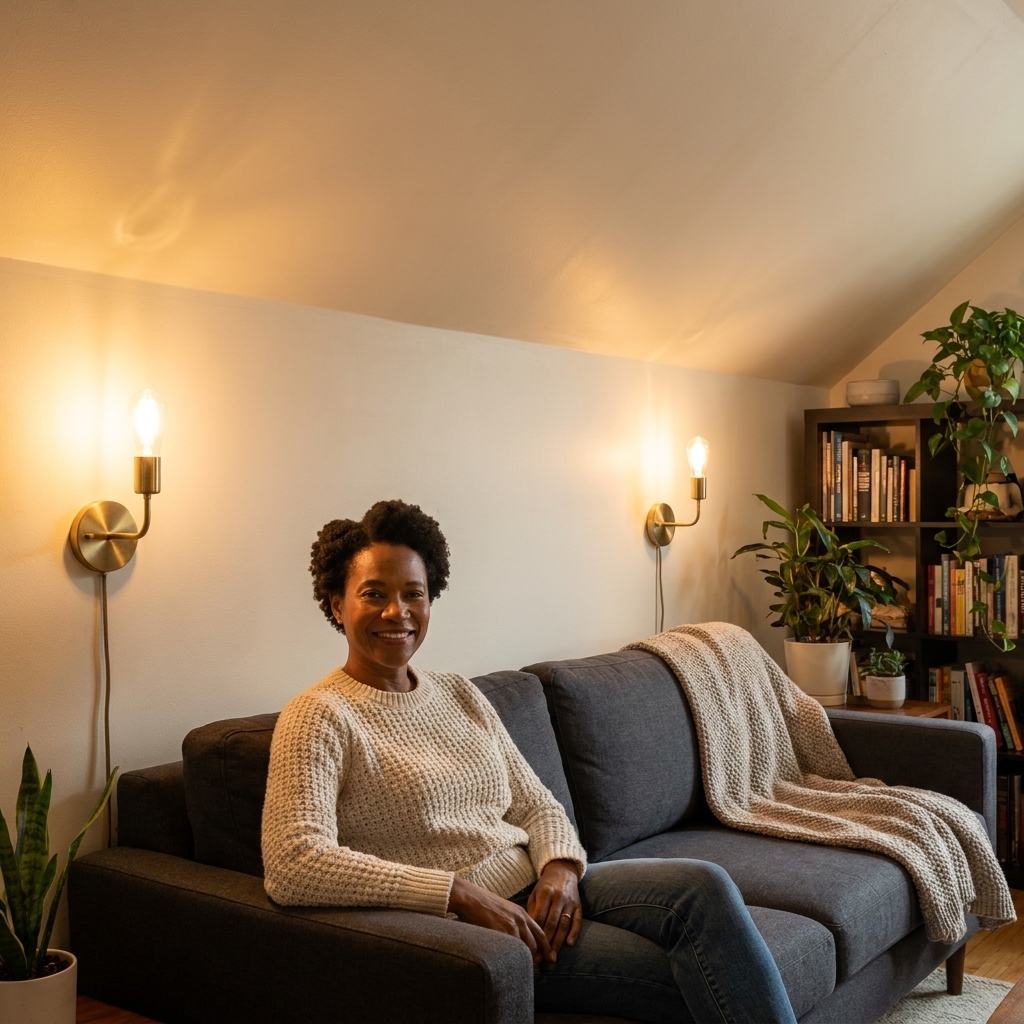
1) Swap the overhead glare for layered lighting
The classic low ceiling problem is a single ceiling fixture blasting light straight down. It creates a bright circle on the floor and leaves the upper walls oddly dim, which makes the ceiling feel like a lid.
Instead, aim for a simple three-layer mix:
- Ambient: a floor lamp or two, or a shaded table lamp that fills the room softly
- Task: a reading lamp by the sofa, a desk lamp, or an under-cabinet kitchen light
- Accent: wall sconces, picture lights, or a small uplight aimed at the wall
When the room is lit from multiple heights, your eye travels. That movement is what makes the space read taller and less cramped.
2) Use wall sconces to create vertical light columns
Wall sconces are my favorite low ceiling cheat because they put light on the wall instead of hanging into your headspace. When placed thoughtfully, they create tall, flattering bands of light that visually stretch the room upward.
How to do it (renter-friendly)
- Choose plug-in sconces or battery sconces if you cannot hardwire.
- Mount them higher than you think. As a rule of thumb, many sconces land well around 60 to 66 inches from the floor to the center, but in some rooms (especially with taller ceilings or higher headboards) 66 to 72 inches can look better. Use “eye level, then a bit higher” as your guide.
- Pick styles that throw light up (uplights, swing arms aimed upward, or shades that are open at the top).
Pro tip from someone who has patched many holes: use painter’s tape to mock placement first, then step back to see if the sconces pull your gaze up past eye level.
If you go the battery route, check the weight rating and use removable hanging strips that are meant for your wall surface. Some paints and wallpapers are more delicate than they look.
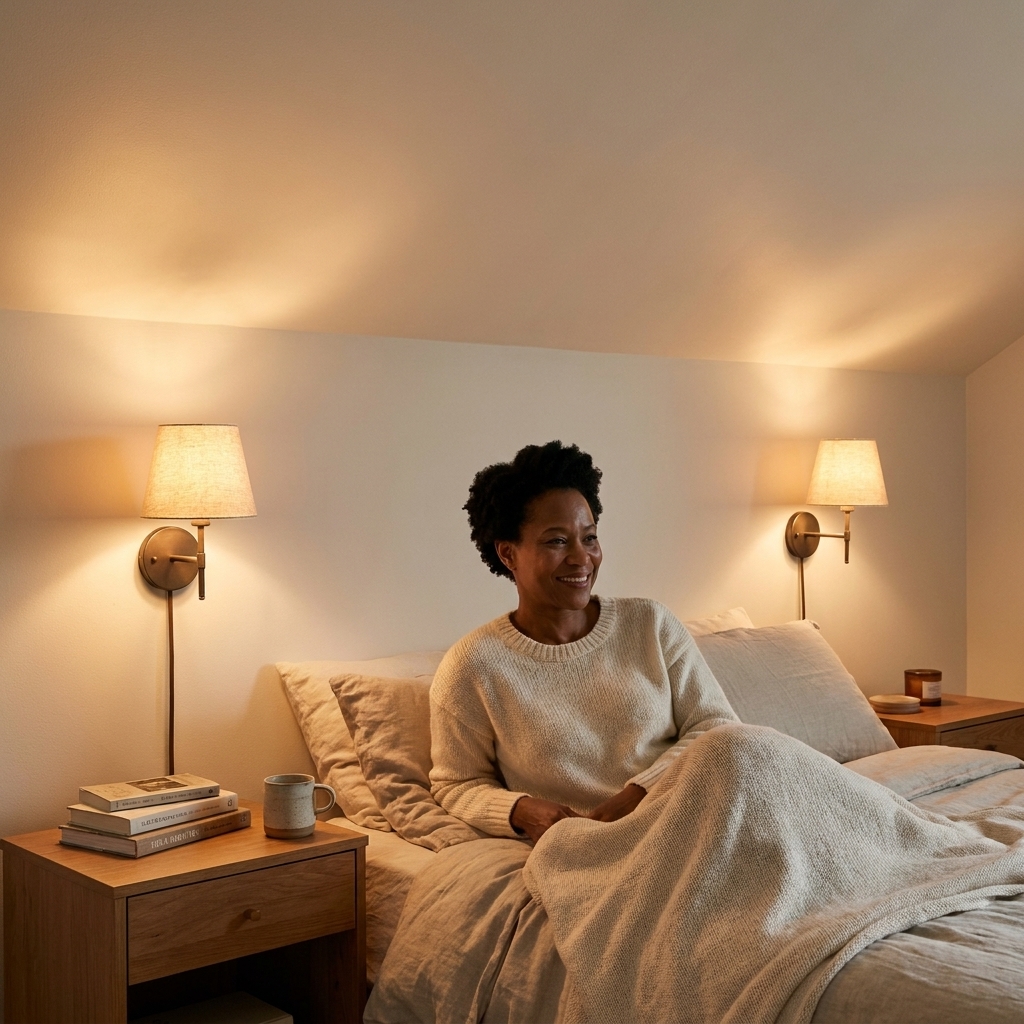
3) Add uplighting behind furniture
If you do one thing from this list, let it be uplighting. When you bounce light up a wall, the wall looks taller, the corners look deeper, and the ceiling line looks less emphasized.
Easy uplight ideas
- LED floor uplight tucked behind a plant, chair, or curtain panel, aimed toward the wall
- Hidden LED strip on top of a bookcase or kitchen cabinets, facing upward
- Small table lamp placed on a tall shelf, aimed toward the ceiling with a reflective shade
Keep the source subtle. The magic is in the glow, not in seeing the fixture.
Quick safety note from a longtime renter: LEDs stay much cooler than older halogen uplights. Whatever you use, give lights breathing room and do not aim a hot bulb directly at curtains or anything fabric-heavy.
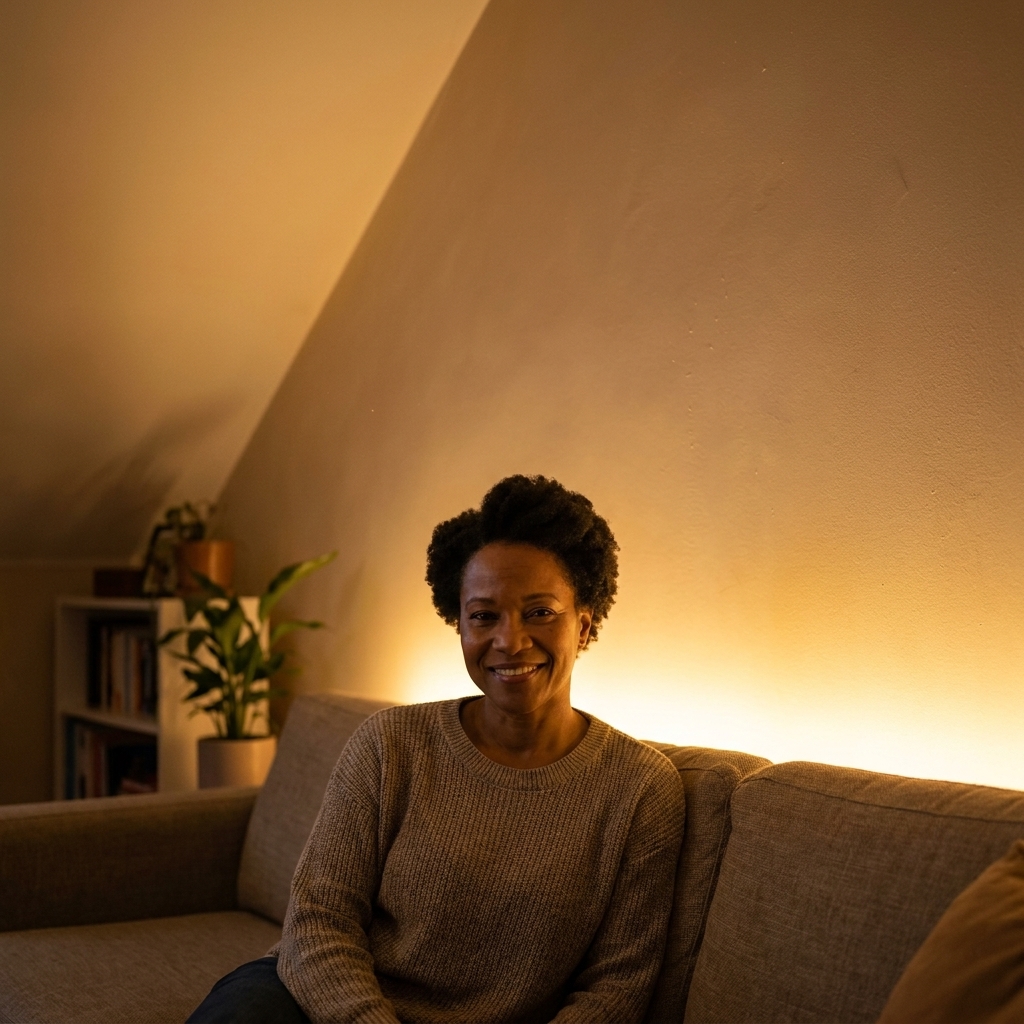
4) Put lighting near the ceiling line
Centered ceiling fixtures can make a low ceiling feel even lower because they spotlight the middle of the room and stop your eye at fixture height. Lighting that lives closer to the ceiling line changes that.
Try:
- Picture lights above art to pull attention upward
- LED strip lighting along the top edge of a wardrobe or bookcase
- Clip lights on the top shelf of open shelving aimed at the wall
The goal is a gentle, high glow that visually lifts the perimeter of the room.
5) Choose the right bulb temperature
Bulbs are not just about brightness. Color temperature affects how open and calm your space feels, especially when ceilings are low.
- Warm white (2700K to 3000K): cozy, flattering, great for living rooms and bedrooms
- Neutral white (3500K to 4000K): crisper and often helpful in kitchens and work areas (this is preference-based, so test before you commit)
- Avoid mixing temperatures within the same sightline. A cool overhead bulb plus warm lamps can make the ceiling feel dingy or the walls look mismatched.
If you want taller vibes, consistency is your friend. A unified glow reads like a more intentional, expansive space.
6) Use higher lumens in shaded lamps
In a small apartment, “brighter” can either feel airy or feel like an interrogation room. The difference is diffusion.
To brighten without flattening:
- Increase brightness using higher-lumen bulbs in lamps with shades.
- Choose opaque or linen shades that soften light and reduce hard shadows.
- Avoid naked bulbs at eye level. They create glare, which makes you squint, which makes the room feel tighter.
As a quick reference, many people like 800 to 1100 lumens for a typical primary lamp in a small living room or bedroom, then adjust based on your room size, wall color, and how many other lights you have. Always check the fixture’s max wattage (or LED equivalent) before you upgrade a bulb.
7) Put everything on dimmers
Dimmers are a small-space superpower because you can shift the room from functional to flattering in two seconds. And renters have options.
Renter-friendly dimmer solutions
- Plug-in dimmer switches for floor and table lamps
- Smart bulbs with app dimming (great if you do not want extra hardware)
- Dimmer plugs (not basic smart plugs) paired with dimmable bulbs. Compatibility matters, and not every LED dims smoothly.
Here is the tall-ceiling trick: keep lower lights a touch dimmer and let your uplights and sconces do the lifting. That balance encourages your eye to float upward.
One more renter reality: cords happen. If cords make your room feel cluttered, run them behind furniture, use paintable cord covers, or tuck them along baseboards so the glow is what you notice, not the wiring.
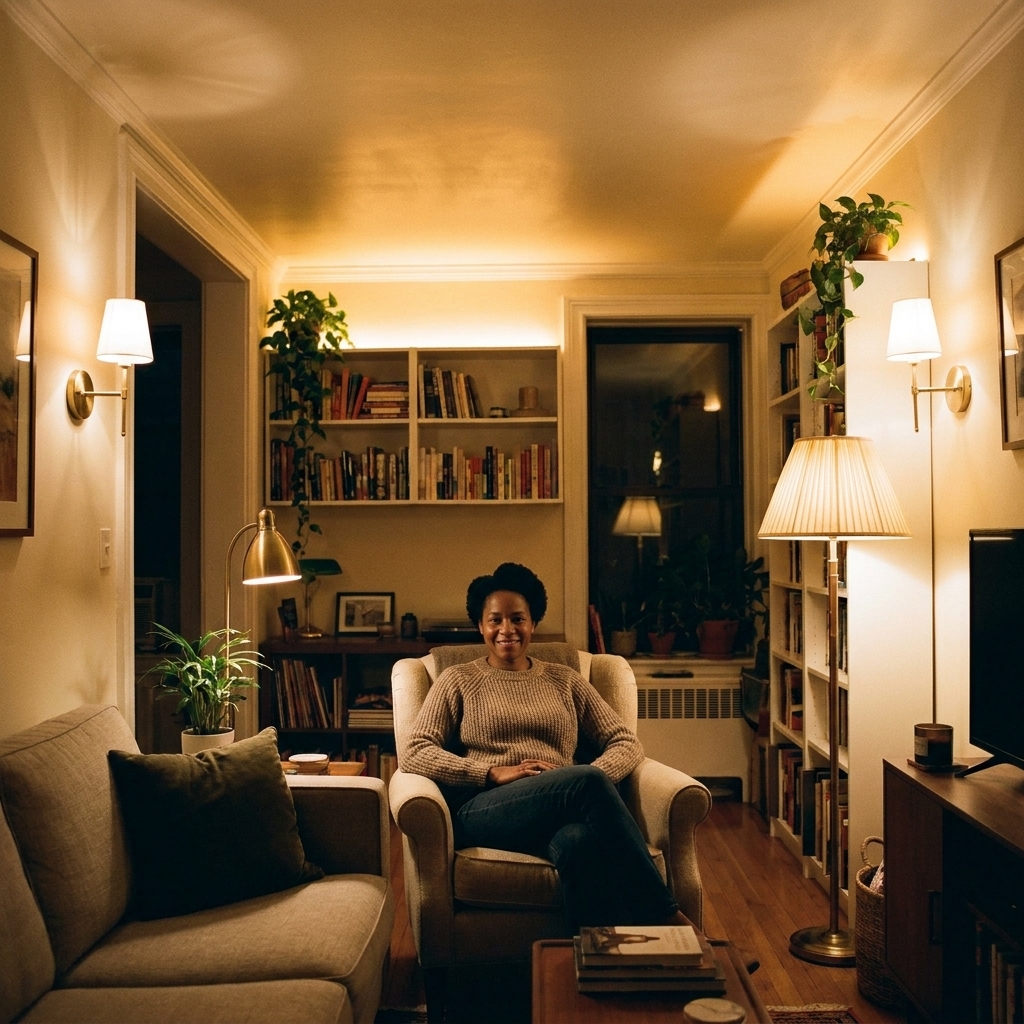
Quick setup: a 20-minute plan
If decision fatigue is real today, do this:
- Step 1: Turn off the overhead light.
- Step 2: Place one floor lamp in a corner and aim it toward the wall, not the room.
- Step 3: Add one table lamp on the highest surface you have (bookcase, console, tall shelf).
- Step 4: Use matching bulb temperature across both lamps (2700K to 3000K is usually safe).
- Step 5: Add a plug-in dimmer to the brightest lamp.
Most low-ceiling rooms feel noticeably taller just from moving light up the walls and spreading it across heights.
Mistakes that make ceilings feel lower
- One intense ceiling fixture only: it emphasizes the ceiling plane.
- Lights that hang too low: especially oversized pendants in tight rooms.
- Cold bulbs in cozy spaces: they can make walls feel flat and uninviting.
- Too much light at knee level: it draws attention down instead of up.
Your goal is simple: more glow on vertical surfaces, fewer harsh shadows, and fewer objects visually dangling from the ceiling.
FAQ
Do I need bright white bulbs to make my ceiling feel higher?
No. Brightness helps, but harsh, cool light often makes a small room feel sterile. A warm white bulb (2700K to 3000K) with enough lumens, plus uplighting, usually reads taller and more inviting.
What if I cannot drill for sconces?
Look for battery sconces with removable mounting options, or use two tall floor lamps with shades that throw light upward. Check weight limits and take your time removing adhesive so you do not peel paint. Even one corner uplight can change the whole ceiling vibe.
Will LED strip lights look cheap?
They can, if you see the diodes directly. Hide strips on top of bookcases or cabinets so you only see the reflected glow. Warm temperature strips look more elevated than icy cool ones.