A small-space guide to choosing well-proportioned furniture, balancing visual weight, and using golden-ratio-inspired rules so your home feels airy, not cram...
Space Ovo
Oversized vs. Petite Furniture in a Tiny Living Room
Should you go big or small in a tiny living room? Learn why one well-chosen “hero” piece often looks cleaner than lots of little furniture, plus sizing guidelines, layouts, and renter-friendly tips.

Maya Brooks
Maya Brooks is an interior stylist and layout enthusiast who believes square footage should never dictate your home's style. After a decade of navigating cramped city studios, she shares practical, renter-friendly decorating and storage solutions to help others maximize their tiny spaces.
Created October 17, 2026
Updated October 17, 2026
If you have ever tried to furnish a tiny living room by buying “small” everything, you already know the plot twist: the room can still feel crowded. Not because the pieces are physically huge, but because there are too many legs, edges, gaps, and visual interruptions competing for attention.
After a decade of living in apartments where my sofa basically had to file a change-of-address form, I learned a counterintuitive truth: one larger, well-proportioned main piece often makes a small living room feel calmer than several petite pieces floating around like little islands.
The key word is proportioned. If the piece blocks door swings, cuts off your main path, or covers what needs to breathe (hello, radiators and vents), it is not a statement. It is a problem.
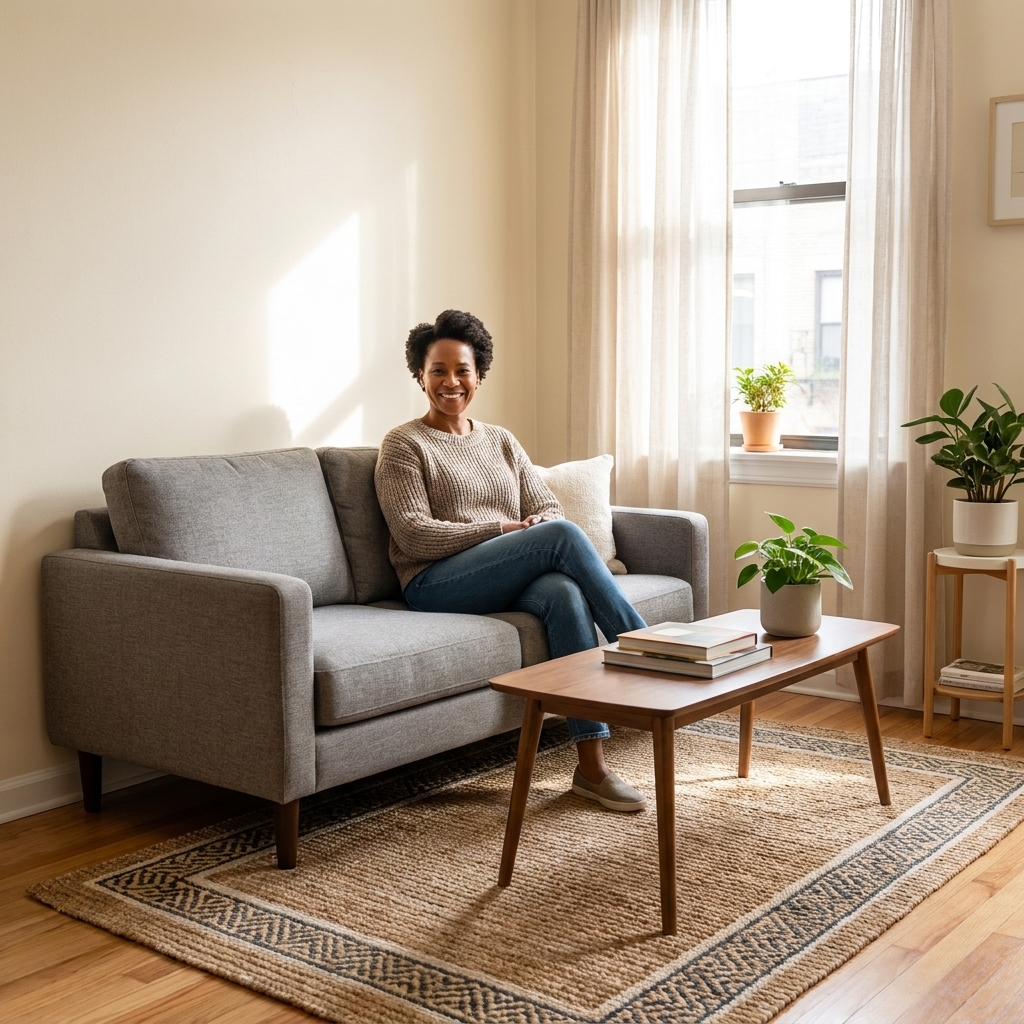
The issue is visual clutter
In small rooms, your eye does not have much space to rest. So anything that creates extra lines or fragmentation makes the room feel busier than it is.
Why lots of petite pieces can feel messy
- More edges and legs: Three small chairs plus two side tables equals a forest of legs. Your eye reads that as clutter.
- More gaps: Lots of little pieces usually means lots of little spaces between them. Those gaps create a chopped-up look.
- More surfaces: Each surface becomes a landing pad for stuff, even if you swear it will not.
- More decision points: You are constantly navigating around items, which makes a room feel cramped in a lived-experience way.
Why one “hero” piece can feel cleaner
- One clear focal point: The room gets a visual home base, which makes everything else feel intentional.
- Simpler silhouette: Fewer pieces means fewer competing outlines.
- More function per inch: One comfortable sofa usually seats more people than two tiny chairs that never feel quite right.
What scale actually does
Bigger pieces (used strategically)
When people say “oversized,” I do not hear “giant sectional swallowing the room.” I hear: a single piece that is slightly larger than you would instinctively choose, but still leaves clear circulation.
What it does well:
- Creates a “designed” look fast
- Reduces the need for extra seating pieces
- Feels more comfortable and grown-up
- Visually simplifies the room
Where it goes wrong:
- Blocks pathways and makes you shimmy sideways
- Forces other furniture to be awkwardly tiny
- Overpowers windows, radiators, or doors that need clearance
- Gets pushed in front of returns, baseboard heaters, or vents that should stay open
Petite pieces (used intentionally)
Petite is not bad. It is just often misused. Small pieces shine when they are airy, leggy, and minimal in number, or when your space truly cannot accept a larger footprint.
What it does well:
- Keeps tight walkways open
- Makes odd layouts more flexible
- Works for very narrow rooms or awkward door swings
Where it goes wrong:
- Too many small items creates visual noise
- “Apartment-size” can accidentally read like “waiting room” if everything is underscaled
- Leaves you buying extra pieces to make it functional
The sweet spot
My favorite tiny living room formula is:
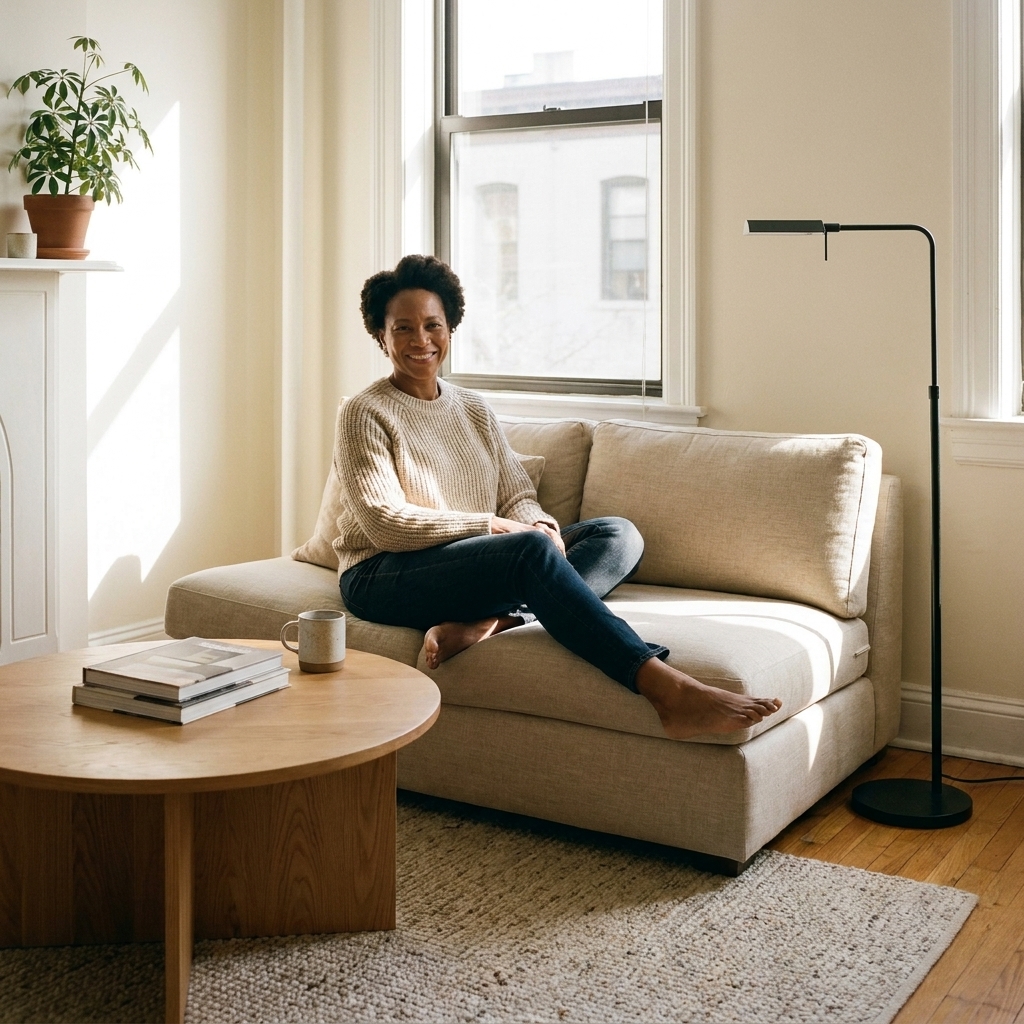
- One main seating piece: a sofa, loveseat, or daybed
- One main surface: a coffee table or large ottoman
- Two to three helpers max: a slim side table, one extra seat, one floor lamp
This keeps the room from feeling like a furniture showroom, while still covering real life: sitting, lounging, setting down a drink, and lighting.
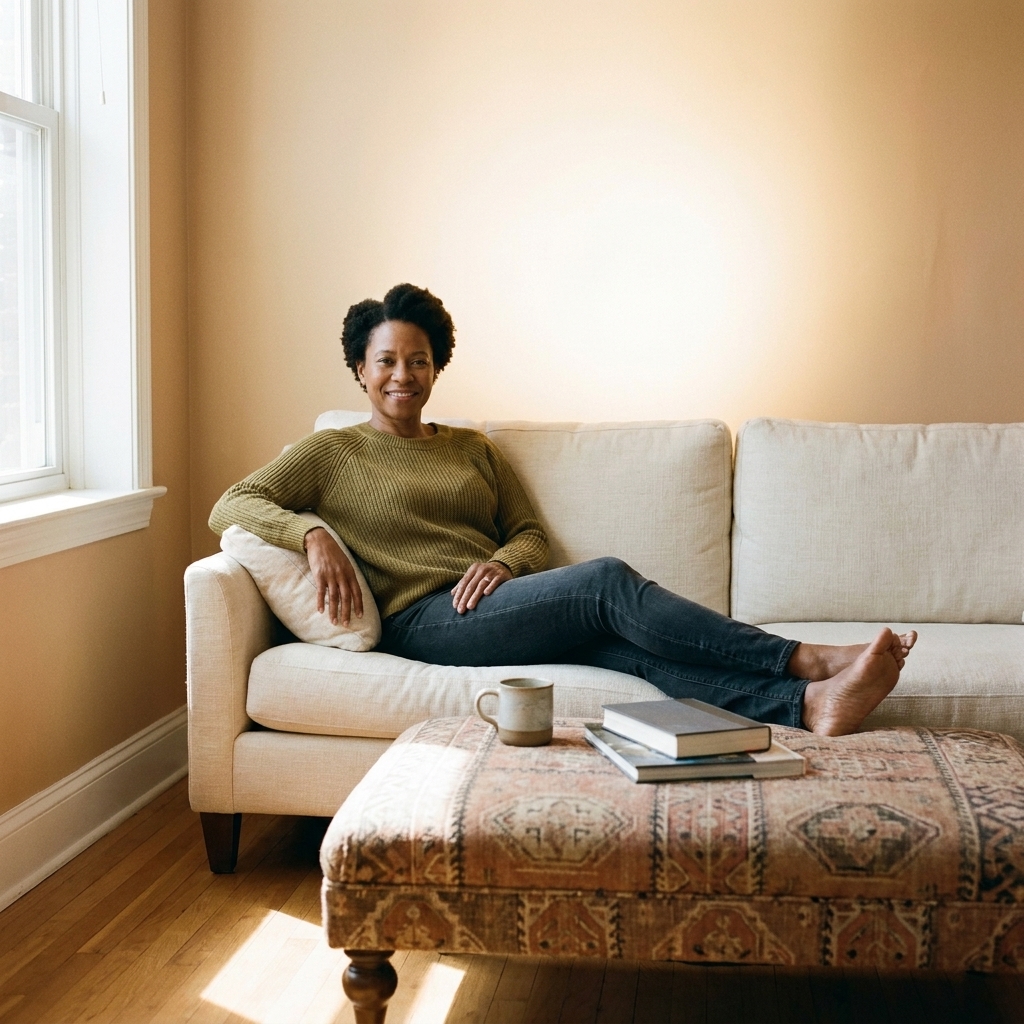
Measuring rules
I am going to be that friend: before you buy anything, measure. Tiny spaces punish guesswork.
Rule 1: Protect walkways
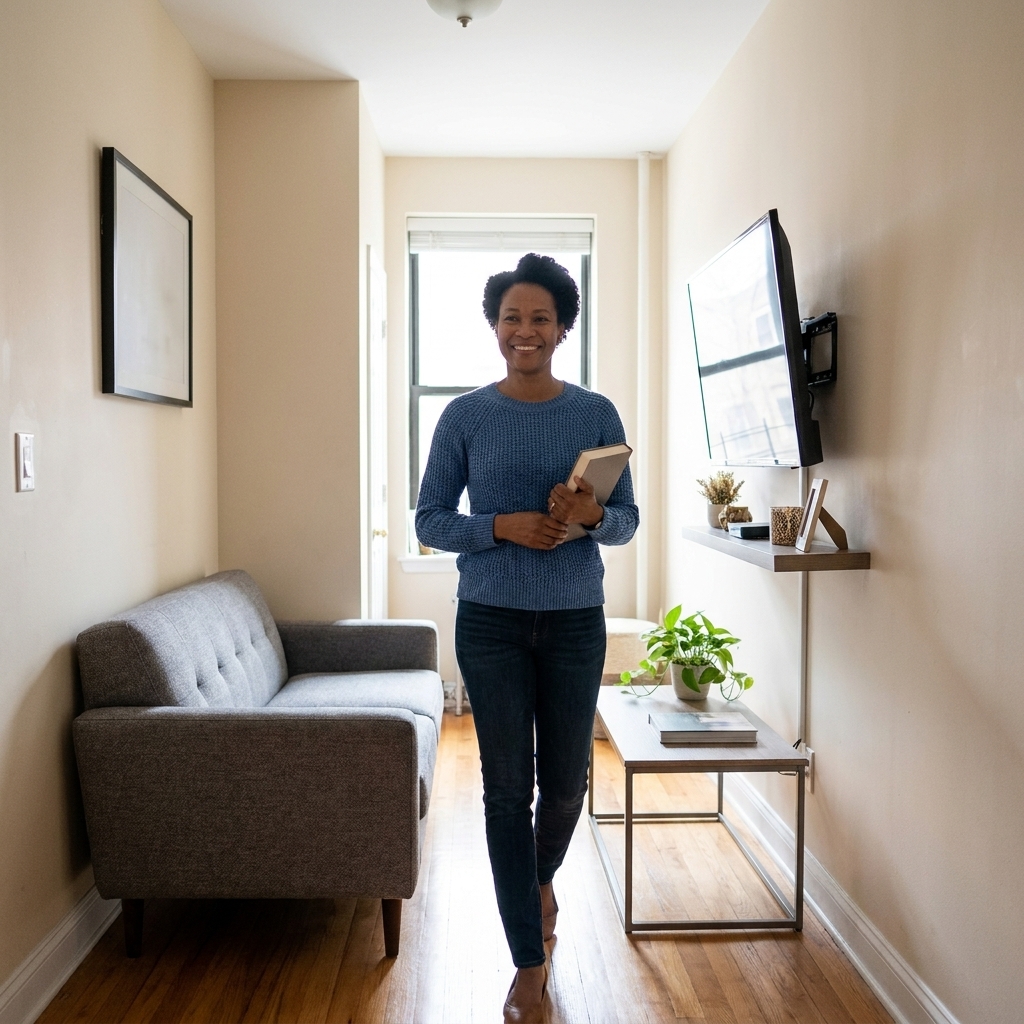
Designers often recommend 24 to 36 inches for main walkways when possible. In ultra-tight apartments, 18 to 24 inches can work for a secondary path, but it should not feel like a daily obstacle course.
Rule 2: Let the sofa fit the wall
Instead of defaulting to a loveseat, look at the wall you want the sofa on.
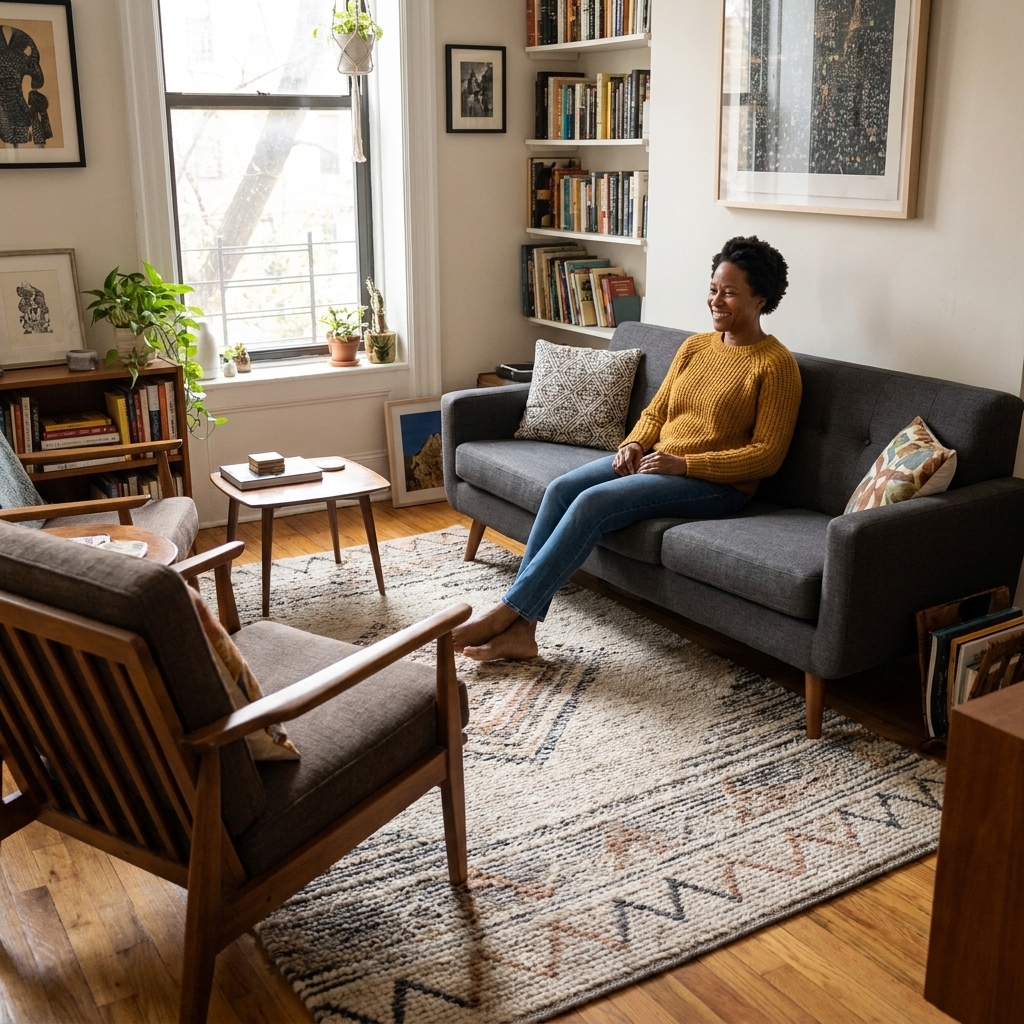
- If the wall is long enough, a 72 to 84 inch sofa often looks better than a 58 inch loveseat plus extra chairs.
- Try to leave 3 to 6 inches on each side if you can, but do not panic if it is tighter. Balance matters more than perfect margins.
Rule 3: Choose depth carefully
Depth is what steals your floor.
- Standard sofa depth: often around 35 to 40 inches, depending on style
- Apartment-friendly depth: often around 30 to 35 inches, still comfy but less bulky
If your living room is narrow, a slightly shallower sofa is one of the easiest ways to make the room feel more open.
Rule 4: Coffee table clearance matters
- Distance from sofa to coffee table: a common guideline is about 14 to 18 inches
- If that is impossible: use a narrow oval table, a nesting set, or a large ottoman that can scoot
When bigger is better
Go bigger (within reason) when any of these are true:
- You need seating for 2 to 3 people regularly. One real sofa almost always beats multiple tiny seats.
- Your room is visually busy. Exposed brick, gallery walls, open shelving, bold rugs, or lots of plants pair better with simpler, larger forms.
- You are constantly moving furniture to make it work. That is a sign your layout lacks a stable main piece.
- You have an open-plan space. A larger sofa helps define the living zone and makes the whole apartment feel intentional.
Good “big” picks for small rooms
- A streamlined sofa with raised legs (airy, less visually heavy)
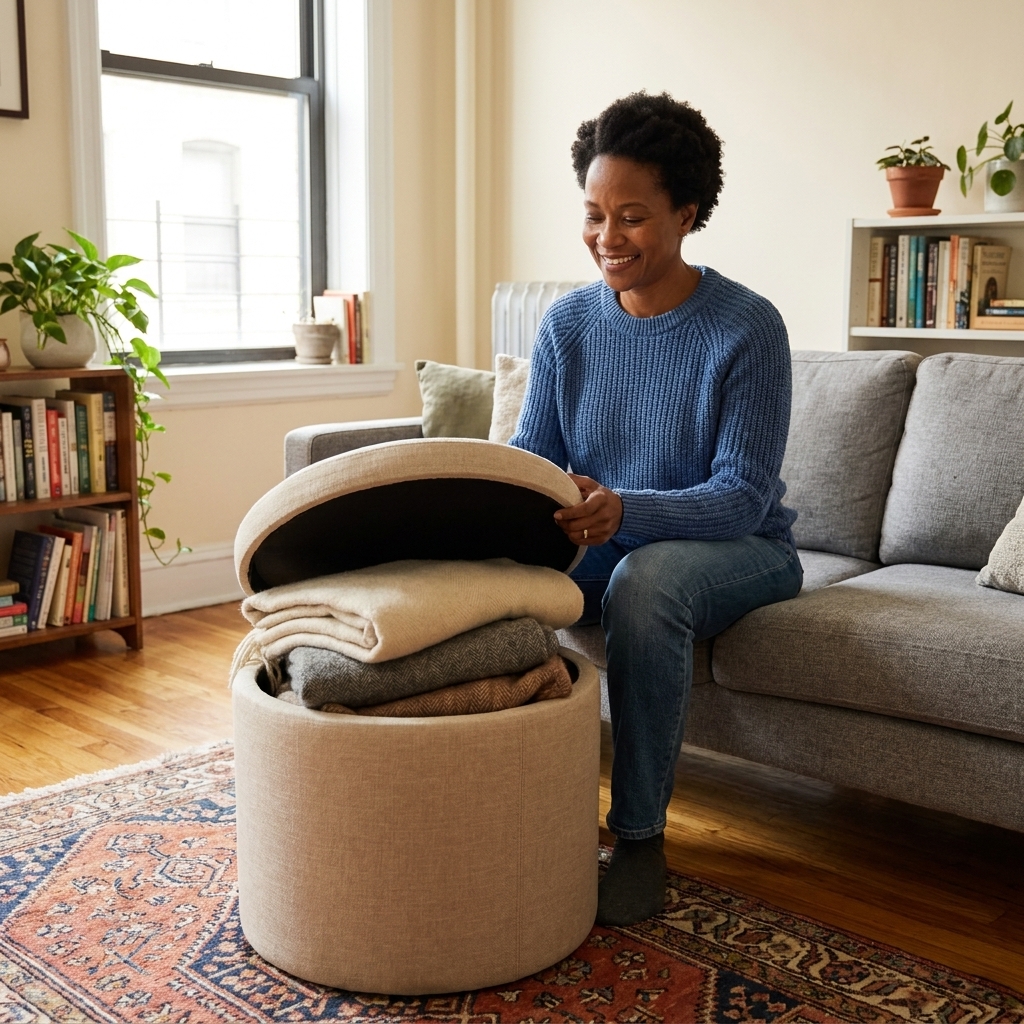
- A large storage ottoman (surface plus hidden storage, one piece doing two jobs)
- A statement armchair (one sculptural chair instead of two small, mismatched seats)
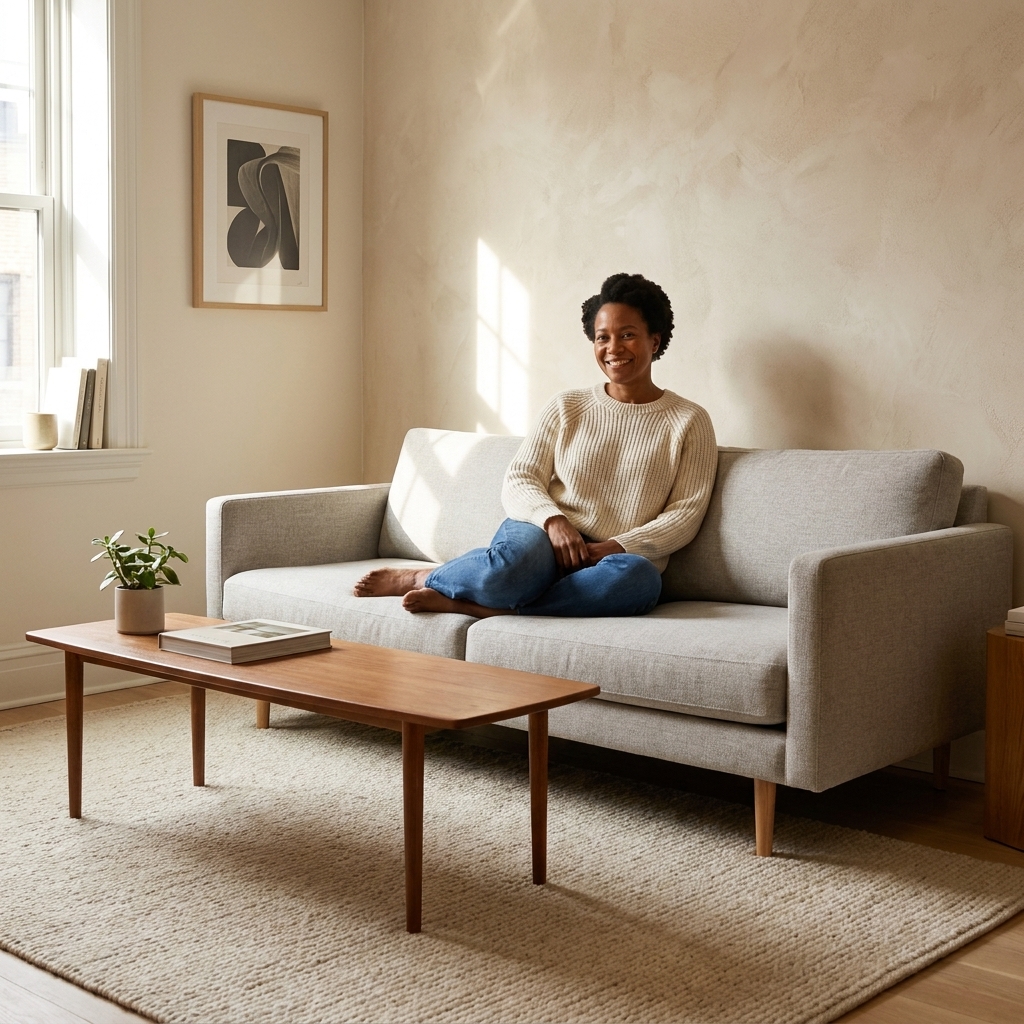
When petite wins
Small-scale pieces are the right call when the architecture is calling the shots.
- Your room is very narrow and anything deep blocks circulation
- You have multiple doors swinging into the space
- You are renting with weird constraints like radiators you cannot block or outlets in inconvenient spots
- You need flexibility for work-from-home, workouts, or frequent hosting
Best petite picks (without the clutter)
- One accent chair with a small footprint (choose a clean silhouette, not fussy arms)
- Nesting tables (two surfaces, one footprint)
- Wall-mounted or C-shaped side tables (surface without the bulk)
- Armless slipper chairs (easy to tuck in and visually quiet)
Vertical space counts
If floor space is limited, go up, but do it calmly. Vertical storage reduces surface clutter, which is usually what makes tiny living rooms feel chaotic in the first place.
- One tall bookcase often looks cleaner than three short, scattered shelves.
- Wall shelves work best when they replace something on the floor, not when they become bonus clutter zones.
- Closed storage (a cabinet, media console with doors, baskets) is your friend if you want the room to feel quieter day to day.
Multifunction options
If you need your living room to do double duty, start by making one piece earn its keep.
- Sleeper sofas are worth it if you host overnight guests, but check mattress thickness and mechanism clearance.
- Storage sofas or chaises can be amazing, as long as they do not interrupt your main walkway.
- Banquette-style seating (a bench along a wall with a table that can shift) can replace multiple chairs in very tight spaces.
- Wall-hugger recliners exist, and yes, some are surprisingly compact. Just confirm the full recline depth before you fall in love.
Layout examples
Layout A: One sofa
- 72 to 84 inch sofa on the longest wall
- One medium rug that sits under the front legs of the sofa
- Oval or narrow coffee table
- One accent chair angled in (or skip it)
- One floor lamp behind the sofa corner
Why it works: one clear seating zone, fewer pieces, cleaner sightlines.
Layout B: Petite and flexible
- Loveseat or apartment sofa with shallow depth
- One armless chair that can move
- Nesting tables instead of a full coffee table
- Wall-mounted shelf as a “console” behind the sofa or near entry
Why it works: you keep circulation open without peppering the room with extra furniture.
Simple visual tricks
Use legs and negative space
Raised legs let you see more floor, which reads as more space. If you love a chunky sofa, balance it with lighter pieces elsewhere.
Keep finishes on a tighter palette
In small rooms, too many finishes can feel like clutter. You do not need a matching set, just fewer competing tones.
Go a bit bigger on the rug
A too-small rug makes everything look like it is floating. A slightly larger rug visually unifies the seating area, which reduces that “bits and pieces” feeling.
Limit little decor surfaces
If you choose petite tables, keep the styling minimal. Tiny surfaces become messy fast, like they are magnetized to random items.
Common mistakes
- Blocking heat and air: Avoid covering radiators, baseboard heaters, and HVAC returns. Even if you can technically squeeze a sofa there, your apartment will remind you later.
- Pushing furniture off the walls “to make it float”: In narrow rooms, pulling a sofa too far forward can steal your walkway. If you float it, do it with a plan, not vibes.
- Buying too many small pieces first: Start with the main seating, then add only what the room proves it needs.
Renter-friendly buying tips
Tape it out first
Masking tape on the floor is my favorite low-effort reality check. Outline the sofa, coffee table, and any chair. Then walk through your actual day.
Make sure it can get inside
Look for:
- Modular sofas that come in sections
- Knock-down frames (easy assembly)
- Legs that remove for tighter delivery angles
Pick big pieces that do extra work
- Sofa with storage chaise (only if it does not block the path)
- Ottoman with storage
- Console table that doubles as a desk
Quick verdict
In most tiny living rooms, one larger main piece (usually the sofa) paired with a few lighter, minimal helpers is the least cluttered, most comfortable option.
Petite furniture wins when your layout has real constraints like narrow widths, multiple door swings, or you need a lot of flexibility. Even then, the goal is the same: fewer pieces, clearer pathways, and calmer sightlines.
If you are stuck, start with the piece you use the most, usually the sofa, and let everything else earn its footprint.
FAQ
Will a big sofa make my tiny living room look smaller?
Not automatically. A bigger sofa that fits the wall and preserves walkways can make the room look less cluttered because it reduces the need for extra seating pieces. The “too big” line is when circulation feels tight or the sofa blocks functional areas like doors, heaters, or vents.
Is a sectional ever okay in a small living room?
Yes, if it replaces multiple pieces and matches the room’s shape. A small L-shaped sectional can be great in a corner, especially in open-plan apartments. Watch the chaise depth and make sure it does not cut off your main path.
What if I need seating for guests but do not want more furniture?
Try one statement chair plus a stashable option: a foldable stool, a slim pouf that tucks under a console, or dining chairs that can pull double duty.
What is the easiest way to make petite furniture feel intentional?
Reduce the number of pieces, choose cleaner silhouettes, and unify finishes. Petite works best when it looks edited, not scattered.