A small-space stylist’s comparison of floating shelves vs. bookcases, including visual impact, storage capacity, renter-friendly install tips, and the best...
Space Ovo
12 Freestanding Shelving Units That Look Like Custom Built-Ins
Tall bookcases and tension-pole shelving that give you that built-in look without major drilling. A renter-friendly roundup made for small apartments, awkward walls, and big storage needs.

Maya Brooks
Maya Brooks is an interior stylist and layout enthusiast who believes square footage should never dictate your home's style. After a decade of navigating cramped city studios, she shares practical, renter-friendly decorating and storage solutions to help others maximize their tiny spaces.
Created October 17, 2026
Updated October 17, 2026
Built-ins are the ultimate small-space flex. They make a room feel finished, intentional, and somehow bigger, even when you are living in a glorified shoebox (said with love). The problem, of course, is that most of us rent. And most leases do not vibe with the phrase “I’m just going to anchor this to the studs.”
The good news: there are freestanding shelving units that read like custom built-ins, especially when you go tall, go wide, and style them with a little strategy. Below are 12 renter-friendly options, including classic bookcases you can hack into a wall-to-wall moment and tension systems that give you floor-to-ceiling storage with little to no damage.
One real-talk note up front: tall storage is safest when it is secured. Some of the options below are truly freestanding, but many manufacturers still recommend (or require) an anti-tip attachment, especially with kids, pets, or wobbly floors. If your lease is strict, ask your landlord, use the smallest hardware possible, and patch cleanly at move-out. Your security deposit is not worth a shelving avalanche.
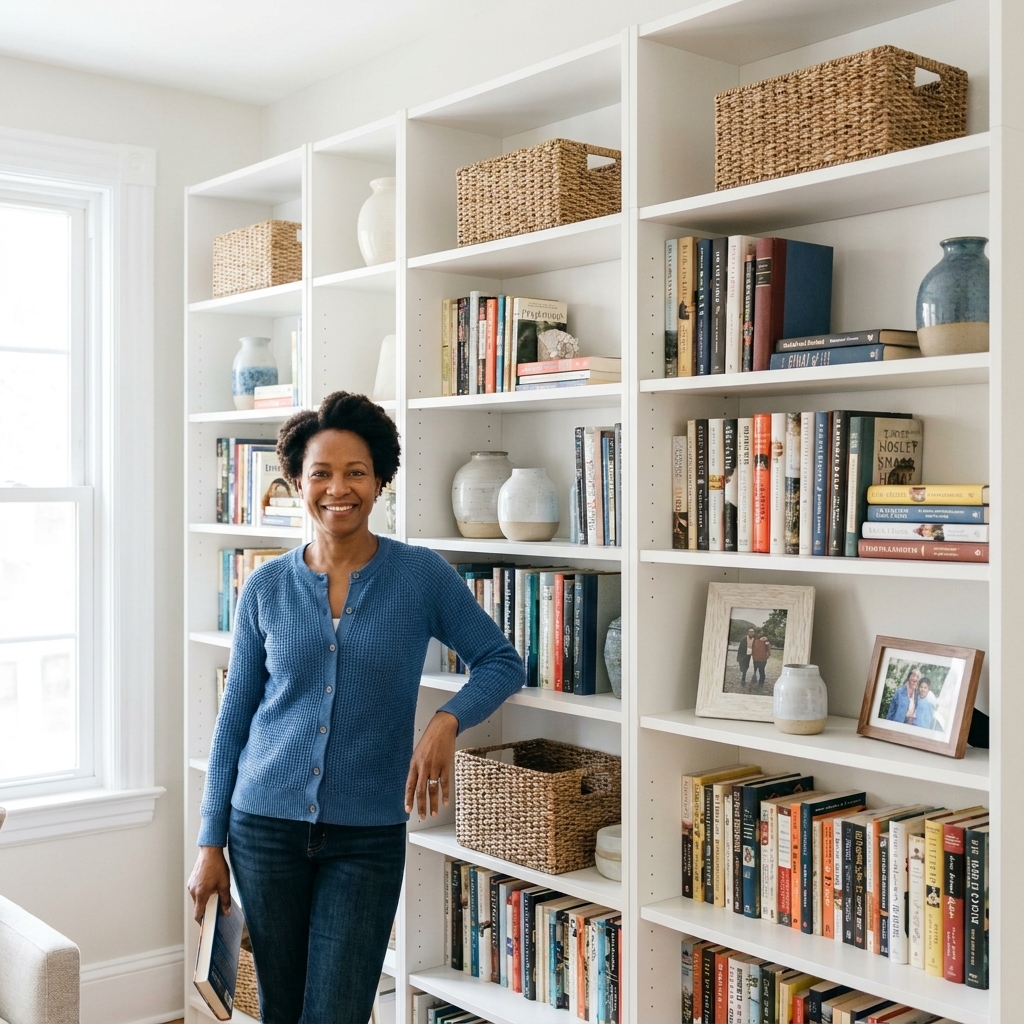
What makes it look built-in?
My quick checklist when I’m trying to fake a custom look in a rental:
- Go nearly to the ceiling. The closer you get, the more architectural it feels.
- Fill the wall. One lonely bookcase looks like furniture. Two to five in a row looks like millwork.
- Match finishes. Same color, same hardware vibe, same basket style.
- Use closed storage on the bottom. Doors and drawers hide the chaos and sell the built-in illusion.
- Keep reveal lines tight. Push units flush, align the fronts, and minimize gaps so it looks fitted, not floated.
Measure before you buy
- Depth matters. For tight walkways, aim for about 10 to 12 inches deep. Deeper shelves can feel bulky fast.
- Mind the baseboards. If your baseboard is thick, a shelf may sit proud of the wall. A slim filler strip (or choosing a unit with a notch-friendly back) helps.
- Check outlets and vents. Decide if you need a cord pass-through, and do not block radiators or HVAC returns.
- Know your ceiling height. If you are under 8 feet, “tall” might mean 72 to 84 inches. If you are closer to 9 feet, look for add-on toppers or tension systems to close the gap.
Also, lighting is the secret built-in cue. Even one plug-in picture light above the shelf wall, or stick-on puck lights inside a cabinet section, makes the whole setup feel custom.
1) IKEA BILLY (with extender)
If you have ever seen a “built-in” on a budget, there is a solid chance it started as BILLY. The magic is the height extension unit, which pulls the whole silhouette upward and makes it feel more architectural.
- Why it looks custom: Tall, simple lines and a modular feel when you line up multiples.
- Small-space win: Slim depth works in narrow living rooms and bedrooms.
- My styling tip: Do three in a row, then repeat the same basket on the bottom shelf of each. Instant cohesion.
2) IKEA HAVSTA Shelving
HAVSTA has that cozy, “real furniture” presence that reads more like a built-in hutch than a flat-pack bookcase. Many pieces use solid wood components (often pine), but materials can vary by configuration and finish, so check the product details for your exact pick.
- Why it looks custom: Chunkier frame and panel-style detailing gives it that fitted-cabinet vibe.
- Small-space win: It can replace a media console and library storage in one footprint.
- My styling tip: Keep the top shelves airy and let the lower portion do the heavy lifting with bins, books, and paperwork.
3) IKEA KALLAX (vertical)
KALLAX is not tall by default, but it becomes surprisingly built-in-adjacent when you stand it vertically and treat it like a modular wall system. In tiny apartments, the cube format is a gift because everything has a “slot.”
- Why it looks custom: A clean grid layout feels intentional, like a designed storage wall.
- Small-space win: Add drawers, doors, or bins to mix open and closed storage.
- My styling tip: Aim for a repeating pattern (example: two bins, one open shelf, one drawer) so it looks designed, not random.
4) IKEA BRIMNES Bookcase (doors)
If you want the built-in look without the built-in-level styling upkeep, choose shelves with doors. BRIMNES is basically a cheat code for hiding visual clutter. In some markets, you can find a BRIMNES bookcase with glass doors. In others, the door styles and availability vary, so check your local lineup.
- Why it looks custom: Door fronts mimic the feel of a fitted library wall.
- Small-space win: Less dusting, fewer “stuff piles,” more calm.
- My styling tip: Put your prettiest items behind glass (if you have it) and the messy items in matching bins elsewhere. Balanced realism.
5) IKEA BESTÅ (tall combos)
BESTÅ is technically modular storage, not a classic bookcase, but that is why it can look so built-in. You can combine frames and doors to create a tall, clean-lined wall of storage that feels custom to your layout. Just know that taller configurations are often intended to be secured for safety.
- Why it looks custom: Flat fronts and repeatable modules create a seamless, “made for the wall” look.
- Small-space win: Great for mixing media storage with books and closed cabinets.
- My styling tip: Choose one door style and commit. Mixed door styles are where it starts to feel piecemeal.
6) Elfa Decor (wall-hung)
Elfa is famous for closets, but the Decor line is legitimately gorgeous out in the open. It is typically a wall-hung system (with top track and standards), and whether you can install it without drilling depends on your space and your landlord’s tolerance for a few small holes.
- Why it looks custom: Vertical standards plus consistent shelf spacing gives you that tailored, built-for-this-wall feel.
- Small-space win: You can build around radiators, windows, and awkward corners.
- My styling tip: Keep shelf heights consistent across the whole run, like a real built-in would.
7) The Container Store Avera
If you want something that feels more like furniture than closet shelving, Avera hits that sweet spot. It is polished enough for living rooms, but practical enough for a work-from-home wall.
- Why it looks custom: Thicker shelves and mixed materials give it a more finished presence.
- Small-space win: It does “office storage” without looking like office storage.
- My styling tip: Use a few oversized objects (big vase, framed print, tall plant) so the shelves feel curated, not crowded.
8) String System (floor panels)
String is a design classic for a reason. With floor panels, you can build a tall, light-looking shelf wall that feels like it belongs to the apartment, not like it moved in with you. Depending on height and load, some configurations may still recommend wall anchoring, so follow the brand’s guidance.
- Why it looks custom: Modular symmetry and made-to-fit sizing lets you “design the wall,” not just place furniture.
- Small-space win: Visually airy, so it stores a lot without making a room feel heavy.
- My styling tip: Anchor the look with closed cabinets on the bottom row, then keep the top half more open.
9) UMAGE hybrids (cabinet plus shelves)
For the small-space dweller who wants storage that feels more like a built-in credenza with an upper, consider a hybrid setup: a tall cabinet with curved doors or tambour-style fronts paired with matching open shelving beside it.
- Why it looks custom: Statement doors plus a cohesive finish creates that bespoke vibe.
- Small-space win: Closed storage hides everything from craft supplies to snack stashes.
- My styling tip: Repeat one material across the whole wall (example: oak tones, brass accents) so it reads as a set.
10) Tension-pole shelving
Tension-pole systems are my favorite “how is this even allowed in a rental?” trick. They wedge between the floor and ceiling, giving you real vertical storage with minimal hardware. “Minimal” is the key word: they can still scuff ceilings or slip on uneven surfaces, so use protective pads (often included), avoid fragile ceiling materials, and re-tighten periodically.
- Why it looks custom: True floor-to-ceiling height is the built-in signal.
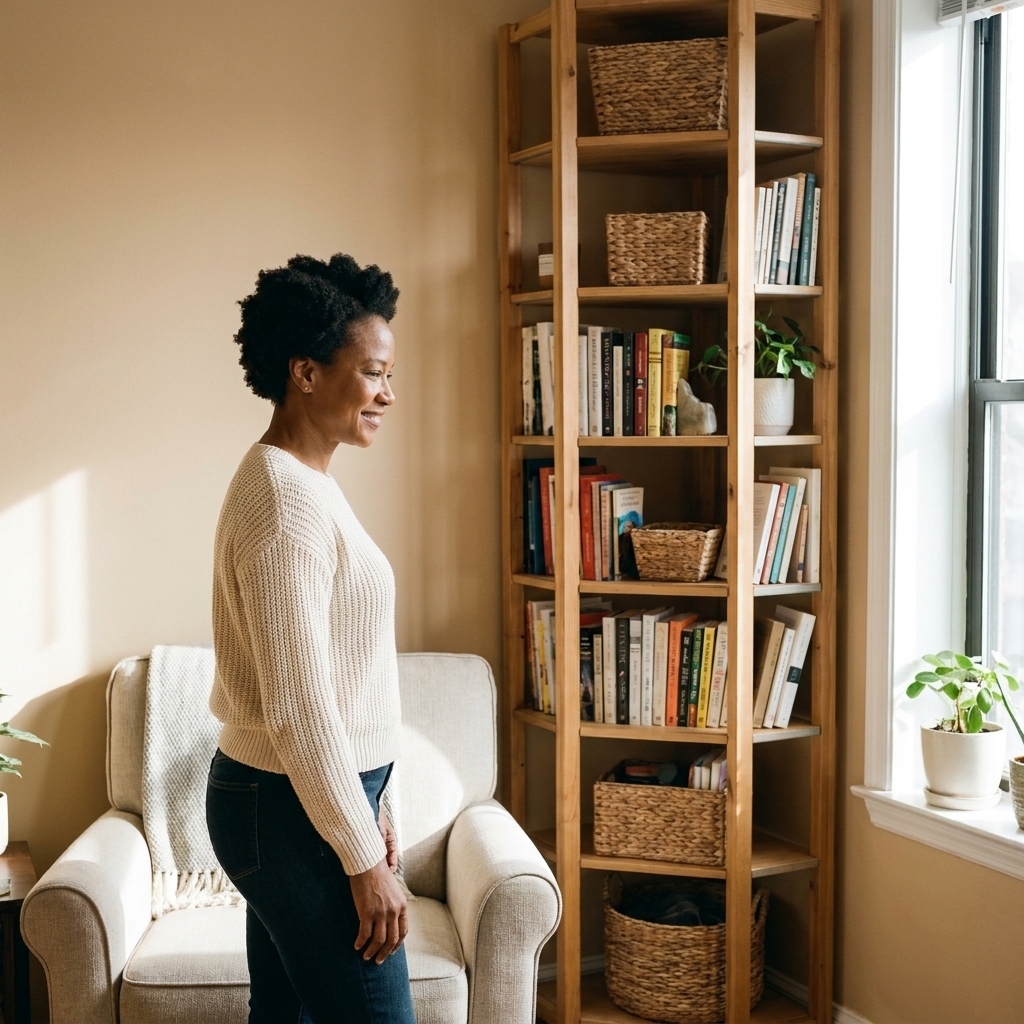
- Small-space win: Perfect for narrow zones like behind a sofa, next to a desk, or in a bedroom corner.
- My styling tip: Use the bottom area for heavier items and keep the top shelves lighter so the whole unit feels stable and visually calm.
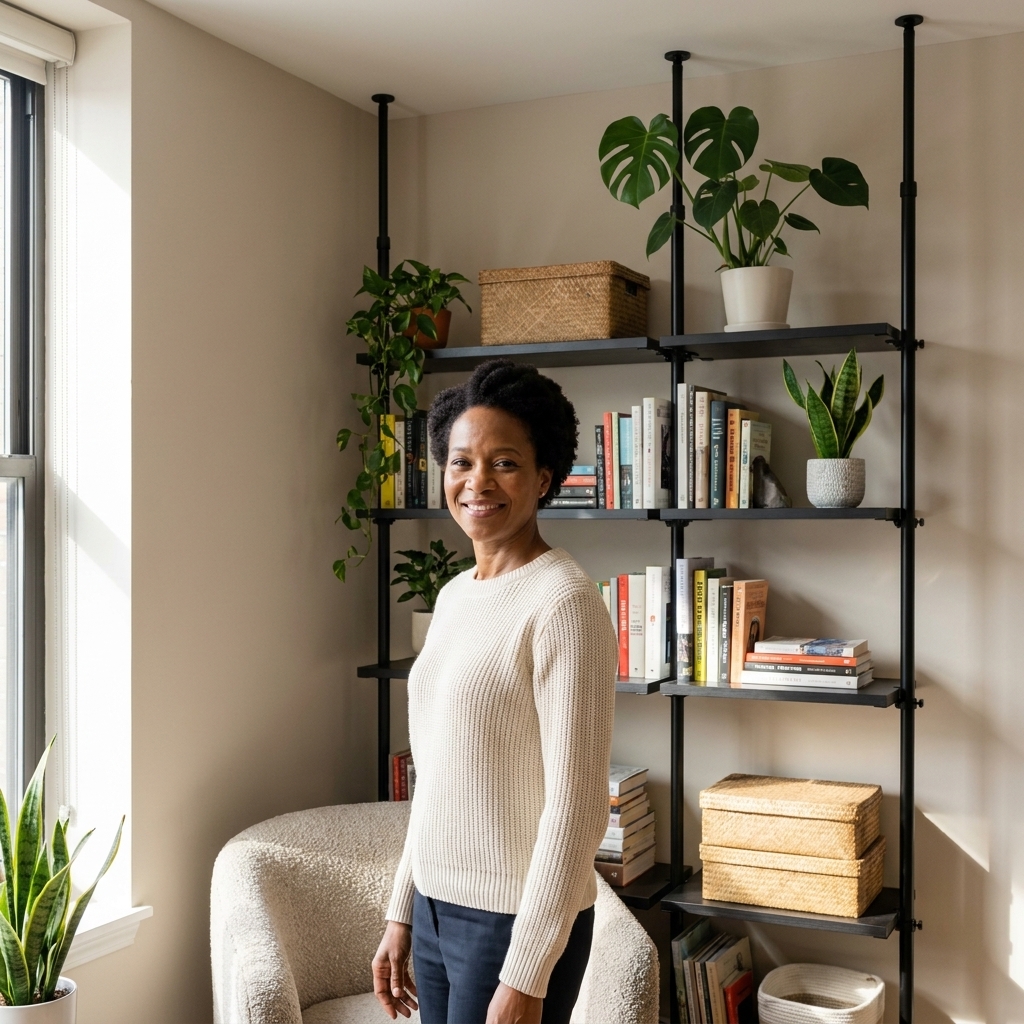
11) Tension-pole corner shelving
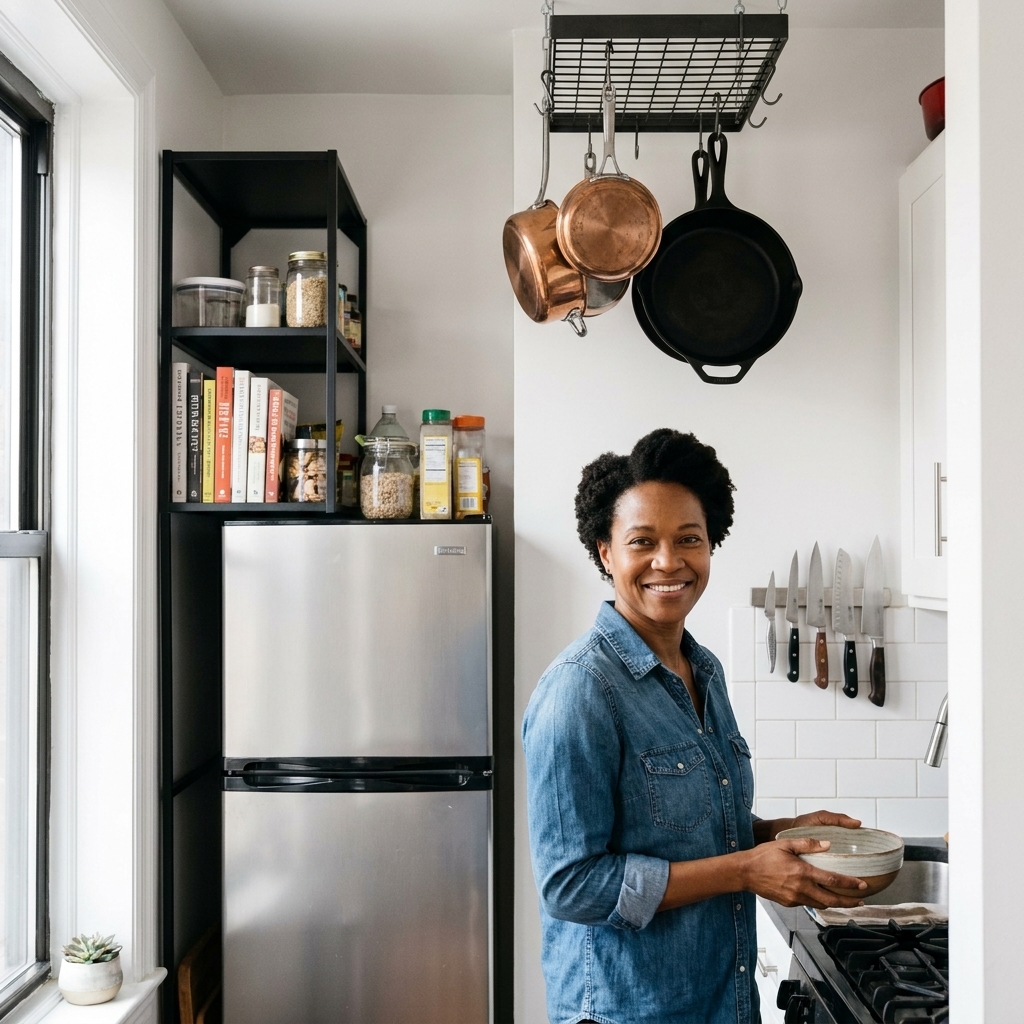
Corners are the ignored real estate of small apartments. A corner tension system turns “dead space” into a vertical storage tower for books, plants, pantry items, or bathroom supplies.
- Why it looks custom: It fits like it was designed for that corner.
- Small-space win: Zero floor footprint wasted, which matters in tight layouts.
- My styling tip: Stick to one category per corner (example: all plants, or all pantry overflow) so it feels intentional.
12) Leaning ladder bookcase
I know, I know. Leaning ladders can scream “temporary.” But a tall ladder shelf with deeper lower shelves, styled with restraint, can look purposeful, especially in bedrooms and home offices. The safety reality: many ladder shelves should be secured with an anti-tip strap. If you cannot secure it, skip this option.
- Why it looks custom: A tall profile draws the eye up and helps bridge the gap toward the ceiling.
- Small-space win: Great when you need storage but cannot sacrifice much depth.
- My styling tip: Keep the color palette tight. Too many bright book spines and trinkets make ladder shelves look busy fast.
Make it look built-in
- Go wall-to-wall if you can. Even if you cannot perfectly fill the wall, centering a “shelf wall” and flanking it with a floor lamp or plant makes it feel intentional.
- Fill gaps cleanly. Slim foam backer rod can visually close small seams. Peel-and-stick trim can also work, but test first since some adhesives can lift paint on removal.
- Create a base line. The built-in look loves a strong bottom row. Use matching bins, door fronts, or low cabinets across the run so the “foundation” looks continuous.
- Raise the eye line. Stack a few large art books horizontally, add a tall vase, and keep the top shelf styled so your gaze goes up.
- Repeat, repeat, repeat. Matching hardware, matching baskets, matching frame colors. Built-ins are basically the art of repetition.
- Add renter-friendly lighting. Stick-on puck lights (inside cabinets) or a plug-in picture light above the wall makes the whole thing feel like real millwork.
Stability and damage
A quick note from someone who has lived through the “one subway rumble away from a shelving avalanche” era: tall storage needs to be stable.
- Follow the manufacturer’s safety guidance. Some tall units are designed to be anchored. If anchoring is required, do not ignore it.
- Use renter-smart anchoring when needed. Furniture anti-tip straps with small screws can mean tiny holes you can patch at move-out. If you cannot make holes, ask your landlord for approval or choose a lower, heavier unit instead.
- Use museum putty or gel for decor. It helps frames and vases stay put, especially on higher shelves.
- Load heavy items low. Books, files, and appliances on the bottom shelves. Lighter decor up top.
- For tension systems: Avoid weak ceiling tiles or crumbling plaster, protect surfaces with pads, and periodically re-tighten.
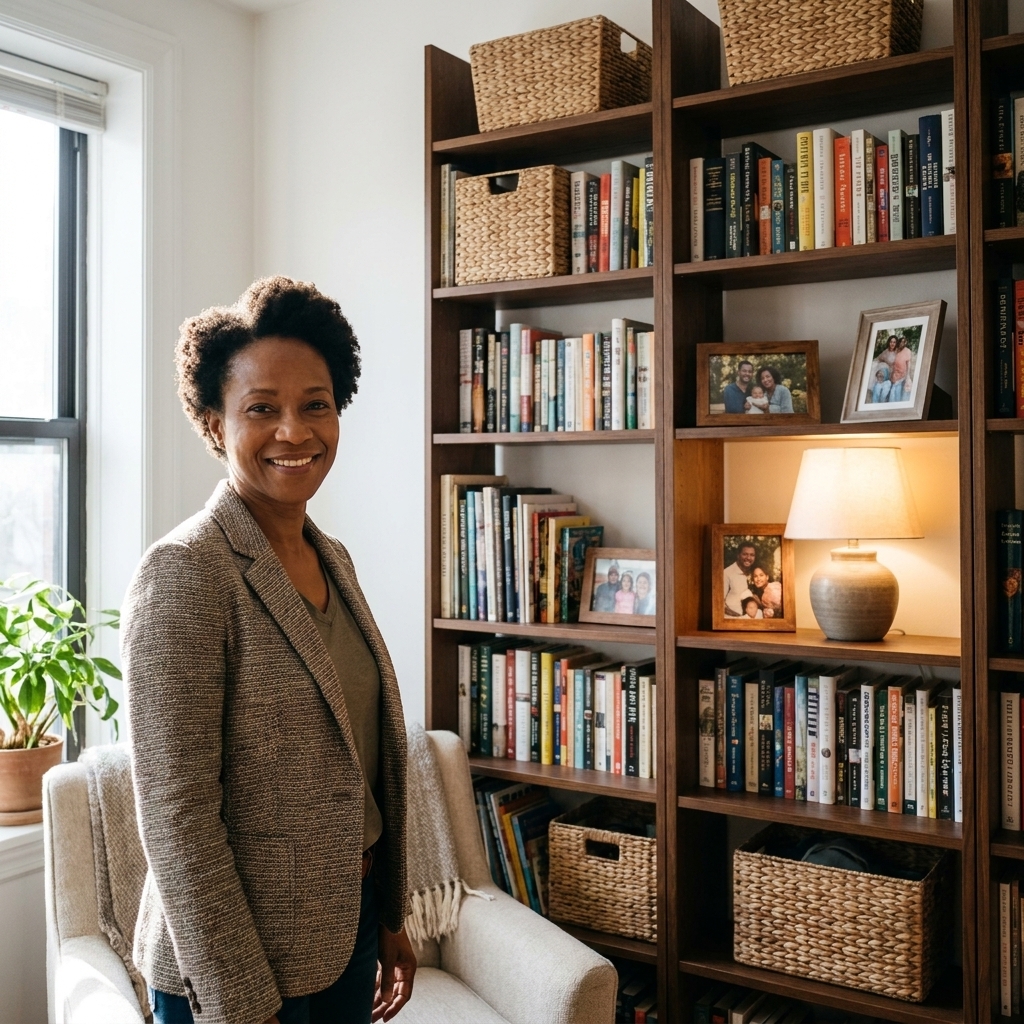
Quick picks
- Want the classic built-in hack? IKEA BILLY plus the extender.
- Want cozy and traditional? HAVSTA.
- Want hidden storage with a polished look? BRIMNES (door styles vary) or BESTÅ with doors.
- Want floor-to-ceiling with minimal drilling? A tension-pole system.
- Want airy, design-forward modular shelving? String System.
If you tell me your wall width, ceiling height, and what you are storing (books, pantry overflow, kids toys, all of the above), I can help you pick the best “fake built-in” setup for your specific floor plan. Consider it my love language.