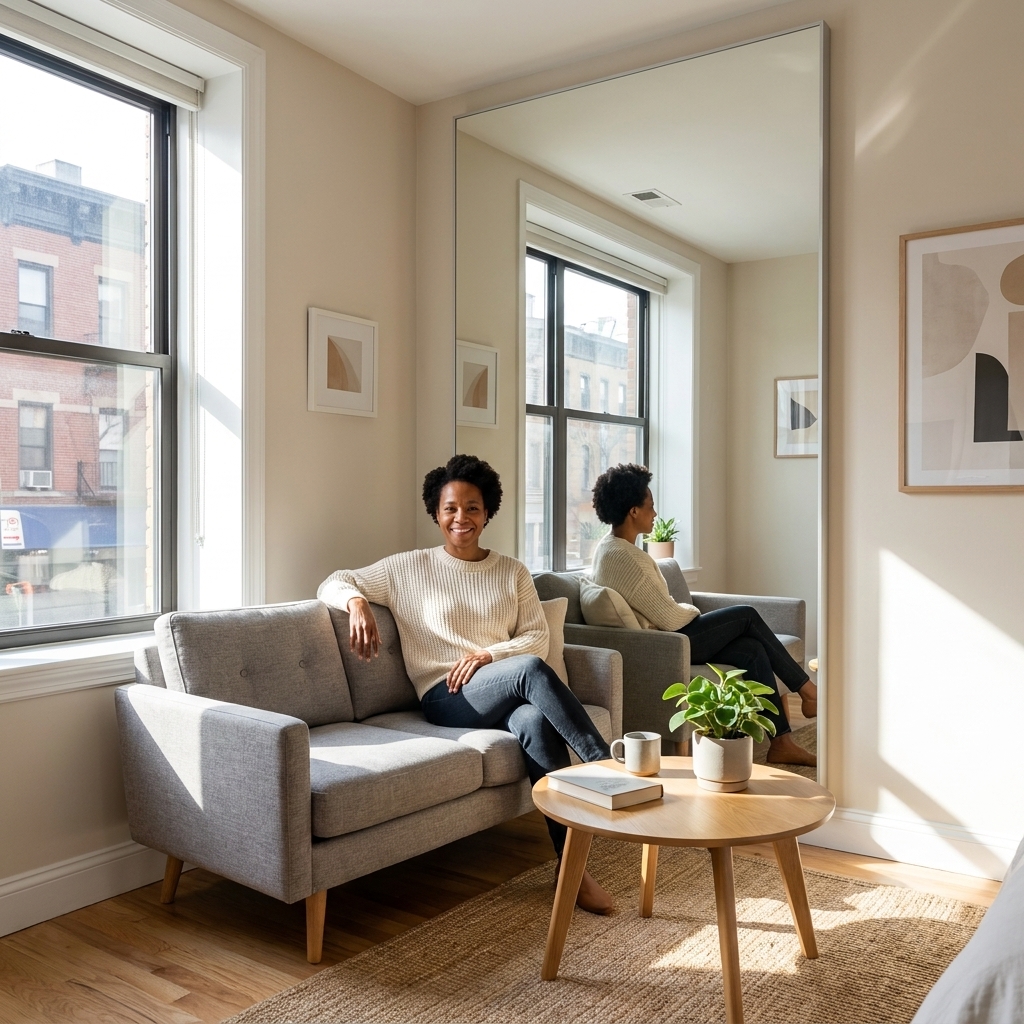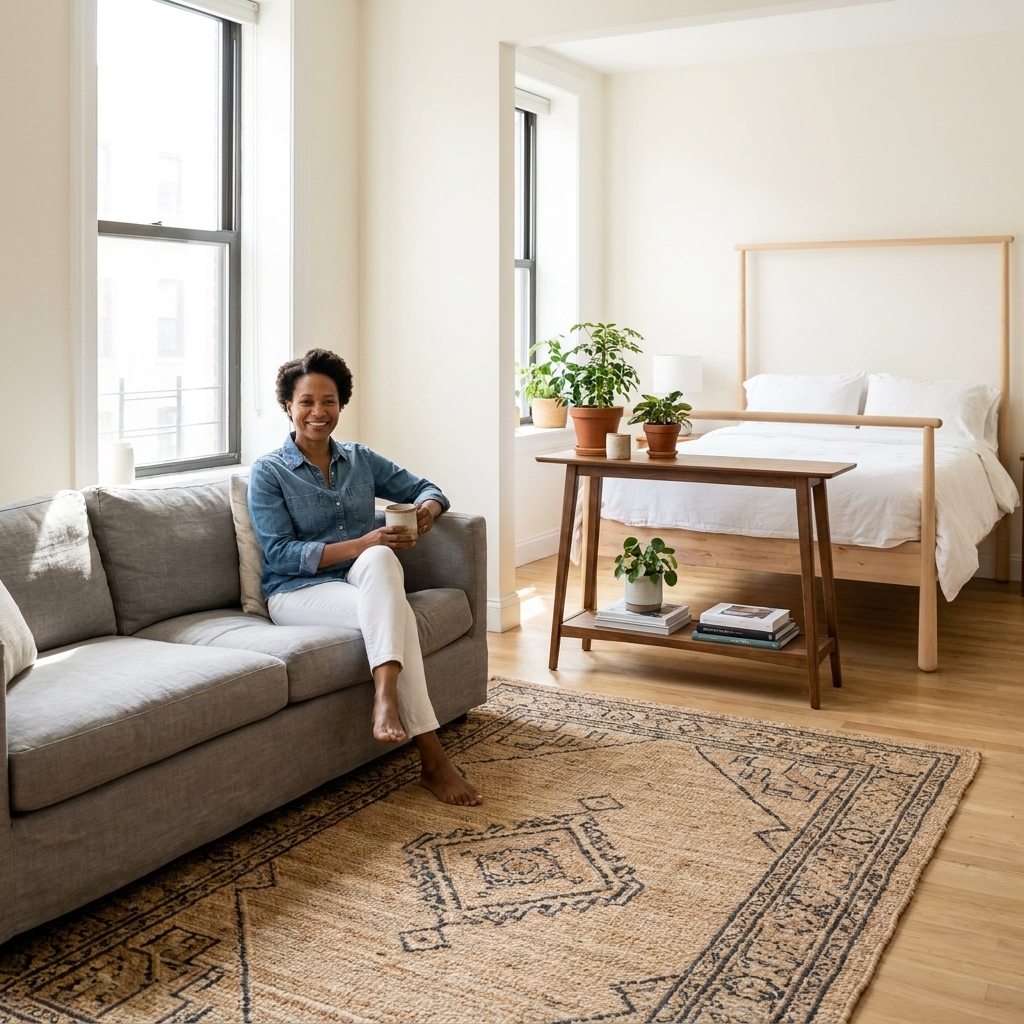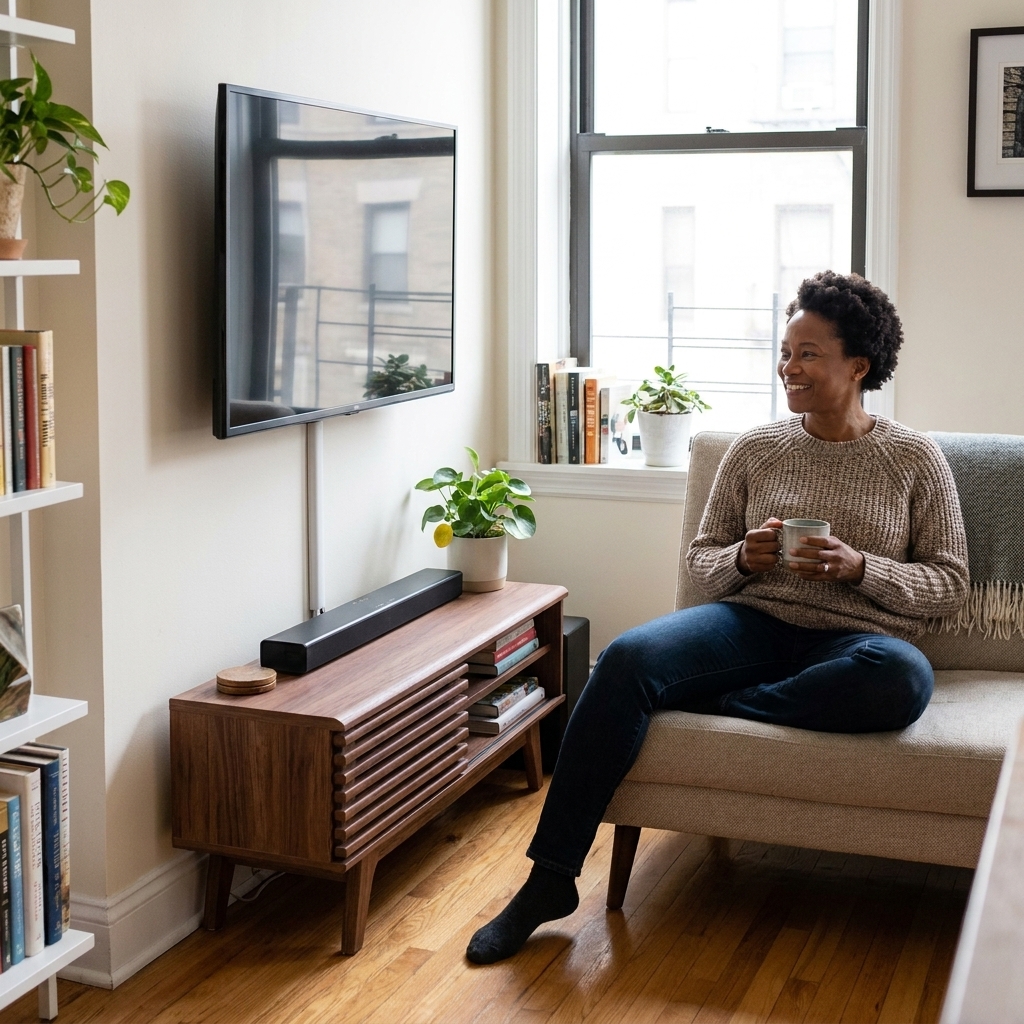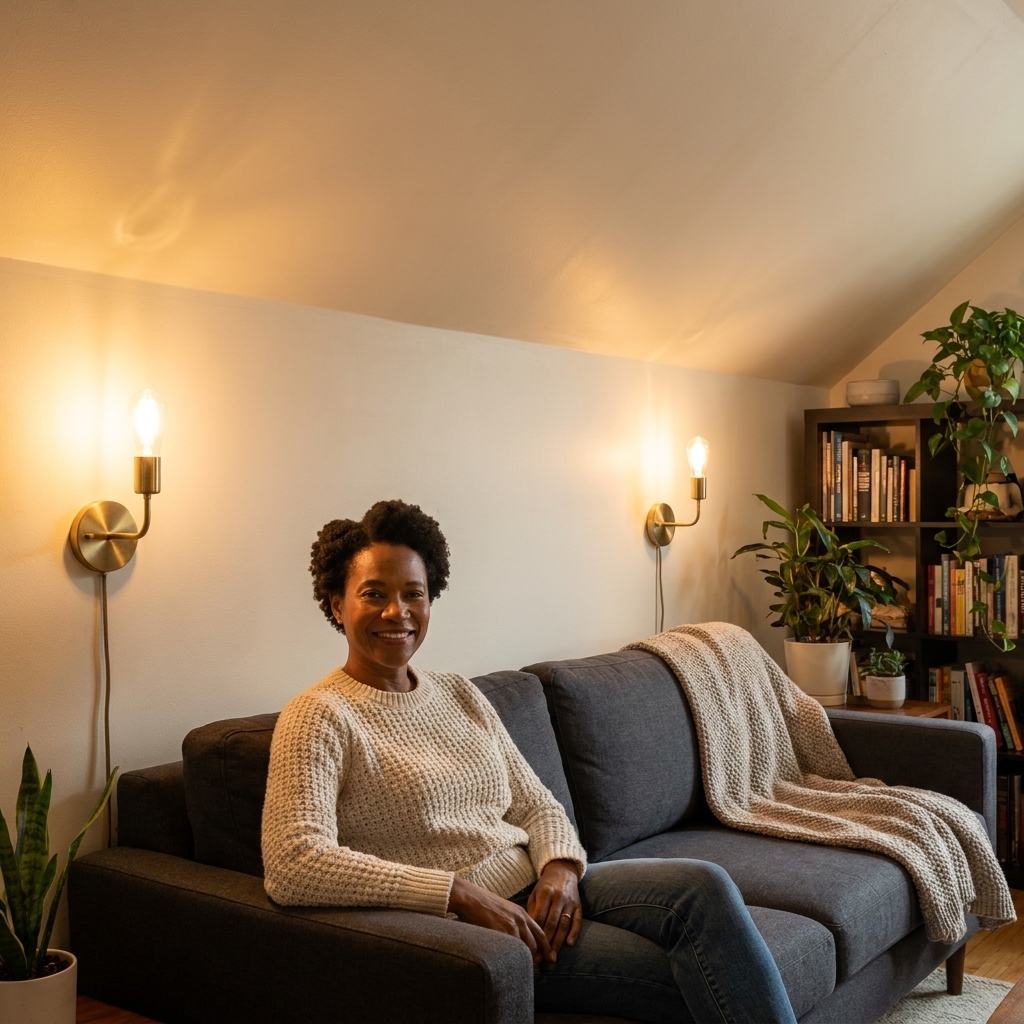
Seven renter-friendly lighting moves that visually lift your ceiling, brighten dark corners, and make a small apartment feel more open.
Space Ovo
Renter-Friendly Lighting That Actually Works
No hardwiring, no landlord drama. Brighten your small apartment with plug-in sconces, battery lights, and smart floor lamp placement that makes rooms feel bigger.

Maya Brooks
Maya Brooks is an interior stylist and layout enthusiast who believes square footage should never dictate your home's style. After a decade of navigating cramped city studios, she shares practical, renter-friendly decorating and storage solutions to help others maximize their tiny spaces.
Created October 17, 2026
Updated October 17, 2026
In my first San Francisco studio, the overhead light was a single sad dome that made everything look like it was being interrogated. I could not hardwire anything, I could not add recessed lights, and I definitely could not start “just a little” electrical project on a Saturday. So I learned the renter way: layer light like you layer outfits, and make every fixture earn its footprint.
This guide walks you through renter-friendly lighting that looks intentional, feels cozy, and makes a small apartment read bigger. No hardwiring required.
The small-space lighting rule: layer, don’t blast
If you only change one thing, let it be this: stop relying on one overhead fixture to do everything. In tiny rooms, a single bright ceiling light creates harsh shadows and makes the corners feel tighter. Layered lighting spreads brightness around the room so your eyes perceive more depth.
- Ambient: the general glow (floor lamps, plug-in swag lights, multiple table lamps)
- Task: light that helps you do something (reading, cooking, Zoom calls)
- Accent: light that highlights “pretty” (art, shelves, plants, textured walls)
A great renter setup in a small living room can be as simple as: one floor lamp for ambient, one plug-in sconce for task near the sofa, and one tiny accent light on a shelf. Three small lights usually feel better than one big one.
Plug-in sconces: the fastest “built-in” upgrade
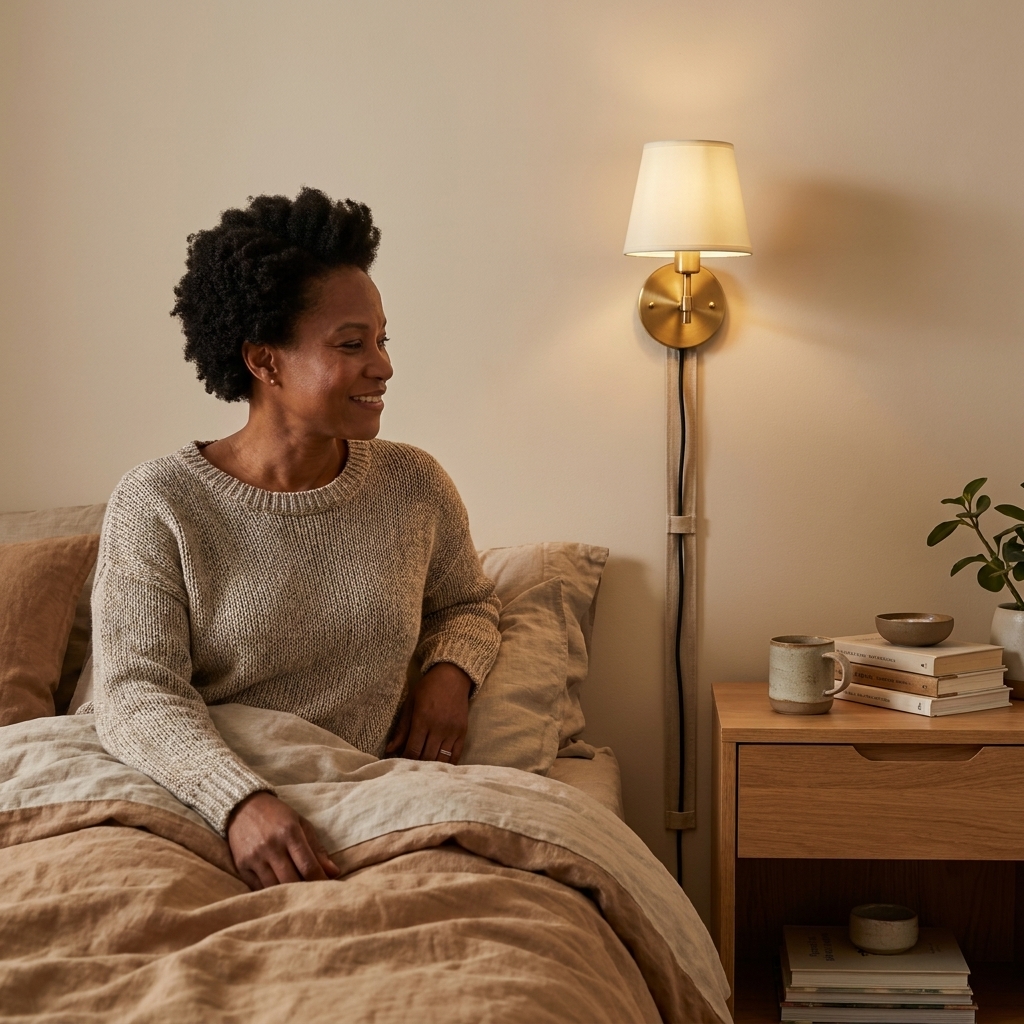
Plug-in sconces are my forever favorite because they give you that custom, grown-up look without touching wiring. They also free up surface space on nightstands and console tables, which is basically gold in a small apartment.
Where plug-in sconces shine
- Bedside lighting: mount one on each side of the bed (or just one if your bed is in a corner)
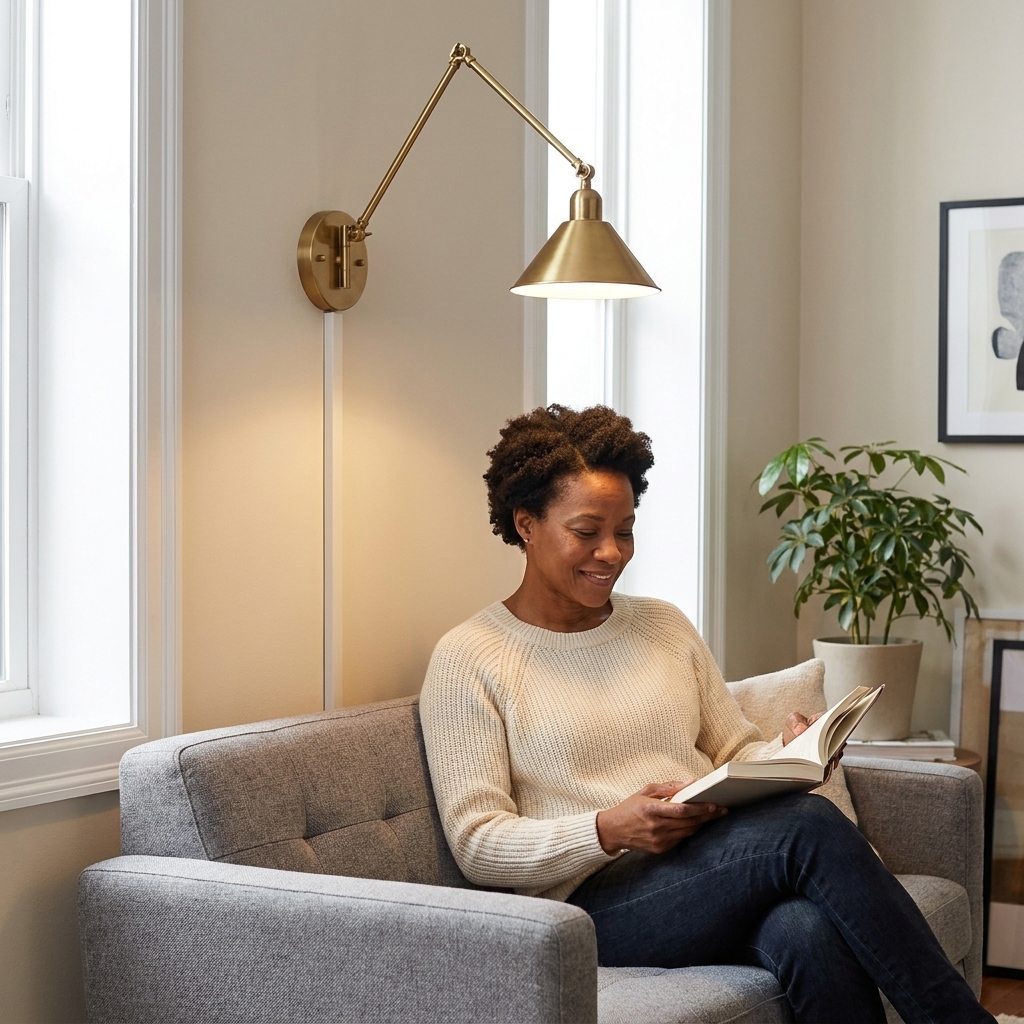
- Sofa reading light: place slightly behind and above your shoulder so the light lands on your book, not your face
- Entry moment: a sconce over a narrow shoe cabinet makes the whole area feel designed
- Bathroom assist: if your vanity lighting is tragic and you cannot change it, a plug-in light near the mirror can help, but only if you can do it safely (see bathroom notes below)
What to look for when buying
- Swivel or swing arm: best for beds and sofas because you can aim the light
- Shade direction: up-light feels ambient, down-light feels task-focused
- Bulb type: standard E26 sockets are easiest because you can choose your own bulb warmth and brightness
- Cord length: measure to your nearest outlet before you fall in love
- Mounting method: a hard plate + screws looks most “real,” but some renters use heavy-duty picture hanging strips for very lightweight fixtures
Mounting without regret
Always check your lease and house rules first. Many rentals allow small nail or screw holes if you patch them on move-out, but what counts as “normal wear” varies by landlord, lease language, and location. When in doubt, ask.
If you want the no-hole route, choose a truly lightweight sconce and use strips rated by the manufacturer for the fixture’s weight, wall type, and conditions. Clean the wall first, let adhesives cure fully, and assume humidity, textured paint, and a cord getting tugged can all reduce hold. If you are using screws, try to hit a stud. If you cannot, use wall anchors rated well above the fixture weight.
Cord management is the make-or-break detail. Use paintable cord covers, run the cord straight down (not diagonally), and align it with trim lines when possible. In a small room, a neat vertical cord reads intentional. A wiggly cord reads temporary.
Battery-operated lights: the secret weapon for dark corners
Battery lighting has gotten so good. The trick is using it where it actually makes sense, meaning places where running a cord would look messy or eat up your only outlet.
Best uses in small apartments
- Closets: motion-sensor puck lights or light bars make mornings less chaotic
- Under cabinets: instant kitchen upgrade, especially in rentals with dim counters
- Bookshelves: tiny puck lights or mini spotlights add depth and make styling look elevated
- Hallways: motion-sensor night lights prevent the “blinded at 2 a.m.” situation
- Artwork: battery picture lights add a gallery feel without wiring

Battery bulbs vs battery fixtures
Battery bulbs are great when you already have a lamp you love but the outlet is inconvenient. Many are rechargeable and come with a remote. Just know they are usually not as bright as plug-in bulbs, so think “mood lighting” more than “light up the whole kitchen.”
Battery fixtures are better when you want light in a spot that has never had it, like a closet or a shelf. Look for rechargeable options if you hate buying batteries.
My performance checklist
- Color temperature: aim for 2700K to 3000K for a cozy home feel
- Brightness: for reading, look for roughly 400 to 800 lumens at your seat, or plan to use two smaller lights instead of one struggling light
- Charging style: USB-C is easiest to live with
- Controls: motion sensors for closets, remotes for bedside
Floor lamps: the “square footage stretcher”
Floor lamps can make a small apartment feel taller and airier because they pull light up from the ground plane. They also let you add a big lighting impact without taking up table space.
Types that work best in tight layouts
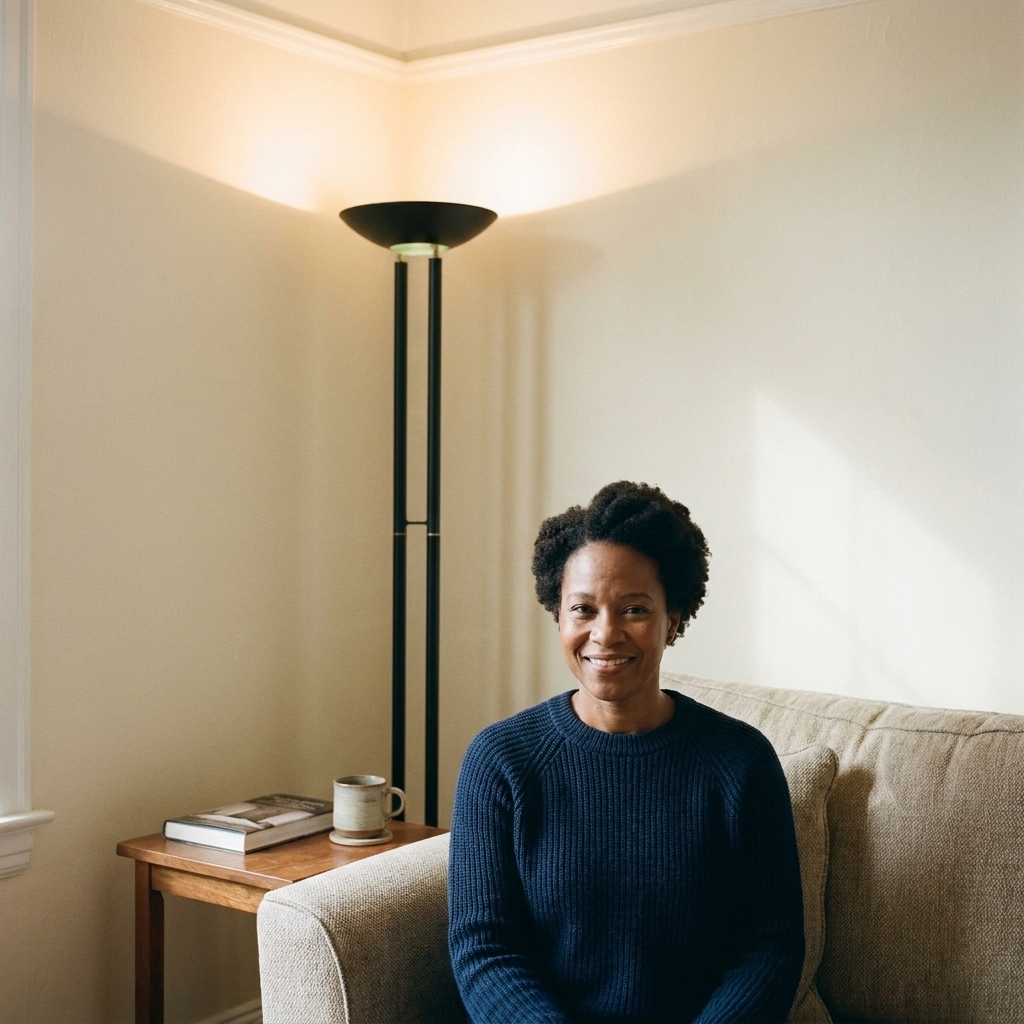
- Torchiere (uplight): bounces light off the ceiling to brighten the room fast
- Arc lamp: reaches over a sofa or chair without needing an end table
- Tripod lamp: adds style but can be footprint-heavy, so measure carefully
- Corner lamp with multiple heads: great for studios because one fixture can cover living and dining zones
- Slim column lamp: perfect when you only have a 10-inch gap to work with
Placement that makes rooms feel bigger
- Light the walls, not just the center: place lamps so they wash light onto vertical surfaces
- Brighten the farthest corner: a lit corner visually pushes the room boundary outward
- Keep pathways clear: tuck the base behind furniture legs when possible
- Use height: a taller lamp draws the eye up and makes ceilings feel higher
Stylist tip: if your overhead light is cold and harsh, turn it off and build your own “ceiling glow” with a bright uplight floor lamp plus one warm table lamp. It is one of the fastest ways to make a rental feel more finished.
Swag lights and plug-in pendants: fake a ceiling fixture
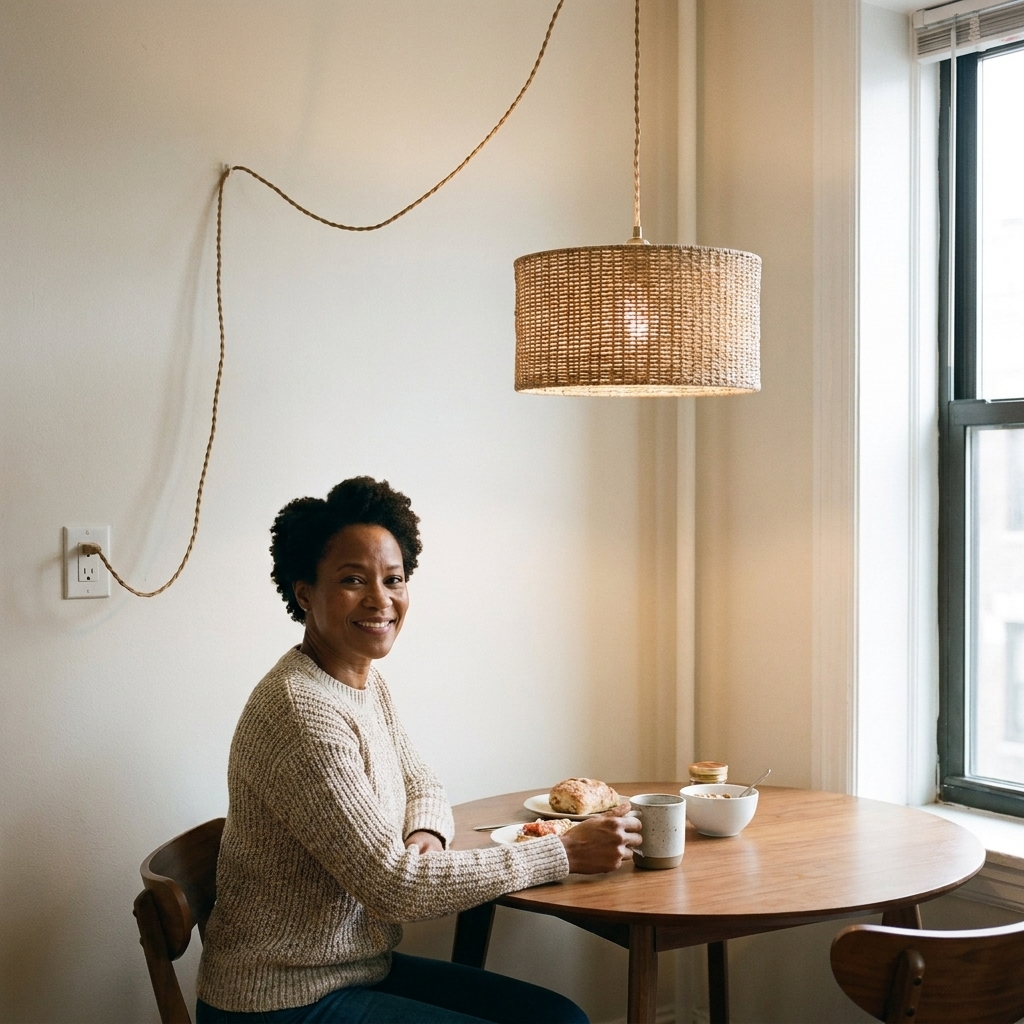
If you have no dining room light, or your living room fixture is in a weird spot, a plug-in swag pendant is a renter-friendly workaround. You hang it from a ceiling hook, then drape the cord to the nearest outlet. It is basically a lighting optical illusion, and I love it.
Where they’re especially useful
- Over a small dining table: creates a zone even if your “dining area” is two feet from the sofa
- Next to the bed: a pendant can replace a bedside lamp if you are short on surface space
- In a dark corner: adds overhead-style glow without overhead wiring
Ceiling hook notes for renters
Use a hook rated for the fixture weight. Many leases allow small holes if repaired, but if you are unsure, choose a lightweight pendant and use removable ceiling hooks designed for the load. Keep the draped cord tidy and intentional, not tangled and apologetic.
Bulbs matter more than you think
You can buy the prettiest lamp in the world and still hate your lighting if the bulb is wrong. In small spaces, bulb choice is the difference between cozy and convenience store.
My default bulb settings for apartments
- Color temperature: 2700K for bedrooms and living rooms, 3000K for kitchens and baths
- Brightness: use multiple medium-bright bulbs rather than one super bright bulb
- High CRI (90+): colors look more natural, which helps everything from plants to skin tone
- Dimmable: even if you do not have a dimmer switch, you can use smart bulbs or inline dimmers with some lamps
One-room tip for studios: keep all your bulbs within the same temperature range so the space feels cohesive. Mixing a cool white bulb with warm bulbs makes a small apartment feel visually messy. Also, smart bulbs vary by brand and model. Some dim warmer, some do not. Mixing brands can look mismatched even at the same listed Kelvin.
Lumens cheat sheet
- Bedside reading: about 400 to 800 lumens, aimed at the book
- Cozy ambient (living room): about 800 to 1600 lumens total, spread across 2 to 3 lamps
- Kitchen task (counters): about 1500 to 3000 lumens total depending on kitchen size, ideally from multiple sources like under-cabinet lights plus a lamp
- Accent: 100 to 300 lumens per small light, just enough to add depth
Glare control (the underrated upgrade)
- Avoid bare bulbs at eye level: they look harsh in small rooms and on video calls
- Choose diffusers: fabric shades, frosted globes, and opal glass soften light and hide hotspots
- Aim light off surfaces: bouncing light off a wall or ceiling often feels brighter and gentler than a direct beam
Room-by-room lighting plans (small-space edition)
Studio apartment
- Living zone: uplight floor lamp in a corner + plug-in sconce by the sofa
- Sleep zone: one swing-arm plug-in sconce or a small table lamp with a warm bulb
- Accent: battery puck lights on a bookshelf to add depth
Bedroom
- Best upgrade: plug-in sconces to free up nightstand space
- Cozy layer: a tiny lamp on a dresser or shelf so you are not relying on one light source
- Closet: motion-sensor light bar
Living room
- Anchor light: one floor lamp with a shade that diffuses light
- Task light: reading lamp near the spot you actually sit
- Make it feel bigger: add a lamp that throws light onto a wall, not just downward
Kitchen
- Immediate win: battery under-cabinet lights
- Evening vibe: a small lamp on a counter or open shelf if you have a safe spot away from water and heat
Entryway
- Small but mighty: plug-in sconce over a narrow console or a slim floor lamp tucked beside a mirror
- Practical: motion-sensor night light for late arrivals
Safety and landlord-friendly basics
- Confirm what your lease allows: even tiny holes and ceiling hooks can be fine if repaired, but rules vary. When in doubt, ask before you drill.
- Do not overload outlets: especially in older buildings. Use a quality surge protector with spacing, not a wobbly tower of adapters.
- Use the right bulb rating: follow the fixture maximum. LEDs run cooler than incandescent bulbs, but they still create heat, especially in enclosed shades.
- Keep cords out of walkways: cord covers are your friend, and so is routing behind furniture.
- Avoid heat near fabric: keep bulbs and fixtures away from curtains, bedding, and drapey pendants, and stick to LEDs where possible.
- Test adhesive slowly: if you are using removable strips, clean the wall first and remove gently later to protect paint.
Bathroom notes (read before you plug anything in)
- Use a GFCI-protected outlet: if your bathroom outlet is not GFCI, do not use plug-in fixtures there until it is addressed.
- Keep cords out of splash zones: never run cords across a sink rim, tub edge, or anywhere water can drip or pool.
- Choose the right rating: if you are using a fixture near a sink, pick something damp-rated when possible.
- When in doubt, skip it: a battery picture light aimed at the mirror area or brighter bulbs in existing fixtures is often a safer workaround.
Quick shopping checklist (measure first, then click)
- Measure distance to the nearest outlet for any plug-in fixture
- Decide your bulb warmth: 2700K or 3000K in most homes
- Pick one “statement” light per room, then fill in with simpler layers
- Prioritize wall-mounted light (sconces, picture lights) when you are short on surfaces
- Add one light to the darkest corner before you buy anything else
FAQ
Do plug-in sconces look cheap?
They can, but they do not have to. The two details that make them look high-end are a proper wall backplate (not a flimsy clip) and clean cord routing with a straight line down to the outlet.
Can I use plug-in lights with smart bulbs?
Yes. Smart bulbs are a renter’s best workaround for dimmer control and scheduling. Just make sure the lamp or sconce stays switched on so the bulb can be controlled by the app or voice assistant.
What is the best lighting for a tiny room with no ceiling light?
Start with an uplight floor lamp for overall brightness, then add either a plug-in sconce or a table lamp for task lighting. If you want a ceiling-fixture feel, add a plug-in swag pendant over the main zone.
How many lamps do I actually need?
For most small rooms, two to three light sources is the sweet spot. In a studio, aim for three to five total lights spread across zones rather than one lamp trying to light everything.