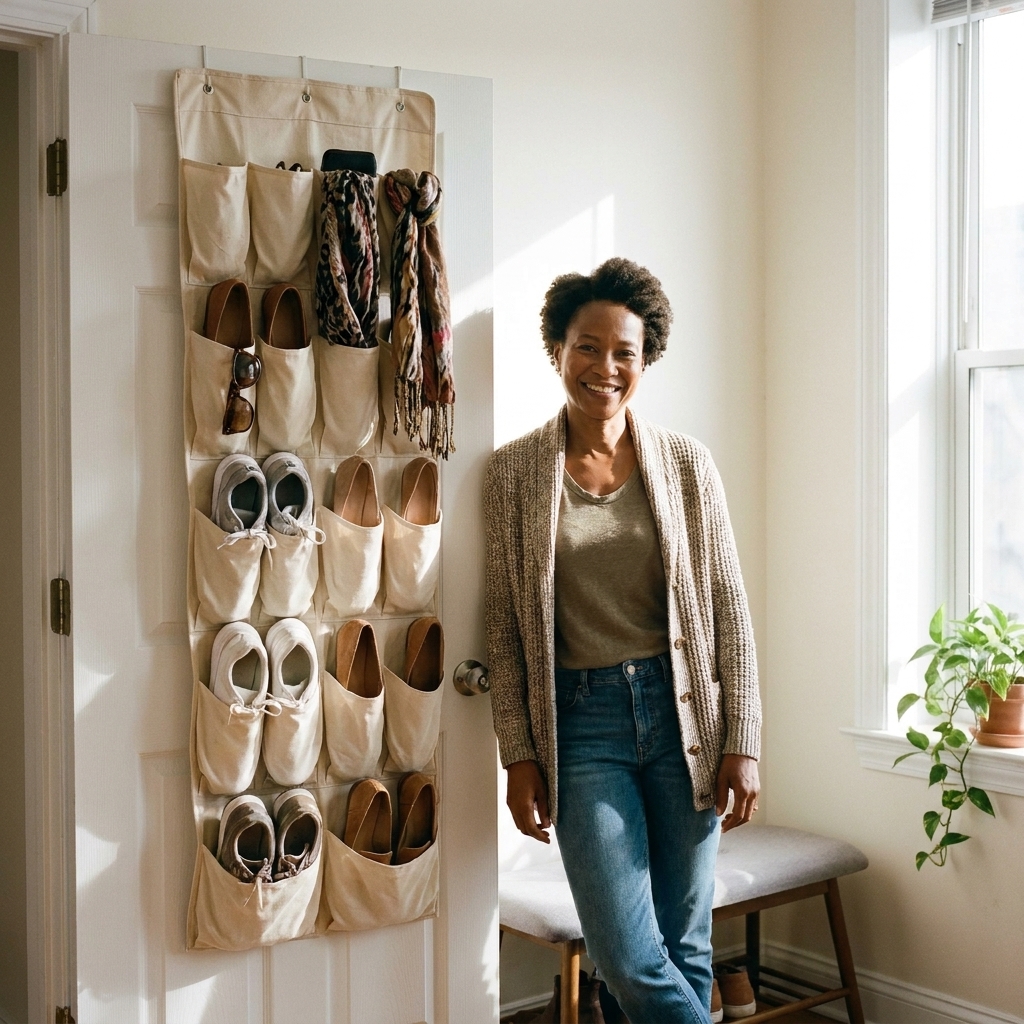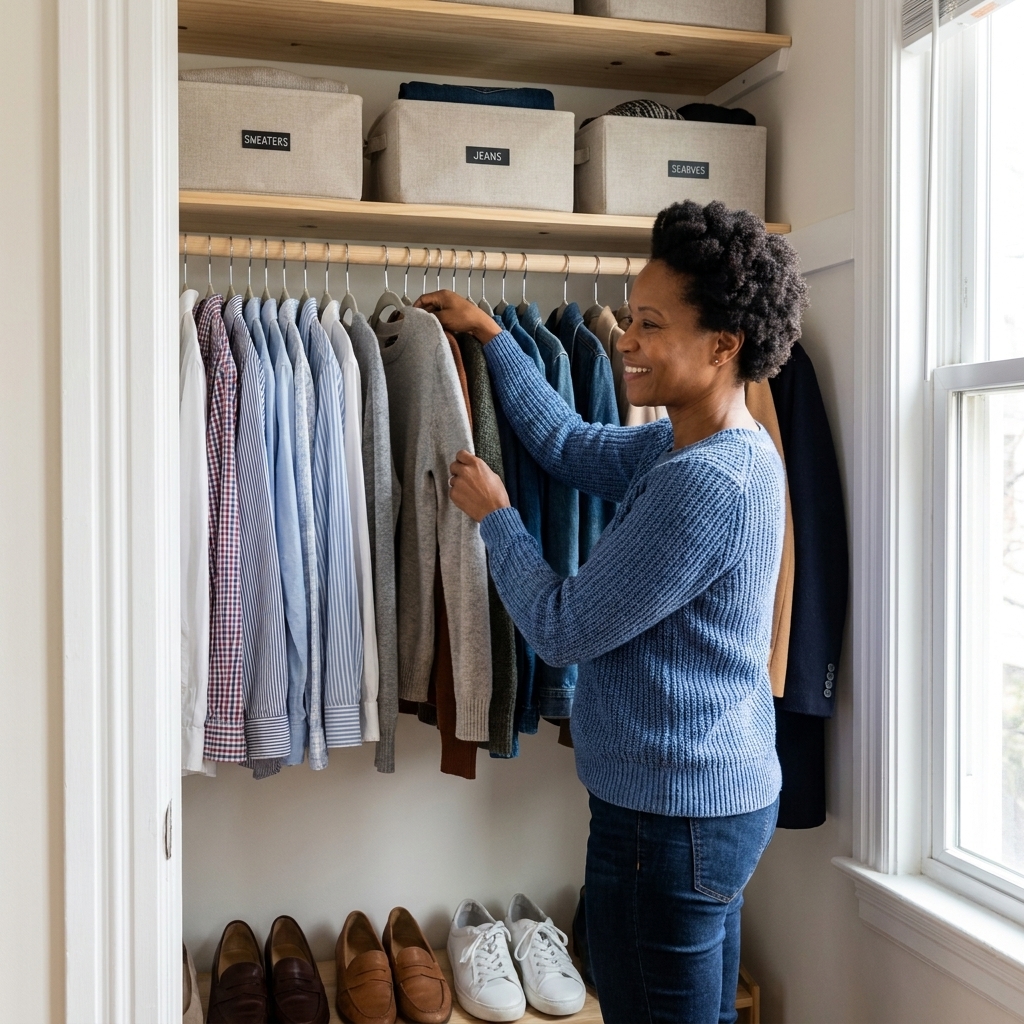
Declutter fast, fold vertically, and increase hanging capacity with cascading hangers and smart zones. Small closet, big wardrobe: handled.
Space Ovo
15 Under-Bed Storage Solutions That Hide Clutter in Small Bedrooms
From rolling bins to vacuum bags and low-profile drawers, these under-bed storage ideas help small bedrooms feel calmer, cleaner, and way more functional.

Maya Brooks
Maya Brooks is an interior stylist and layout enthusiast who believes square footage should never dictate your home's style. After a decade of navigating cramped city studios, she shares practical, renter-friendly decorating and storage solutions to help others maximize their tiny spaces.
Created October 17, 2026
Updated October 17, 2026
If you live in a small bedroom, the space under your bed is not “extra.” It is premium real estate. And the best part is you can store a surprising amount down there without your room looking like a storage unit, as long as you choose the right systems.
I have lived through the 350-square-foot era of my life (twice, once in SF and once in Brooklyn), and under-bed storage is one of the few renter-friendly upgrades that can make your room feel calmer fast. Below are 15 under-bed storage solutions that hide clutter beautifully, plus a few “learn from my mistakes” tips so you do not buy the wrong height bin and then rage-return it.
Before you buy anything: 3 fast measuring checks
Quick tape-measure moment. It saves you money and keeps your storage actually usable.
- Measure clearance height: From floor to the lowest part of the bed frame. Subtract about 0.5 inch so bins slide without catching. If you have carpet, measure with the bin sitting on the carpet too, since thick pile can steal more clearance than you think.
- Measure usable depth: If you have a center support leg or rail, or slats that dip, you might need multiple smaller bins instead of one big one.
- Check access: Do you pull storage from the foot or the sides? If a nightstand blocks the side, prioritize drawers or bins that pull from the foot.
Bonus sanity check: If you rent and your bed shifts easily, add felt pads or rubber grippers. A rolling bin that constantly bumps your baseboard is a tiny daily annoyance that adds up.
The 15 best under-bed storage solutions
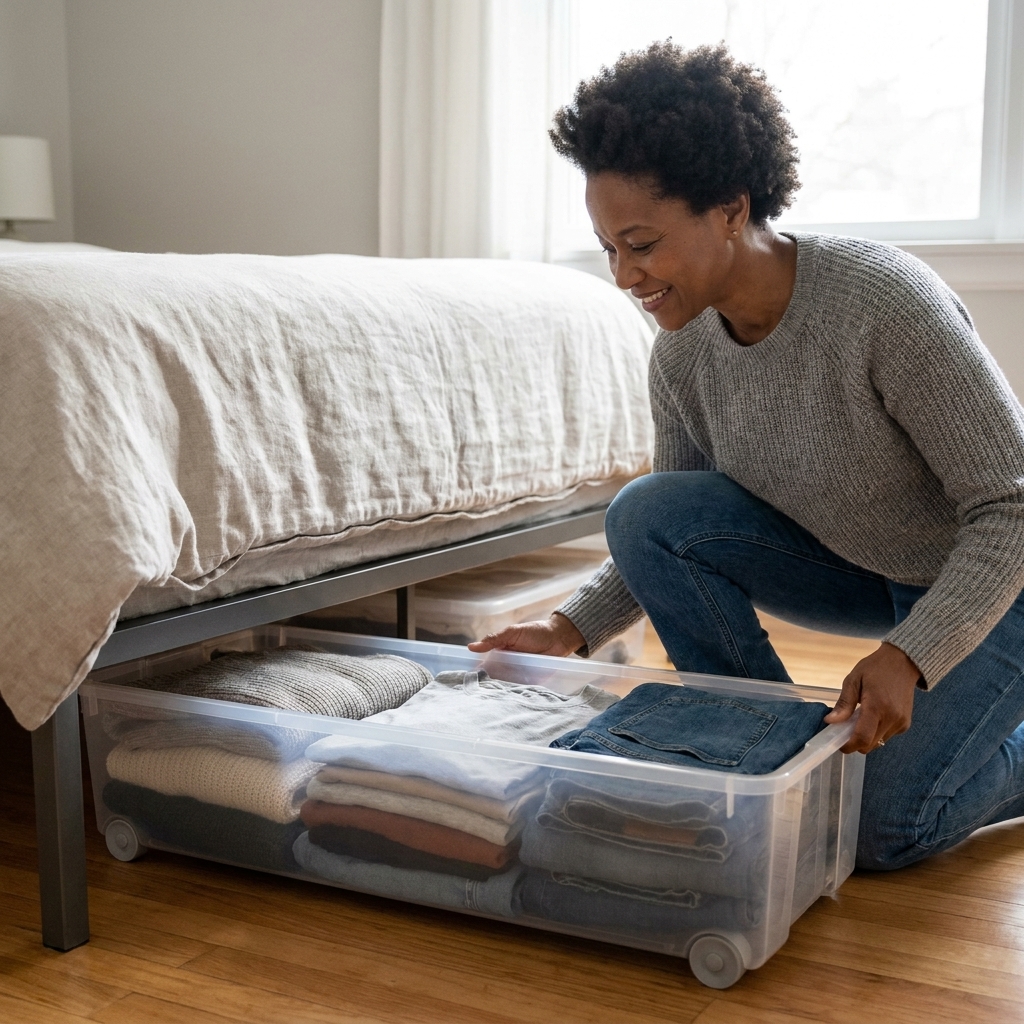
1) Low-profile rolling bins (the easiest win)
If you want maximum storage with minimum effort, start here. Rolling bins are ideal for clothes, shoes, linens, or that “I will deal with it later” pile you are trying to hide from yourself.
- Why it works: You will actually use it because it glides out easily.
- Look for: Locking wheels and a lid that stays rigid.
- Best for: Daily or weekly access items.
2) Clear lidded totes (for visual people who forget what they own)
Clear bins are not the chicest on their own, but under the bed they are basically invisible. They are perfect if you tend to re-buy things because you cannot remember where you stored them.
- Why it works: Instant inventory.
- Look for: Tight latches and a truly low-profile shape.
- Best for: Off-season clothes, gift wrap, extra toiletries.
3) Fabric zippered under-bed bags (soft, light, and budget-friendly)
These are the renter’s classic for a reason. They are lightweight, flexible around bed legs, and easy to stash even when your clearance is awkward.
- Why it works: Flexible sides fit tricky frames.
- Look for: Reinforced handles and a zipper that runs smoothly around corners.
- Best for: Sweaters, blankets, guest bedding.
4) Vacuum-sealed bags (smallest footprint for puffy things)
If your biggest storage enemies are comforters, winter coats, or extra pillows, vacuum sealing is a great tool. Just keep expectations realistic: vacuum bags are excellent for volume reduction, not for quick access, and not for every fabric.
- Why it works: Compresses bulky items dramatically.
- Look for: Double-zip seals and a valve that holds air long-term.
- Best for: Seasonal bedding and outerwear you will not touch for months.
One caution from experience: long-term compression can crease delicate knits and can be rough on some fills (especially down and feathers). If you are storing a fancy down duvet you love, consider a roomy under-bed bag or bin instead.
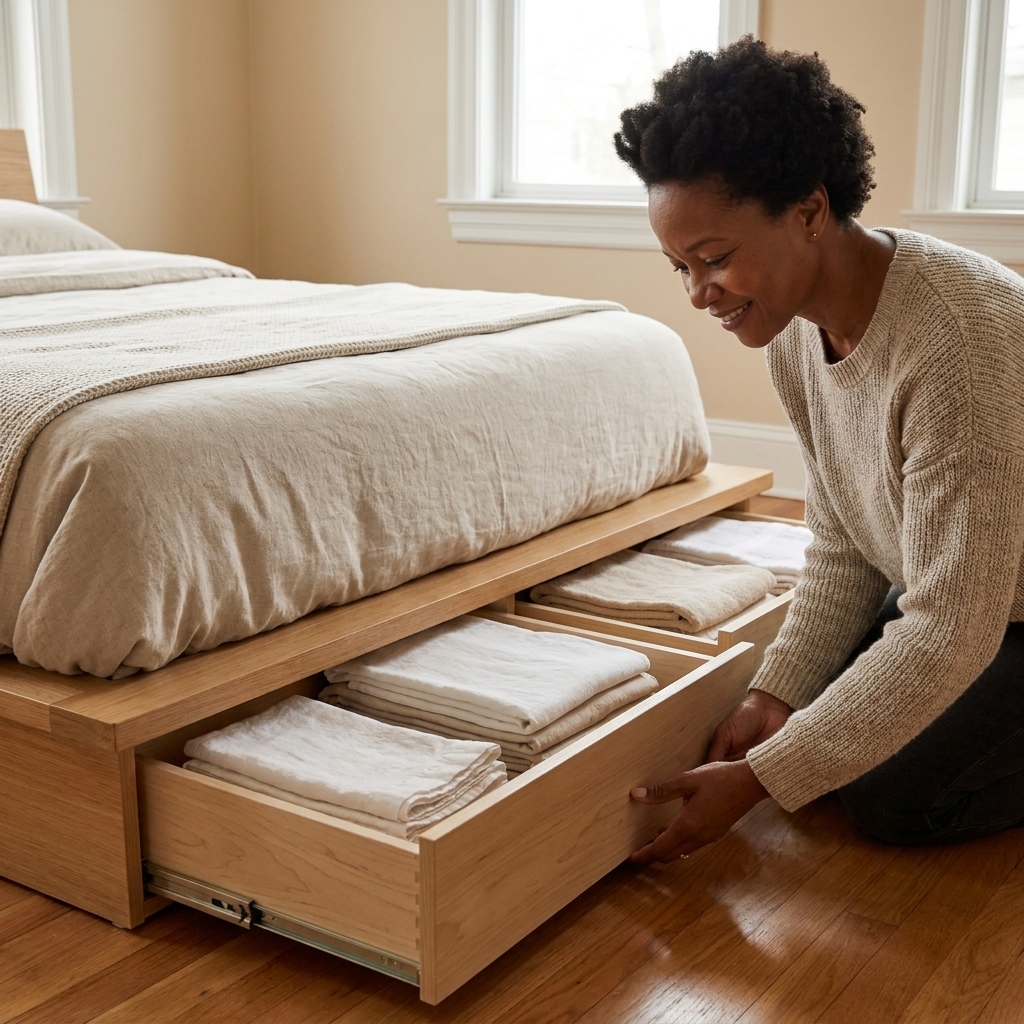
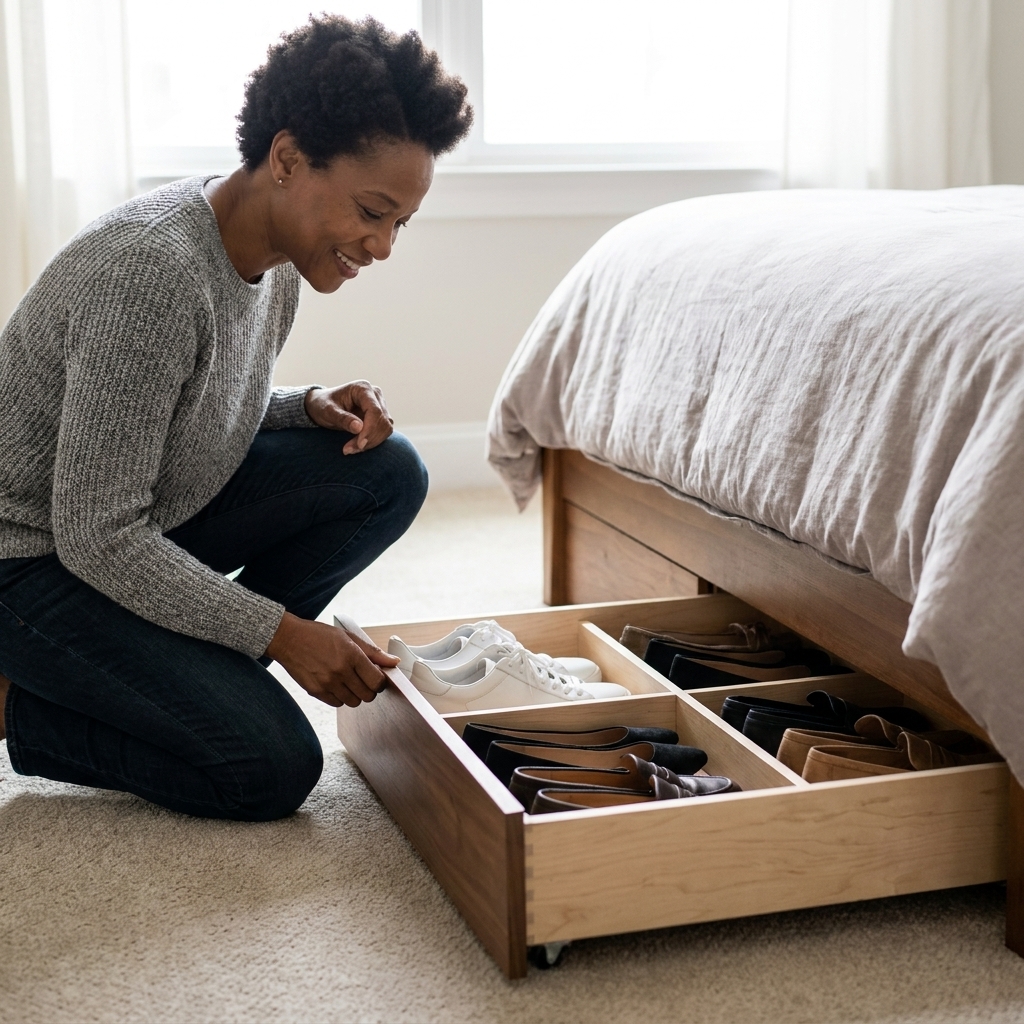
5) Low-profile drawer units on casters (the “built-in” look without built-ins)
Think of this as a dresser drawer that lives under your bed. It looks more furniture-like than bins, which is helpful if your bed frame is open on the sides.
- Why it works: Feels intentional, not like you are hiding stuff.
- Look for: Smooth glides or sturdy wheels, plus a front that stays straight.
- Best for: T-shirts, workout sets, sleepwear.
6) Under-bed shoe drawers (goodbye shoe piles)
Shoe storage gets chaotic fast in small bedrooms. A designated under-bed shoe drawer is the simplest way to keep pairs together and dust-free.
- Why it works: One home for shoes you actually wear.
- Look for: Compartments or dividers so shoes do not tumble into a heap.
- Best for: Flats, sneakers, sandals, low boots.
7) Long shallow bins for linens (hotel vibes on a budget)
Sheet sets are sneaky bulky, and closets rarely have the right shelf height. A long, shallow bin under the bed keeps linens flat and easy to grab when you are doing the awkward corner-of-the-fitted-sheet battle.
- Why it works: Wide footprint prevents tall, messy stacks.
- Look for: A lid that stays flat and handles that do not rip.
- Best for: Sheets, pillowcases, spare duvet covers.
8) Cedar under-bed boxes (helpful for moth-prone closets)
If you store wool sweaters, scarves, or vintage pieces, cedar can help deter pests and keep things smelling fresh. It is also one of the prettiest “peek out from under the bed” options.
- Why it works: Can discourage moths in enclosed storage when items are clean and dry.
- Look for: A tight-fitting lid and unfinished cedar interior.
- Best for: Knitwear, heirloom linens, special-occasion clothing.
Quick reality check: cedar is a helper, not a force field. Its scent fades over time, so you may need to refresh it (light sanding is a common approach), and clean storage still matters most.
9) Woven baskets (only if your under-bed area is visible)
Open-frame beds can expose your storage, so aesthetics matter. Woven baskets are my favorite way to make under-bed storage look like decor.
- Why it works: Warm, styled look even when visible.
- Look for: A low rectangular shape and a reinforced bottom that will not sag.
- Best for: Extra throws, slippers, reading backlog.
10) Storage plus a dust ruffle (the stealth option)
If you want the storage but do not want to see it, add a simple bed skirt or tailored dust ruffle. It is like a curtain for clutter.
- Why it works: Hides mismatched bins instantly.
- Look for: A clean, straight hem and an easy attachment method like wrap-around elastic, Velcro, or a platform-friendly skirt designed for beds without a box spring.
- Best for: Mixing storage types without visual chaos.
11) Labeled photo boxes for keepsakes (thin, stackable, and tidy)
Memory items are important, but they can take over a small room. Photo storage boxes (the kind for prints) are surprisingly perfect under beds because they are slim and stack neatly.
- Why it works: Keeps paper goods protected and organized.
- Look for: Acid-free options for photos and letters.
- Best for: Photos, cards, documents, small mementos.
12) Slide-out trays for crafts or office supplies
If your bedroom doubles as your workspace (hello, city living), under-bed trays can hold craft supplies, tech accessories, or paperwork without living on your desk.
- Why it works: Pull-out access without digging through deep bins.
- Look for: A rigid tray with a lip edge to keep items contained.
- Best for: Wrapping supplies, cords, notebooks, art supplies.
13) Under-bed storage for sports gear (the weird shapes solution)
Yoga blocks, resistance bands, swim fins, inline skates, climbing shoes. Sport stuff is awkward. Use one dedicated under-bed bin so it is contained, not sprinkled around your bedroom like a fitness confetti situation.
- Why it works: Containment for bulky, irregular items.
- Look for: Extra-long bins and sturdy handles.
- Best for: Gear you use weekly but do not want out.
14) Bed risers plus storage bins (only when you truly need clearance)
If your bed barely has clearance, risers can turn “no storage” into “actual storage.” The tradeoff is aesthetics and stability, so choose carefully.
- Why it works: Creates space where none existed.
- Look for: Wide-base risers and a height increase you can live with visually.
- Best for: Studio apartments with limited closet space.
My tip: If you use risers, commit to matching bins. When the under-bed area becomes more visible, cohesion matters more.
15) Lift-up bed hardware (possible for some frames, with caution)
If you have a sturdy platform bed and you are allowed to swap hardware, lift-up mechanisms can create one big hidden compartment. This is the closest thing to a storage bed without buying a whole new bed, but it is not a casual DIY for every frame.
- Why it works: Uses the entire footprint of your bed.
- Look for: Gas-lift hardware rated for your mattress weight, clear installation instructions, and reputable reviews.
- Best for: Long-term storage, luggage, bulky seasonal items.
Safety note: if it is installed incorrectly or under-rated for your mattress, the lift can slam or shift, which is a real injury risk. If you rent, double-check your lease, warranties, and whether your frame can handle the stress before you commit.
How to keep under-bed storage from turning into a junk drawer
Under-bed storage works best when it is curated, not chaotic. Here are my small-space rules:
- Store by category, not by randomness: One bin for linens, one for off-season clothes, one for shoes. Mixing categories creates digging, and digging creates mess.
- Keep a little breathing room: Do not pack bins so full they bow or snag. If it does not slide easily, you will stop using it.
- Label the ends: If bins pull out from the foot of the bed, labels on the short end save time.
- Do a 10-minute seasonal swap: At the start of spring and fall, rotate what is under the bed so the most relevant items are easiest to reach.
If allergies are a factor in your life, treat this area like a dust zone: use sealed containers when possible and vacuum under the bed regularly. Your sinuses will notice.
What to store under your bed (and what not to)
Great candidates
- Off-season clothing (especially in sealed bins or bags)
- Extra bedding and towels
- Shoes in dust-free containers
- Gift wrap and party supplies
- Luggage (nested, with smaller items inside)
Be careful with
- Anything damp or dirty: Under-bed airflow is limited, so avoid storing wet boots, sweaty gym gear, or anything that could mildew.
- Food: Please do not invite pests into your sleep sanctuary.
- Heirloom paper without protection: Photos and documents need acid-free boxes and dry conditions.
Humidity tip: if you live in a damp climate or an older building, toss a few silica gel packs into lidded bins (and replace them periodically). For natural fibers you care about, breathable fabric storage can be a better long-term choice than airtight compression.
Quick FAQs
How much space do I need for under-bed storage?
Even 5 to 6 inches of clearance can work with slim fabric bags or very low bins. If you have 7 to 8 inches, your options expand a lot. Measure from the floor to the lowest part of the frame, not to the mattress.
Is it okay to store clothes under the bed long-term?
Yes, as long as they are clean, fully dry, and stored in a sealed bag or lidded bin to protect from dust. For delicate items like wool, cashmere, or pieces you do not want permanently creased, skip long-term vacuum compression and use breathable storage or cedar.
How do I keep dust out?
Choose containers with lids or zip closures, and vacuum under the bed when you change sheets. If your bed frame is open, a simple dust ruffle can hide the bins and reduce visible dust buildup.
What is the most stylish option if my under-bed storage shows?
Woven baskets or matching low drawer units look the most intentional. When storage is visible, repeating the same container style is the trick that makes it feel designed.
My tiny-space pep talk
You are not “messy.” You are living in a room that is doing too many jobs with too little storage. The right under-bed setup can give your bedroom that exhale feeling, where the surfaces are clear and your brain stops buzzing.
Pick one solution that matches how you live. If you need quick access, go rolling bins or drawers. If you need serious volume, go vacuum bags (with fabric caveats). If your bed area is visible, go baskets or cohesive matching containers. Tiny spaces are just puzzles, and I promise you can win this one.