Clever under-bed storage picks for small bedrooms: rolling bins, slim drawers, vacuum bags, and more, plus tips to measure and keep it looking tidy.
Space Ovo
Organize a Small Bedroom Closet When You Have Too Many Clothes
A small bedroom closet can hold a big wardrobe with the right system. Learn quick decluttering rules, vertical folding, cascading hangers, and renter-friendly storage tricks that actually work.

Maya Brooks
Maya Brooks is an interior stylist and layout enthusiast who believes square footage should never dictate your home's style. After a decade of navigating cramped city studios, she shares practical, renter-friendly decorating and storage solutions to help others maximize their tiny spaces.
Created October 17, 2026
Updated October 17, 2026
If you have a micro-closet and a maxi wardrobe, welcome. I have lived this life in multiple “cozy” apartments where the closet rod was basically a suggestion. The goal is not to own three shirts and call it minimalism. The goal is to make your closet work like a tiny boutique: clear categories, easy access, and zero avalanches.
This is the exact playbook I use when the closet is small, the ceiling is high, and the clothes are winning.
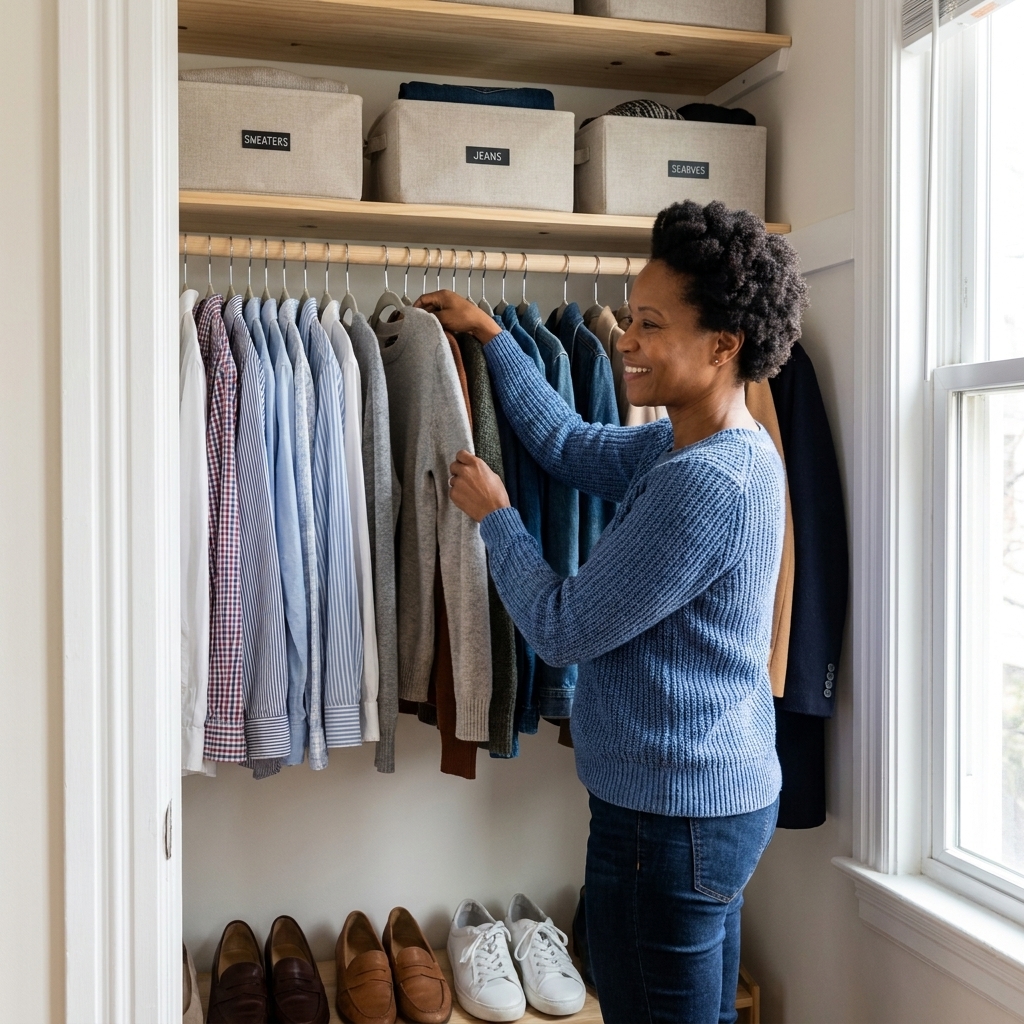
Step 1: Measure first
Before you declutter a single sock, grab a measuring tape. Two minutes of measuring saves you from owning seven bins that do not fit anywhere.
- Closet width: wall to wall.
- Rod height: floor to rod.
- Shelf depth: front edge to back wall.
- Usable height above the rod: this is prime real estate.
- Door clearance: whether doors slide or swing, or if you use a curtain.
Write it down in your Notes app. You will use these numbers for hangers, shelf dividers, and bins.
Step 2: Declutter with renter rules
I am not going to tell you to “keep only what sparks joy” while you are staring at a closet the size of a cereal box. We need quicker, clearer rules.
A quick sort that actually works
Pull everything out and make five piles on the bed:
- Everyday favorites: you wear them constantly.
- In-season: weather-appropriate pieces you will wear in the next 30 days.
- Out of season: store elsewhere in the apartment, not in prime closet space.
- Maybe: the “I might need this” pile.
- Out: donate, sell, recycle, or toss.
Three fast decluttering tests
- The hanger test: if it has not touched your body in a year and it is not a formalwear outlier, it does not get closet space.
- The comfort test: if you constantly tug, adjust, or avoid it, it is taking up rent-free space.
- The duplicate test: keep the best version. Small closets cannot afford “backup black tees” in five fabrics.
For the Maybe pile, box it up and date it. If you do not retrieve something in 30 days (in-season) or by next season (out-of-season), you have your answer.
Step 3: Make a zoning plan
Big closets can be chaotic and still function. Small closets need zones, or everything becomes a tangled sweater tragedy.
My go-to zones
- Eye level: daily wear. This is your VIP section.
- Upper shelf: light, bulky, or rarely used items (handbags, extra bedding, off-season accessories).
- Lower zone: shoes, bins, and heavier items.
- One small drawer or bin for “weird stuff”: lint rollers, garment tape, heel caps, mini sewing kit. Keep it contained.
Decide the zones first, then put products in last. Organizers should support the plan, not become the plan.
Step 4: Try vertical folding
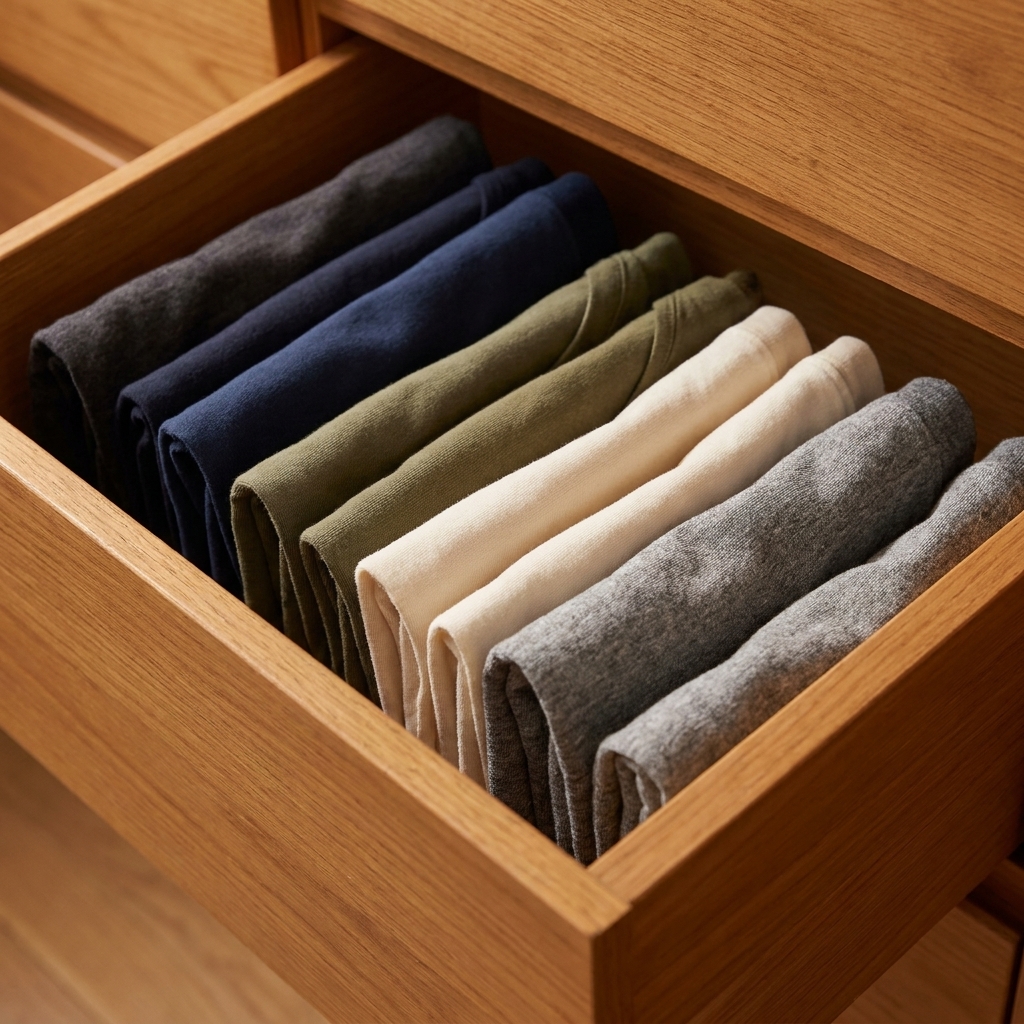
Vertical folding is my favorite small-space trick because it gives you visibility. Stacks hide clothes. Vertical files show clothes. It will not magically work on every item, but it often helps shelves and drawers fit noticeably more while staying easier to browse.
How to vertical-fold in 30 seconds
- Lay the item flat and smooth it.
- Fold sleeves in (for tops).
- Fold into a long rectangle.
- Fold into thirds until it can stand upright.
Use this for tees, tanks, leggings, pajamas, gym gear, and even light sweaters. Store the “files” front to back in a drawer, bin, or shelf cube so you can flip through like records.
Step 5: Use cascading hangers
If your closet has one rod and you have a lot of tops, blouses, and lightweight jackets, cascading hangers are the cheat code. They can increase hanging capacity without adding furniture.
Two ways to cascade
- Cascading hooks: a small connector hook hangs from one hanger and holds another below. Great for shirts and skirts.
- Tiered multi-hangers: one hanger holds multiple garments vertically. Great for tanks, camisoles, or matching sets.
My rules so cascading does not turn into chaos
- Keep “like with like”: cascade only similar weights (all blouses, all tanks). Mixing a heavy sweater with a silk cami is how you get stretching and slipping.
- Cap the chain: 4 to 6 items per cascade is usually the sweet spot. More than that becomes hard to browse.
- Put the everyday pieces at the top: you should not have to unhook five things to get dressed.
A quick safety and fit check
- Make sure hems do not drag: if items hit the floor, shorten the cascade or move it to a higher part of the rod.
- Do not overload the rod: especially in older rentals. If the rod bows, scale back.
- Mind garment length: long dresses and coats usually need their own uninterrupted space.
Bonus: Pair cascading with slim velvet hangers. They reduce bulk and stop shoulder bumps from sliding onto the floor.

Step 6: Use dead space
Small closets usually have three underused areas: the top shelf, the floor, and the inside of the door. We are going to make all three earn their keep.
Top shelf: make it bin-friendly
- Use identical bins so you can slide them in and out like drawers.
- Pick one bin for accessories: belts, scarves, hats. Contain the spaghetti.
- Use a shelf divider if stacks slump and migrate.
Closet floor: think in layers
- Shoe risers let you store pairs vertically instead of in a messy row.
- A low bin for “worn but not dirty” keeps the chair pile from happening.
- One lidded box for special occasion shoes so they do not get dusty and forgotten.
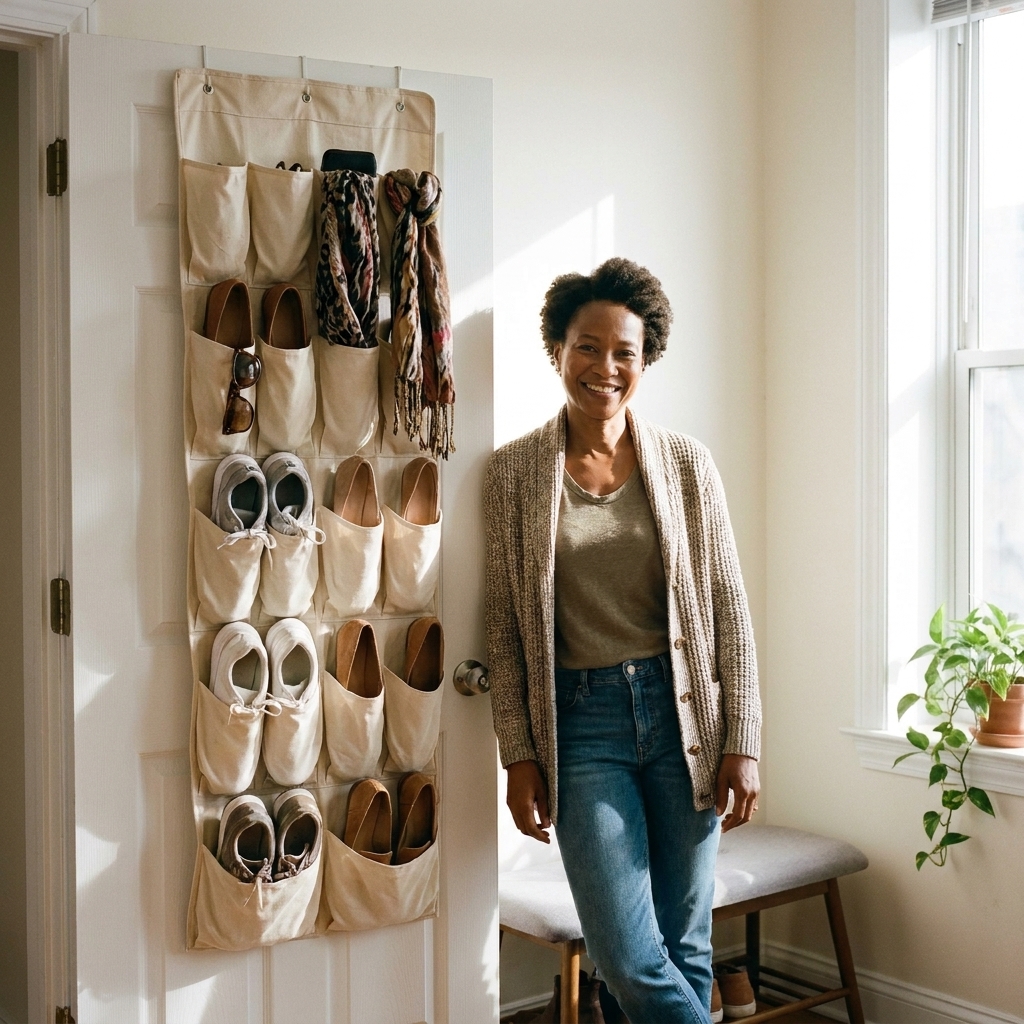
Back of door: add a removable adhesive system
- Over-the-door hooks: bags, robes, tomorrow’s outfit.
- Pocket organizer: socks, tights, small accessories. Choose one with stiff pockets so it does not sag.
If your closet has sliding doors, use the adjacent wall instead with removable hooks or a freestanding rack for bags.
Step 7: Store off-season elsewhere
When closet space is tight, off-season items should live somewhere else. Not because you own “too much,” but because winter coats should not bully your summer dresses for six months.
Best small-apartment spots for off-season storage
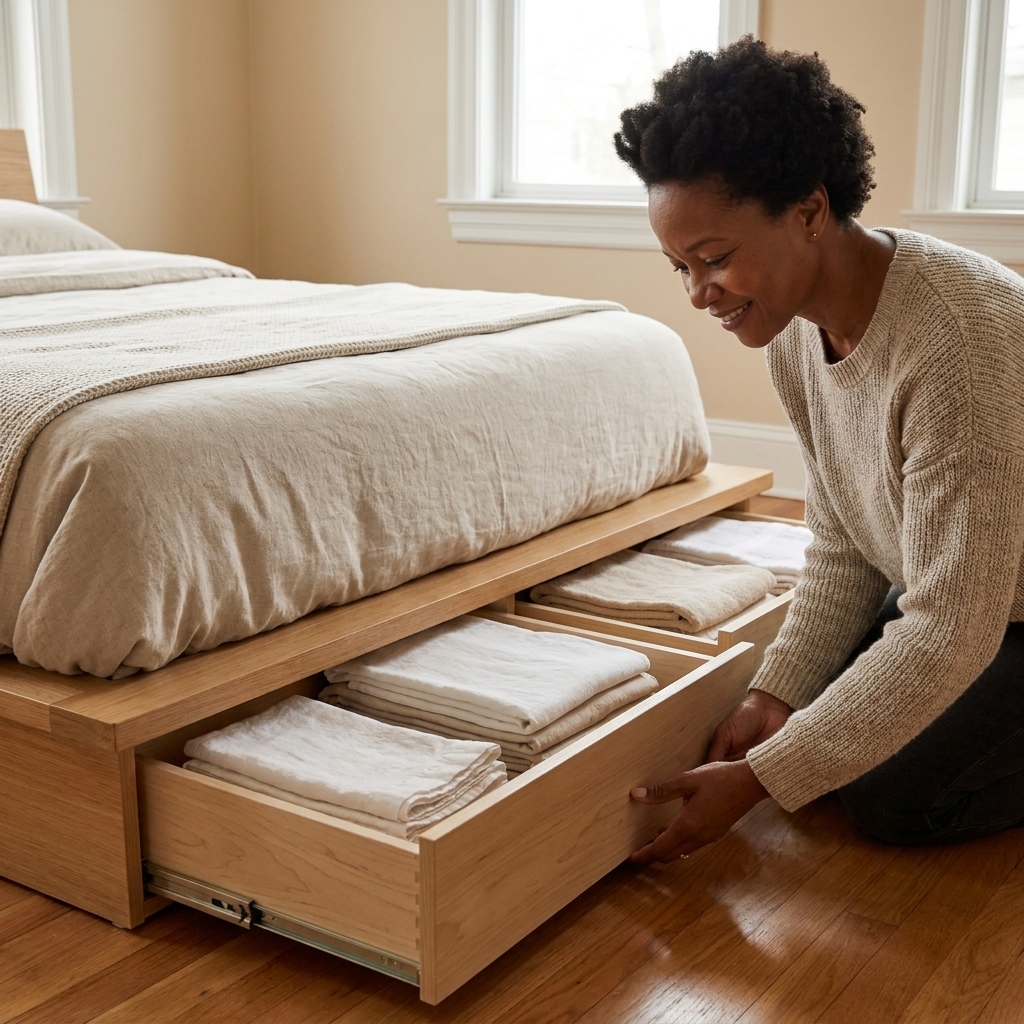
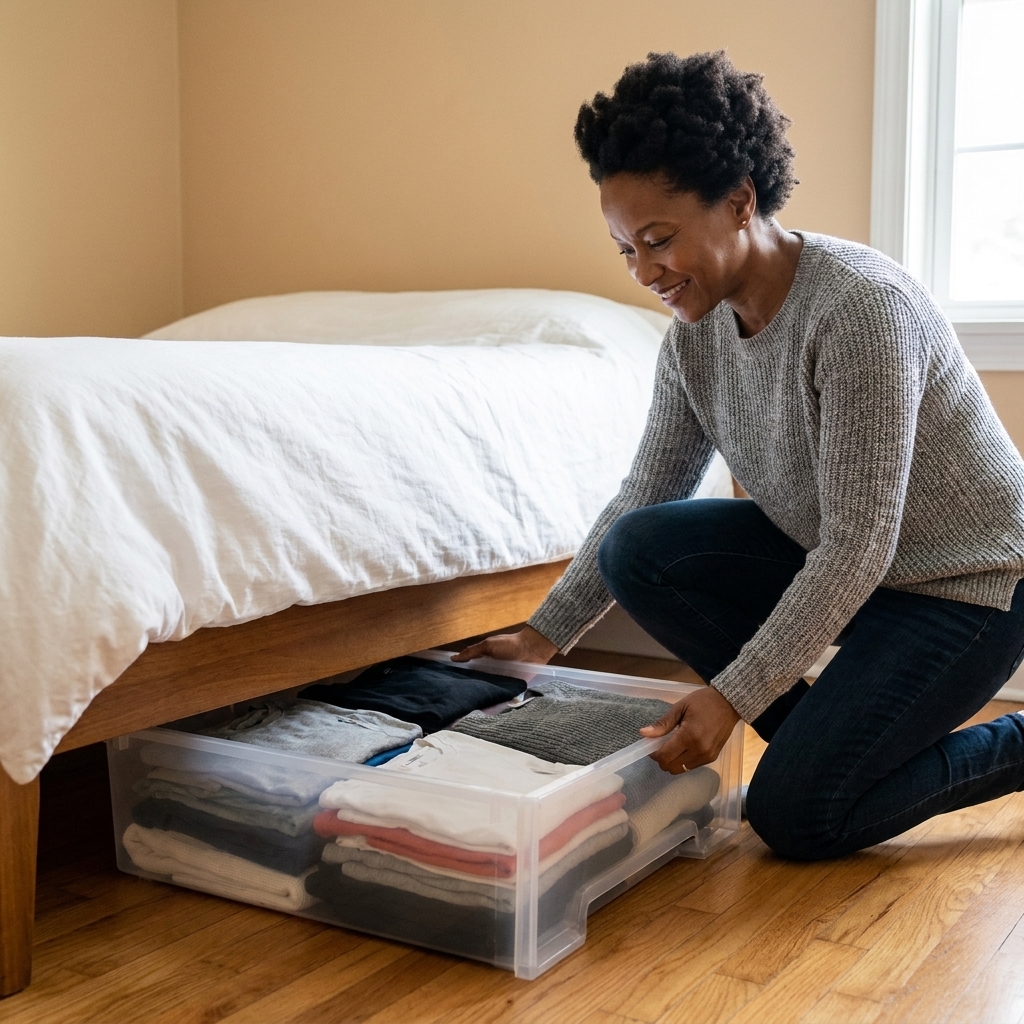
- Under-bed bins: the gold standard. Choose low-profile, zippered bins.
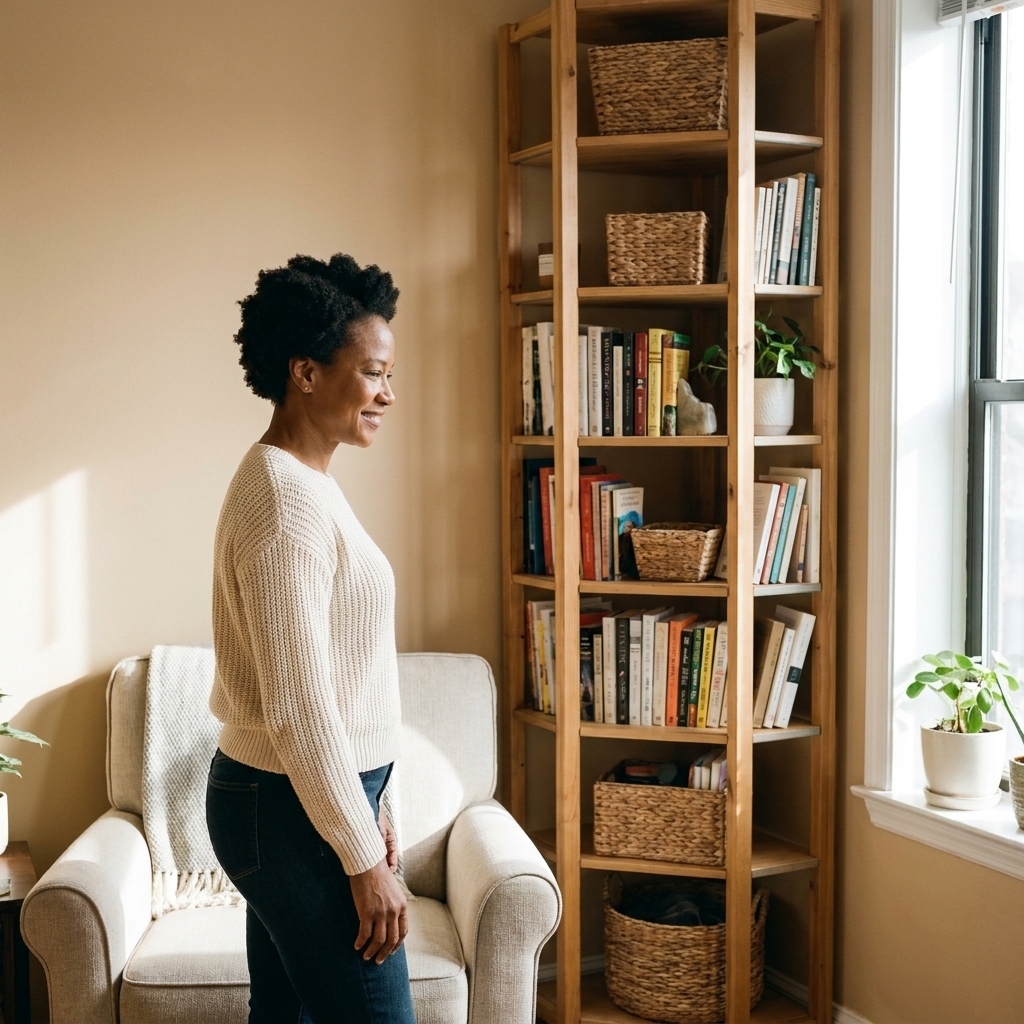
- Top of wardrobe or bookcase: use matching lidded boxes to look intentional.
- Suitcase storage: fill your luggage with sweaters and store it under the bed or in a corner.
Pro tip: store off-season clothes clean and add a cedar sachet. Nothing ruins a “new season refresh” like mystery closet smell.
Step 8: Make it easy to maintain
Organization that requires a Saturday and a full moon does not survive real life. Your system should reset in five minutes.
My low-effort maintenance routine
- One-in, one-out for hangers: if the rod feels tight, something leaves before something enters.
- Weekly two-minute sweep: re-hang strays, toss laundry in the hamper, put shoes back.
- Monthly category check: pick one category (jeans, sweaters, tees) and consider moving anything you did not reach for into a Maybe box.
If you are constantly fighting the same mess, that is not a you problem. That is a layout problem. Adjust the zones.
What to hang vs fold
This is where most small closets get sabotaged. Too much hanging makes the rod feel jammed. Too much folding turns into unstable stacks.
- Hang: items that wrinkle easily or that you wear often and want visible: button-downs, blazers, dresses, trousers, skirts.
- Fold: tees, knits, denim, workout gear, and pajamas using vertical folding so you can see everything at once.
- Skip hanging heavy knits: chunky sweaters can stretch at the shoulders. Fold them instead.
- Support delicate pieces: silky tops do better on grippy or padded hangers (and sometimes folded in a drawer if they snag easily).
Closet layouts that work
Here are three renter-friendly setups I use again and again, depending on what kind of closet you have.
1) The “more hanging” setup
- Slim velvet hangers
- Cascading hooks for tops
- One hanging shelf organizer for knits
- Shoe riser on the floor
2) The “more folding” setup
- Two medium bins on the top shelf (accessories, off-season)
- One set of shelf dividers
- Vertical folding for tees and gym clothes in bins
- A small lidded box for formal items
3) The “no closet shelf” setup
- Add a shelf alternative: a hanging organizer from the rod
- Use stackable bins on the floor
- Over-the-door organizer for small items
FAQ
Are vacuum bags good for small closets?
Yes for off-season bulky items like puffer coats and spare bedding, especially under the bed. I avoid them for everyday clothing since vacuum-packed piles are annoying to access and can cause deep creases. If you are storing down or other lofty insulation long-term, minimize extended compression if you want to preserve loft.
What should I hang vs fold in a small closet?
Hang items that wrinkle easily or that you wear often and want visible: button-downs, blazers, dresses, trousers, skirts. Fold tees, knits, denim, workout gear, and pajamas using vertical folding so you can see everything at once.
How do I stop hangers from taking up so much space?
Switch to one hanger type (slim velvet or slim plastic) and get rid of bulky mismatched ones. Uniform hangers reduce wasted inches and make the closet feel calmer instantly.
My closet is organized but still feels stuffed. Now what?
That usually means your closet is doing too many jobs. Move one category out: off-season clothes, special-occasion outfits, or backups. Even relocating one bin can relieve the “overstuffed” feeling.
5-minute closet checklist
- Measure, then buy organizers.
- Keep daily wear at eye level.
- Fold vertically so you can see everything.
- Use cascading hangers for light, similar items (and keep hems off the floor).
- Move off-season pieces out so the closet can breathe.
A small pep talk
You do not need a bigger closet to have a calmer morning. You need fewer friction points: a clear edit, vertical folding, a cascading system that matches your wardrobe, and zones that make sense for how you actually get dressed. Once your closet stops fighting you, your whole bedroom feels bigger. Not because the walls moved, but because your brain can breathe.