A small-space guide to making every weird nook useful, from corner shelving to custom-fit storage that looks intentional and feels breathable.
Space Ovo
Awkward Nooks and Slanted Ceilings
Turn weird angles into your home’s hardest-working spots. Layout ideas for slanted ceilings, alcoves, and random nooks, including storage, micro offices, and cozy reading corners.

Maya Brooks
Maya Brooks is an interior stylist and layout enthusiast who believes square footage should never dictate your home's style. After a decade of navigating cramped city studios, she shares practical, renter-friendly decorating and storage solutions to help others maximize their tiny spaces.
Created October 17, 2026
Updated October 17, 2026
If you live in a small space long enough, you learn a funny truth: the most annoying architectural “features” are often the most useful once you stop trying to force them into normal-room behavior. Slanted ceilings, knee walls, random alcoves, and that one corner that refuses to fit a standard dresser are not design flaws. They are potential.
I spent years in apartments where the ceiling did a dramatic swoop right over the only wall that could fit a bed. At some point you either surrender to the angle, or you become the Tetris master of furniture. I vote we Tetris this.
Measure like a designer
Before you buy anything, map the nook. Weird spaces punish guesswork.
- Measure height at three points: left, center, right. With slopes, one number is never enough.
- Find the stand zone: the area where you can comfortably stand. That is your circulation path. Protect it.
- Mark outlets, vents, radiators, and returns: they decide what can sit flush and what needs breathing room.
- Use painter’s tape on the floor: outline the footprint of a desk, chair, or cabinet. If the tape feels tight now, the real item will feel tighter later.
My favorite low-tech trick: hold a book or cutting board level against the slanted ceiling to estimate where furniture will hit. Instant reality check.
One more sanity check: mock it up. A flattened cardboard box taped into a quick “desk top” or “cabinet front” will tell you fast if your knees, elbows, or shins are about to lose this fight.
Slanted ceilings: pick low functions
Slopes are only frustrating when you expect them to do tall-people tasks. Under a slanted ceiling, prioritize functions that are naturally low to the ground.
Layout: low lounge
Perfect for: sleeping, reading, gaming, movie nights.
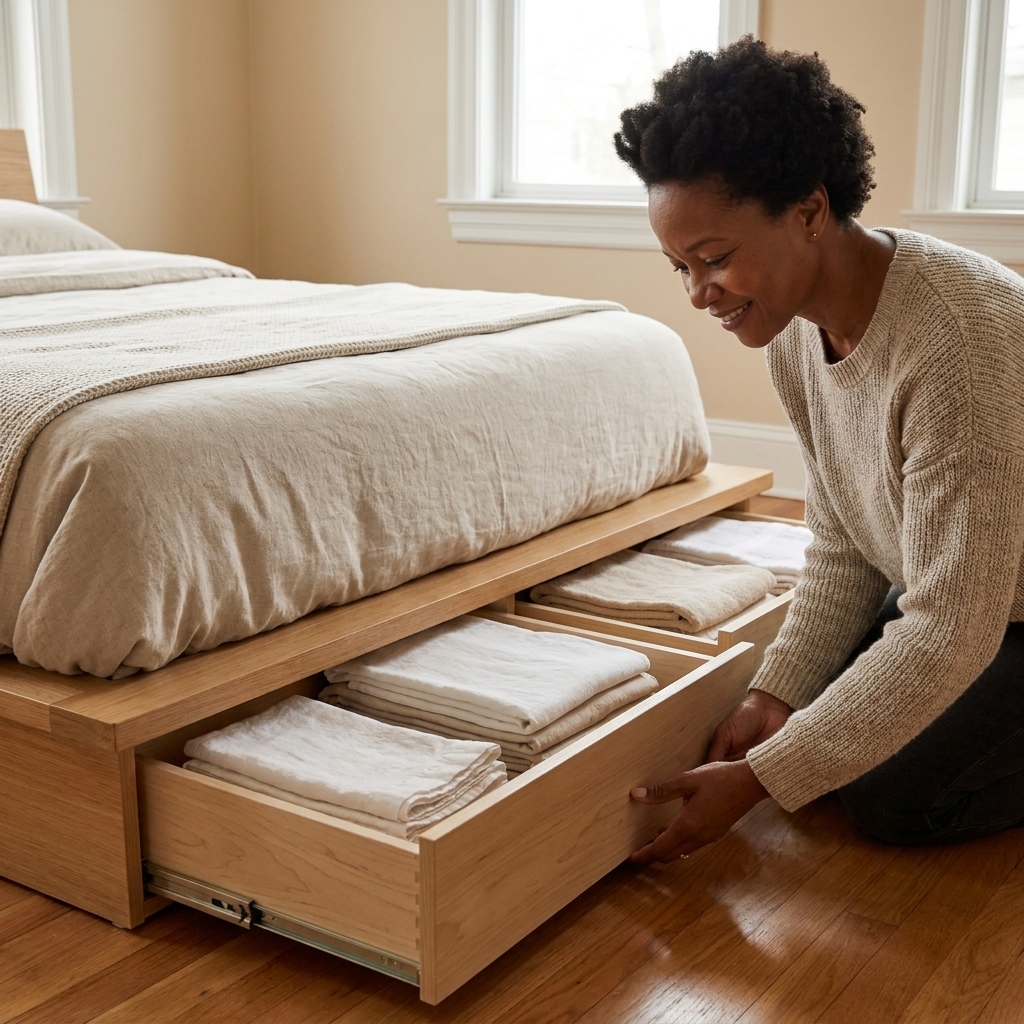
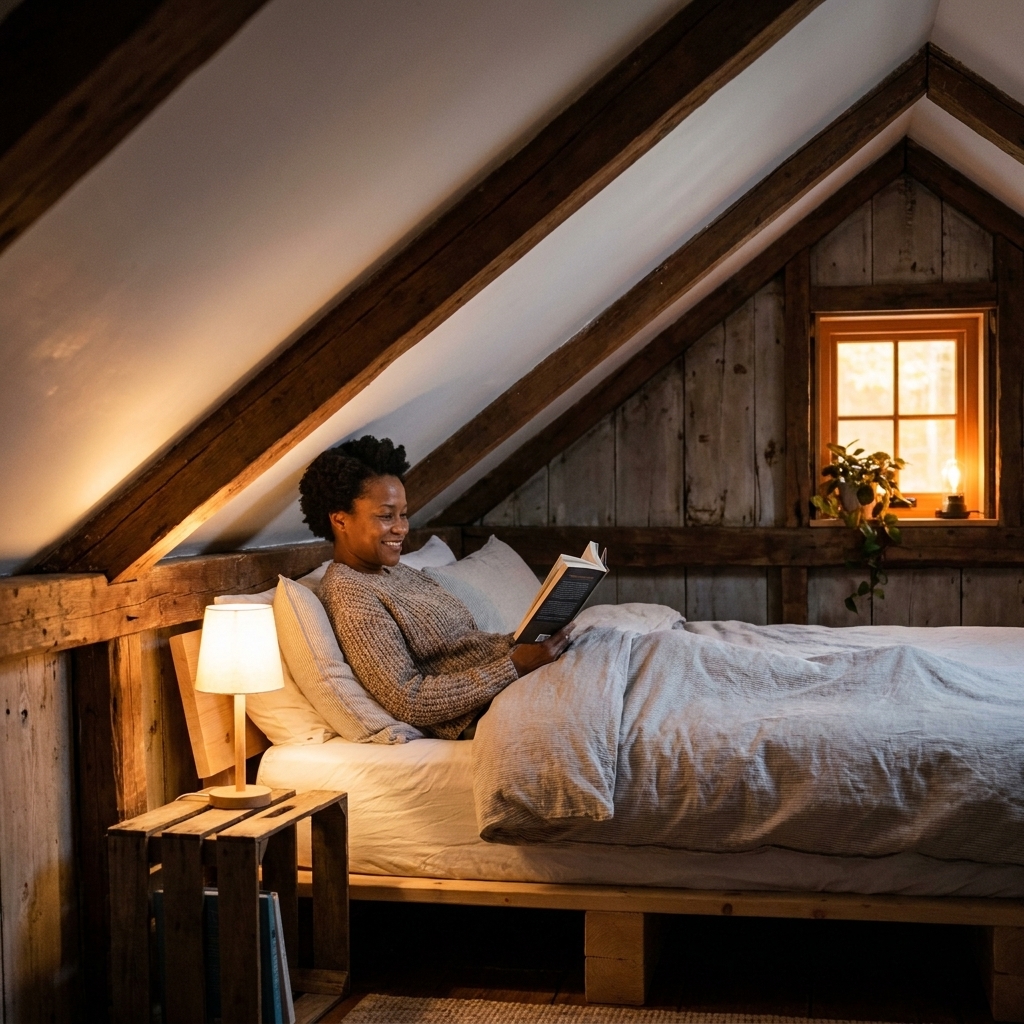
- Use a platform bed or low daybed instead of anything with a tall headboard.
- Swap nightstands for wall-mounted shelves or a slim ledge so you are not bonking your head.
- Add a plug-in sconce or clamp light so you get light at eye level without needing tall lamps or bulky tables.
Quick clearance rule-of-thumb: wherever your head lands when you sit up or lean back is the spot that needs the most height. Test it in the room before you commit to placement.
Layout: knee-wall storage run
Perfect for: clothing, linens, files, craft supplies.
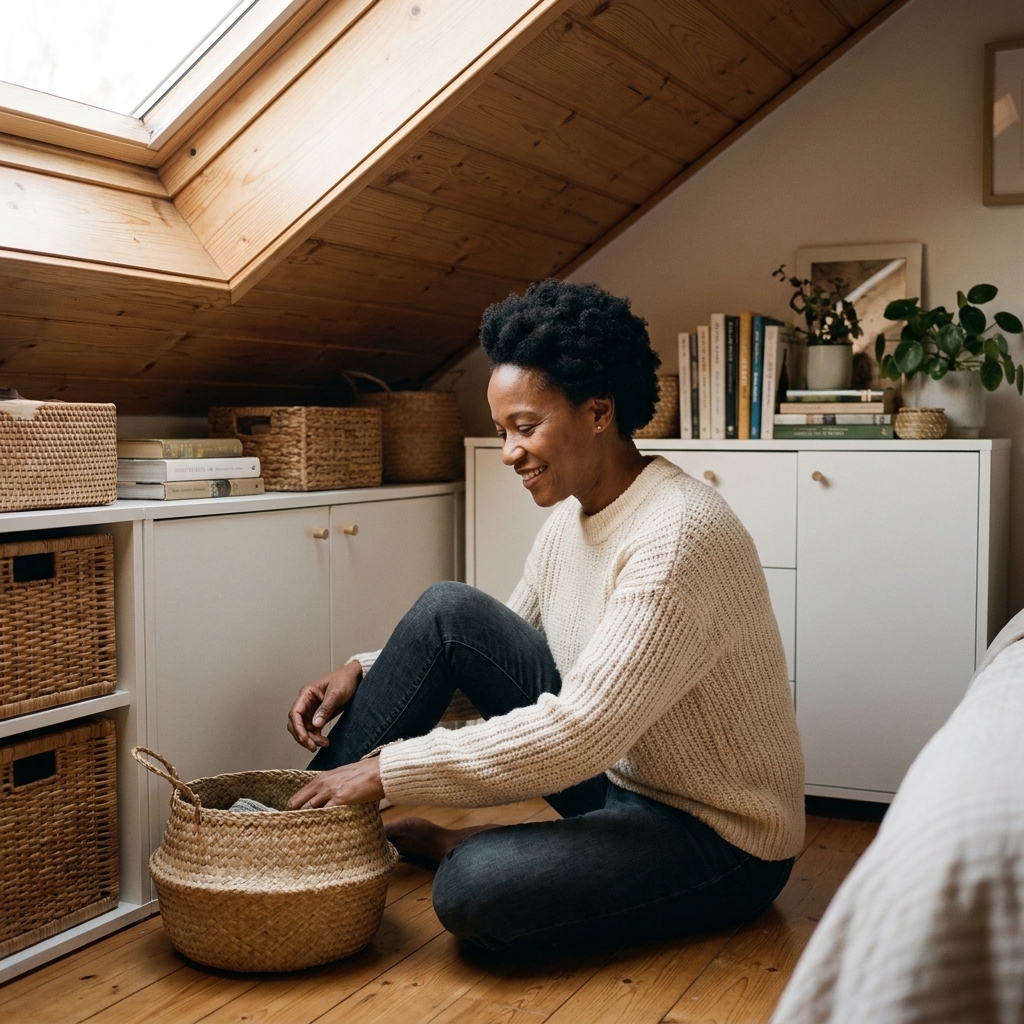
- Line the shortest wall with low dressers, cube storage, or bins.
- Keep it looking intentional by choosing matching fronts (even if the insides are chaos).
- Top it with a continuous surface (a wood panel or a fitted top) to create a clean built-in effect without actually building.
Renter tip: if you cannot drill, use sturdy freestanding units. Museum putty is great for keeping small decor from sliding, but it is not a safety device and should never be used to keep furniture from tipping. For safety, follow the manufacturer’s anchoring guidance whenever possible.
Layout: closet under the slope
Perfect for: clothing when a standard wardrobe is too tall.
- Install a lower closet rod where the height allows, and use short hang only (shirts, folded pants).
- Add stacking drawers or bins underneath for socks and tees.
- If drilling is not an option, a garment rack with a lower rod can mimic the same idea.
If this is an attic or exterior wall situation, do not cram furniture hard against the coldest surfaces. A little airflow helps prevent musty surprises.
Awkward nooks: choose one job
The biggest mistake with an alcove is leaving it open-ended. It becomes a dumping zone because it has no identity. Give it one job, then define its edges with furniture, lighting, and texture.
Job 1: micro office
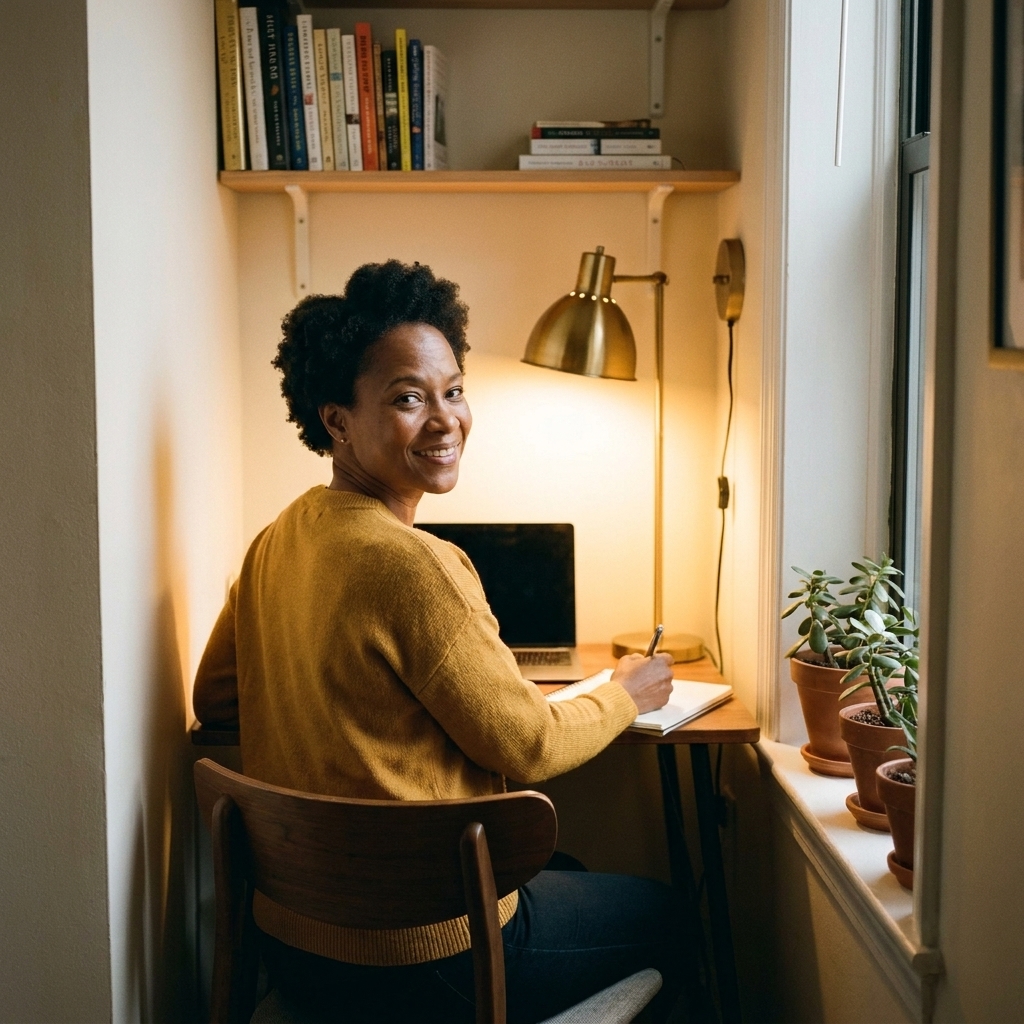
If you have a niche that is roughly 18 to 36 inches deep, a work spot can fit in many cases. The make-or-break detail is clearance: you need knee room, and you need enough space to pull the chair out without trapping yourself.
- Desk depth rule-of-thumb: 16 to 20 inches typically works for a laptop setup. If you use a monitor, 20 to 24 inches often feels better, but ergonomics and viewing distance can push you deeper.
- Choose an armless chair or stool that can tuck fully in.
- Mount a shelf above for vertical storage, but keep the lowest shelf high enough that you do not feel boxed in.
- Use a plug-in wall sconce or a swing-arm lamp so the desktop stays clear.
Stylist trick: paint the inside of the nook one shade deeper than the room. It visually frames the workspace so it reads like a destination, not a leftover gap.
Job 2: reading nook
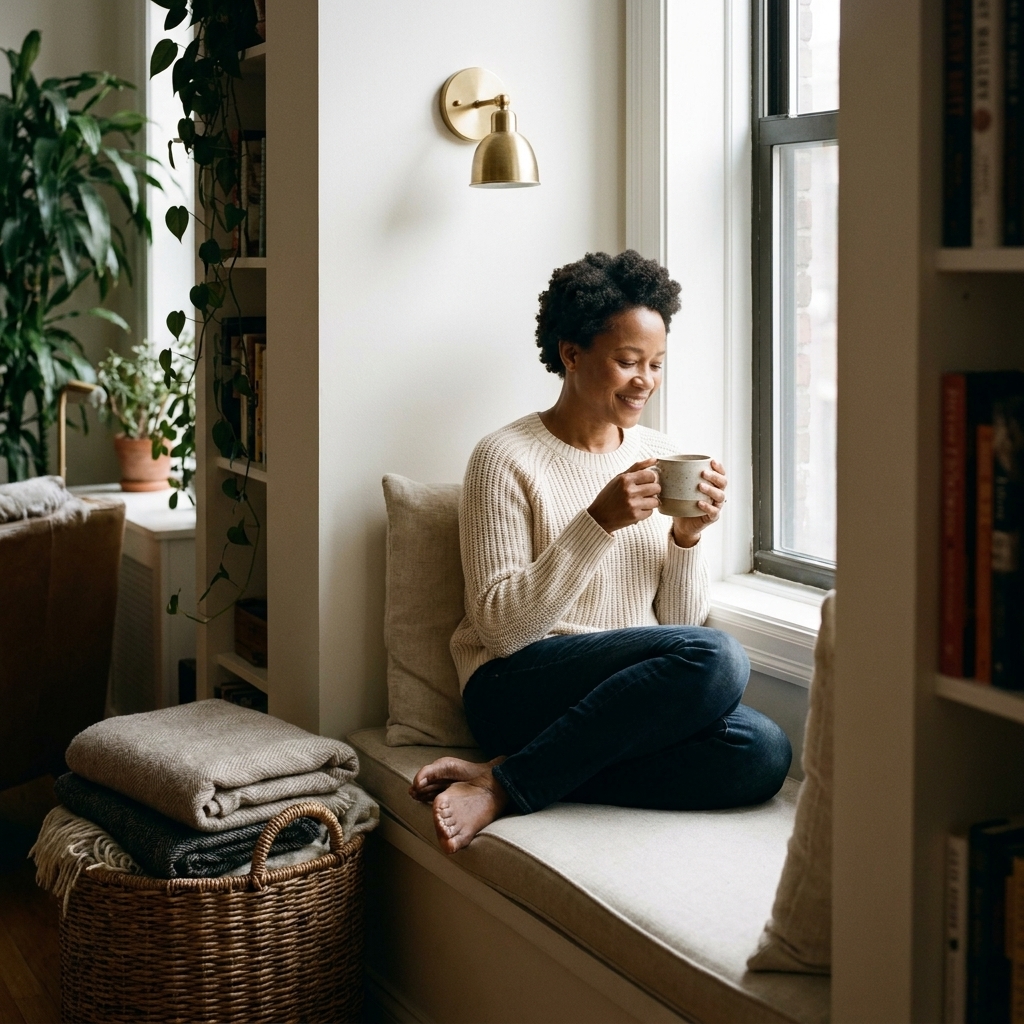
A reading nook is basically permission to slow down, which is a big deal in a tiny apartment. The key is building in one piece of storage so it stays serene.
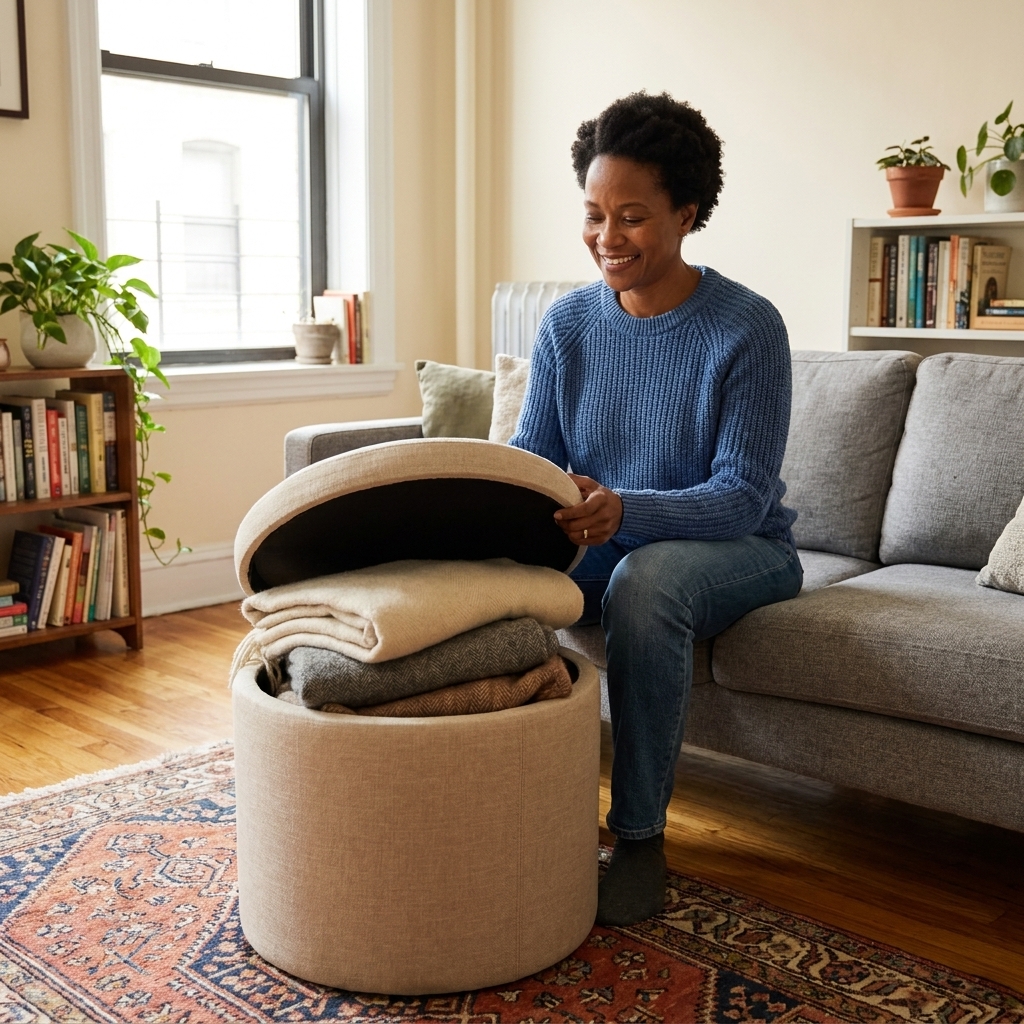
- Start with a bench seat or a small slipper chair. Benches with lift-up storage are gold.
- Add a wall sconce or floor lamp that arches over, so you are not sacrificing surface area to a table lamp.
- Include a basket or lidded box nearby for throw blankets.
- Keep it anchored with a small rug that fits fully under the front legs of the seat.
If the nook is under a slant, keep the tallest item on the high side and let the ceiling slope down over the seat. It feels cocooning, not cramped.
Job 3: calm storage
Not every nook needs to be cute. Sometimes it needs to hold your vacuum, recycling, or the pile of delivery boxes you swear you will break down later.
- Use curtains to close off messy utility storage. A tension rod can work in many openings without drilling.
- Try two-tier storage: daily-use items at arm height, backstock above or below.
- For deep nooks, use pull-out bins or labeled boxes so you can grab what is in the back without unloading the front.
My rule: if it is open storage, it needs a repeatable system. Matching bins, consistent heights, and no more than two materials (like wood plus linen) keeps it from looking like a pantry exploded.
Odd corners: furniture that works
When walls tilt, your furniture has to either hug the floor or float off it.
- Low and long: benches, credenzas, low dressers, media consoles.
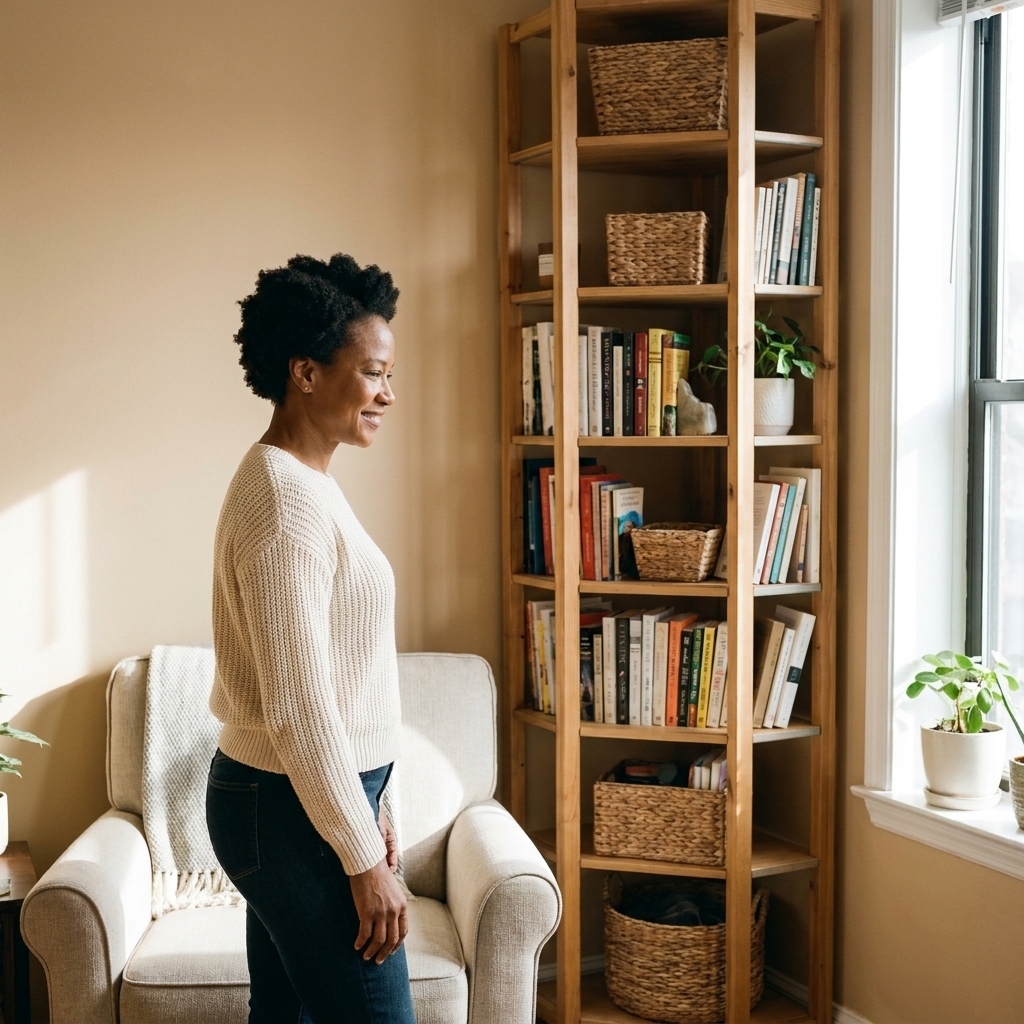
- Shallow depth: shoe cabinets, slim bookcases, narrow console tables (great behind sofas).
- Round and soft: a round side table or small pedestal table is easier to navigate in tight angles than a sharp corner.
- Wall-mounted: shelves, peg rails, fold-down desks, and hanging nightstands.
A quick visual trick: if the ceiling slopes down, keep your tallest furniture on the tallest wall in the room. It balances the weight of the space and makes the slope feel intentional.
Make it feel bigger
Use light to soften angles
- Wash a slanted ceiling with light using a floor lamp that aims upward or a picture light above art.
- Avoid one harsh overhead light that casts dramatic shadows on angles. Layering is your friend.
Mirrors that help
- Place a mirror on a vertical wall near the nook to bounce light and reduce the cave feeling.
- If you put a mirror on the short wall under a slope, keep it lower and wider so it feels proportional.
Go tone-on-tone
Small spaces with lots of angles can look choppy if every surface is a different color. You do not need sterile white. You need cohesion. Try keeping walls, trim, and built-ins in the same color family, then add contrast through textiles and art.
Renter-friendly custom fits
- Tension rods for curtains, hanging plants, or lightweight organization.
- Peel-and-stick wallpaper inside the nook to visually define it.
- Command strips and hooks for lightweight art, cord management, and renter-safe hanging where appropriate.
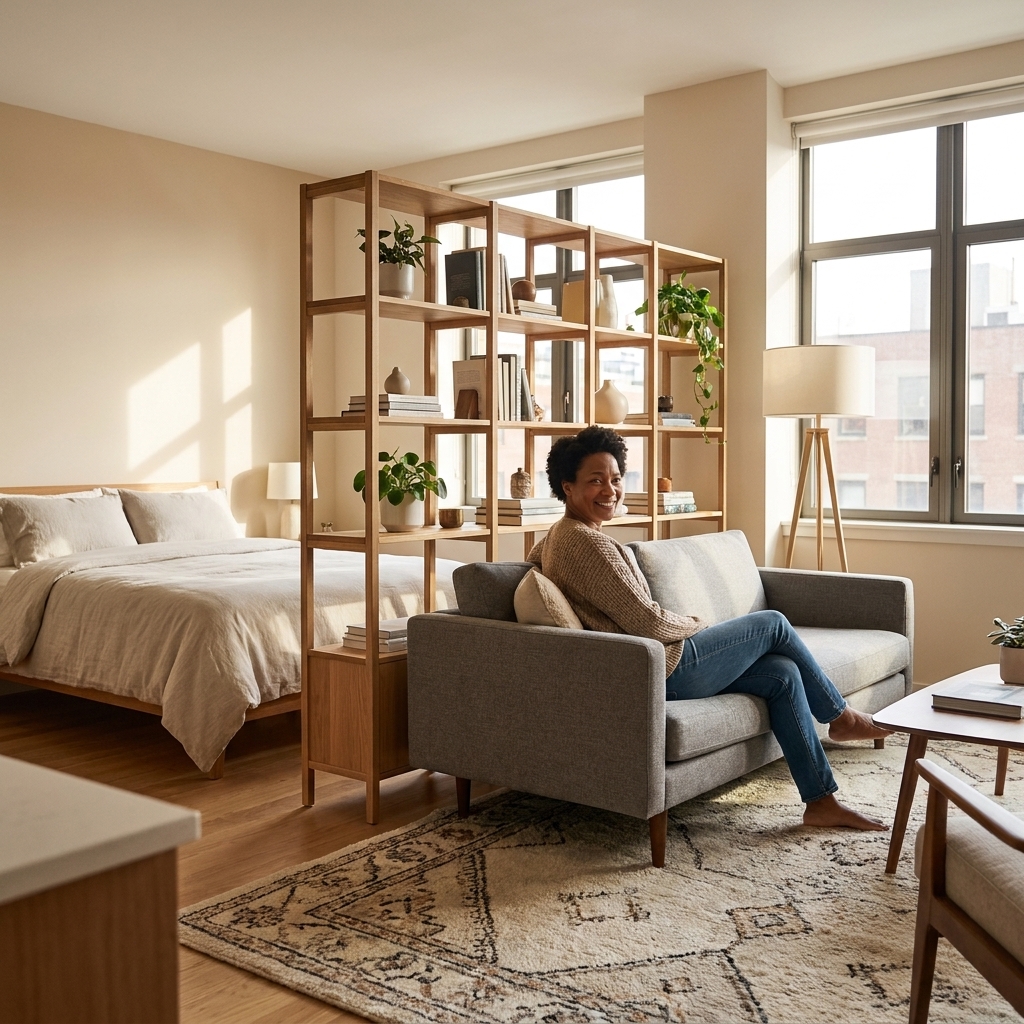
- Freestanding shelving turned sideways for a shallow, built-in vibe.
- Cut-to-size liners on shelves and ledges to prevent slipping and protect finishes.
If you are tempted to DIY a permanent built-in, try a mock built-in first with two matching bookcases and a single top board. Live with it for two weeks. If it solves the problem, then decide if you want to commit.
Quick fixes
The nook is too dark
- Add a plug-in sconce or battery picture light.
- Use a lighter rug or cushion to brighten the base layer.
- Hang art with a white mat or light background to reflect more light.
The ceiling makes it feel short
- Hang curtains high on the tallest wall, not directly under the slope.
- Use a low-profile sofa and keep tall bookcases to one anchor wall.
Everything looks messy fast
- Switch to closed storage for anything smaller than a fist.
- Limit surfaces in the nook to one: either the desk, or the shelf, or the side table. Not all three.
It feels unsafe or cramped
- Keep a clear exit path and do not block vents, radiators, or returns.
- Anchor tall furniture when you can, especially in homes with kids or pets.
My tiny-space rules
- Protect the path: circulation first, then furniture.
- Low functions under low ceilings: sleep, lounge, storage, not standing tasks.
- Give every nook a job: office, reading, storage, dressing, or display.
- Repeat materials: matching bins and consistent finishes look intentional.
- Light it like a destination: a nook without a light becomes a dumping ground.
If your space has an angle that makes you sigh every day, start there. The moment that spot starts working, the whole apartment feels bigger, calmer, and more you.
FAQ
What can I put under a slanted ceiling?
Go low: a platform bed, daybed, bench seating, low dresser, cube storage, bins, a media console, or a short bookcase. Save tall wardrobes and shelving for your tallest walls, and keep airflow in mind if it is an exterior wall.
How do I turn a small alcove into an office?
Use a shallow desk (16 to 20 inches deep typically works for a laptop), a chair that fully tucks in, and a wall shelf for vertical storage. Plan for chair pull-out space and add dedicated task lighting so it feels like a real workstation.
How do I make a nook look intentional?
Define the boundary with one anchor piece (bench, desk, or cabinet), add a light source, then finish with one texture layer (a cushion, rug, or curtain). When a nook has a clear purpose and a clear edge, it stops looking accidental.