The small-space traffic flow fix: walkway width guidelines, key clearances, and renter-friendly layout tweaks that stop the daily shuffle and make a tight ap...
Space Ovo
Small Apartment Balcony Decor
Turn a tiny balcony into a cozy outdoor room with foldable seating, renter-friendly privacy ideas, and vertical gardens. Smart tips for measurements, weather, and railing planters.

Maya Brooks
Maya Brooks is an interior stylist and layout enthusiast who believes square footage should never dictate your home's style. After a decade of navigating cramped city studios, she shares practical, renter-friendly decorating and storage solutions to help others maximize their tiny spaces.
Created October 17, 2026
Updated October 17, 2026
If your balcony is big enough for exactly one human and one guilty sip of coffee, I see you. I lived through years of “outdoor space” that was basically a ledge with ambition. The good news is that a tiny balcony can still feel like a real room if you focus on three things: seating that folds, privacy that is removable, and greenery that climbs instead of sprawls.
Think of this as a mini living room with a strict bouncer at the door. Every item needs a job, ideally two.
One quick adulting note before we begin: check your lease, HOA, and building rules for railing planters, privacy screens, lights, and anything that attaches to a railing. Some places are strict, especially about items hanging over the edge.
Start with two quick measurements
Before you buy anything, grab a measuring tape (my love language) and note these:
- Clear walking path (usable clearance): the front-to-back space you need to step outside, pass by furniture, and turn around. On very tight balconies, many people find 18 to 24 inches workable, but comfort depends on body size, door placement, and whether you are carrying a tray.
- Railing height and width: this decides what railing planters and privacy screens will actually fit without wobbling.
Then do a quick “door swing test.” Open the balcony door fully and mark the no-furniture zone with painter’s tape or a sticky note. If the door bangs into your future chair, that chair will become an indoor chair. Ask me how I know.
Seating that fits a tiny footprint
Balcony seating is all about choosing pieces that disappear when you are not using them. Your goal is comfort without permanently blocking the floor.
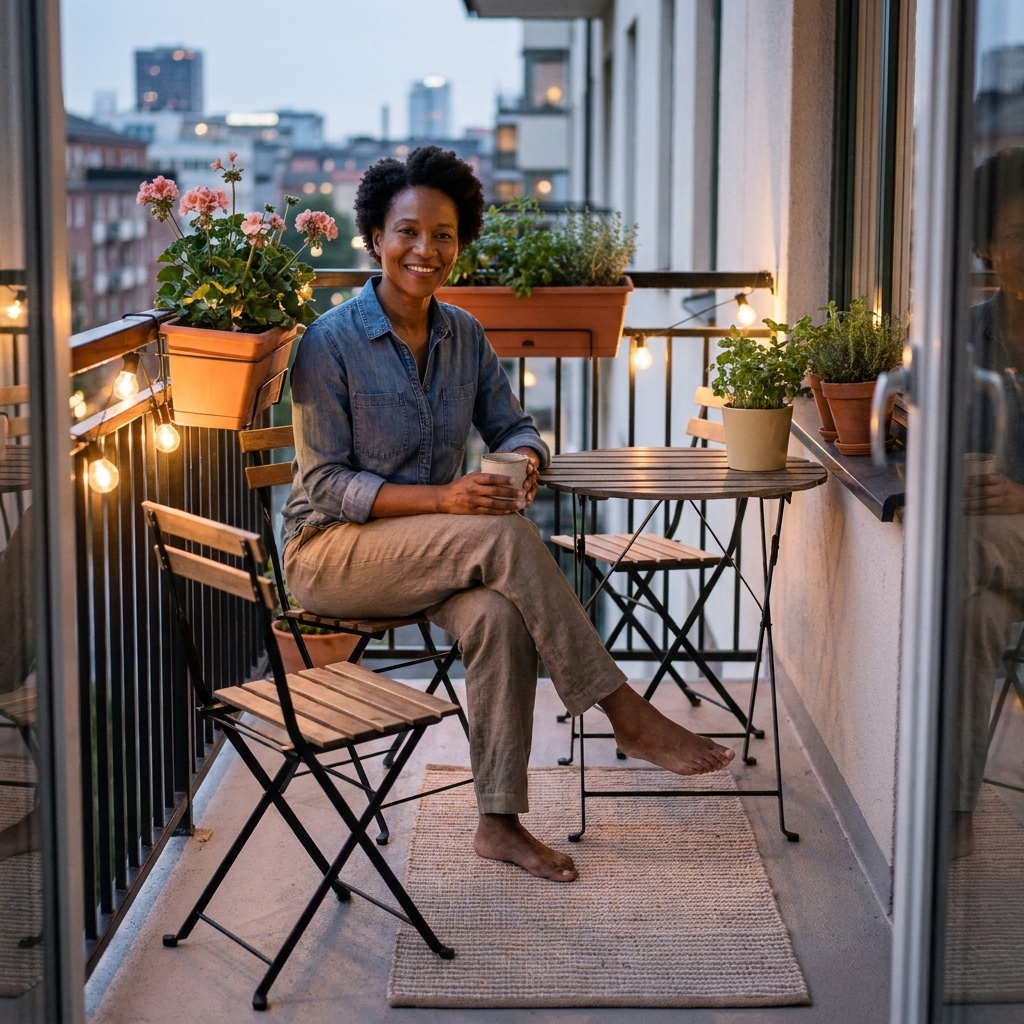
Foldable bistro sets
A compact bistro set works because you can eat, work, and lounge without needing separate furniture. Look for:
- Chairs that fold flat and can hang on a wall hook indoors if needed
- A table under 24 inches wide for most small balconies
- Slatted or mesh tops that shed water and dry faster (less puddling after rain)
Styling tip: add two seat cushions in the same fabric so it reads like a “set,” even if the furniture is budget-friendly.
Storage benches and cube ottomans
If your balcony can handle a deeper piece, a narrow storage bench is a two-for-one: seating plus stash space for a small watering can, extra cushions, or a throw blanket. As a rough guide, benches around 12 to 16 inches deep tend to play nicely on small balconies, but let your measurements decide. Choose one with a weather-resistant finish and consider a waterproof liner bag inside for anything fabric.
No room for a bench? Try a small outdoor cube ottoman that tucks under a table. It doubles as a footrest and an extra seat.
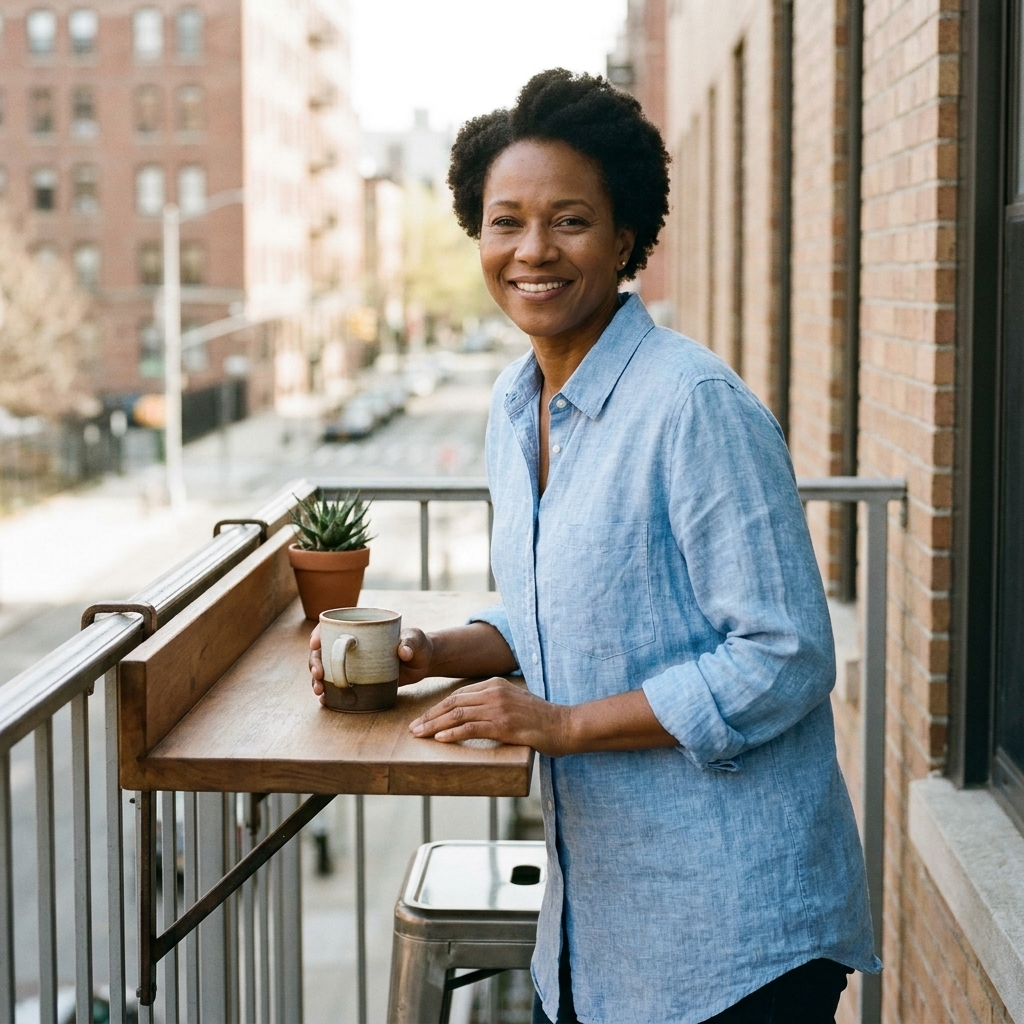
Railing bar tables
For ultra-slim balconies, a railing-mounted bar table gives you a place for coffee or a laptop without taking up precious floor space. Make sure it has adjustable brackets, a stable, level surface, and that your building allows railing-mounted items.
Privacy that renters can live with
Privacy is what turns “I can step outside” into “I want to hang out here.” The key is choosing solutions that attach to the railing or stand on their own. No drilling into exterior walls unless your lease explicitly allows it.
Outdoor curtains on a tension rod
If your balcony has two side walls or a ceiling overhang, a tension rod can hold outdoor curtains with surprisingly little effort. Pick a mildew-resistant fabric and use curtain rings so you can slide them open when you want sunlight.
Privacy screens
These are classic for a reason. They tie directly to the railing with zip ties or twine and instantly soften sightlines. (Again: some buildings ban these, so check first.)
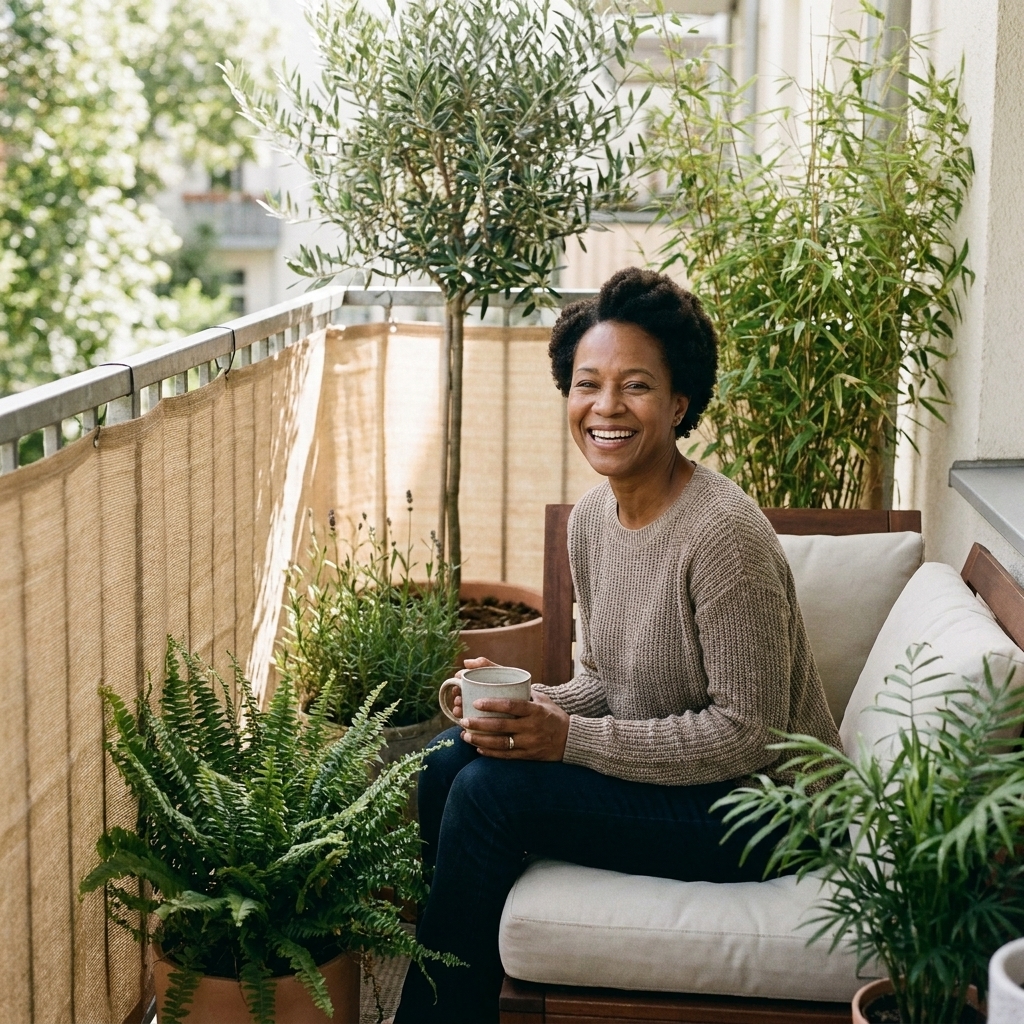
- Reed or bamboo: warm and natural, best for partial privacy
- Fabric screens: better coverage, often more modern-looking
- Look for UV resistance so it does not fade in one season
My practical warning: in windy areas, go for a screen with reinforced grommets and use plenty of tie points so it does not flap like a sail.
Privacy from plants
If you want privacy without a “screen” vibe, use tall, narrow planters to create a green boundary. Think grasses, upright rosemary, or small shrubs that stay narrow in containers. If you love the bamboo look, stick to clumping, container-suitable varieties where permitted (some types spread aggressively, even when you think you have outsmarted them).
Grouping three planters reads fuller than one lonely pot.
Vertical gardens that save floor space
When your balcony is tiny, the walls and railing are your garden bed. Vertical gardening keeps the footprint small and the impact big.
Railing planters
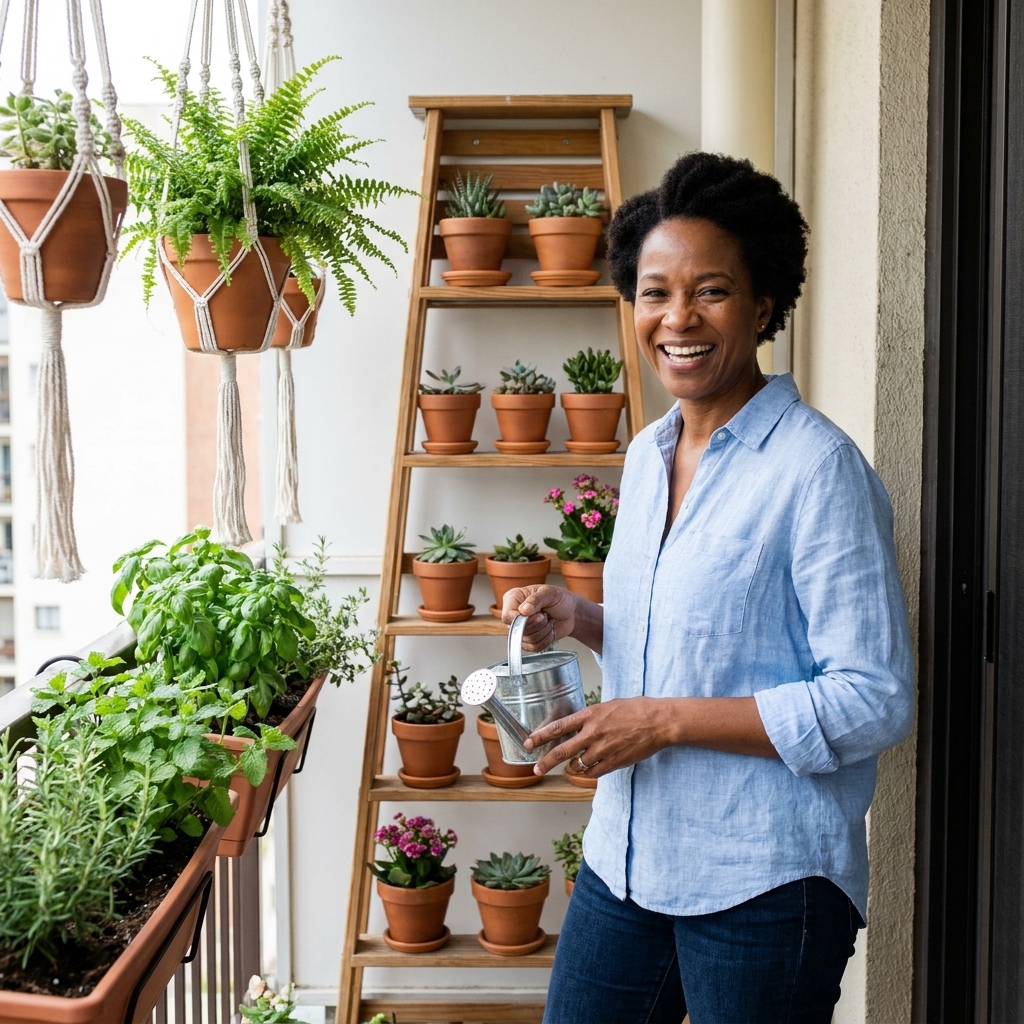
Railing planters are my go-to because they add lushness without stealing walking space. Tips that keep them functional and not terrifying:
- Choose secure brackets sized for your railing thickness
- Use liners or self-watering inserts to reduce dripping
- Keep the weight reasonable (wet soil is heavier than you think), and stay within any posted balcony load limits
Plant ideas that thrive in containers depend on your light:
- Sunny balconies: petunias, geraniums, herbs like thyme and oregano, compact strawberries if you get strong light
- Shady balconies: some shade annuals, ferns, and leafy plants that prefer indirect light
And a quick caveat on the classics: trailing ivy can be invasive in some areas and can irritate skin for some people, so handle with care and check local guidance. Pothos is typically a houseplant and only works outdoors in warm climates or mild seasons in bright shade. Bring it inside before temperatures drop.
Trellises and climbing vines in pots
A trellis tucked into a pot gives you instant height. Look for a narrow trellis that sits inside a rectangular planter so it stays stable. Great climbers for containers include jasmine and clematis, but both vary a lot by species. Check your plant tag for hardiness zone and sun requirements before you commit.
Wall-friendly vertical planters
If you cannot drill, think leaning ladder plant stands or freestanding tiered shelves. They create a “green wall” effect while staying totally removable. If you do use a shelf, anchor it or choose a heavy base if your balcony gets gusty.
Make it feel like a real room
This is where the tiny balcony stops feeling like an afterthought.
Add an outdoor rug
A rug visually defines the space and makes it feel finished. Go for a flatweave outdoor rug so the balcony door can still swing freely. If your balcony is extremely narrow, a runner works beautifully.
Lighting that flatters
- Solar string lights: easy, cozy, renter-friendly (and yes, check building rules, some places restrict exterior lighting)
- Rechargeable lanterns: great for dining, no cords
- Battery candles: instant ambiance with no fire risk
One small side surface
If you skip a table, you still need a place for a drink. A narrow C-table (outdoor-safe) or a stool can act as a landing zone without eating the whole balcony.
Weather-proofing that keeps the vibe
Balcony decor fails when it is not prepared for sun, rain, and grime. The fix is not complicated.
- Cushion strategy: use removable covers and store cushions in a bench, deck box, or a large waterproof tote when storms hit
- Rust check: choose powder-coated metal or treated wood, and add felt pads so furniture does not scratch the balcony surface
- Water and runoff: saucers, liners, and careful watering keep downstairs neighbors friendly. Never let water drain onto neighbors.
- Wind reality: prioritize heavier planters (or add weight at the bottom with gravel) and avoid anything that can tip easily
If you grill, use heaters, or add anything with a flame, check building rules and local codes first. Balconies come with opinions.
Three tiny balcony layouts
1) The coffee nook
- Railing bar table
- One folding stool or compact chair
- Two railing planters plus one tall plant in the corner
2) The mini living room
- Storage bench or loveseat-sized outdoor bench
- Small side table or stool
- Outdoor rug and lantern lighting
- Privacy screen on the railing
3) The green escape
- Foldable bistro chair (or two, if it fits)
- Ladder plant stand against the wall
- Trellis planter in a corner for height
- Herbs in railing planters for daily use
Quick checklist
- Can you still open the door fully?
- Do you have a workable clear walking path (often 18 inches minimum on very tight balconies)?
- Does every item fold, stack, store, or serve two purposes?
- Is privacy solved from your most exposed angle?
- Are plants up on the railing or a vertical stand instead of all over the floor?
- Have you checked lease and building rules for railing attachments and lights?
Once those boxes are checked, you are not decorating a “small balcony” anymore. You are building a tiny outdoor room that earns its square footage.
FAQ
What is the best seating for a very small balcony?
Start with one comfortable folding chair or a slim bistro chair, then add a small side stool that can double as a table. If you have depth, a narrow storage bench gives you seating plus weather-proof storage.
How do I add privacy to my balcony without drilling?
Use a railing-attached privacy screen (reed, bamboo, or fabric where allowed), outdoor curtains on a tension rod if your balcony shape allows it, and tall potted plants for a softer, greener barrier.
How do I create a balcony garden in a tiny space?
Go vertical: railing planters for herbs and flowers, a freestanding ladder plant stand for small pots, and one trellis planter for climbing greenery. Match plants to your sun exposure and climate so they thrive without drama.