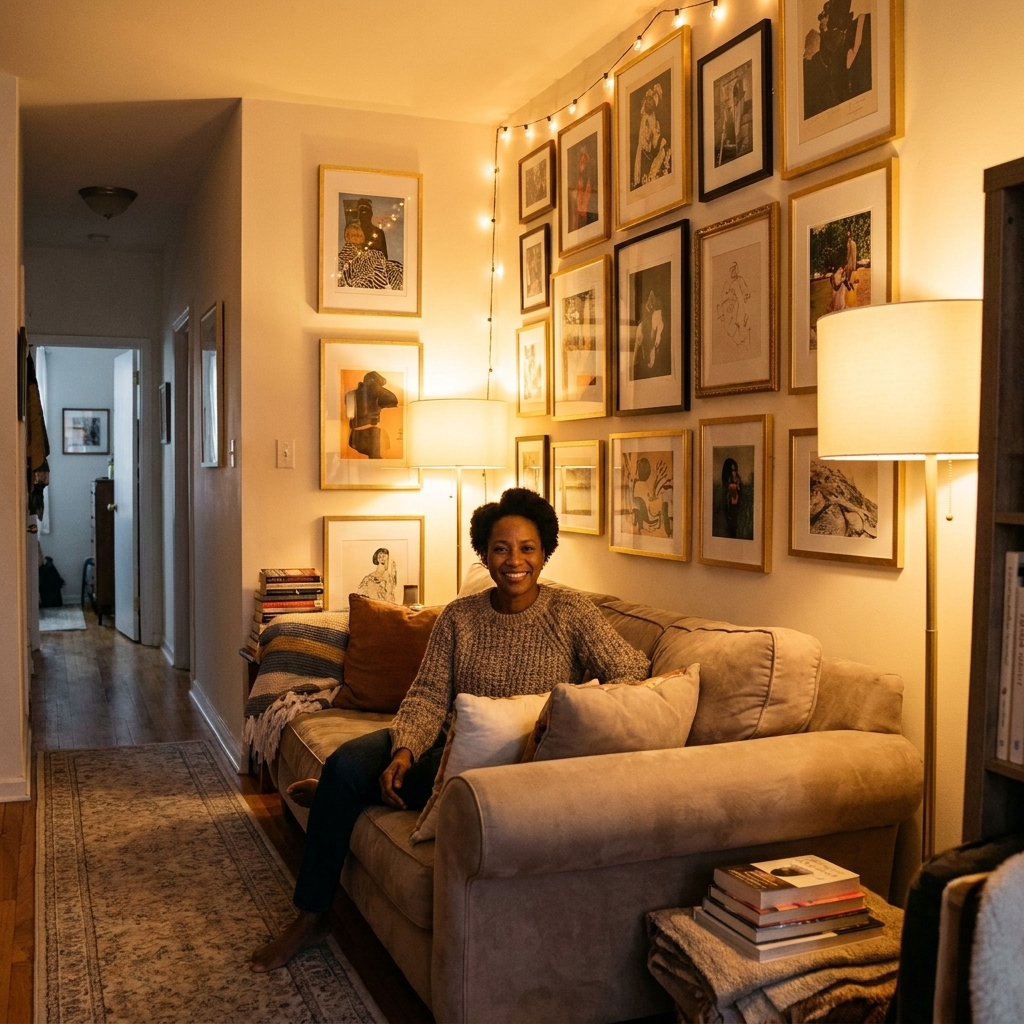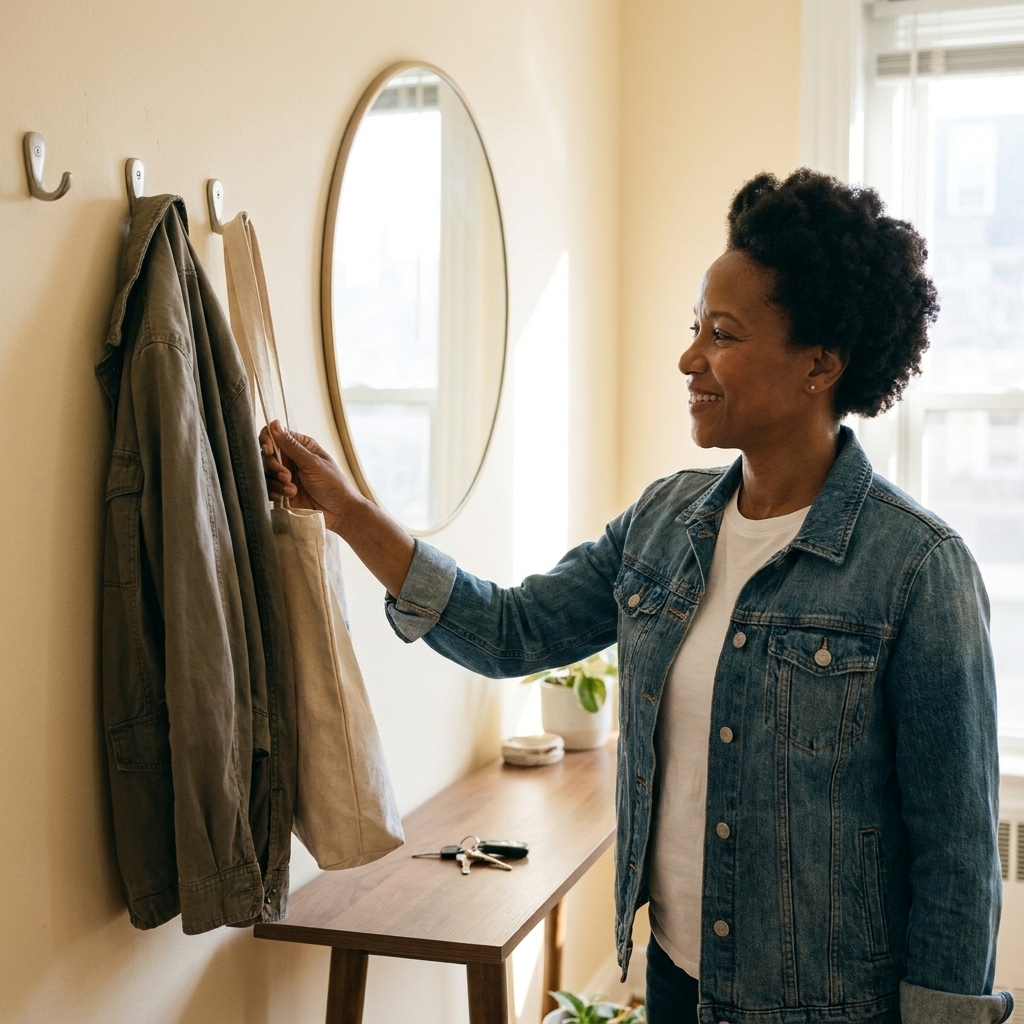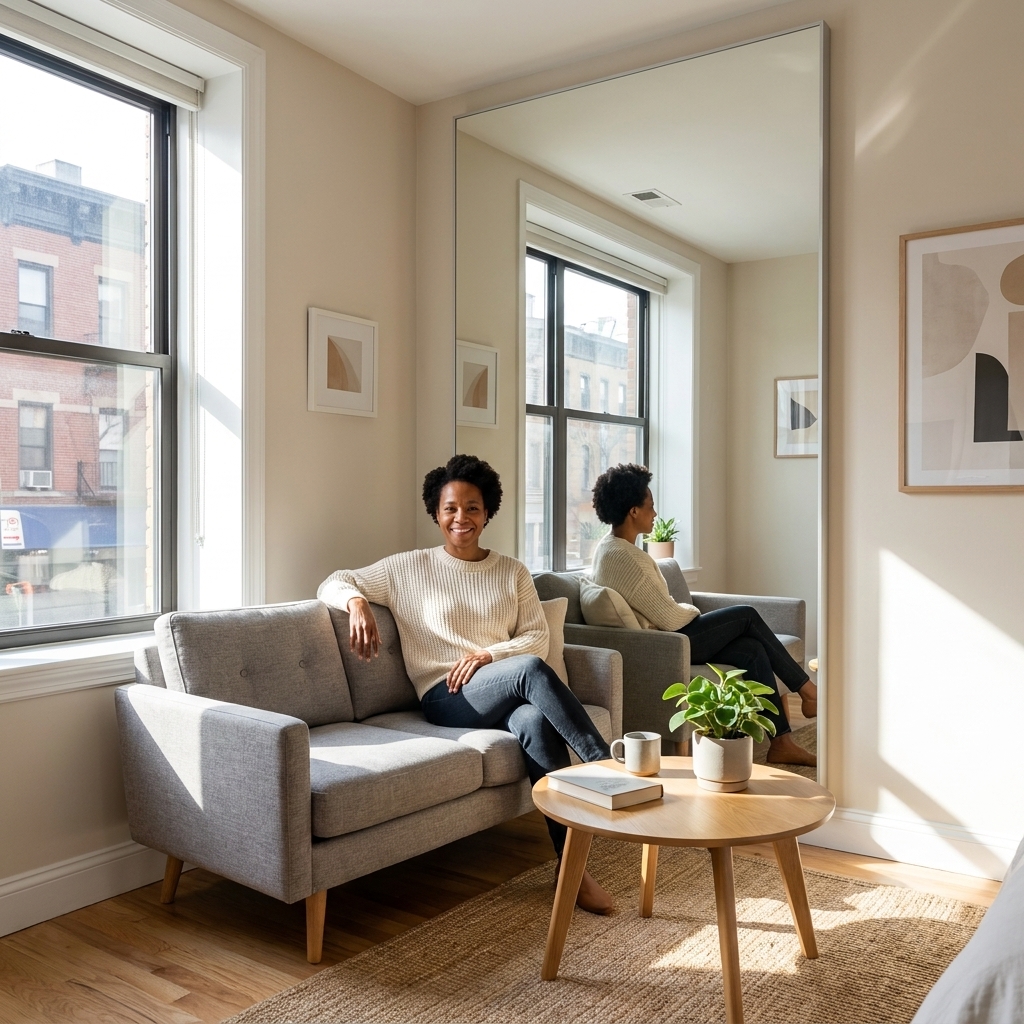
Where to hang mirrors, what they should reflect, and how to angle them to multiply light and create real-looking depth in a small studio.
Space Ovo
10 Damage-Free Ways to Hang Heavy Wall Art and Mirrors
Heavy mirror, no drill? Yes. Try heavy-duty adhesive options, tension setups, leaning tricks, and pro renter hacks that keep your walls intact and your space stylish.

Maya Brooks
Maya Brooks is an interior stylist and layout enthusiast who believes square footage should never dictate your home's style. After a decade of navigating cramped city studios, she shares practical, renter-friendly decorating and storage solutions to help others maximize their tiny spaces.
Created October 17, 2026
Updated October 17, 2026
If you have ever stood in your “cozy” rental holding a gorgeous mirror in one hand and your lease in the other, you know the struggle. You want impact. Your landlord wants zero holes. And your walls, if they are anything like my old Brooklyn place, are basically made of wishful thinking and paint.
The good news: you can absolutely hang (or convincingly “hang”) heavy wall art and mirrors without drilling. The not-so-fun news: “damage-free” only works when you match the method to your wall type, the weight, and the way you live in the space. I am going to walk you through 10 options I have used in real apartments, plus a mini checklist so nothing comes crashing down at 2 a.m.
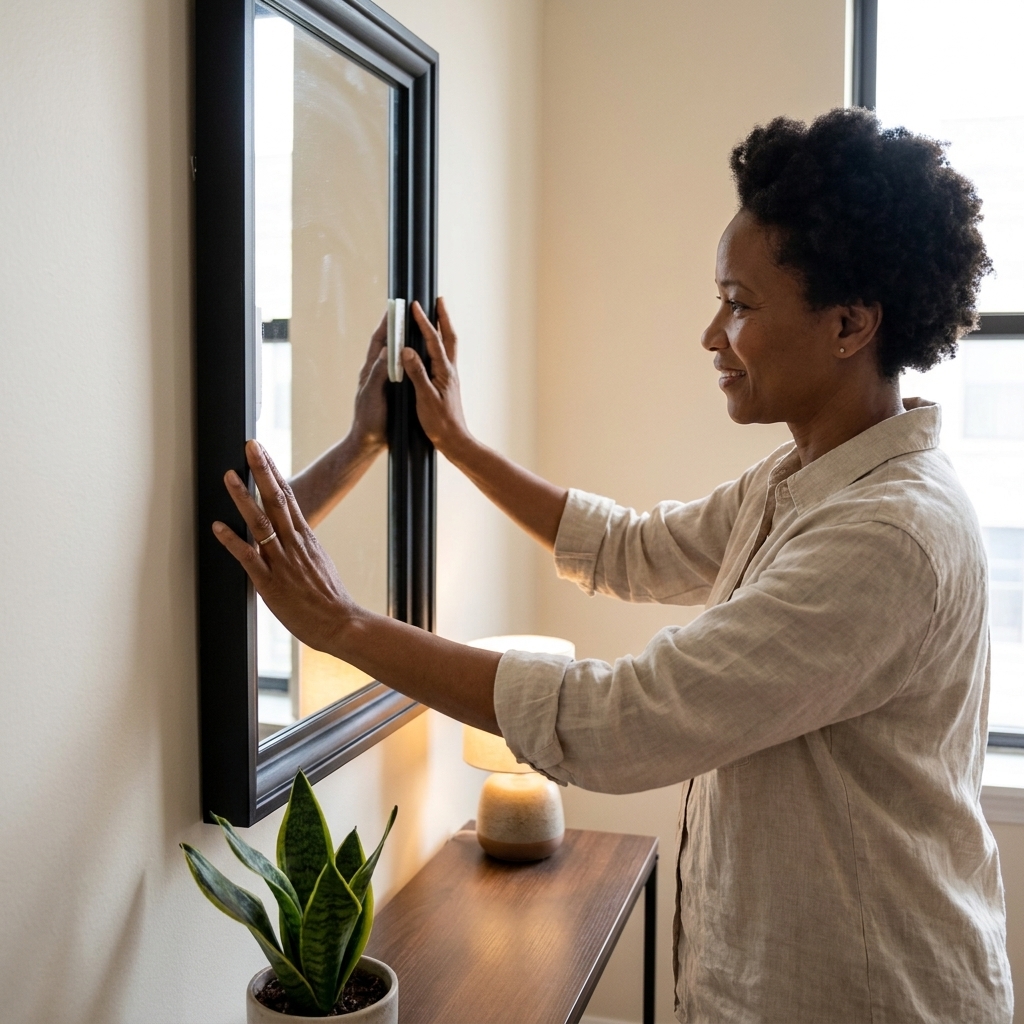
Before you start: 3 quick safety checks
- Know the real weight. Don’t guess. Check the label, step on a scale holding the item, or look up the product specs. Include the frame and glass.
- Identify your wall surface. Adhesives love smooth, fully cured paint. They hate dusty plaster, chalky flat paint, wallpaper, and heavy texture.
- Never hang a mirror over a bed with a method you do not 100% trust. If you are unsure, choose a leaning solution or anchor into studs with permission.
Pro renter tip: Clean the wall with 70% isopropyl alcohol and let it dry completely. Skipping this step is one of the most common reasons strips and hooks fail.
Quick wall and room reality check
- Painted drywall (smooth or light orange peel): Usually the easiest for adhesive strips and hooks.
- Plaster or older walls: Often dusty or fragile at the surface. Adhesives can stick to the paint film and take it with them.
- Tile or glossy surfaces: Adhesives can work well, but only if the surface is cleaned thoroughly and kept dry. Bathrooms are harder because steam and heat shorten adhesive life.
- Wallpaper: Avoid adhesives. Most will pull the paper or top layer right off.
- Humidity and heat: If it is above a radiator, near a shower, or in direct sun, assume adhesives will be less reliable and choose a ledge or leaning option.
1) Heavy-duty adhesive hanging strips
Heavy-duty adhesive strips are my first stop for medium-to-heavy frames because they distribute weight across multiple points, and you can level and reposition without new holes.
Best for
Large framed art, lightweight mirrors, gallery wall groupings.
How to make it actually hold
- Use multiple sets, not just the minimum on the box.
- Place strips near the top corners and add extra pairs along the vertical sides for big frames.
- Press firmly for the full time recommended, then wait before hanging. Patience is load-bearing here.
Watch out for: Fresh paint (needs time to cure) and very matte, chalky paint that can peel under tension.
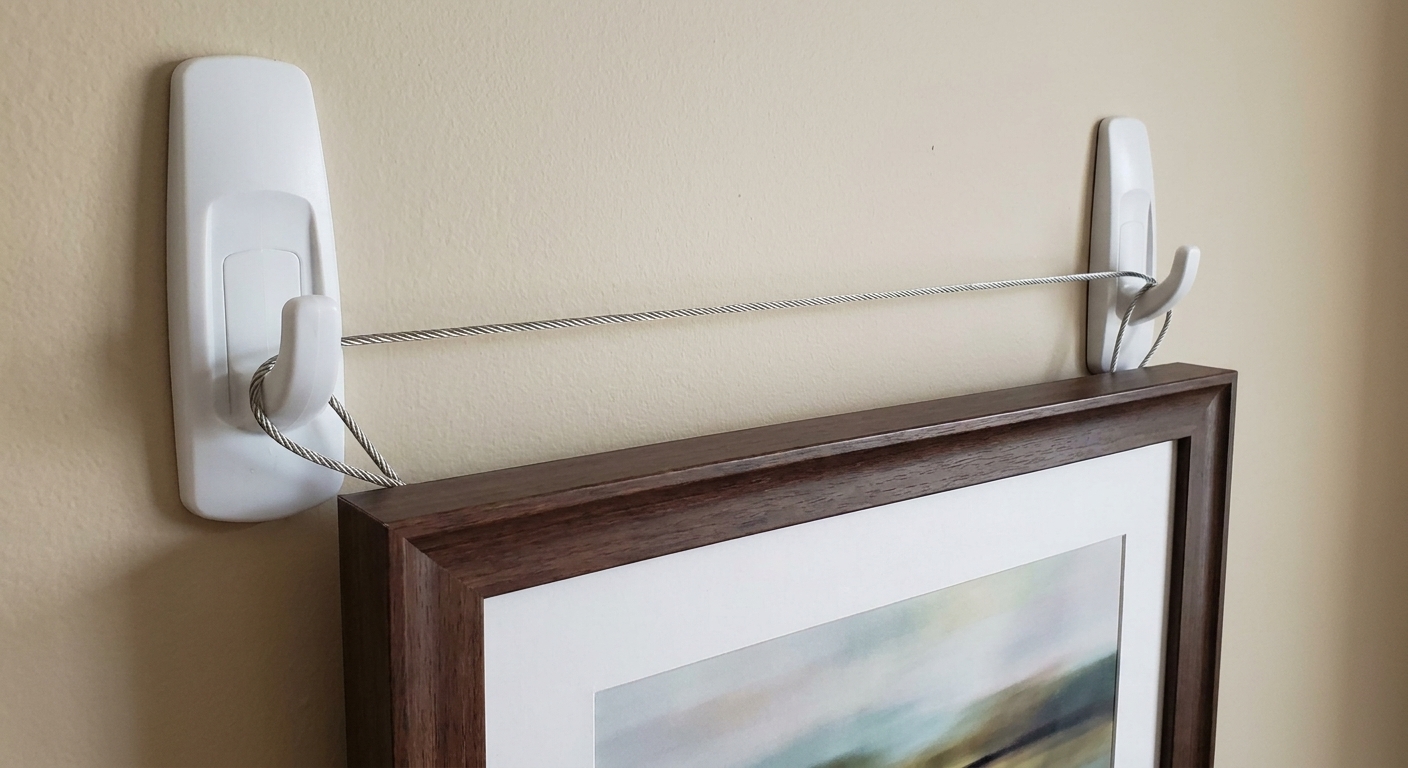
2) Jumbo adhesive hooks plus D-rings or wire
If your frame has D-rings or a hanging wire, a pair of high-capacity adhesive hooks can be surprisingly sturdy. The key is using two hooks to share the load, not one heroic hook doing all the work.
Best for
Framed art with a wire, medium mirrors with solid backing hardware.
Setup tips
- Measure your spacing. A good starting point is to place the hooks about 1/3 of the frame width in from each side, then adjust so the wire makes a shallow “V,” not a steep angle. A shallower angle usually reduces strain on the hooks.
- Use a level and measure from the ceiling line or molding so it reads intentional in a small room.
- Once it is up, gently “seat” the wire into the hooks and test with a careful upward tug.
3) Adhesive tie mounts and zip ties
This is one of my favorite behind-the-scenes tricks for pieces that make you nervous. Look for adhesive-backed cable tie mounts (small squares with a slot) and use them to create a discreet safety tether.
Best for
Light to medium pieces where you want backup security, especially in high-traffic pass-throughs.
How to use it
- Stick two mounts high on the wall, one near each side of where the piece will sit.
- Thread a strong zip tie (or a rated strap) through each mount and through the frame hardware.
- Hang the piece with your primary method (strips or hooks), then snug the ties so they act as a backup. Keep the slack minimal so it catches quickly.
Important: Treat this as a secondary restraint, not the main support for a truly heavy mirror. Use components with clear weight ratings, and remember adhesives can fail under peel forces.
4) Museum putty or gel for the bottom edge
Museum putty is not meant to hold a heavy mirror by itself, but it is amazing as a helper. In small apartments, doors slam, floors vibrate, and frames love to drift out of level. A tiny amount at the bottom corners keeps things straight and helps prevent wall scuffs.
Best for
Any hung frame that tilts, sways, or bumps when you walk by.
Use it like a stylist
- Use small dots at the lower corners.
- Press and hold for a few seconds.
- Test removal on an inconspicuous spot first, especially on flat paint.
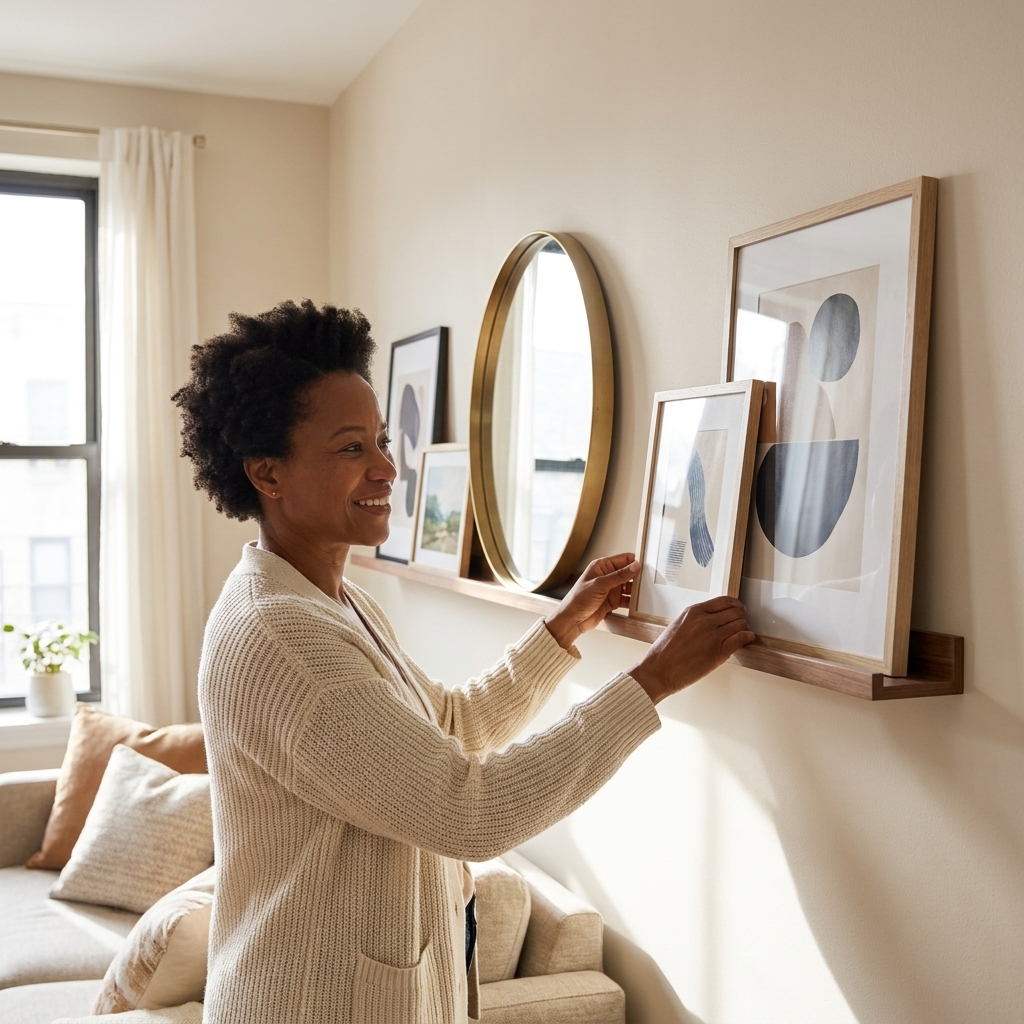
5) A ledge shelf
If you can get permission for one small set of holes, a ledge is the ultimate loophole. You mount one shelf, then rotate large art, mirrors, and layered frames forever without touching the wall again. In tiny spaces, that flexibility is gold.
Best for
Gallery walls, renters who love swapping decor, people who thrift a lot of oversized frames.
Make it feel intentional
- Go longer than you think you need; it looks calmer and more architectural.
- Layer two or three pieces, then add one small object (a vase or sculptural candle) to break up rectangles.
6) Lean a full-length mirror safely
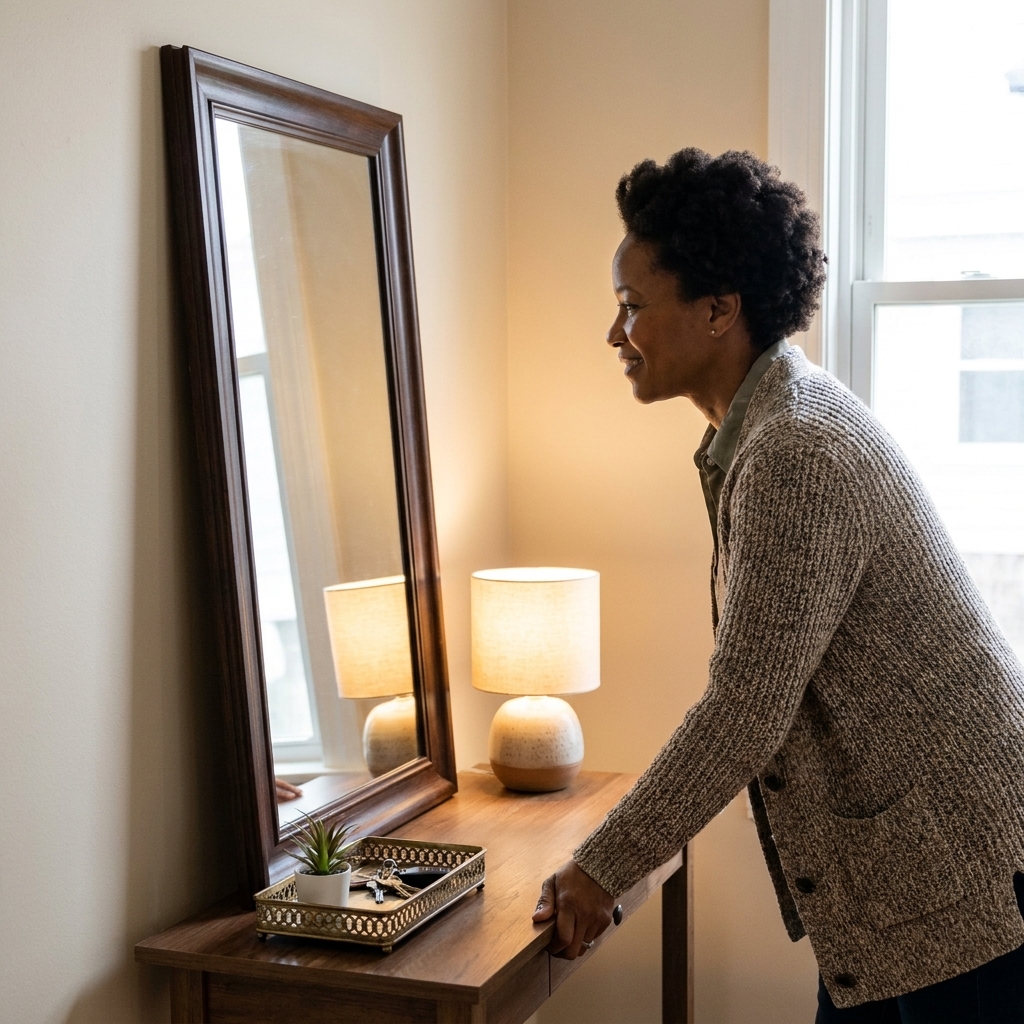
Leaning is the renter’s best friend because it gives you the look of a massive mirror with almost zero wall commitment. The difference between “styled” and “accident waiting to happen” is how you stabilize it.
Best for
Full-length mirrors, oversized frames, awkward walls where hanging is risky.
Stabilize it safely
- Use a non-slip rug pad or furniture grippers under the mirror’s bottom edge.
- Add a small felt bumper or clear rubber bumper where the top touches the wall to prevent marks.
- If you have pets or kids, use a discreet safety tether (see method #3) for extra peace of mind.
7) Dresser or console lean
No mantel? No problem. A low dresser or slim console can become your “mantel moment” and support heavier pieces without hanging anything. This is my go-to for studios where wall space is limited and every hole feels like a major decision.
Best for
Heavy framed art, medium mirrors, renters who like rearranging.
Styling formula that works
- Lean one large piece centered.
- Add one smaller frame overlapping the corner.
- Finish with a tall object on the opposite side (lamp, vase, plant) to balance height.
8) Tension pole system
Tension poles are not just for shower curtains. In a small apartment, a floor-to-ceiling tension pole system can create a “wall” where you can hang art using hooks, clamps, or lightweight rails. It is especially helpful when your actual walls are delicate plaster or you have limited permission to mount anything.
Best for
Studios, room dividers, creating an art moment behind a sofa, defining an entry zone.
How to do it
- Choose a system designed for floor-to-ceiling pressure and check the ceiling type (avoid fragile drop tiles).
- Add hooks or clamps rated for the weight you plan to hang.
- Keep heavier pieces lower to reduce tipping forces.
Small-space bonus: It can double as a place to hang plants, a sconce-style light, or a small shelf, but only if your specific system is rated for that load (and for the movement that comes with watering plants).
9) Over-the-door hooks and hangers
Doors are prime real estate in tiny apartments. Over-the-door hangers can support art and mirrors without a single wall mark. The trick is to keep the piece centered and prevent it from swinging.
Best for
Bedroom mirrors, back-of-bathroom-door storage mirrors, lightweight to medium framed art.
Make it feel built-in
- Use thin felt pads where the hanger touches the door to prevent dents and rattles.
- Add museum putty at the bottom corners of the frame to reduce movement.
- Make sure the door still closes easily without scraping.
10) Compression display rail
If you have a narrow nook, hallway, or space between two cabinet runs, you can sometimes create a horizontal compression-fit rail. Then hang art with S-hooks or clip hangers. It reads like a mini gallery installation, and it is shockingly renter-friendly when done with the right hardware.
Best for
Skinny hallways, kitchen wall gaps, between two bookshelves, rental spaces where you cannot touch drywall.
Key details
- Measure the span carefully and choose a rod designed for compression, not a flimsy closet extender.
- Use rubber end caps to protect surfaces.
- Keep loads light unless the rail is specifically designed for display weight. For stability, hang pieces closer to the supports (near the ends) to reduce torque and slipping risk.
My “will this fall?” checklist
- Wall prep done? Alcohol wipe, fully dry, no dust.
- Weight rating exceeded? Stay well under the max, especially for mirrors.
- Enough contact points? More strips or two hooks instead of one.
- Wait time honored? Adhesives need time to bond.
- Right room conditions? Steam, heat, and humidity make adhesives less reliable.
- Backup plan? Add a tether for anything that would hurt someone or shatter, but do not treat a tether as a substitute for proper support.
If you are ever in doubt, choose a leaning solution or a ledge shelf. In small spaces, “safe and flexible” beats “technically hung” every time.
Quick FAQs
Can adhesive strips hold a heavy mirror?
Sometimes, but only if the mirror is within the strip rating, the wall is smooth, and the mirror has a flat, sturdy back that allows full adhesive contact. For anything truly heavy, I prefer leaning with stabilization or using a shelf ledge approach.
What walls are hardest for damage-free hanging?
Heavily textured walls, dusty plaster, wallpaper, and very matte or chalky paint are the toughest. Adhesives stick to the paint film, so if the paint is weak, the adhesive can pull it off.
How do I remove adhesive without peeling paint?
Follow the product directions exactly. Most pull-tab strips need to be stretched slowly downward, not yanked outward. Go slow, keep the tab parallel to the wall, and stop if you feel paint lifting. If a tab tears, gentle warmth from a hair dryer can soften adhesive, and a small amount of adhesive remover can help, but always test first in a hidden spot.