The small-space traffic flow fix: walkway width guidelines, key clearances, and renter-friendly layout tweaks that stop the daily shuffle and make a tight ap...
Space Ovo
How to Fit a Crib in a Small Bedroom or Apartment Nursery
Real-life nursery layout ideas for tiny spaces, plus safety rules for crib placement near windows, cords, heaters, and furniture. Make room to walk, change diapers, and breathe.

Maya Brooks
Maya Brooks is an interior stylist and layout enthusiast who believes square footage should never dictate your home's style. After a decade of navigating cramped city studios, she shares practical, renter-friendly decorating and storage solutions to help others maximize their tiny spaces.
I learned “cozy” can mean “you can touch both walls at once” the hard way, after a decade of city apartments where every new purchase was basically a game of furniture Tetris. Adding a crib to that kind of floor plan can feel impossible, especially when you also need a place to change diapers, store tiny clothes, and still have a clear path to stumble through at 3 a.m.
The good news: you do not need a big nursery to create a safe, functional sleep setup. You need a solid plan, the right crib size, and a few layout tricks that keep walking space open.
First, the safety rules that matter most
I am not a medical professional, and you should always follow your crib manual plus guidance from your pediatrician. That said, there are a few space-related safety principles that come up constantly in small rooms.
Keep the crib away from windows and cords
- Do not place a crib under a window where blinds or curtain cords can hang near baby. In a tight room, it is tempting to use that wall. It is rarely worth the risk.
- Avoid any reachable cords near the crib, including monitor cables, phone chargers, lamp cords, and extension cords. In small spaces, cable management is not optional.
- Keep loose fabric out of reach, including long drapes that could end up within grabbing distance as your baby grows and stands.
Watch for heaters, radiators, and vents
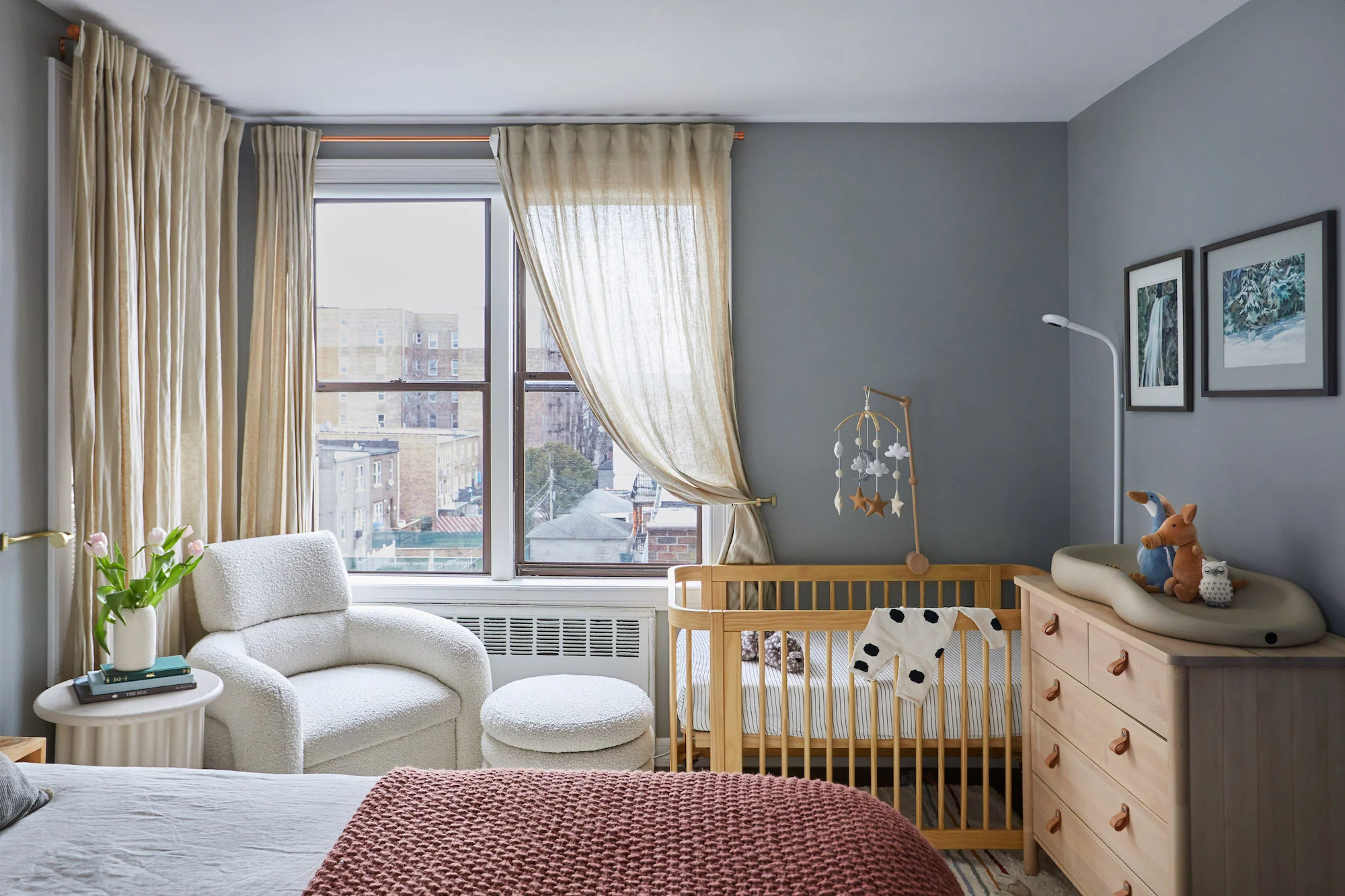
- Keep the crib away from radiators, baseboard heaters, space heaters, and heat vents. Overheating is a real concern, and hot surfaces are a burn risk.
- Do not wedge the crib where it blocks an HVAC return or gets blasted by hot or cold air.
Anchor and separate tall furniture
- In tiny nurseries, the crib often sits close to a dresser or bookshelf. Anchor tall furniture to the wall so climbing hazards are reduced as baby grows.
- Try not to position the crib where a baby could eventually use nearby drawers or shelves as a “ladder.” A little distance helps.
- If you are using a divider or bookcase in a studio, anchor it and keep it far enough from the crib that it cannot be grabbed, climbed, or pulled on.
Keep the crib zone clear overhead
In a small room, it is tempting to hang shelves, art, or a heavy mirror anywhere it fits. I treat the space above the crib like a no-fly zone. Keep anything that could fall or get pulled down off the wall above the crib.
Maintain a practical access zone
You need space to reach into the crib safely. If you have to twist sideways or step over a hamper to set baby down, that is a signal to rework the layout. In small rooms, I aim for a clear, comfortable standing area along at least one long side of the crib so bedtime does not become an obstacle course.
Measure like a Tetris master (in three quick steps)
Before you buy anything, grab a tape measure and do this.
- Map the “no-go zones.” Mark windows, heaters, door swings, closet doors, and the path you take from bed to doorway.
- Mark your usable wall lengths. In small rooms, the best crib wall is usually the longest uninterrupted wall that is not a window wall.
- Tape it out on the floor. Painter’s tape rectangles beat guesswork every time. Tape the crib footprint, then tape the standing area on the side you will use most for pickups and set-downs. Walk it at night with the lights low. If you bump corners now, you will bump them later.
Typical crib footprints vary by model, so always check the product specs. As a rough planning guide, a standard crib mattress is typically around 28 inches by 52 inches, while the crib’s outer dimensions are often a bit larger depending on the frame. Mini cribs can be notably smaller, but the same rule applies: confirm the exact exterior dimensions before you commit.
Pick the right crib for a small space
In a small bedroom, the crib type can make or break the layout.
Mini crib (best for very tight rooms)
A mini crib is my go-to recommendation when the room is truly compact. You get a familiar crib feel in a shorter footprint, and many mini cribs are on casters, which is a game changer for cleaning and reconfiguring.
- Best for: studio apartments, shared bedrooms, closet nooks, or when you still need a dresser in the room.
- Watch for: mattress size availability and how long you plan to use it. Some babies outgrow mini cribs sooner depending on height.
Full-size crib (works if you plan the rest around it)
A standard crib can still work in a small room if you let it be the anchor piece and keep everything else slim and vertical.
- Best for: small bedrooms that can spare one full wall or a corner without blocking walkways.
- Watch for: bulky rocking chairs, big hampers, and wide nightstands that steal your clearance.
Crib on wheels or compact legs
If your layout requires occasional shifting, a crib with locking casters can be helpful. Even moving it 6 inches can open a door swing or give you a better changing spot.
What about a bassinet?
Many families start with a bassinet in the parents’ room, then transition to a crib later. If you are working with a one-bedroom apartment, that phased approach can buy you time to see what you truly need and what you can live without.
Layout ideas that leave room to walk
Here are layouts I have seen work again and again in tight rentals. Use them as a starting point, then adjust for windows, doors, and your nightly route.
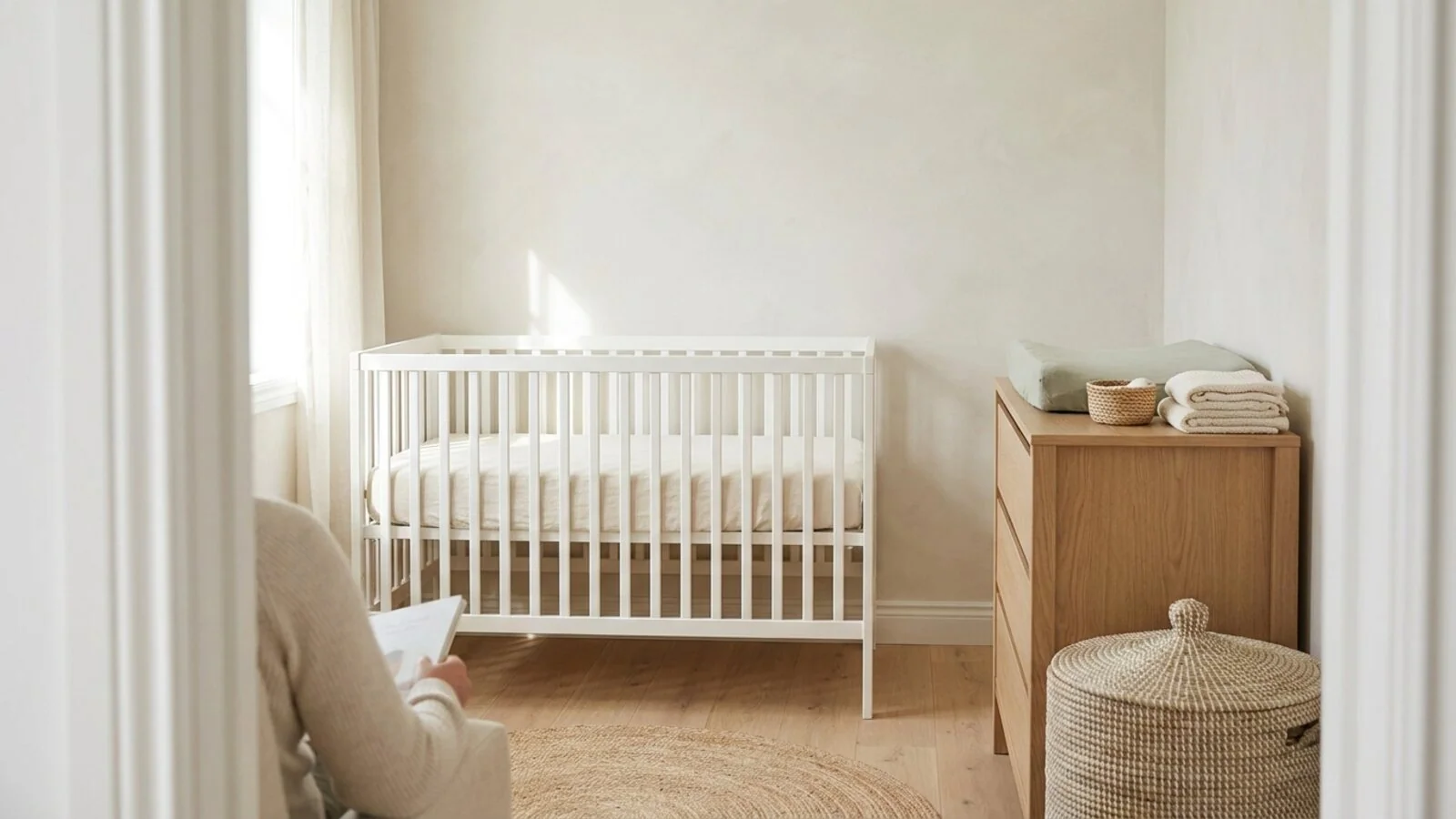
Layout 1: Long wall
This is the simplest and often the safest. Put the crib on the longest wall that has no window, then place a compact dresser on the adjacent wall. Keep the center of the room open so you can move with a laundry basket and a sleepy baby.
Layout 2: Bedroom corner
If you are fitting a crib in your bedroom, corners are your friend, but pick the corner that does not interfere with closets or your bed access.
- Try the crib at the foot of the bed only if you still have a clear walkway to the door and you can access the crib comfortably.
- More often, the best solution is crib on one side wall, with your nightstand swapped for a wall shelf.
Layout 3: Closet nook (last resort)
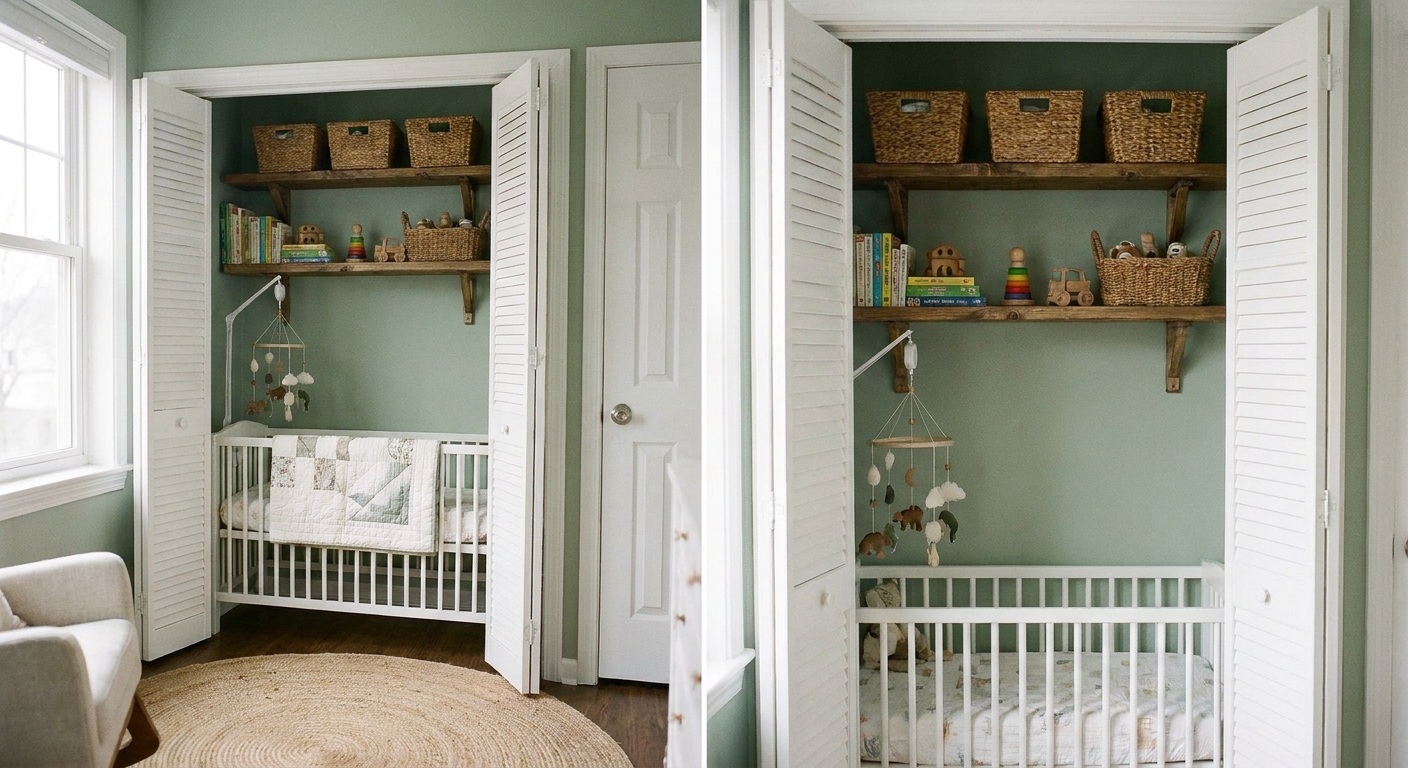
Yes, a closet nook can work, but it needs a cautious, thoughtful setup. First, check local building or fire rules for your rental. Then make sure the space stays well ventilated and does not trap heat. Never use a fully enclosed, unventilated closet as a sleep space.
If the closet doors pinch airflow or block safe access, remove them and store them elsewhere. If you want visual calm, use a curtain outside the opening or keep the closet open with tidy shelving.
- Best crib type here: mini crib.
- Storage approach: use the closet’s upper shelf for bins and keep the floor area around the crib clear.
Make room for changing without a full changing table
In small spaces, a standalone changing table is often the piece that breaks the plan. I prefer one of these options instead:
Option A: Dresser-top station
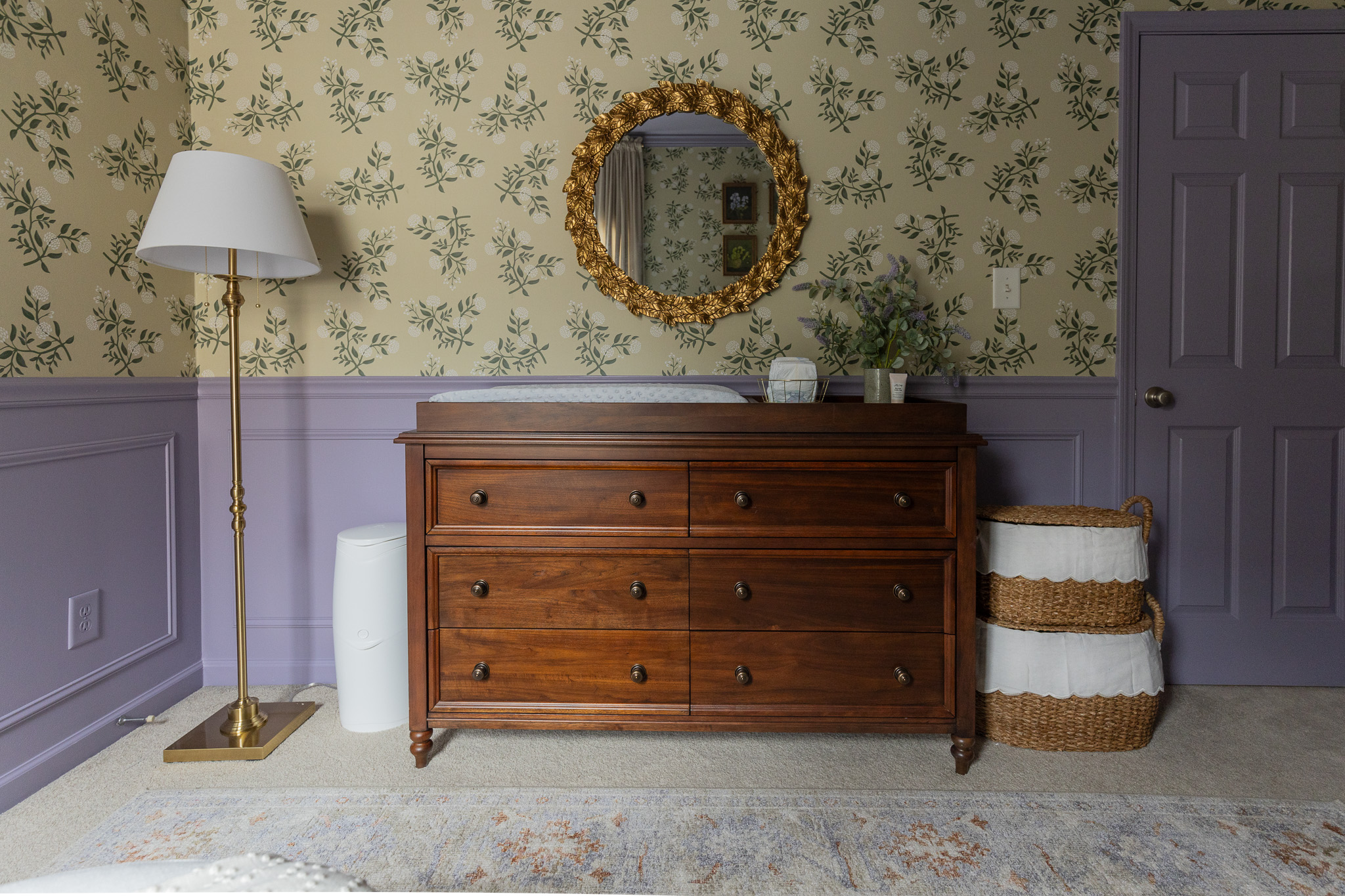
A changing pad on a dresser is my favorite. You get diaper storage and clothing storage in one footprint.
- Use a contoured changing pad that fits the dresser top securely.
- Store diapers and wipes in one lidded bin so it looks calm even when life is not.
- Anchor the dresser to the wall.
Option B: Foldable pad on the bed
If you have truly no extra wall space, a foldable pad can live in a drawer and come out only when needed. Not glamorous, but it is very apartment-realistic.
Option C: Bathroom basket
If your bathroom has a sturdy counter, a small basket with diaper supplies can keep nighttime changes from taking over the bedroom. Good lighting and easy cleanup are big wins here.
Use wall storage to keep the floor open
Floor space is the rarest currency in a small nursery. Walls are your extra square footage.
Wall shelves over the dresser, not over the crib
I like shelves above the dresser for diapers, creams, and swaddles. I avoid placing shelves above the crib because anything mounted overhead comes with extra risk if it is improperly installed or overloaded.
Peg rails and hooks for daily essentials
- Hang a small caddy with burp cloths.
- Use hooks for headphones, a white-noise machine cable loop, or a small diaper bag.
- Keep hanging items out of baby’s reach.
Back-of-door storage (done carefully)
An over-the-door organizer can be great for tiny clothes and spare sheets. If it is on the same door baby will access later, keep items light and secure so nothing can tumble out.
Simple styling tricks for tight rooms
You do not need a “theme.” You need a room that feels calm at 3 a.m.
- Choose one light wall color and keep the biggest pieces in similar tones to reduce visual clutter.
- Use a single large rug instead of several small ones. It reads as more spacious.
- Skip bulky gliders if they block your path. A compact rocker, a supportive chair, or even pillows on the bed can be enough for the newborn phase.
- Mirror placement matters. A mirror across from a window can bounce light, but avoid positioning it where it reflects bright streetlights into your sleep zone.
Common small-room mistakes (and fixes)
Mistake: Crib wherever it fits
Fix: Treat the walkway as sacred. Reclaim it by switching to wall shelves, a narrower dresser, or a mini crib.
Mistake: Changing table becomes storage
Fix: Replace it with a dresser-top changing pad and store supplies in two bins: one for daily use, one for backups.
Mistake: Cords sprawl because outlets are far
Fix: Mount a UL-listed or ETL-listed power strip to the back of a dresser (out of reach), avoid overloading it, and keep charging stations away from the crib zone. Use cord covers as needed, and do not run cords under rugs where they can overheat or become a trip hazard.
Mistake: Overfurnishing “just in case”
Fix: Start with crib plus changing surface plus one laundry solution. Add later only if a real need shows up.
Layout recipes for real apartments
Studio
- Use a mini crib near the bed.
- Put a dresser-top changing station on the same wall as your clothing dresser if possible.
- Create a soft visual divider with a bookcase or curtain, but keep airflow open around the sleep area. Anchor any tall divider so it cannot tip.
One-bedroom with storage needs
- Choose a crib wall, then use vertical storage on the opposite wall.
- Swap wide furniture for tall, narrow pieces.
- Store out-of-season items high and keep daily baby items at waist height.
Baby in your room long-term
- Replace one nightstand with a wall shelf.
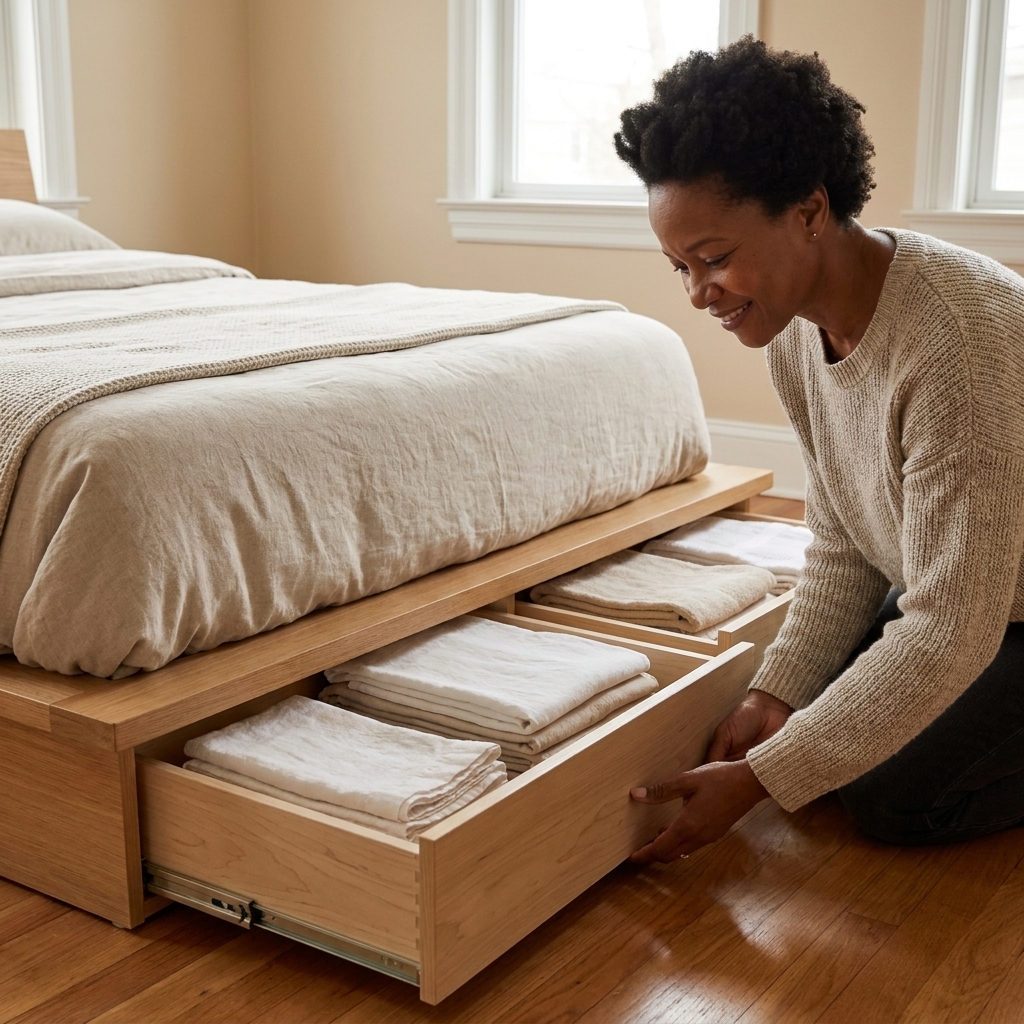
- Use under-bed bins for diapers, wipes, and extra pajamas.
- Keep lighting simple: one dimmable lamp, cords managed and away from the crib.
FAQ
Can I put a crib next to a window?
It is best to avoid it whenever possible because of blind cords, curtain fabric within reach, drafts, and the temptation for little hands to reach as baby grows. If you have no other wall, remove corded coverings, use cordless shades, keep the crib as far from the window area as you can, and follow safety guidance from your crib manufacturer and pediatrician.
Is a mini crib safe?
A mini crib can be safe when it meets current safety standards and you use the correct mattress for that exact model. Always follow the manufacturer instructions for assembly and mattress fit. A too-small or too-soft mattress is not something to improvise in a small space.
How do I fit a crib and a dresser in a tiny room?
Prioritize a narrow dresser, wall shelves above it, and keep the center walkway open. If the dresser is deep, consider rotating it to a different wall so you are not creating a pinch point between crib and furniture.
Should I use a crib in a closet nook?
Only if you can keep airflow strong, avoid heat buildup, and maintain safe clearances from cords and stored items. Check local building or fire rules for your space, and avoid any fully enclosed, unventilated setup. Remove clutter above and around the crib area and keep the access path clear for safe set-downs and pick-ups.
Checklist before you commit
- Crib is not under a window and not near any cords.
- Crib is away from radiators, heaters, and strong vents.
- The wall above the crib is clear of shelves, frames, and anything heavy.
- There is a clear standing area to access the crib.
- Tall furniture and room dividers are anchored and not acting like a step ladder into the crib.
- Changing setup is consolidated, ideally on a dresser top.
- Storage is mostly vertical, leaving the floor open.
Once the crib is in, do one last “midnight walk test.” Lights low, phone in hand, laundry basket in the other. If you can get from bed to crib to door without clipping a corner, you built a layout you can live with.
One last reminder, since small rooms can make it tempting to “pad” the space: follow safe sleep guidance for your setup, including a firm, flat mattress with a fitted sheet only, and keep soft items out of the crib.