Create a functional entryway in a tiny apartment with slim shoe storage, pegboards, floating shelves, and smart wall hooks that keep clutter off the floor.
Space Ovo
Create an Entryway When You Don’t Have One
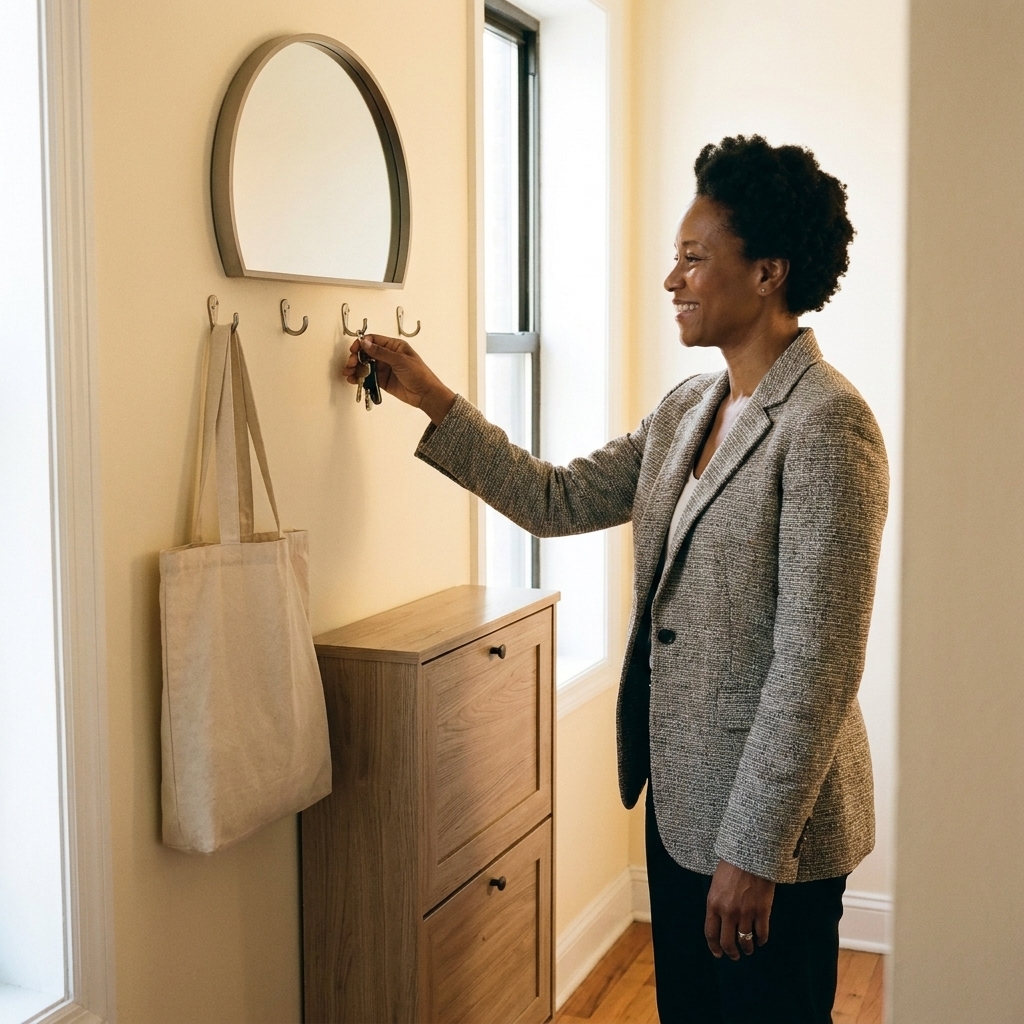
No foyer, no problem. Use a slim console table, wall hooks, and a mirror to carve out a functional, renter-friendly drop zone right by the front door.

Maya Brooks
Maya Brooks is an interior stylist and layout enthusiast who believes square footage should never dictate your home's style. After a decade of navigating cramped city studios, she shares practical, renter-friendly decorating and storage solutions to help others maximize their tiny spaces.
Created October 17, 2026
Updated October 17, 2026
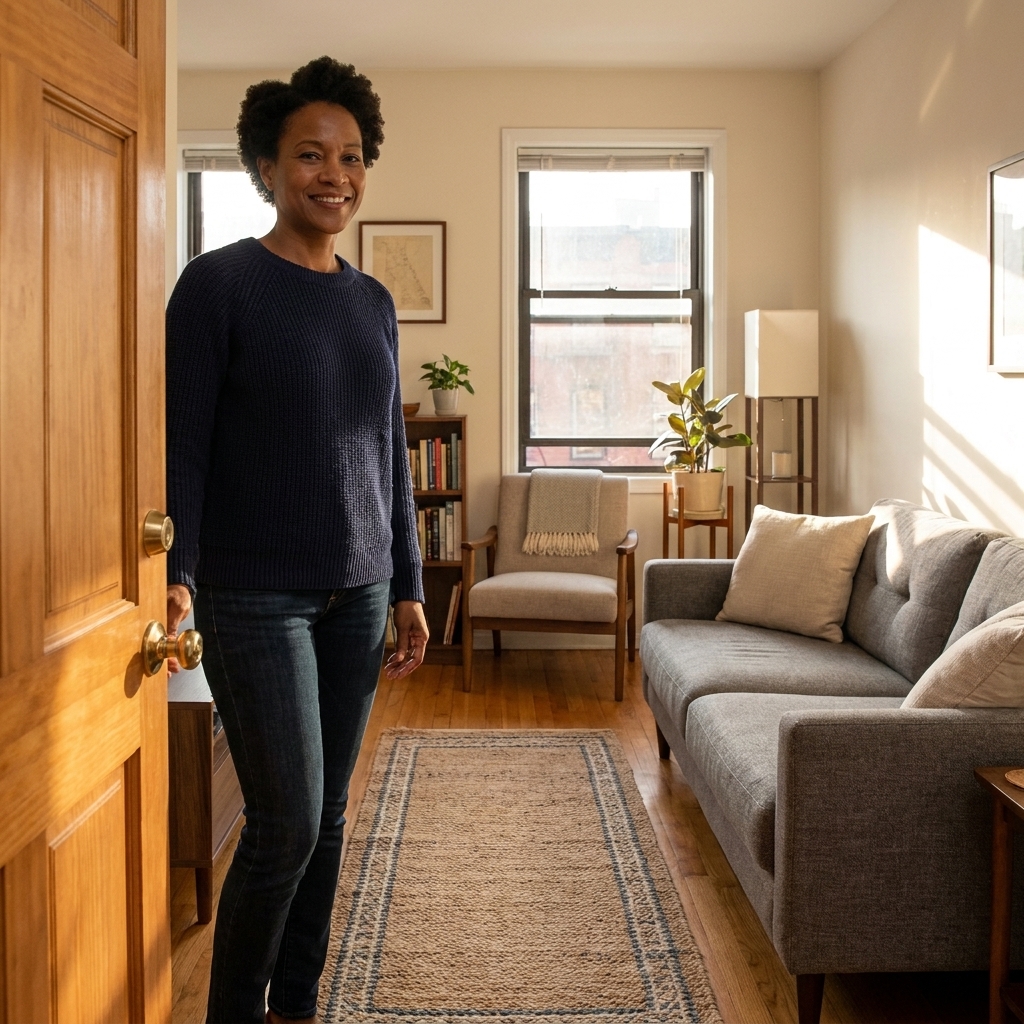
If your front door opens straight into your living room, kitchen, or, in truly chaotic apartments, your bed, you are not alone. I have lived in plenty of places where the “entryway” was basically a strip of floor tile and a dream.
The good news: you do not need a real foyer to have an entryway. You just need a drop zone that does three things: catches your daily stuff (keys, bag, shoes), survives high traffic, and looks intentional. I am going to walk you through a simple setup using three small-space heroes: a slim console, floating wall hooks, and a mirror.
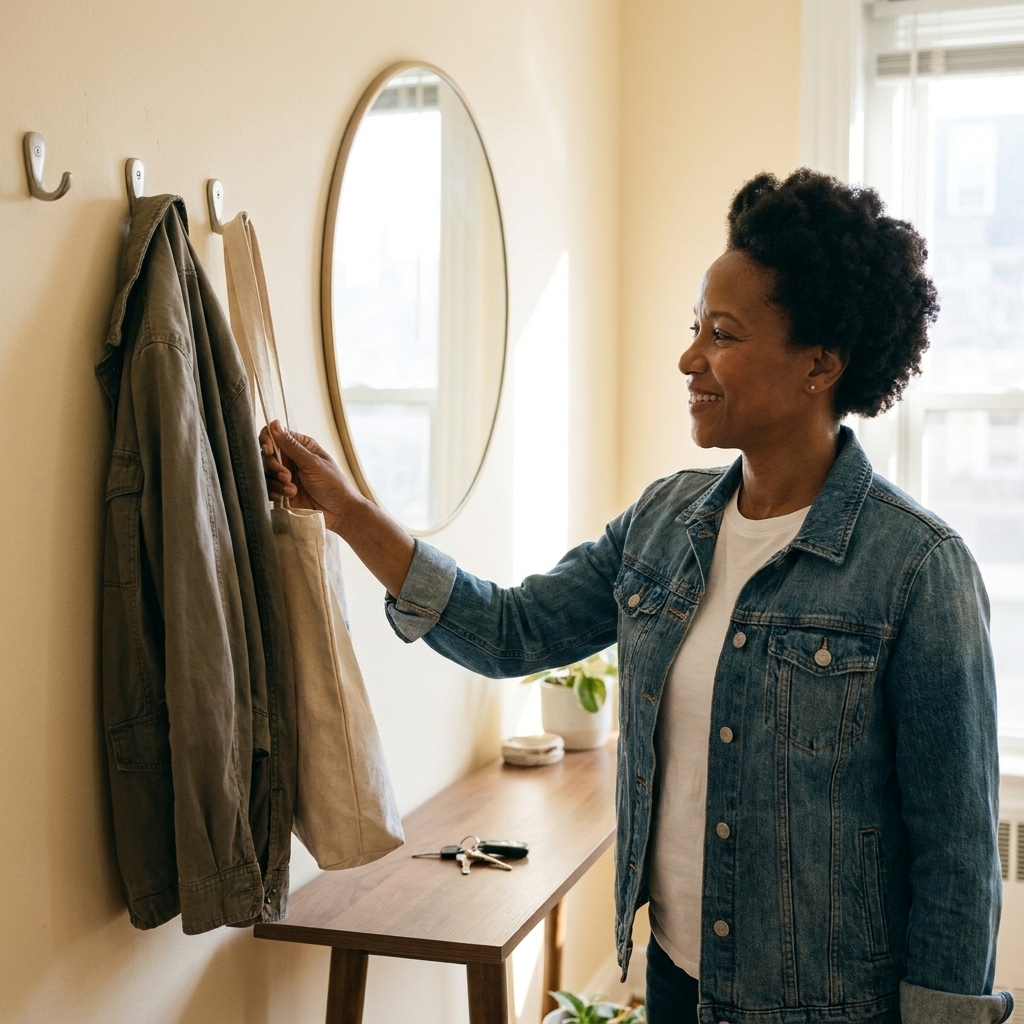
Step 1: Pick your entry footprint
Before you buy anything, do a two-minute layout check. I promise this is the difference between “cute entry moment” and “why do I keep bruising my hip.”
Measure these three things
- Door swing: Open your door all the way. Measure the clear space behind it and next to it. You want furniture that does not block the door or force you to shimmy inside.
- Walking path: Many designers aim for around 30 inches of clear walkway for a comfortable pass-through. You can sometimes make 24 inches work in a pinch, but it will feel tight when carrying groceries. If anyone in your home needs accessibility clearance (or you want a more future-proof setup), plan wider.
- Wall real estate: Identify one surface where you can claim a vertical “entry zone.” Even an 18- to 24-inch-wide slice of wall can hold hooks and a mirror.
My rule: In small apartments, your entryway does not need to be wide. It needs to be flat. Slim pieces plus vertical storage is how you win.
Step 2: Add a slim console (or shelf)
The console is your command center. It says, “This is where life gets set down,” which is exactly what you want when you come home tired and holding five things.
What to look for
- Depth: 8 to 12 inches deep is the sweet spot for tight entry areas. You can go up to 14 inches if you have breathing room.
- Height: 30 to 34 inches is a typical console height range and generally comfortable for dropping keys, sorting mail, and styling a mirror above.
- Legs over bulk: A console with open legs feels lighter and makes the area look less crowded. Bonus: it is easier to clean under.
If you truly have no floor space
Swap the console for a floating shelf installed into studs or with the right anchors for your wall type. Even a narrow picture ledge can hold a small catchall tray and a mail sorter.
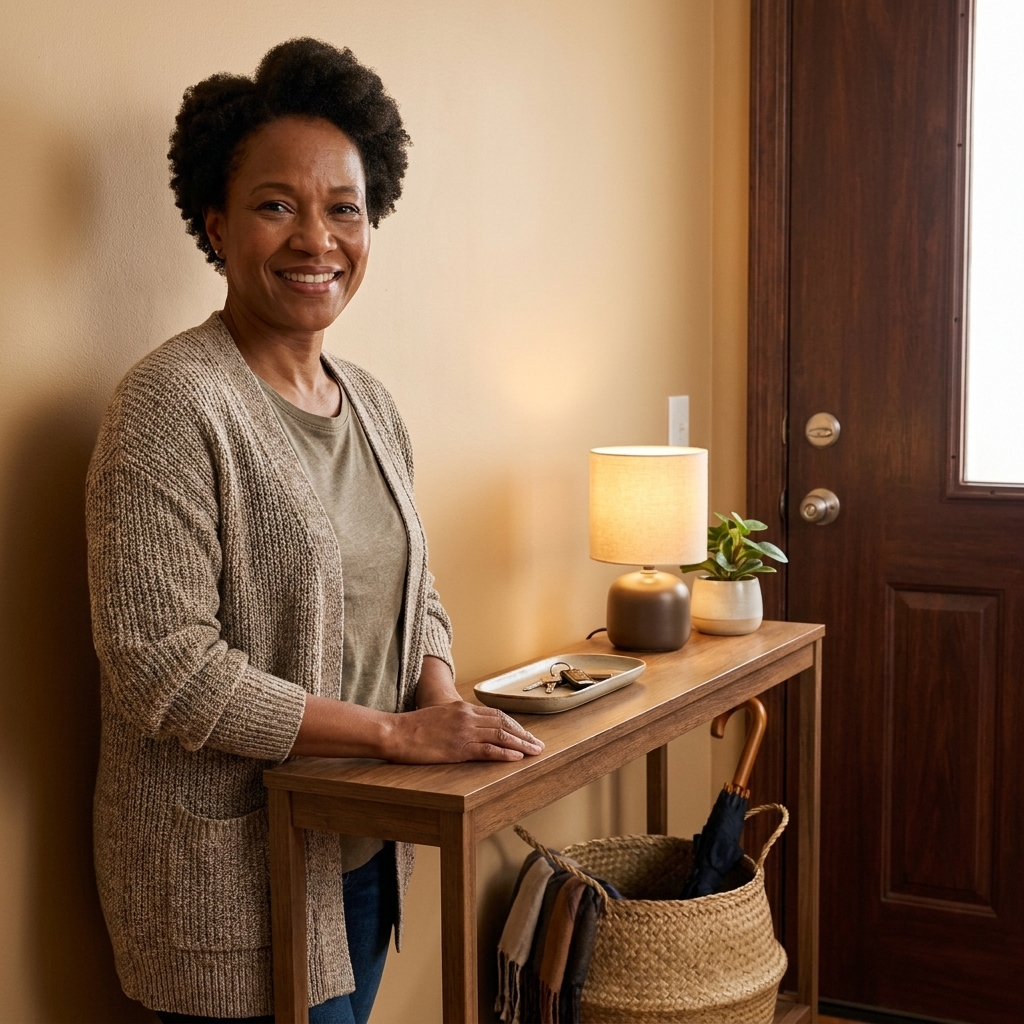
Style it like a grown-up
- Put down a tray or shallow bowl for keys and earbuds. Containment is the whole game.
- Add one small light source if the area is dim, like a tiny lamp or a plug-in sconce nearby.
- I try to keep the surface mostly empty (think: one tray, one light, one small “pretty” thing). That breathable look is what keeps it from turning into a clutter shelf by day three.
Step 3: Install wall hooks
If you have ever stepped over a bag and thought, “I live in an obstacle course,” hooks are your fix. They create instant function without eating up square footage.
Hook placement that works
- Everyday hooks: A good starting point is about 60 to 66 inches from the floor for coats and bags.
- Lower hook option: Add one hook around 45 to 48 inches if you want a spot for a smaller bag, dog leash, or a kid’s jacket.
- Spacing: Start with 6 to 10 inches between hooks so bulky coats are not fighting each other.
Rental-friendly note: If you cannot drill, use heavy-duty removable hooks rated for the weight you plan to hang. Be honest about weight. A loaded backpack is not the same as a scarf. Also, wall surfaces matter. Tile, plaster, and textured walls can behave differently than drywall, so check your product instructions before you commit.
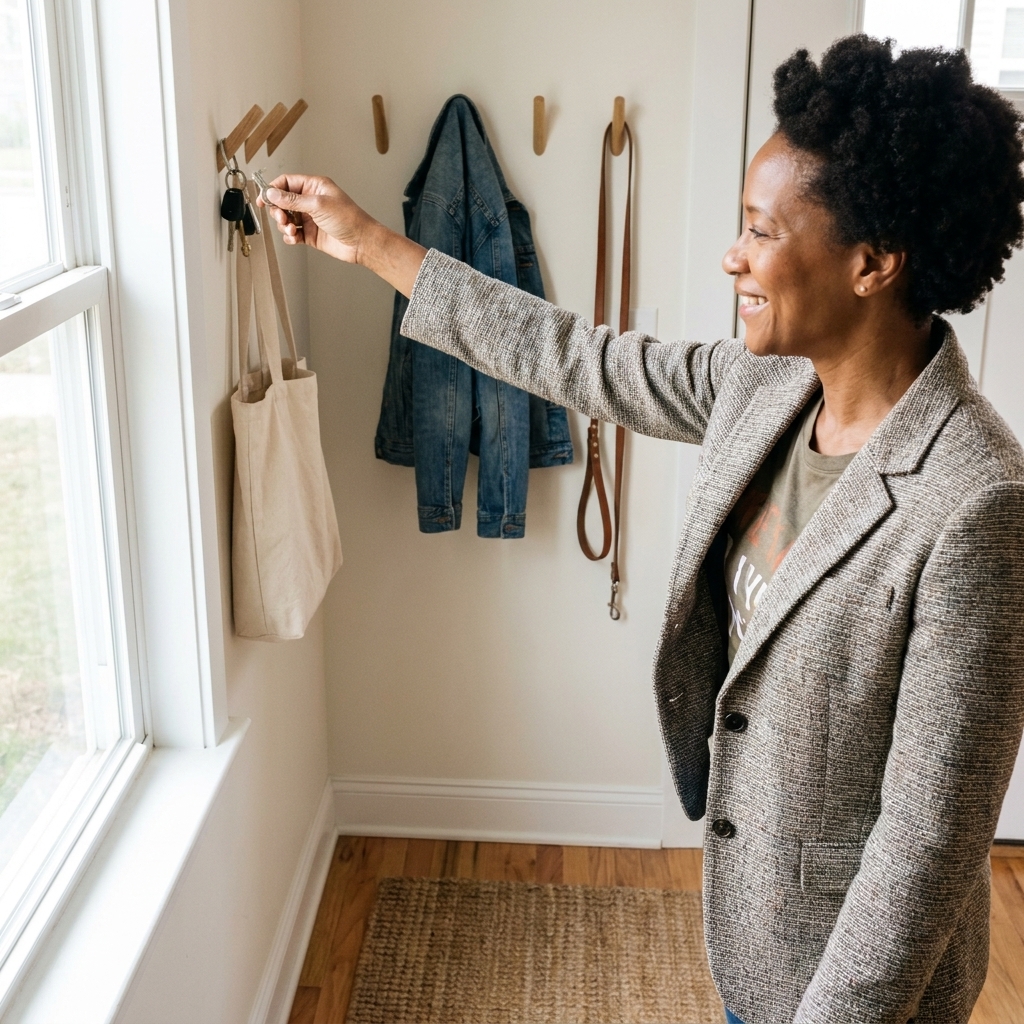
Make it look intentional
Use matching hooks or a single hook rail. Visual repetition reads calm. A mix-and-match hook situation can look cluttered fast in a tiny space.
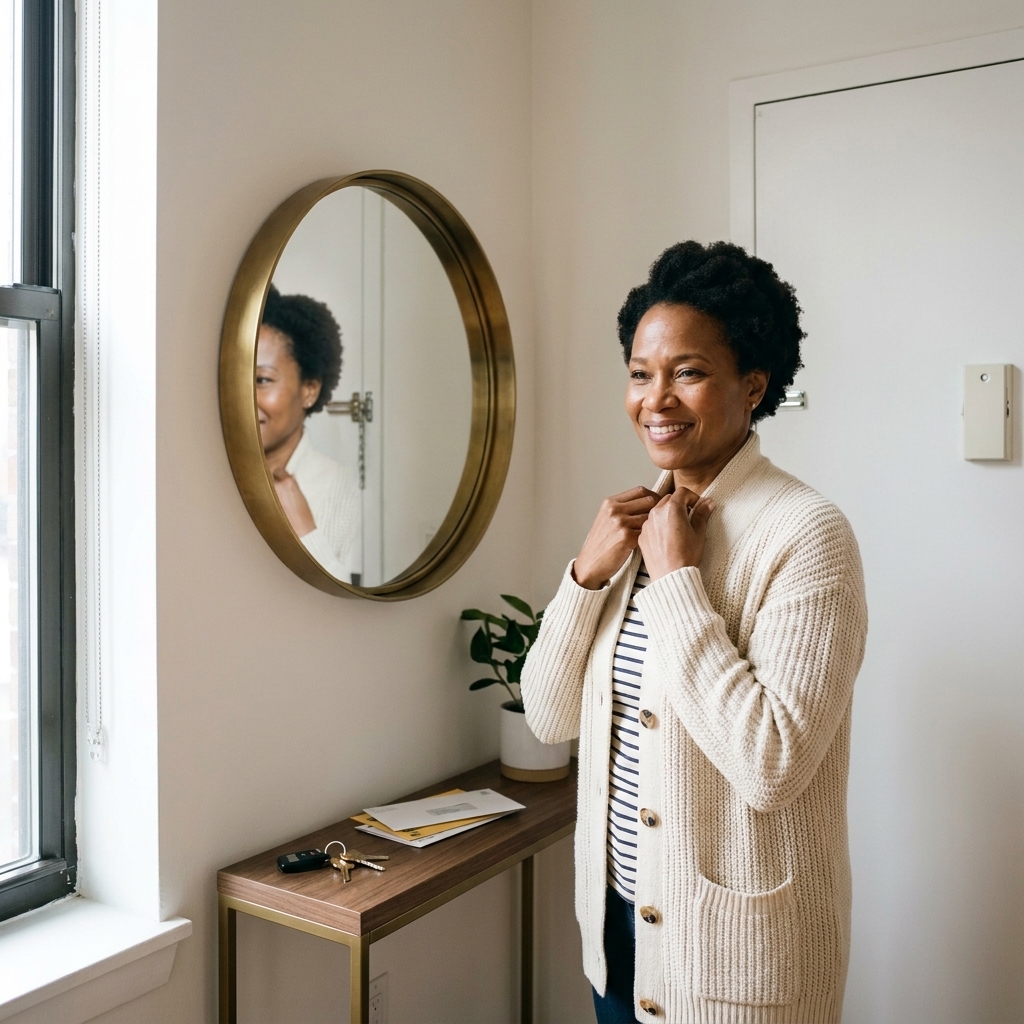
Step 4: Hang a mirror
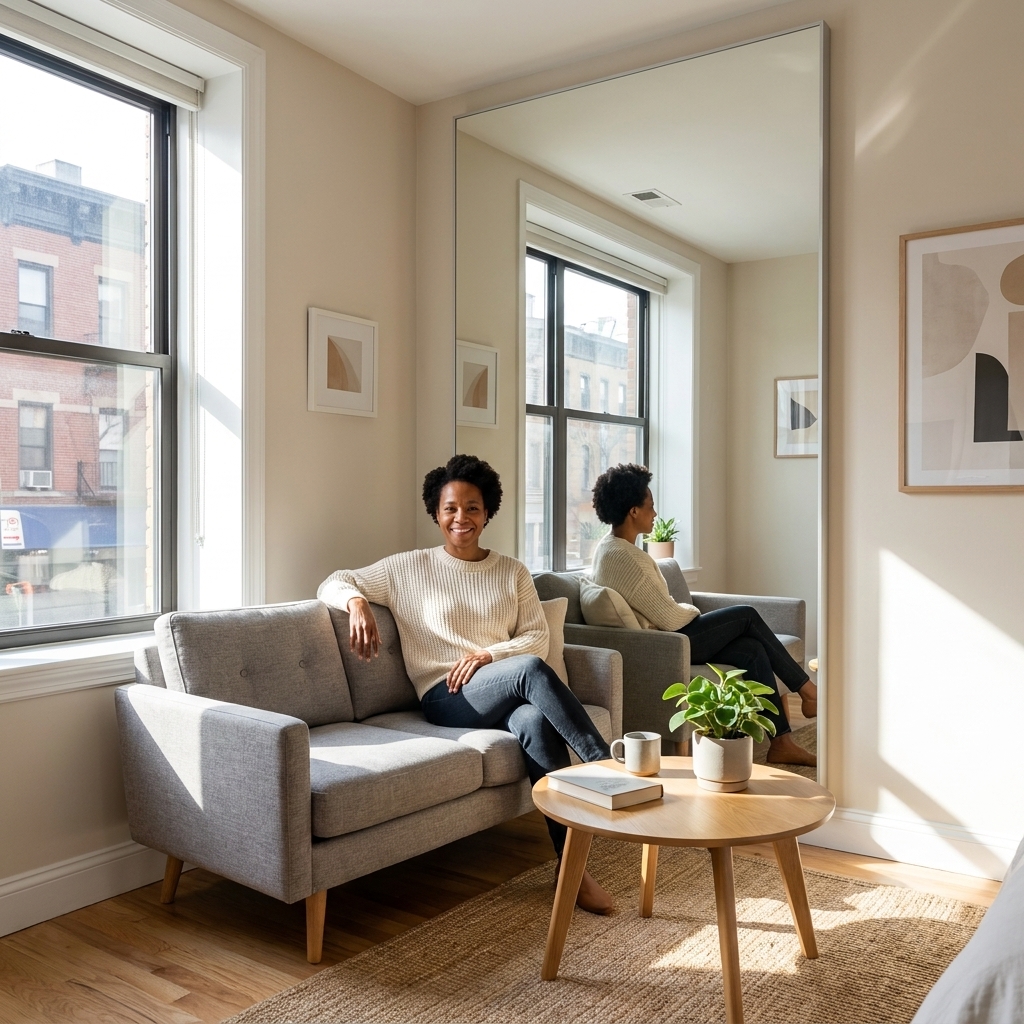
A mirror does two jobs in a small entry: it gives you the last-second outfit check, and it helps bounce light around what is often the darkest part of an apartment.
Mirror choices for small entries
- Round mirror: Softens the hard lines of doors and hallways and feels less boxy.
- Tall, vertical mirror: Often makes a narrow area feel taller and more open, plus it is great for a quick full-look check.
- Mirror with a small ledge: Sneaky extra storage for a card holder or lip balm.
Where to place it
- Above your console, centered, with about 6 to 8 inches between the console top and the mirror bottom.
- If there is no console, place it near hooks so the whole zone reads as one “entry wall.”
Step 5: Give shoes a plan
Shoes are the fastest way an entryway turns into a mess. Your goal is simple: shoes should live in one defined container.
Small-space shoe storage
- Under-console baskets: Great if you rotate shoes and do not need everything visible. Choose baskets with a firm shape so they slide in and out easily.
- Low-profile shoe tray: Especially helpful in wet or snowy climates. It protects the floor and visually bounds the mess.
- Vertical shoe rack: If your entry is basically a hallway, go vertical and keep the footprint small.
Tetris master tip: Set a realistic shoe limit for the entry. Two pairs per person is a good starting point. Everything else goes in the closet, under the bed, or in seasonal storage.
Step 6: Add one boundary
When you do not have an architectural entryway, you create one with a boundary cue. This is what makes the setup feel designed, not improvised.
Pick one
- A small rug: A runner or doormat-sized rug visually claims the zone. Use a non-slip pad so it does not scoot.
- A paint moment: If your lease allows it, a small painted rectangle behind hooks and mirror is a tiny-space miracle worker.
- A wall sconce or plug-in light: Light signals purpose. Even a small glow makes it feel like a destination, not a pass-through.
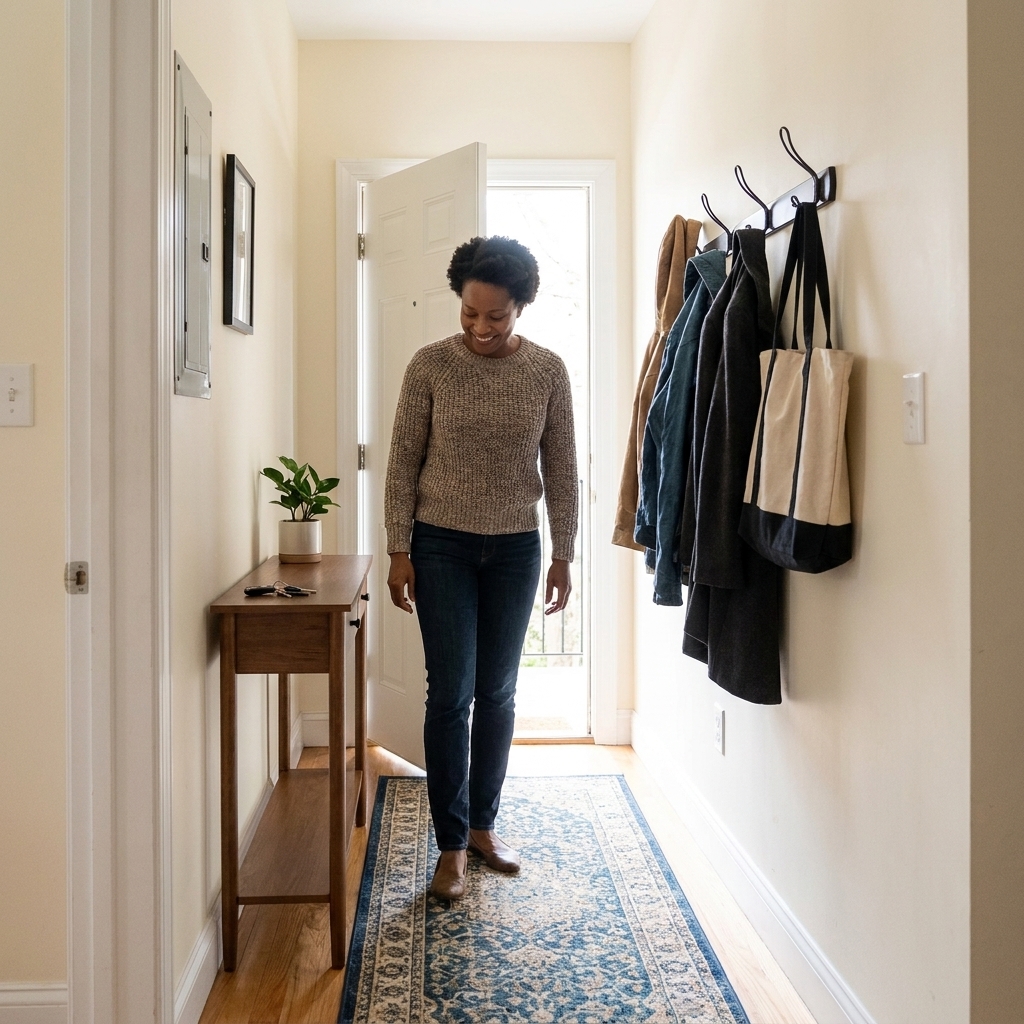
Three setups by layout
Door opens into the living room
- Try a slim console behind the sofa if the wall by the door is tight.
- Mount hooks and a mirror on the nearest usable wall section.
- Anchor the zone with a small rug so it feels separate from the lounging space.
Door opens into the kitchen
- Opt for a floating shelf instead of a console to avoid crowding the cooking path.
- Designate hooks for bags and a dedicated spot for reusable totes.
- Go with an easy-clean mat or washable rug since crumbs happen.
Door opens into a narrow hallway
- Skip the console and do a hook rail plus a tall mirror.
- Add a wall-mounted key holder or micro shelf for keys and mail.
- Keep shoes on a very slim solution, like a vertical rack or a single tray.
Keep it functional: a 60-second reset
The secret to a small entryway staying cute is maintenance that is almost too easy to skip.
- Put keys back in the tray.
- Hang the bag and jacket you will use tomorrow.
- Move shoes into the basket or onto the tray.
- Sort mail fast: recycle junk, and put action items in one dedicated slot so they do not migrate across your kitchen counter.
That is it. You are done before your microwave finishes reheating leftovers.
Quick FAQs
What if I cannot drill into the wall?
Use removable hooks for lighter items and lean on a slim console or a narrow freestanding coat rack. If you add a tall mirror, treat it like furniture: position it securely and anchor it with anti-tip hardware, especially if you have kids, pets, or lively friends.
How do I make a tiny entry look less cluttered?
Choose pieces with negative space, like a console on legs, and use closed or contained storage for small items. Matching hooks, one tray, and a single basket are calmer than multiple little organizers.
What is the minimum entryway I can get away with?
A mirror plus two hooks plus a key tray is enough. If you can add a shoe tray, even better. Think of it as a micro landing strip for your daily essentials.