The small-space traffic flow fix: walkway width guidelines, key clearances, and renter-friendly layout tweaks that stop the daily shuffle and make a tight ap...
Space Ovo
Where to Put a Litter Box in a Small Apartment
Smart, renter-friendly spots for a litter box in studios and one-bedrooms, plus odor control, ventilation tips, and ways to hide it without trapping smells.

Maya Brooks
Maya Brooks is an interior stylist and layout enthusiast who believes square footage should never dictate your home's style. After a decade of navigating cramped city studios, she shares practical, renter-friendly decorating and storage solutions to help others maximize their tiny spaces.
I have lived in enough “cozy” rentals to know the real challenge is not finding space for something. It is finding space for it where you do not smell it, trip over it, or stare at it during dinner. A litter box checks all three boxes, which is why placement matters more in a studio or one-bedroom than it does in a house.
The goal is simple: pick a spot your cat will actually use, with airflow for odor control, and a setup that looks intentional. Let’s walk through the best locations I have seen work in small apartments, plus what to avoid and how to make any spot feel cleaner and more discreet.
First, the non-negotiables
Before we talk specific corners and closets, here is the checklist I run mentally every time I help a friend re-home their litter box.
- Easy access for your cat. If your cat feels trapped, rushed, or startled, you will get accidents. Avoid tight dead ends where someone could walk in and block the only exit.
- Easy access for you. In a small apartment, a box you hate scooping becomes a box you scoop less often, and that is where odor starts.
- Ventilation. Odor control is strongly influenced by airflow and routine. If you put the box in a cabinet or closet, you need a plan for air movement.
- Distance from food and high-traffic stress. Cats generally do not want their bathroom next to their dining area, and they also do not want it right where the front door slams.
- Floor protection. Even tidy cats track litter. You want a mat, and ideally a hard, wipeable surface nearby.
One more reality check people look for: the common rule of thumb is one box per cat, plus one extra. In a studio, that can be aspirational. If you can only fit one, placement and scooping frequency matter even more.
Best places in a small apartment
1) Bathroom corner
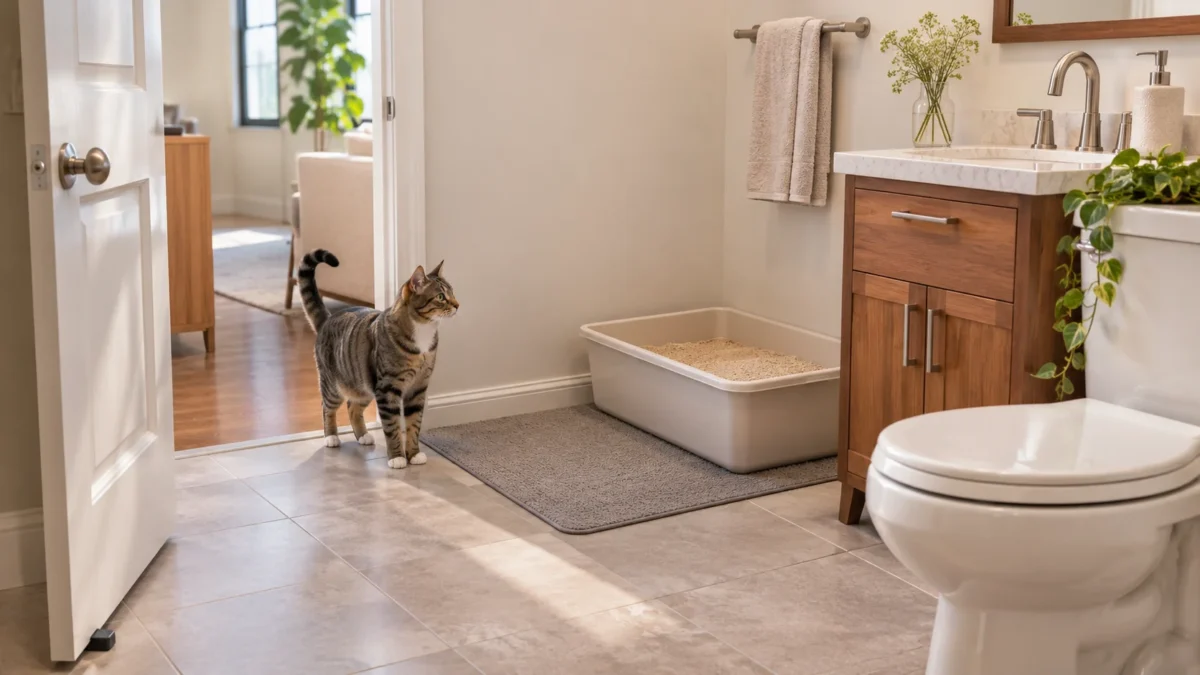
If you have even a modest bathroom, this is usually my first pick. Bathrooms are easy to wipe down, tend to have hard flooring, and often include an exhaust fan or decent natural ventilation.
Why it works: easy cleanup, hard floors, often better ventilation than other rooms
Watch-outs: loud fans can spook some cats, and very tiny bathrooms can feel like a trap
- Make it better: if you have a fan, try running it after scooping to clear the air. How long depends on your fan, your layout, and your nose.
- Styling tip: a slim, wipeable screen can hide the box from view when the door is open, but do not block the only path in and out.
2) Laundry closet or utility nook
If your unit has a laundry closet, hallway utility nook, or that random recessed space, it can be a great litter box home because it is not where you relax or eat.
Why it works: out of sight, not in living zones, usually near hard flooring
Watch-outs: closets can trap smell fast
- Make it better: keep the door cracked with a doorstop, or use a baby gate if you need airflow but want to block other pets or toddlers.
- Do not do this: fully close a tight closet door all day unless you have proven ventilation, otherwise you are concentrating odors in a small space.
3) Under a console table or entry bench
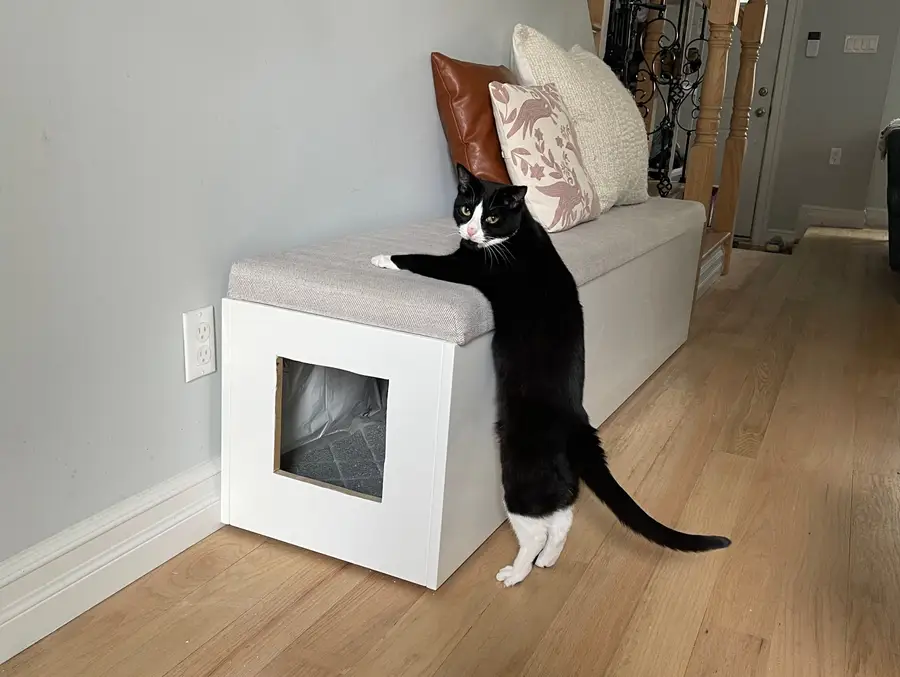
This is my favorite small-space trick because it uses negative space you already have. A shallow console behind a sofa, a hallway console, or an entry bench can hide a litter box without dedicating a whole closet.
Why it works: visually discreet, easy to reach for scooping, flexible placement
Watch-outs: if it is too close to your front door, noise and foot traffic can deter a shy cat
- Make it better: add a short decorative screen or a tailored curtain panel attached with tension rods or stick-on hooks. Keep the bottom edge off the floor so air can move.
- Proportions: give at least a few inches of clearance around the box, especially above it, so odors do not get trapped.
4) Inside a ventilated cabinet enclosure
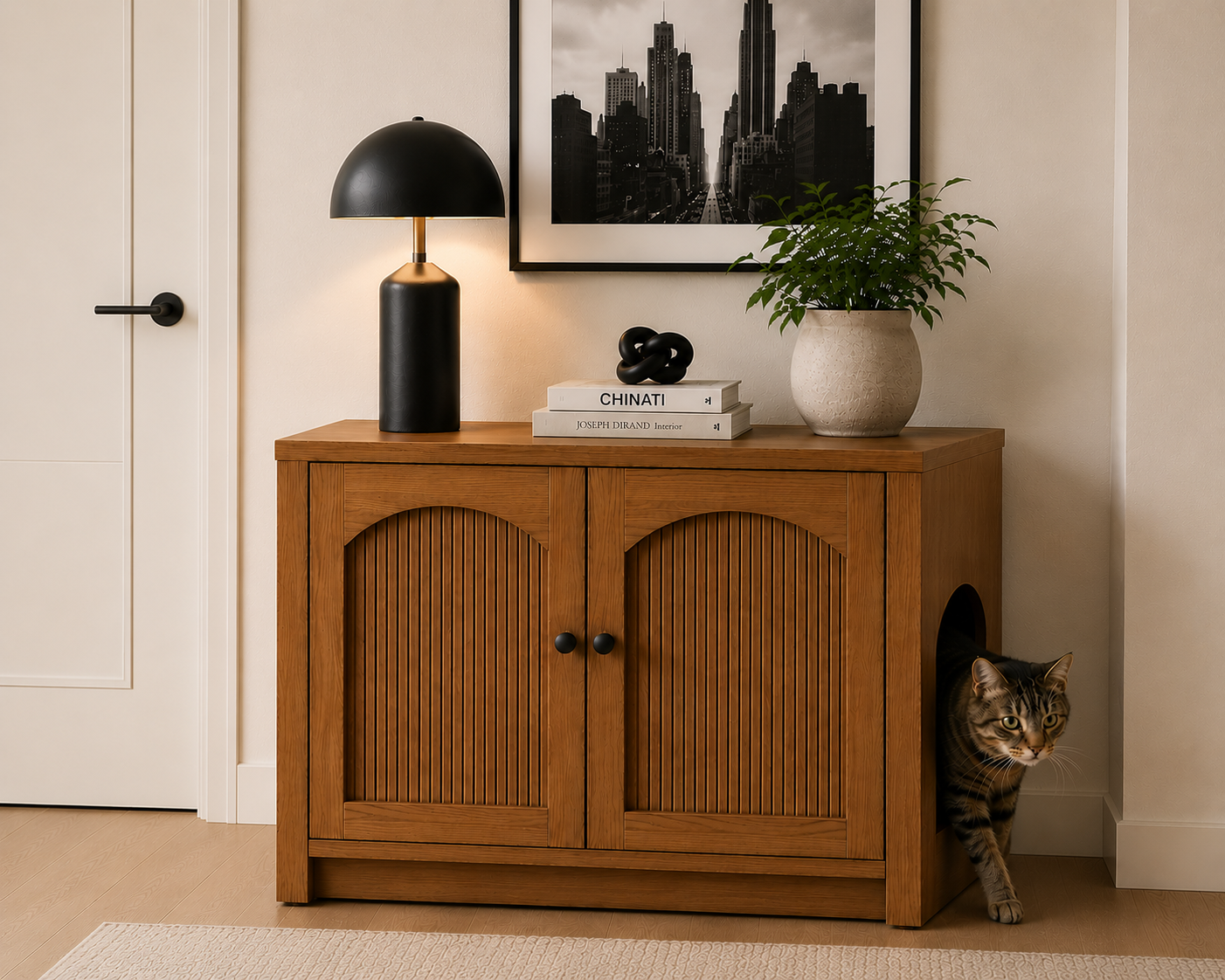
Litter box furniture can be a lifesaver in a one-bedroom, but the design details matter. You want concealment without sealing odors inside.
Why it works: looks intentional, keeps litter scatter contained, reduces visual clutter
Watch-outs: enclosed spaces amplify odor if you skip airflow and frequent scooping
- Look for: side vents, a wide entry opening, enough interior space for your cat to turn comfortably, and a door that opens wide for cleaning.
- Make it better: place a charcoal odor absorber nearby. If you add a small, quiet fan, position it so it helps move air out without blowing litter dust into your room or creating a strong draft that makes your cat avoid the box. Secure cords and keep them out of reach.
- Cleaning reality: wipe the inside walls weekly. Enclosures collect dust, litter residue, and odor films.
5) A bedroom corner
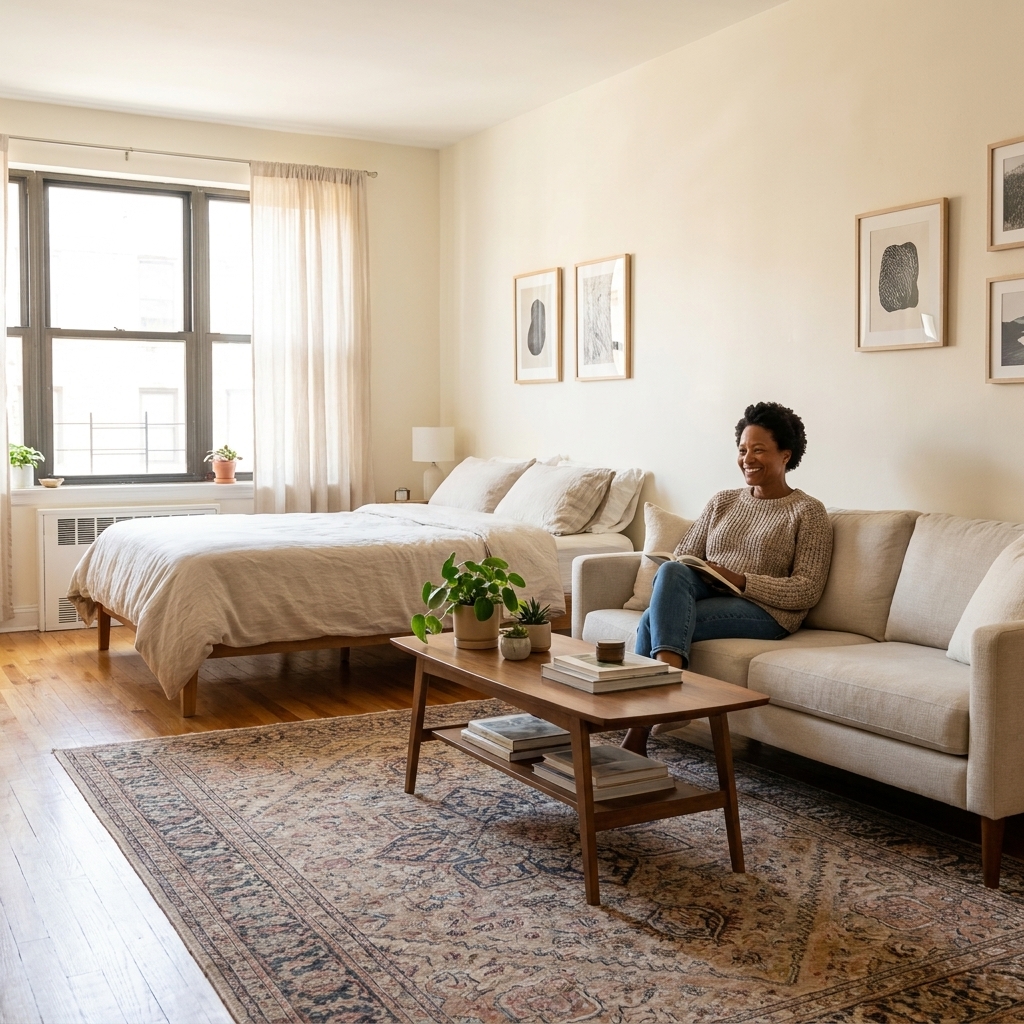
In a true studio, the bedroom and living room are the same room. Sometimes the only low-traffic spot is a bedroom corner. This can work if you prioritize ventilation and routine.
Why it works: calmer than an entryway, predictable environment for your cat
Watch-outs: you will notice odor more because you sleep there
- Make it better: place it as far from your bed as possible, ideally near a window you can crack safely (with a secure screen).
- Visual trick: hide it behind a tall plant stand or open shelving unit that still allows airflow. Avoid fully boxing it in.
Spots I try to avoid
- Next to the cat’s food and water. This is a common studio compromise, but it can stress cats and lead to avoidance.
- Right by the front door. Slamming doors and guests can make the box feel unsafe.
- Under your desk if you WFH all day. You will be stuck with the smell and noise, and your cat may avoid using it if you are always there.
- Inside an unventilated closet with the door closed. It hides the box visually, but it concentrates odor fast.
- Near shared vents or returns. In some apartments, air moves between rooms more than you think. If odor seems to travel fast, try a spot farther from HVAC returns, or talk with roommates about the least disruptive location.
Odor control that works
In a small apartment, odor control comes down to routine plus airflow, with a few other big variables in the background like litter type, diet, and your cat’s health.
Scoop schedule
- Scoop at least once daily. Twice daily is the fastest way to keep a studio from smelling like a litter box.
- Full dump and wash as needed. This varies a lot by litter type (clumping vs non-clumping), box count, and cat count. Many people land somewhere around every 2 to 4 weeks, but adjust based on odor and how the litter is holding up. Wash with mild soap, dry fully, then refill.
Litter and box choices
- Use the litter your cat prefers. The best odor plan fails if your cat starts avoiding the box.
- Unscented is often better. Strong fragrance plus waste smell can be worse than either alone.
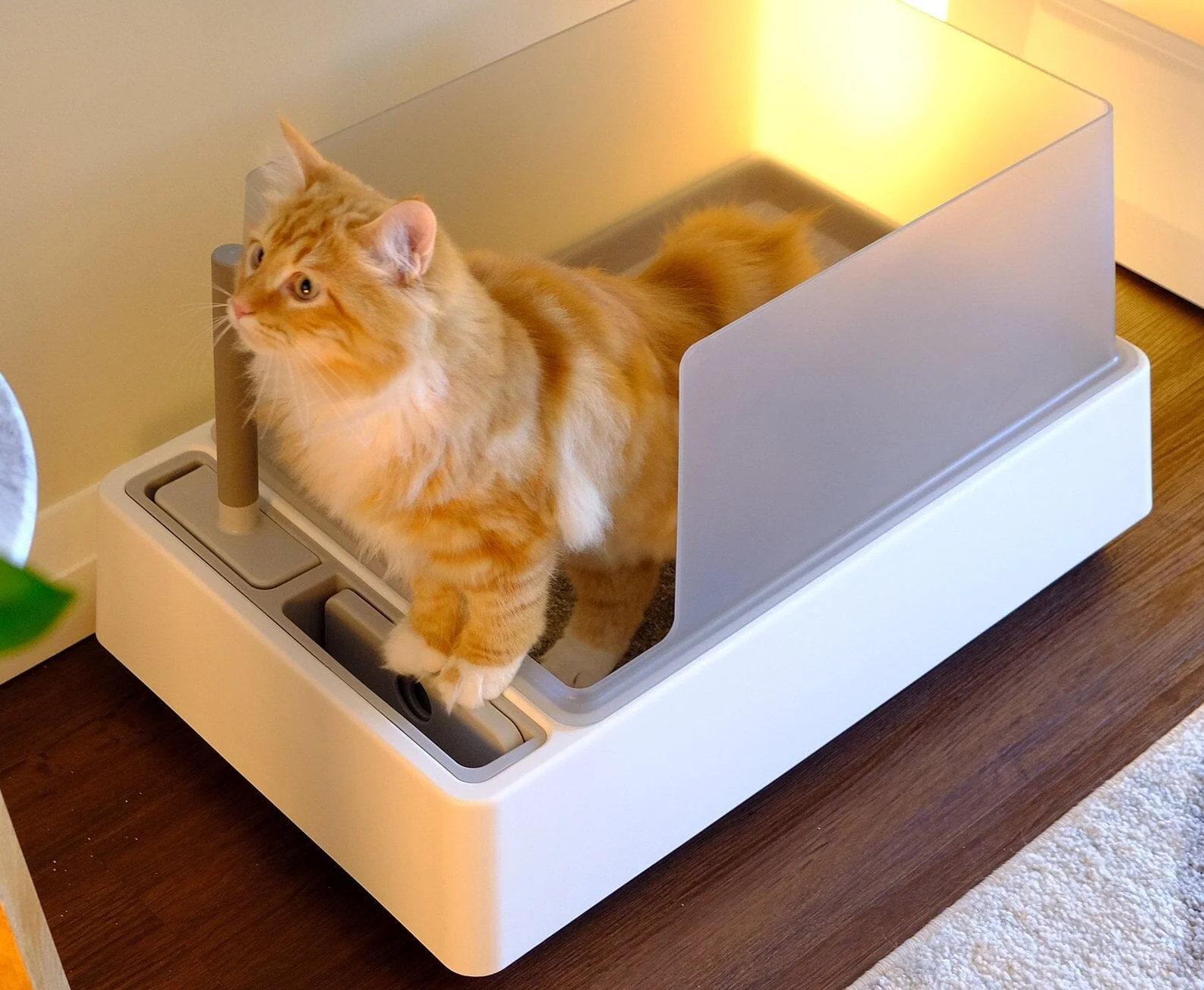
- High-sided boxes help with scatter. For cats who kick, a top-entry box can reduce tracking, but only if your cat is comfortable using it.
Ventilation and air cleanup
- Use your bathroom fan if you have one. It helps, even if it is not perfect.
- Open a window when you can. Even 10 minutes of cross-ventilation helps.
- Choose odor absorbers, not masking sprays. Activated charcoal and baking soda style deodorizers help without layering perfume on top.
Control litter tracking
- Use a large litter mat. Bigger than you think. Give your cat a few steps of landing strip.
- Keep a tiny vacuum or handheld broom nearby. The fastest cleanup is the one you will actually do.
Hide it without trapping stink
Concealment is a design problem and a ventilation problem. Here are renter-friendly ways to make the litter box less visible without creating an odor cave.
Decorative screen
A folding screen or a short freestanding panel can block the sightline from your sofa or entry. Leave at least one side open so air can circulate.
Curtain panel under a table
If your box sits under a console, hang a simple curtain. Choose a washable fabric and keep it a couple inches off the floor.
Cabinet enclosure with breathing room
If you use an enclosure, prioritize one with vents and enough interior space. You want it to feel like a room, not a sealed container.
Open shelving as a visual blocker
A low bookshelf can break the sightline while keeping airflow. Just make sure your cat can enter and exit without feeling cornered.
Quick decision guide
If you have a bathroom fan
- Best bet: bathroom corner
- Second best: just outside the bathroom behind a screen
If your bathroom is too small
- Best bet: under a console table with a screen or curtain
- Second best: a ventilated laundry closet with the door cracked
If you have guests often
- Best bet: a ventilated cabinet enclosure in a low-traffic area
- Second best: closet nook with airflow and easy daily access for scooping
If your cat is shy
- Best bet: bedroom corner or calm hallway nook away from the door
- Avoid: entryway and loud appliances
If your cat is a kicker or high-sprayer
- Best bet: high-sided or top-entry box placed on a wipeable mat
- Placement tip: choose a spot with easy wall and floor wipe-down access (bathroom, laundry area)
My go-to setup
If you are torn and want a default setup that works in a lot of studios and one-bedrooms, this is it:
- Location: bathroom if it fits, otherwise under a living room console that is not right by the door
- Odor plan: scoop daily, use ventilation when you can, and keep an odor absorber nearby
- Mess plan: oversized litter mat plus a handheld vacuum stored within arm’s reach
- Visual plan: screen or curtain that blocks the view from your main seating area, while leaving airflow around the box
Troubleshooting
If it smells within a few hours
- Increase scooping frequency.
- Make sure you are not trapping odor in a closed closet or sealed enclosure.
- Check if the litter needs a full change sooner.
If the smell clings to the area
- Wash the box itself. Plastic holds odor over time.
- Wipe nearby baseboards and the floor around the box.
- Replace or wash mats and any fabric curtains.
- Avoid ammonia-based cleaners near the box. The smell can mimic urine and, in some cats, encourages re-marking.
If your cat stops using the box after you move it
- Try a gradual move, a few feet per day.
- Make sure the new spot has an easy exit path.
- Consider adding a second box temporarily if you have the space.
If odor suddenly spikes or habits change
If your cat suddenly starts missing the box, straining, going more often, or the smell changes dramatically, treat it as a potential health issue first. UTIs, GI problems, stress, and even arthritis can change litter box behavior. When in doubt, call your vet.
FAQ
Can I keep a litter box in a closet?
Yes, but only if you can keep it ventilated and accessible. A cracked door, a vented door, or a closet that is more of an open nook tends to work better than a tightly sealed closet.
Is a covered litter box better for odor?
Sometimes it helps with scatter, but it can trap odor inside the box, which can make the moment you open it worse. Some cats also dislike covered boxes. In small apartments, I focus more on daily scooping and airflow than relying on a lid.
Where should I not put a litter box in a studio?
If you can avoid it, skip placing it right next to your bed, next to the cat’s food, or directly by the front door. In tight layouts, a screened-off nook with airflow usually beats a sealed closet.