A curated list of over-the-door organizers for shoes, pantry items, and accessories that keep tiny apartments tidy and chic, not cluttered.
Space Ovo
Small Laundry Closet Organization Ideas
Make a tiny laundry closet work harder with slim shelving, door storage, and collapsible drying hacks that keep detergent, tools, and linens neat and reachable.

Maya Brooks
Maya Brooks is an interior stylist and layout enthusiast who believes square footage should never dictate your home's style. After a decade of navigating cramped city studios, she shares practical, renter-friendly decorating and storage solutions to help others maximize their tiny spaces.
Created October 17, 2026
Updated October 17, 2026
If you have a stackable washer dryer tucked into a closet, you already know the vibe: you open the doors and get hit with a detergent avalanche, a lint roller that has vanished into the void, and exactly zero places to set a basket down. The good news is that a laundry closet is basically a vertical storage puzzle, and I love a good puzzle.
Below are my favorite shelving and drying hacks for making a tiny laundry closet feel calm, functional, and renter friendly. No drilling required, no custom carpentry, and yes, we are absolutely using the back of the door.

Start with a 10-minute reset
Before you buy anything, do this quick reset. It prevents the classic small space mistake of adding organizers that just organize the clutter.
- Pull everything out. Yes, even the random single sock and the mystery wrench.
- Wipe the shelves and machine tops. Laundry closets collect detergent dust like it is their job.
- Edit aggressively. Keep one backup of essentials, toss expired stain removers, and donate products you never reach for.
- Group by task. Washing, drying, stain treatment, and linens each get their own zone.
Measure like a tiny space Tetris master
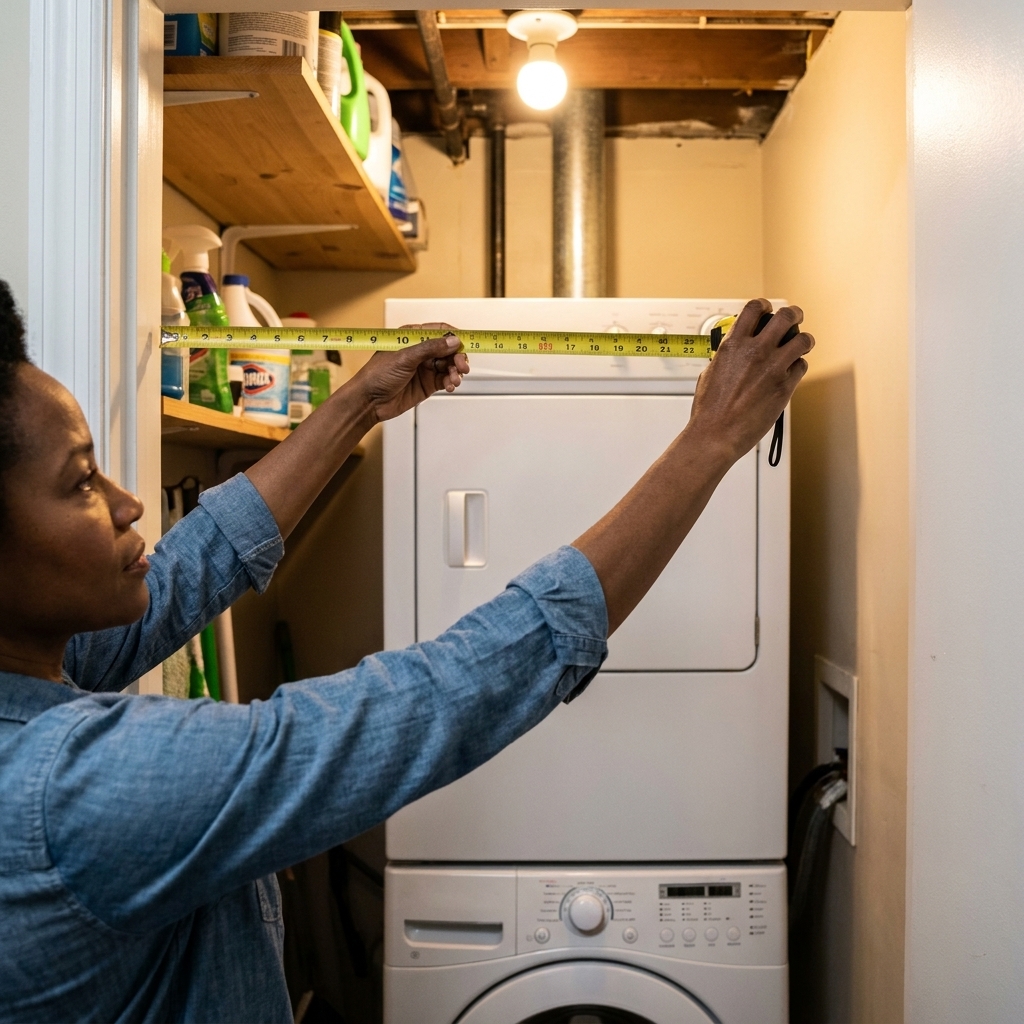
I keep a measuring tape in my bag for a reason. In a laundry closet, a half inch matters.
Three measurements that unlock the whole plan
- Depth: Most closets cannot handle deep shelves without blocking doors or making it hard to access the machines. Shelves often work best around 8 to 12 inches deep above or beside a stackable unit, but measure your clearance and door swing first.
- Clearance: Check how far the washer door opens, plus room for vibration and hoses. Do not cram shelving so close that bottles rattle off during the spin cycle.
- Reach height: If you cannot reach it without a stool, it is for backups only. Put daily supplies between shoulder and hip height.
Shelving that works in a closet
Your goal is to add surfaces without stealing precious access space. These options are my go-tos for renters.
1) Tension pole shelving units
If your closet has a little side wall space, a tension pole system is gold. It creates vertical shelving without drilling, and you can adjust shelf heights as your product lineup changes.
- Best for: narrow closets with awkward side gaps
- Pro tip: keep heavier items lower to reduce wobble
2) Slim shelf beside the machines
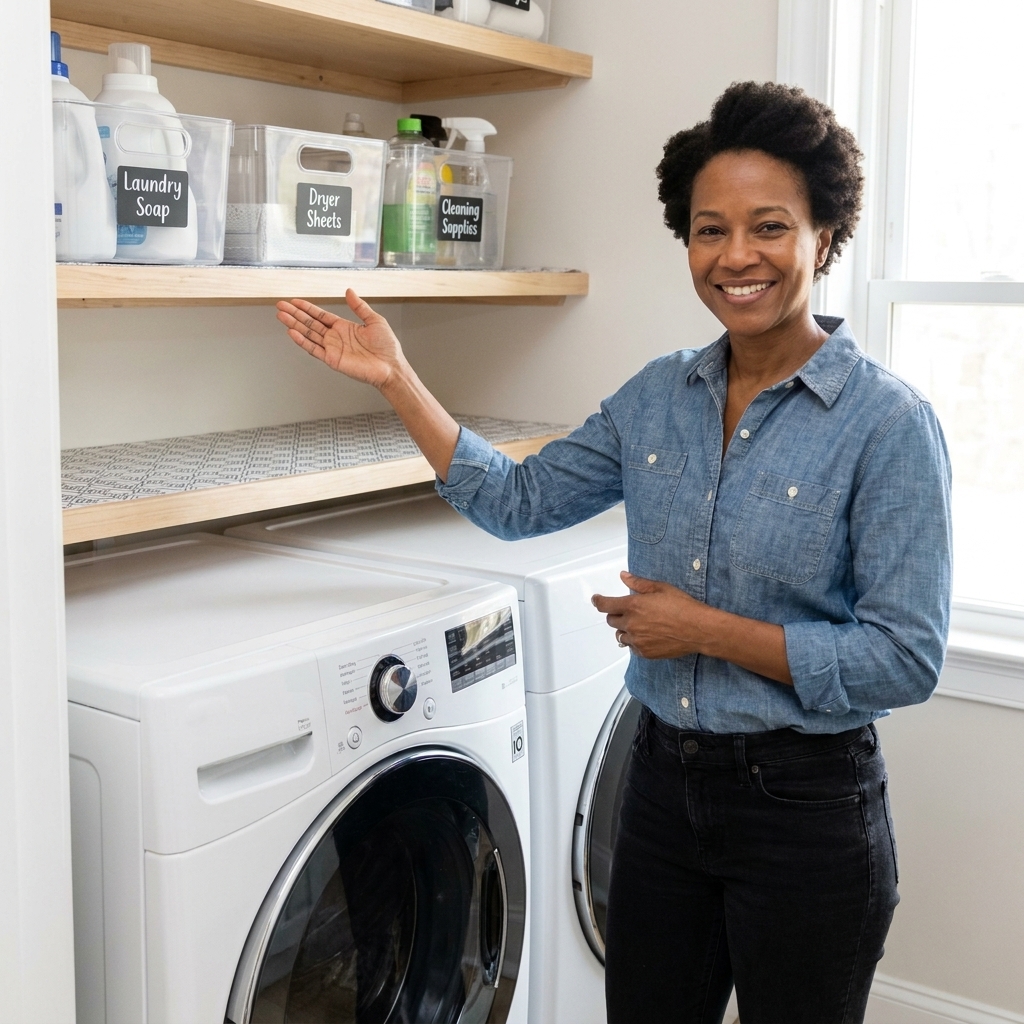
Look for a 6 to 10 inch wide unit that slides into the dead space next to your stack. This becomes the home for detergent, dryer sheets, stain sprays, and a small bin of cleaning cloths.
- Best for: closets with 2 to 8 inches of side clearance
- Pro tip: choose shelves with a lip or add small bins so bottles cannot migrate during vibration
3) Over-washer shelf with a rail
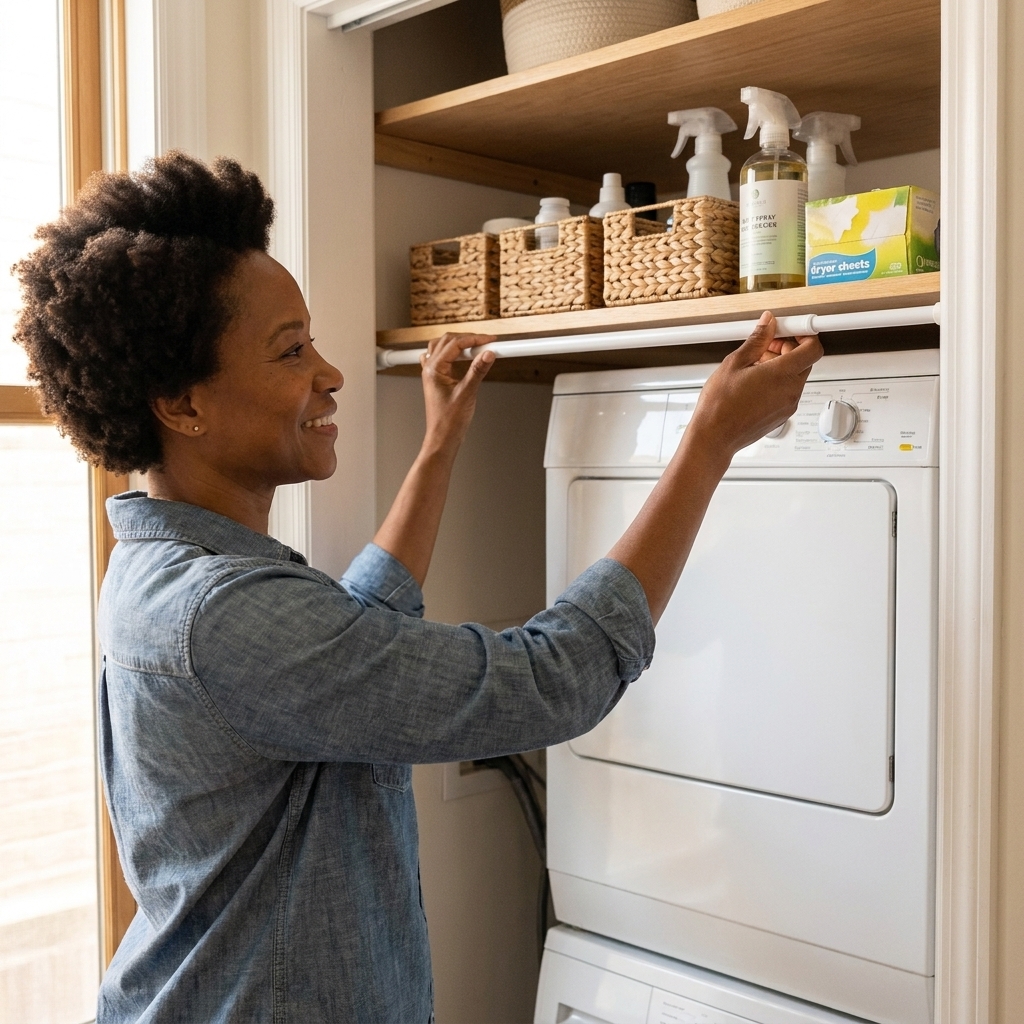
If you have an existing builder shelf above the machines, add a low barrier so things do not tip forward. A simple tension rod across the front edge works like a tiny rail.
- Best for: preventing the dreaded detergent topple
- Pro tip: keep only lightweight items up there like pods, clothespins, or spare sponges
Door and wall storage
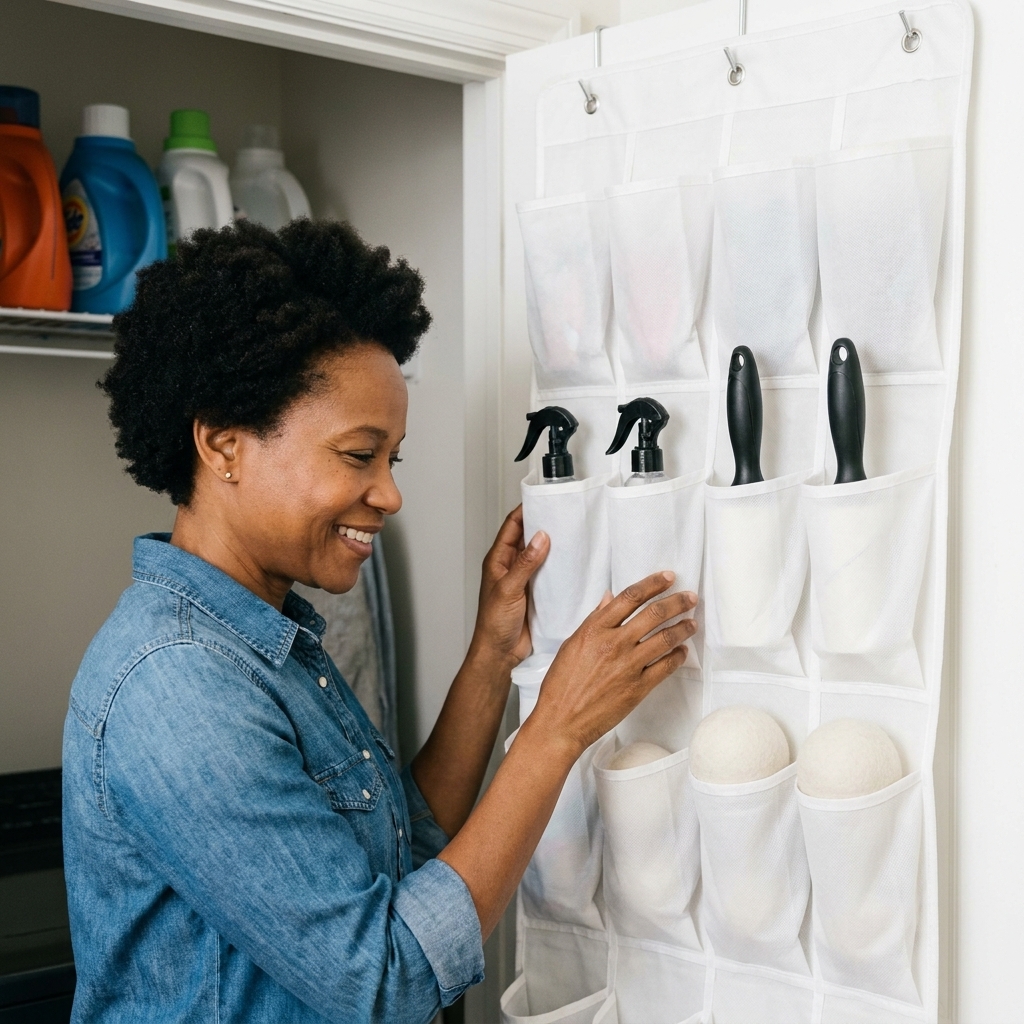
The inside of your laundry closet door is prime real estate. If you do nothing else from this article, do this.
Over-the-door organizers that stay tidy
- Clear pocket organizer: Great for stain sticks, lint rollers, dryer balls, and sewing kit basics. Choose one with smaller pockets so items do not slump.
- Metal rack organizer: Better for spray bottles and refills. Look for adjustable basket heights.
- Command hook lineup: Perfect for hanging a small folding rack, mesh delicates bag, and a handheld vacuum.
Noise note: If an over-the-door rack bangs when the machines run, add small felt pads where it touches the door. Quiet closet, happy life.
Drying hacks for low airflow
Most laundry closets are not designed for air drying. They are designed to hide the machines. So you have to get clever.
1) Foldable drying rack, renter friendly
If you cannot drill, look for a foldable rack that hangs on sturdy over-the-door hooks, or one that uses a tension bar system inside the closet opening. The goal is something you can deploy for two hours, then fold away.
- Best for: delicates, workout wear, and anything that hates the dryer
- Pro tip: dry items outside the closed closet whenever possible. Even two feet of breathing room helps.
2) Retractable clothesline
If your laundry closet is a narrow alcove, a retractable line is surprisingly useful. Some models use adhesive mounts, but be picky: avoid textured walls, follow the manufacturer weight limits, and test the hold before trusting it with anything heavier than light pieces like tees and underwear. Heat and humidity can make adhesives quit early.
3) Shower rod trick, upgraded
If your closet opening is near a bathroom, a tension shower rod in the doorway can become a temporary drying bar. Add matching hangers and it looks intentional, not chaotic.
4) Rack that stores slim
My favorite small apartment move is a slim folding rack that slides between the machines and the wall or stands upright behind the door. If it can store in a 3 inch gap, it earns its keep.

Stop the spin cycle shuffle
Stackable units can vibrate, and small closets amplify the chaos. Your storage needs friction, containment, and a clear system.
Use bins like drawers
- One bin for washing: detergent, pods, scent booster, measuring scoop
- One bin for stain care: stain spray, stain stick, old toothbrush, small rag
- One bin for tools: extra lint trap brush, mini screwdriver, tape, zip ties
Choose bins that fit your shelf depth so they slide like drawers. If you can pull a bin out with one hand while holding a basket, you nailed it.
Decant only what you use
I am pro decanting when it reduces visual noise and makes things easier to grab. But you do not need a full pantry makeover moment in a laundry closet.
- Worth decanting: clothespins, dryer sheets, pods, dryer balls
- Usually not worth it: giant detergent jugs unless the jug shape is truly unworkable
Add grip
Line shelves with a thin, non-adhesive, non-slip shelf liner. It keeps bottles from walking forward and avoids sticky residue later.
Where to put the basket
If you can store a basket in the closet, do it. It keeps laundry from spreading across your apartment like glitter.
Options that do not block access
- Tall slim hamper: best for tight floor space, choose one with a lid to reduce visual clutter
- Collapsible pop-up hamper: stores flat on a hook when not in use
- Two-bag hanging sorter: hangs on the back of the door for lights and darks
Favorite layout: one slim lidded hamper on the floor, plus a collapsible pop-up hamper stored on a door hook for laundry day overflow.
Make it feel bigger
Yes, you are organizing. But you are also styling. A laundry closet you hate looking at is one you will avoid maintaining.
- Swap harsh bulbs: if you can, use a brighter, neutral white bulb so you can actually see stains and labels.
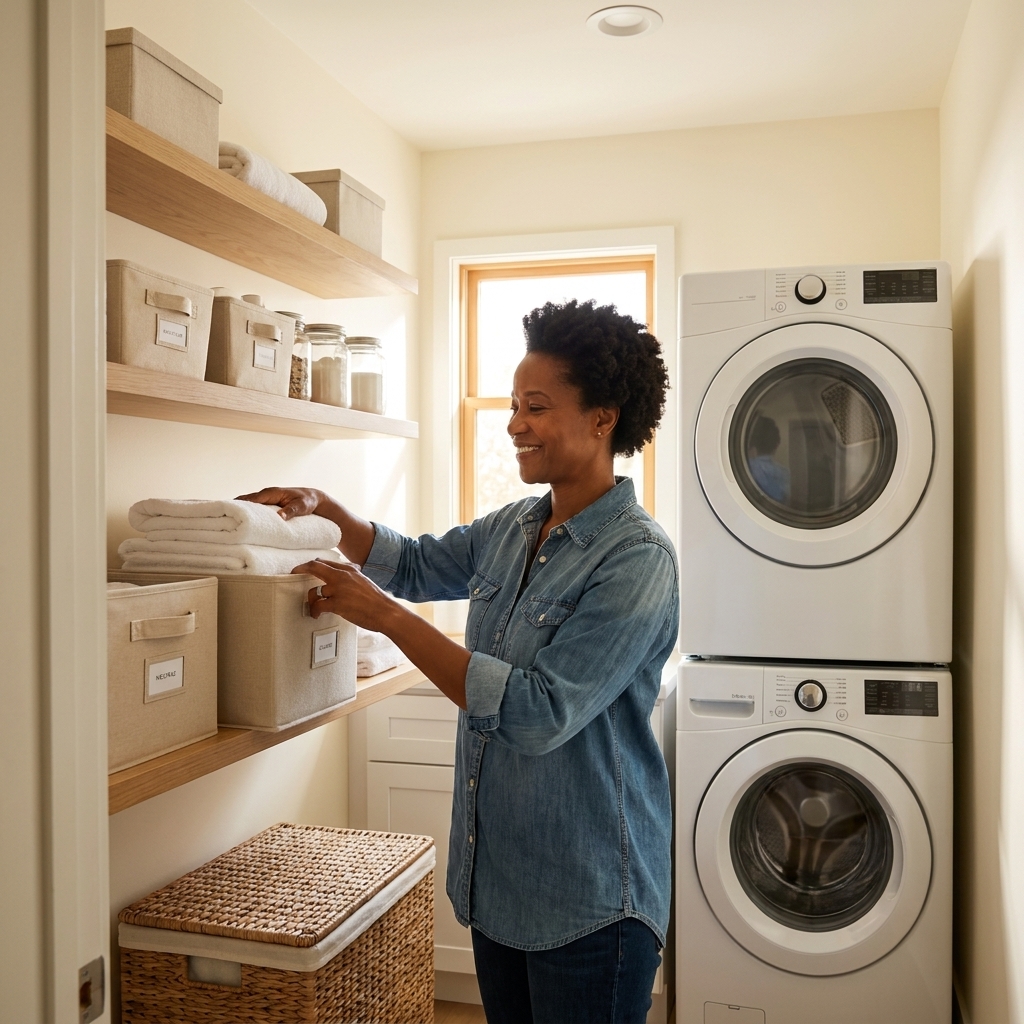
- Keep a consistent palette: matching bins in white, clear, or soft neutrals reads calmer instantly.
- Hide the ugly stuff: toss half-used boxes into a lidded bin so the closet looks intentional when you open it.
- Use one scent moment: a small sachet or a single jar of dryer balls. Too many scents can feel like a chemical cloud in a tight space.
Mini layout plans
Shelves above the machines
- Top shelf: backups and rarely used items in lidded bins
- Middle shelf: daily supplies in a grab bin
- Door: stain tools and small items
- Floor: slim hamper
No shelves at all
- Add: tension pole shelves or a slim freestanding shelf unit
- Door: over-the-door rack for spray bottles and tools
- Drying: foldable rack stored on a hook
Too shallow for shelves
- Go hard on door storage
- Use a hanging organizer on a closet rod, if you have one
- Keep the floor clear for baskets so you can pull items in and out easily
Safety and machine tips
A few practical notes that save you from headaches later.
- Do not block vents or clearances. Dryers need airflow and breathing room. Keep shelving, bins, and hanging organizers out of vent paths and follow the clearance guidelines in your machine manual, especially near heat output.
- Lint is not decor. Clean the lint trap every load, keep lint off shelves and floors, and avoid storing paper goods, cardboard, or other combustibles right next to the dryer area.
- Watch moisture. If your closet traps humidity, crack the door after a load and run a nearby fan (like the bathroom fan) for 15 to 30 minutes, or until the damp, warm air clears.
- Avoid damp storage. Do not stash wet towels or sweaty gym clothes in a closed laundry closet. If musty smells are a recurring issue, improving airflow beats masking it, but a small moisture absorber can help if used safely and kept away from kids and pets.
- Skip heavy items overhead. Storing a giant detergent jug above your head is a small space accident waiting to happen.
- Use a drip tray. If you use liquid detergent, stash it in a small plastic tray or bin to catch sticky leaks.
FAQ
How do I add shelves without drilling?
Use tension pole shelving, a slim freestanding shelf unit, or an over-the-door organizer. If you already have a closet rod, you can also hang a fabric shelf organizer from it for lightweight items.
Where should I store detergent?
Store daily detergent at chest height in a handled bin so you can pull it out like a drawer. Backups can go higher up. If vibration is an issue, use non-slip liner and avoid balancing bottles on narrow ledges.
What is the best drying solution?
A slim folding rack that stores in a narrow gap is the most flexible. If you need something even smaller, try a retractable clothesline for light items and a tension rod in a doorway for hang drying on hangers.
How do I stop supplies from falling behind the machines?
Add a gap filler, like a narrow rolling cart, a piece of foam gap blocker, or a measured strip of rigid plastic. Also, contain small items in bins rather than leaving them loose on shelves.
A tiny closet can still feel luxe
The goal is not to own a million organizers. The goal is to make laundry day feel smoother, with fewer dropped pods, fewer toppled bottles, and way less visual chaos. Once your closet has zones, vertical storage, and a drying plan, that little utility nook starts acting like a real laundry room, just in apartment form.