Smart bed placements for micro-bedrooms: corners, float tricks, window-wall setups, lofting, and renter-friendly ways to keep circulation, storage, and style.
Space Ovo
Fitting a Queen Bed in a Tiny Bedroom
Real layouts that fit a queen bed in a micro-bedroom, plus under-bed storage ideas and slim bedside alternatives that keep the room walkable and calm.

Maya Brooks
Maya Brooks is an interior stylist and layout enthusiast who believes square footage should never dictate your home's style. After a decade of navigating cramped city studios, she shares practical, renter-friendly decorating and storage solutions to help others maximize their tiny spaces.
Created October 17, 2026
Updated October 17, 2026
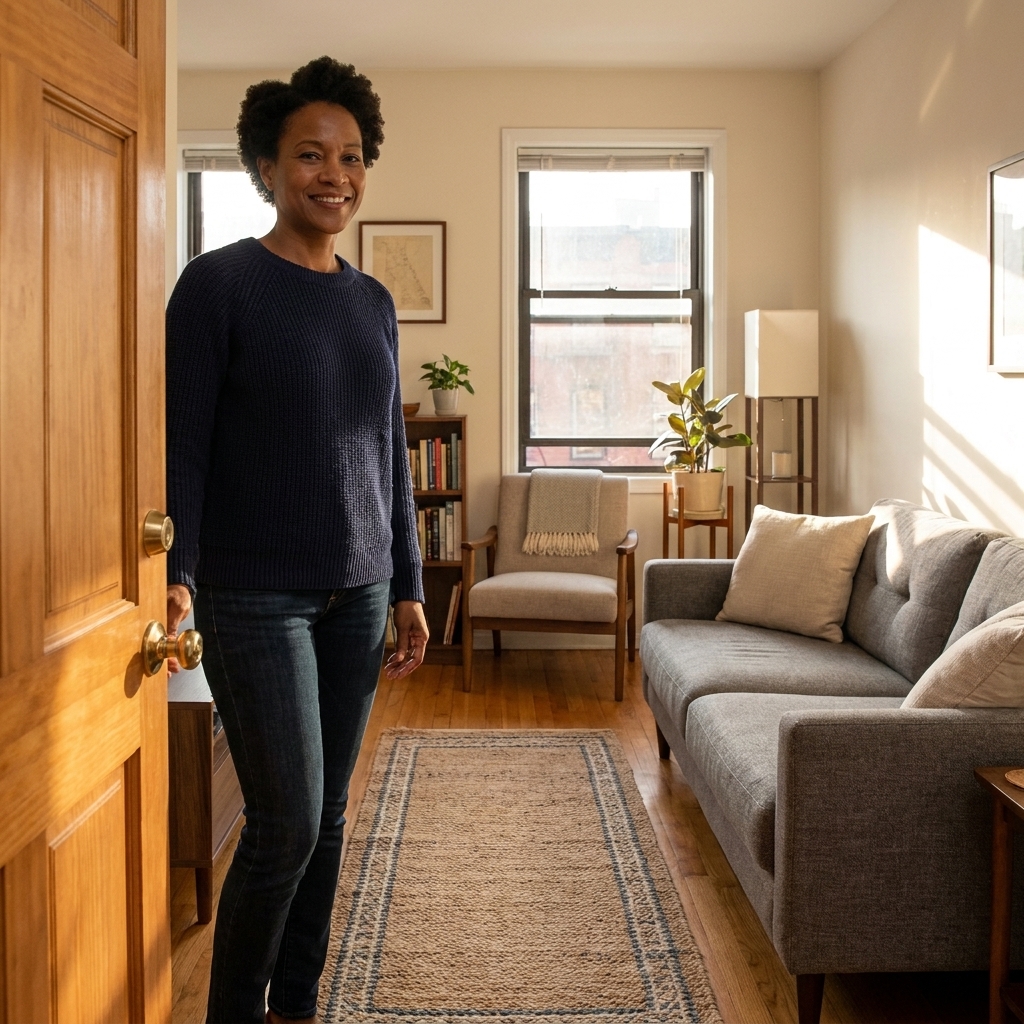
I have lived through the “cozy” listing photos, the awkward radiator placement, and the door that swings exactly where your bed wants to be. The good news is: a queen can fit in a tiny bedroom without turning it into a mattress museum. The trick is choosing a layout that protects the paths you use every day (door to bed, bed to closet, bed to window) and then being strategic about what replaces bulky furniture.

Below are the layouts I use most often in micro-bedrooms, plus the clearance numbers that keep things functional, and storage moves that do not require drilling or a new lease.
Know your non-negotiables
Grab a measuring tape and write these down. They decide whether your queen feels snug in a good way or suffocating in a bad way.
- Queen mattress size: 60 in x 80 in (152 cm x 203 cm). Frame footprints are often bigger.
- Frame reality check: Some frames add roughly 2 to 5 inches per side or at the head and foot. That is how a “perfect fit” becomes a daily bruise.
- Comfortable walkway: Designers typically aim for 24 to 30 inches as a practical target. 30 to 36 inches feels generous. These are usability guidelines, not building code.
- Minimum squeeze zone: 18 to 24 inches can function on one side if you accept a “sideways shuffle.”
- Closet access: If it is a hinged door, you need swing space. If it is a slider, you mainly need standing space.
- Door swing: If the bedroom door hits the bed, that is your first problem to solve. A hinge pin door stop is cheap, but sometimes a layout change is better.
- Measure the awkward stuff too: Note baseboards, radiator depth, window trim that sticks out, and any bumps, outlets, or ledges. Also measure door swing arcs and closet-door travel, not just wall to wall.
My golden rule: Protect at least one full-length side of the bed or a clean path at the foot. If you cannot do either, a queen will feel like it is eating the room.
Layout 1: Centered on the main wall
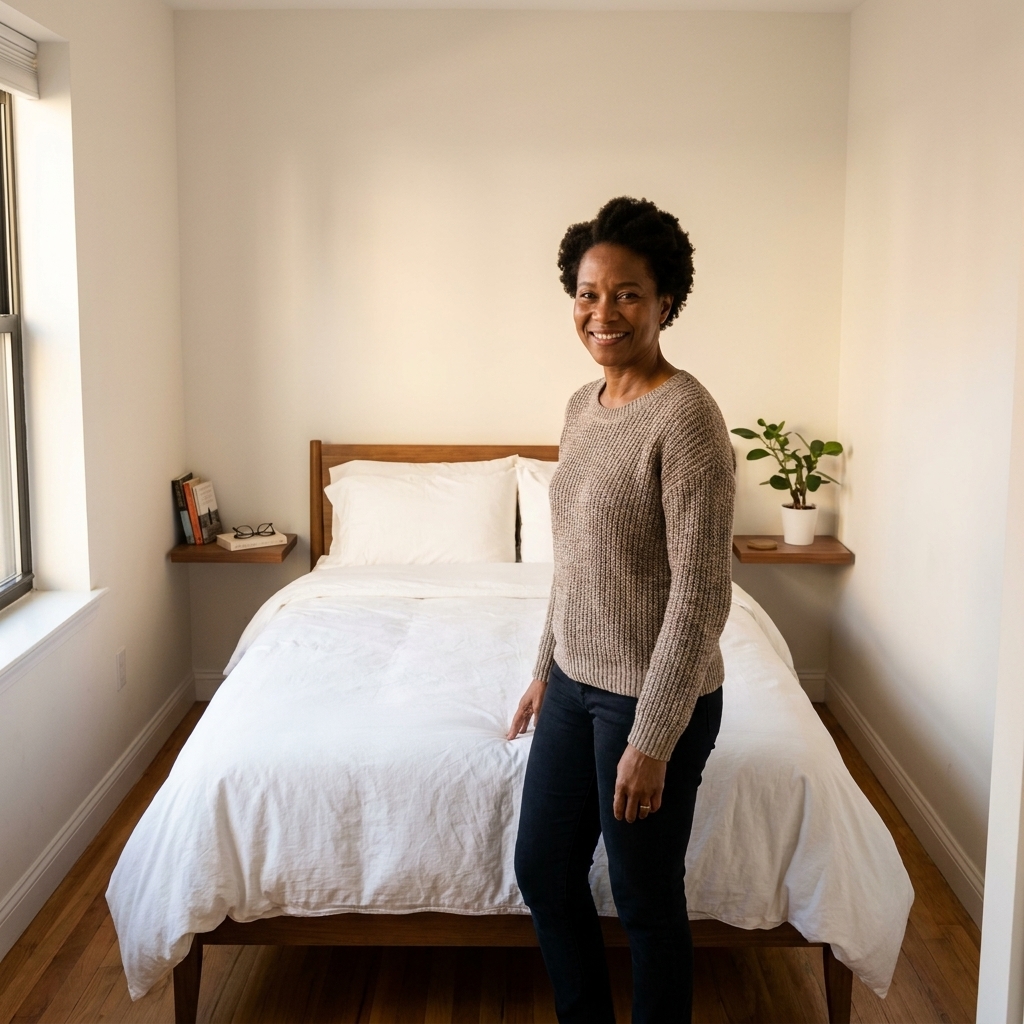
This is the “hotel” layout: bed centered on the longest uninterrupted wall, pathways on both sides, something small at each side or a single nightstand.
When it works
- Your room is wide enough to leave at least 24 inches on both sides.
- The closet is not blocked by the bed footprint.
- You want the most balanced look for a tiny space.
Make it work in a smaller room
- Use a wall-mounted reading light instead of lamps.
- Swap bulky nightstands for a floating shelf or stool (ideas below).
- Choose a frame with legs so you can see floor underneath. Visually, it reads lighter.
Layout 2: One side against the wall
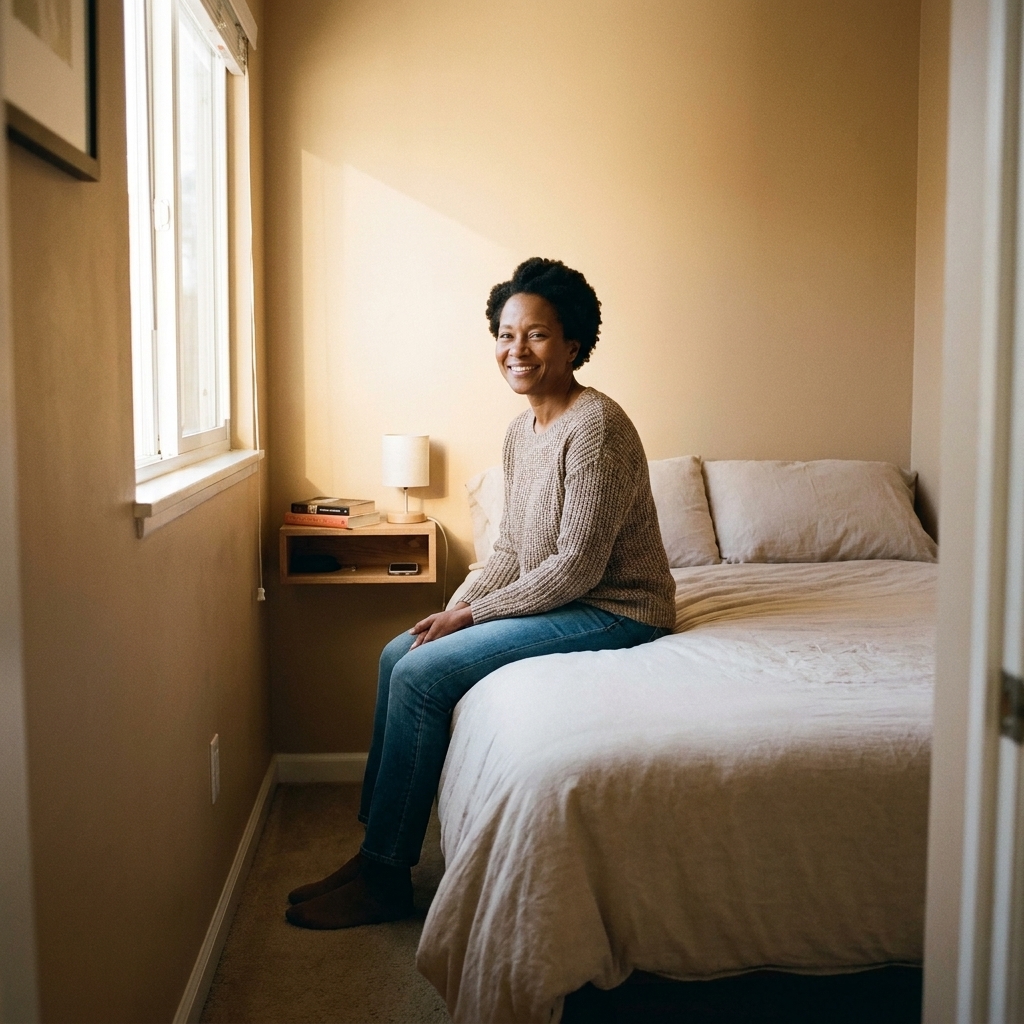
In a lot of city bedrooms, the queen fits best when you push one long side of the bed against a wall and keep one usable side as your main entry and exit.
Why it works
- You only need one real walkway.
- You free up floor area for a dresser, hamper, or a tiny desk.
- It stops the room from feeling like you are navigating an obstacle course on both sides.
How to keep it from feeling like a dorm
- Add a headboard (even a thin one). A simple upholstered or wood headboard makes it feel intentional.
- Use a long lumbar pillow so the bed can act like a daybed when you are not sleeping.
- Protect the wall with a washable slipcover, a tight tuck-in duvet, or a subtle peel-and-stick wainscot panel behind the pillows and head-of-bed area.
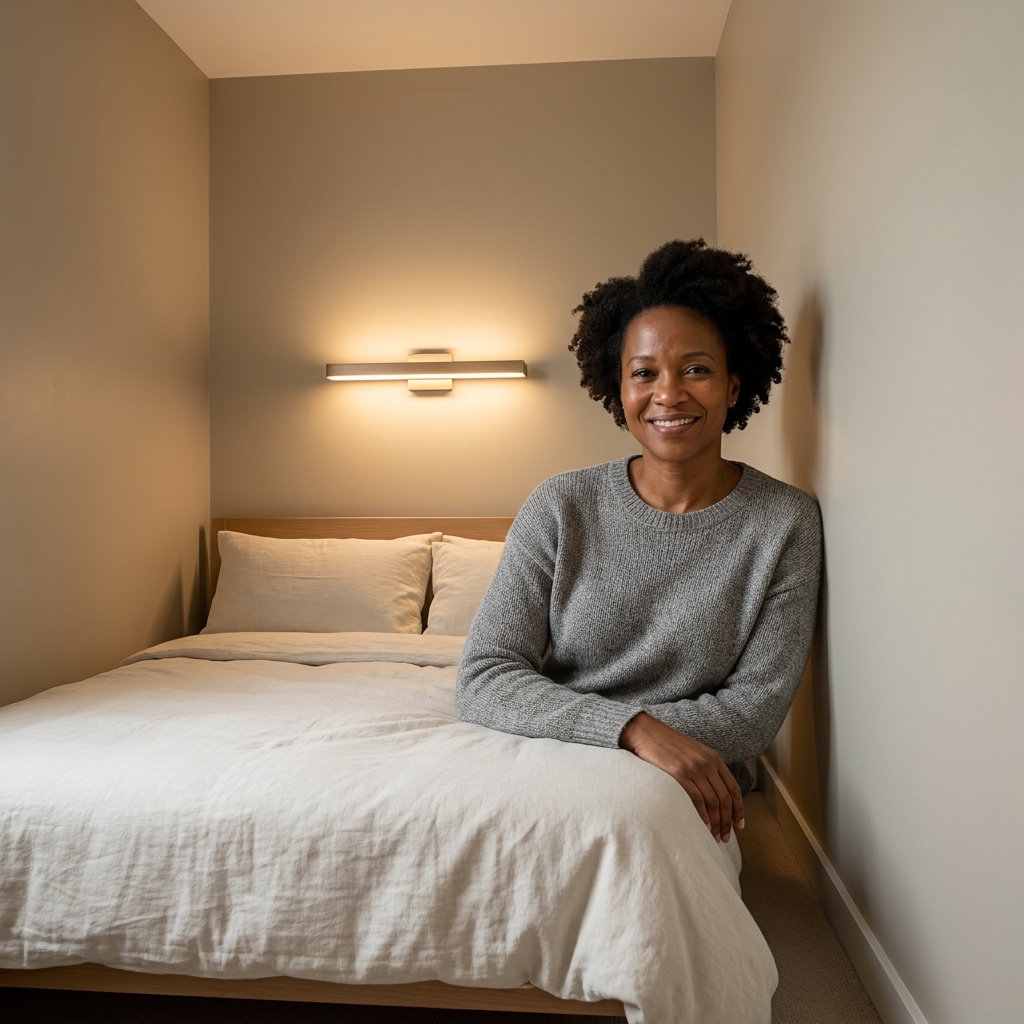
Layout 3: Corner queen
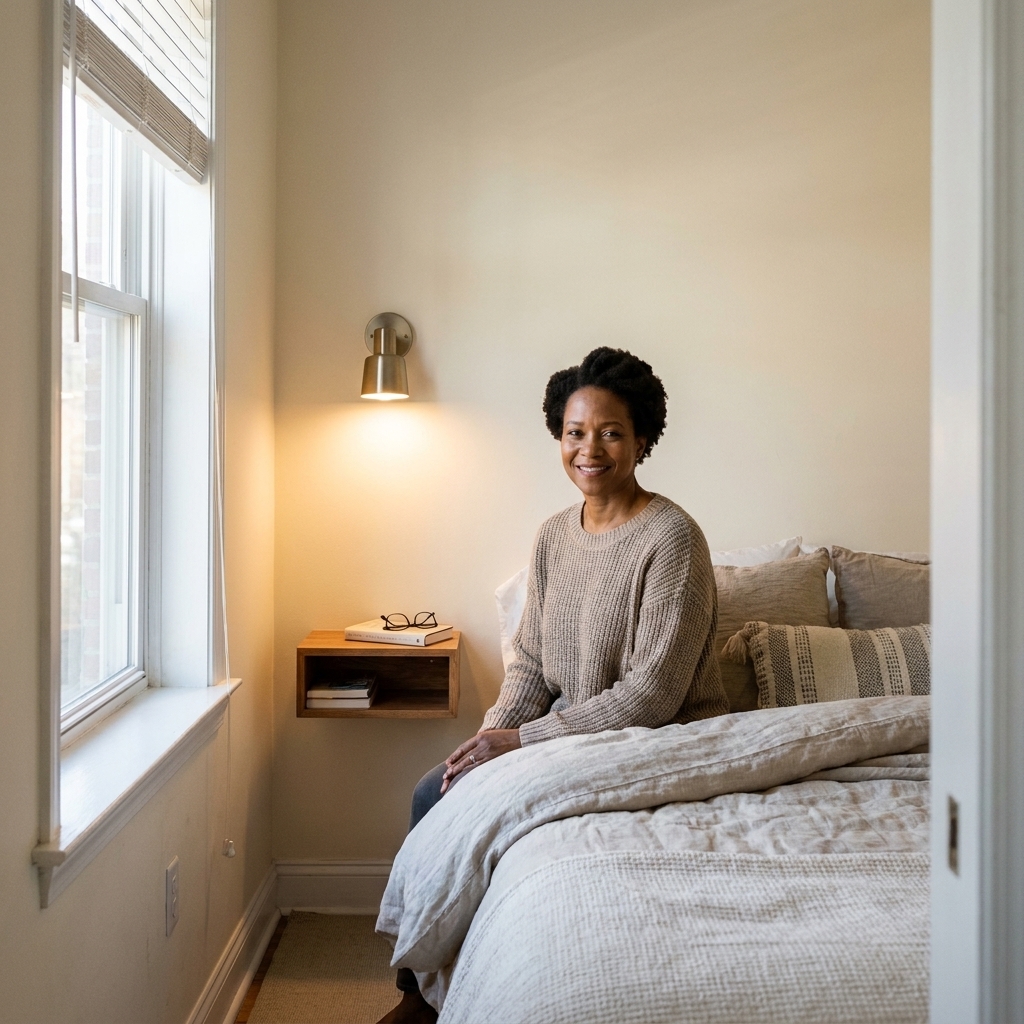
If the room is short and narrow, tucking the queen into a corner can be the only way to keep the door and closet functional.
Best for
- Rooms where the door swing or closet area needs to stay open.
- People who do not mind making the bed in sections (it is a commitment).
- Anyone prioritizing floor space for a tall shelf unit or a vertical drawer tower.
Corner-queen tricks that save your sanity
- Use a fitted sheet with deep pockets so it stays put even if you cannot access both sides easily.
- Choose a comforter you can “flip and smooth” without walking around the entire perimeter.
- Store extra linens in a bin at the accessible side, not in the blocked corner.
Layout 4: Head by the window
Sometimes the best wall for the headboard is not available because of a closet, a radiator, or a weird bump-out. In that case, rotate the bed so the head sits under or near the window and the foot faces the door. It can solve circulation fast.
When it makes sense
- Your only uninterrupted wall is short.
- The room has a window that sits high enough for a headboard, or you can skip a headboard entirely.
- You need the sides clear for closet access.
Window and heater safety
- Do not block heaters or radiators. Follow manufacturer, landlord, and local safety guidance for clearance and airflow.
- Keep emergency egress in mind. If your window is intended as an exit (building dependent), avoid placing the bed in a way that makes it hard to open or climb out.
- Use a washable curtain panel and keep it simple so it does not constantly brush your pillows.
- Consider a low-profile headboard or a thick, washable pillow backrest if the window trim is awkward.

Under-bed storage that stays calm
Under-bed space is prime real estate, but it gets messy fast if you do not assign it a system. My goal is always: easy access, low visual clutter, and zero “avalanche of stuff” when you pull one item out.
Pick the right bed base
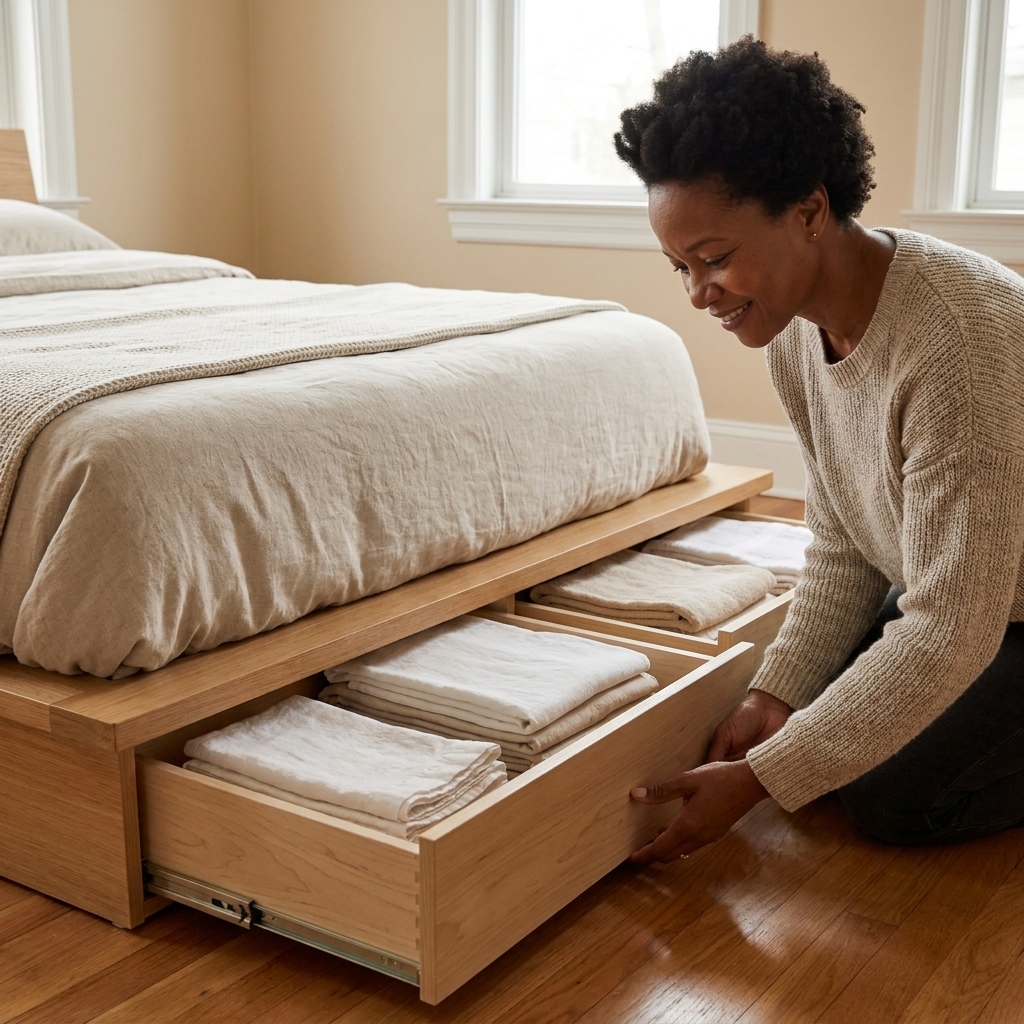
- Lift-up storage bed: Best if you have minimal closet space and can lift the mattress easily. Great storage, but check weight and hinge quality.
- Platform with drawers: Amazing if you can access the drawer side. Not ideal if one side is tight to a wall.
- Simple frame with legs: Best for bins and rolling drawers. Most flexible for renters and weird layouts.
My favorite under-bed zones
- Zone 1 (closest to your main walkway): Everyday extras like spare sheets, workout gear, hair tools, or gift wrap.
- Zone 2 (deeper under the bed): Seasonal clothing, bulky sweaters, luggage, or keepsake bins.
- Zone 3 (foot of the bed): Shoes, cleaning supplies, or a “grab and go” bin for weekend travel.
Storage tools that actually slide
- Low rolling bins (hard-sided if you have pets or dust issues).
- Under-bed bags with structured sides so they do not collapse when you pull them.
- Bed risers only if you truly need the height. If you raise the bed, keep everything underneath uniform so it looks calmer.
Pro tip: If you can see your under-bed storage from the doorway, choose matching bins. Tiny rooms reward visual consistency.
Nightstand alternatives
When you upgrade to a queen, the nightstands are usually what stop fitting. Here are swaps I have used in apartments where a full-size nightstand would have made the room unlivable.
1) Floating shelf
If drilling is not allowed, look for lease-safe shelves that use strong adhesive systems rated for the weight you need. Keep it light: phone, glasses, water, book. Adhesives can fail on textured paint, dusty walls, or humid rooms, so do a test spot and avoid anything precious or heavy.
2) Narrow ledge shelf
A slim picture ledge mounted just above the bed gives you a landing strip without stealing floor space. It is also great for charging cords if you manage the cable neatly.
3) Plug-in sconce plus a micro surface
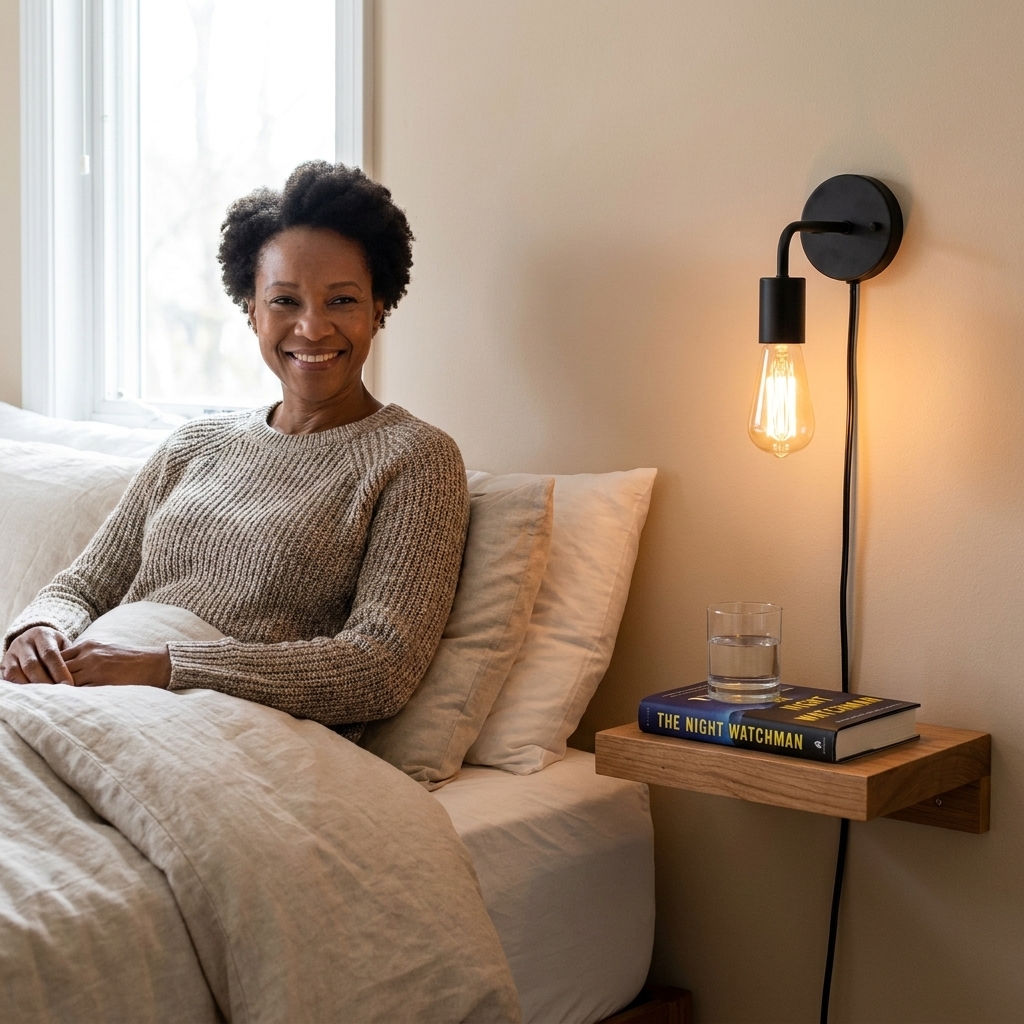
Lighting is half the battle. If your lamp base is eating your nightstand, go vertical with a plug-in sconce and use a tiny shelf, stool, or even a lidded box as the surface.
4) Stool or plant stand
A small stool is a tiny-space hero. It is a nightstand, a step stool, and extra seating when a friend squeezes in.
5) Bedside caddy
For the truly tight side, tuck essentials in a fabric caddy that hangs between mattress and frame. Add a small wall hook nearby for headphones or a robe.
Sharing a queen in a tiny room
If two people are using the bed, the layout has to work for two sets of daily habits, not just one.
- Decide the “main side.” Give the easiest walkway to the person who gets up most often (or the early riser). The other side can be a squeeze zone if needed.
- Go for one shared surface. A narrow ledge shelf behind the headboard can replace two nightstands.
- Plan charging on purpose. A single slim power strip mounted to a nightstand alternative (or tucked into a cord box) keeps cables from spreading across the floor.
- Split under-bed zones. One bin per person in Zone 1 prevents the “where did my stuff go?” spiral.
- Give the hamper a home. Pick one narrow spot (often behind the door or beside the dresser) so laundry does not migrate into the walkway.
Make a queen feel lighter
Once the bed is in, the room can still feel breathable if you use a few visual tricks that I swear by.
- Keep bedding simple and bright. Light, calm bedding reads less bulky. Add texture with a knit throw instead of a dark heavy duvet.
- Use one large rug, not two small ones. A rug that extends beyond the bed makes the room feel bigger. Even a simple 6x9 can help in many small bedrooms.
- Go tall with curtains. Hang the rod higher than the window to draw the eye up, but keep the fabric streamlined.
- Choose slim, leggy furniture. Seeing more floor creates “air” in a small footprint.
- Mirror placement matters. A mirror on the closet door or adjacent wall can bounce light, but do not aim it directly at the bed if that bothers you.
Common problems and fixes
The door hits the bed
- Try a hinge pin door stop or a floor stop to limit the swing.
- If possible, rotate the bed so the door opens into a clear path instead of into the mattress corner.
Closet doors cannot open
- Shift to a one-side-against-wall layout to free the closet side.
- If you have permission, consider swapping to bi-fold or a curtain closet closure. In many rentals, this is negotiable if you store the original doors safely.
You lost space for a dresser
- Use a tall, narrow dresser instead of a wide one.
- Move some clothing into under-bed bins and keep only daily items in the dresser.
- Consider a wardrobe rack if your closet is tiny and you have one open wall.
No room for a bedside lamp
- Plug-in sconces, clamp lights, or adhesive puck lights can all work without hardwiring.
Quick checklist: can your room handle a queen?
- You can maintain a 24 to 30 inch walkway on at least one side or at the foot (or accept a tighter squeeze zone on the less-used side).
- The closet and door can open without daily frustration.
- You have a plan for bedside essentials without a bulky table.
- You can access under-bed storage from your main walkway side.
If you check three out of four, you can usually make a queen work. If you only check one, I would consider a full, or a queen mattress with a very minimal frame and a ruthless edit of everything else in the room.
FAQ
What is the smallest room that fits a queen bed?
It depends on door and closet placement, but a queen is often possible in a room around 8 x 10 feet if you accept tighter clearances, plan on one-side access, and skip traditional nightstands. Wider rooms make the “centered” layout possible. Narrow rooms usually require the bed against a wall or in a corner.
Should I get a queen platform bed with drawers?
Only if the drawers will open fully in your chosen layout. If one side is against a wall, drawers on that side become decorative, not functional. In that case, a frame with legs and rolling bins often works better.
How do I fit two people with a queen in a tiny room?
Prioritize one comfortable entry side, use wall-mounted lighting, and choose a shared narrow shelf or ledge instead of two nightstands. Also, split storage zones so you are not both fighting for the same drawer and under-bed bin.
Is it okay to put a bed in front of a window?
It can be, as long as you are not blocking a heater and you can still use the window safely. If the window is intended as emergency egress (building dependent), do not make it hard to open or climb out. Use simple curtains and keep the headboard low profile if the window trim is in the way.