A curated list of over-the-door organizers for shoes, pantry items, and accessories that keep tiny apartments tidy and chic, not cluttered.
Space Ovo
No Foyer? 8 Drop-Zone Storage Ideas for Your Front Door
No entryway, no problem. Try these renter-friendly drop-zone ideas, from slim shoe cabinets and pegboards to floating consoles and wall hooks that fit in tight spaces.

Maya Brooks
Maya Brooks is an interior stylist and layout enthusiast who believes square footage should never dictate your home's style. After a decade of navigating cramped city studios, she shares practical, renter-friendly decorating and storage solutions to help others maximize their tiny spaces.
Created October 17, 2026
Updated October 17, 2026
If your apartment door opens straight into your living room, kitchen, or that mysterious two-foot strip of “hallway,” welcome. This is the tiny-space rite of passage: no foyer, nowhere to toss your keys, and somehow five pairs of shoes reproduce overnight.
The good news is you do not need a real entryway to act like you have one. You just need a drop zone: a small, repeatable landing spot for the things you carry in and out every day. Think shoes, keys, bags, mail, dog leash, sunglasses, umbrella. The goal is to catch the clutter before it migrates to your couch.
And yes, you can absolutely start with what you already own: a bowl, a tray, a couple hooks, even a repurposed shelf. The “system” matters more than the shopping.
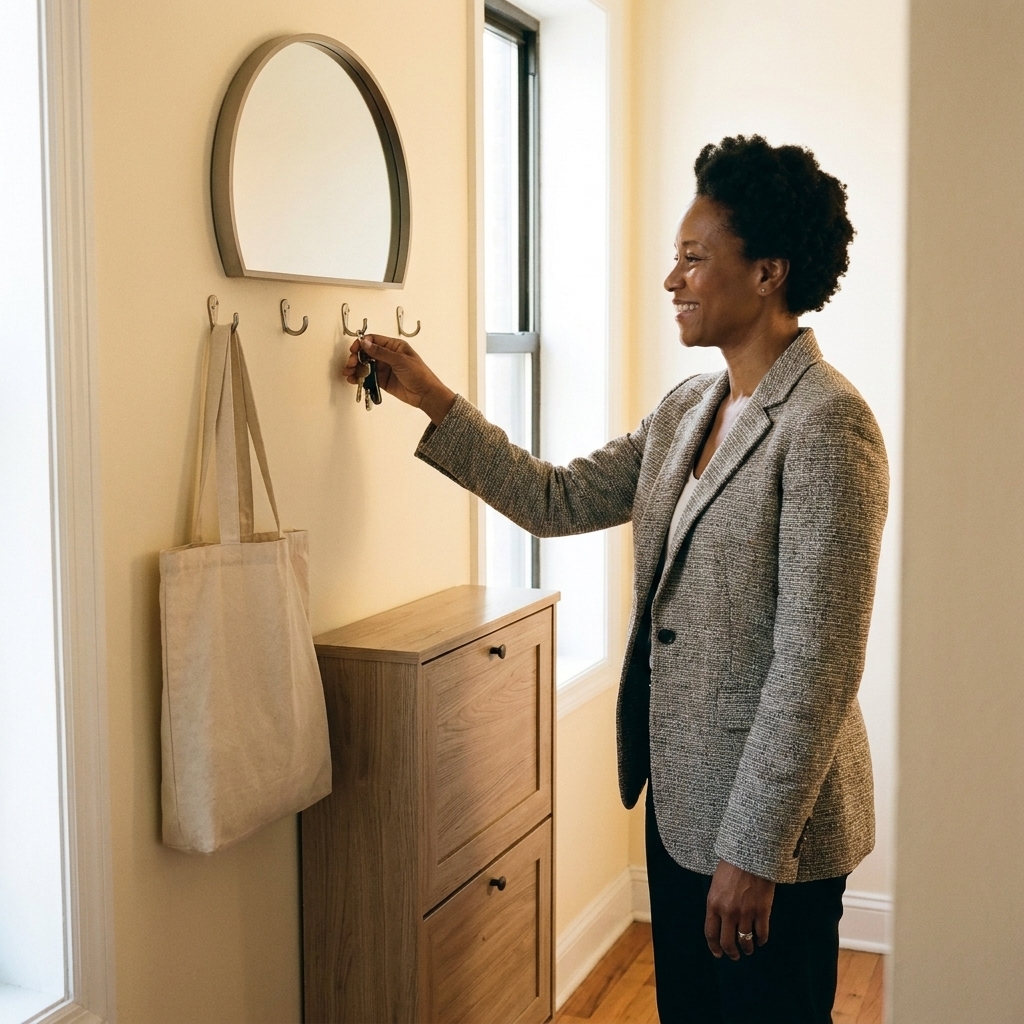
Before you buy: claim a strip
I’m a big believer in measuring first and shopping second. In many no-foyer apartments, you can still carve out a functional drop zone in as little as ~24 to 30 inches of width. That said, door swings, radiators, switches, intercom panels, and tight egress paths can change the math fast.
- Pick your landing wall. Usually the wall beside the door, or the first wall you see when you walk in.
- Check the swing. Open the door fully and make sure your future setup does not block it, bang into it, or keep it from latching.
- Measure the pinch point. Look at the narrowest part of the path you actually walk through, not just the widest spot near the wall.
- Prioritize clear walking space. If your passage is already tight, let the walkway win. A smaller drop zone is better than a daily obstacle course, especially if you use a stroller, cane, walker, or wheelchair.
- Decide your non-negotiables. For most renters: a spot for keys, a spot for shoes, and a spot for one bag.
- Go vertical. If you cannot go wider, go taller.
Quick safety reality check: Keep walkways clear, avoid blocking exits, do not cover electrical panels, and be cautious with heavy items on drywall or over-the-door racks that prevent the door from closing properly.
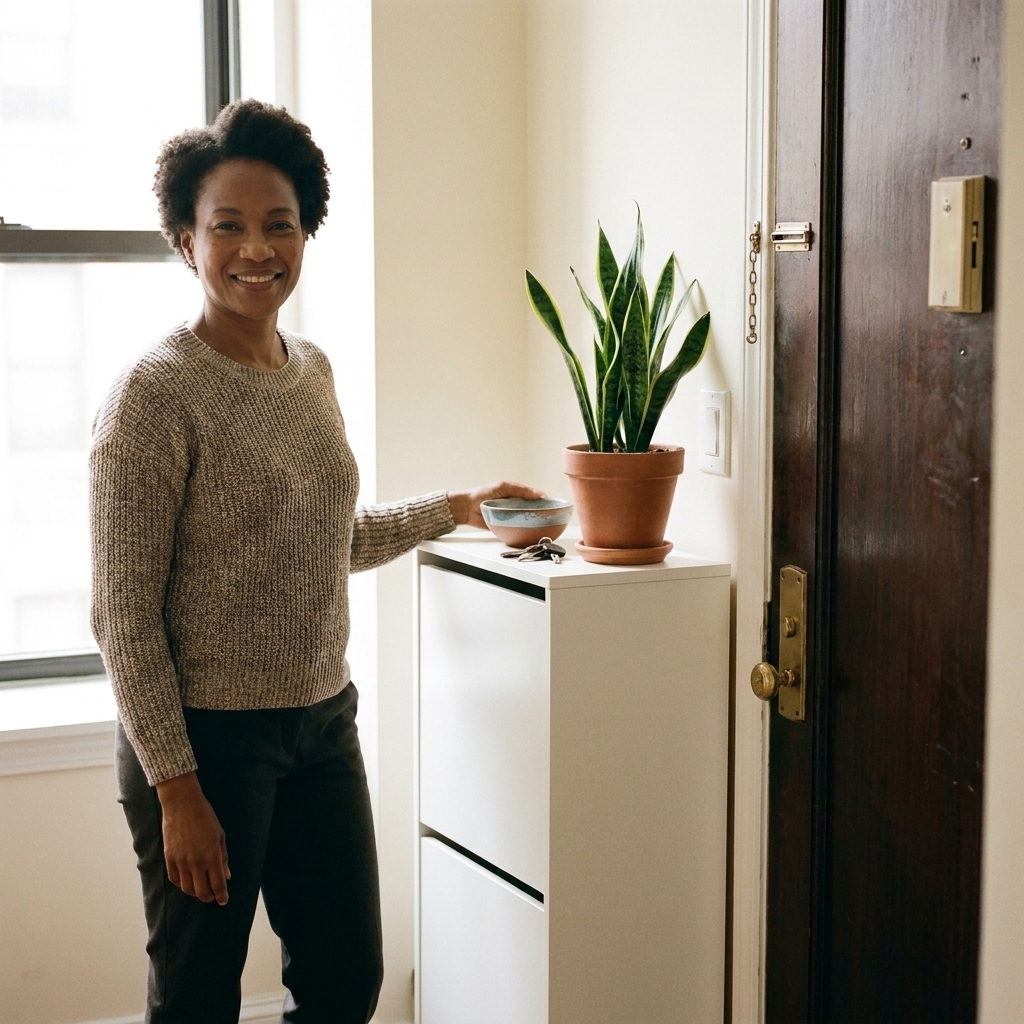
1) Add a slim shoe cabinet
If you do one thing, do this. A slim shoe cabinet is the closest thing to magic I’ve found for tight entry zones. It hides visual clutter, keeps shoes from turning into a tripping hazard, and gives you a small surface for a catchall tray.
Make it work in a tight space
- Aim for a shallow depth. Many tilt-out styles are often ~6 to 10 inches deep when closed, but they vary by brand and some are deeper when doors are open. Measure your walkway and door swing before you commit.
- Anchor for safety. Use the manufacturer’s anti-tip kit whenever possible. The safest option is wall anchoring into a stud or proper anchors. If drilling is not allowed, talk to your landlord (many will approve a couple of small holes), or choose a lower, heavier-base unit and position it where it cannot be grabbed, climbed, or pulled. Do not rely on adhesive alone to prevent tipping.
- Contain the shoe chaos. Assign each person one compartment. No one likes a shoe Jenga surprise at 7 a.m.
Tetris-master tip: Keep one small bin inside for door items like a lint roller, mini umbrella, and spare tote.
2) Mount a pegboard wall
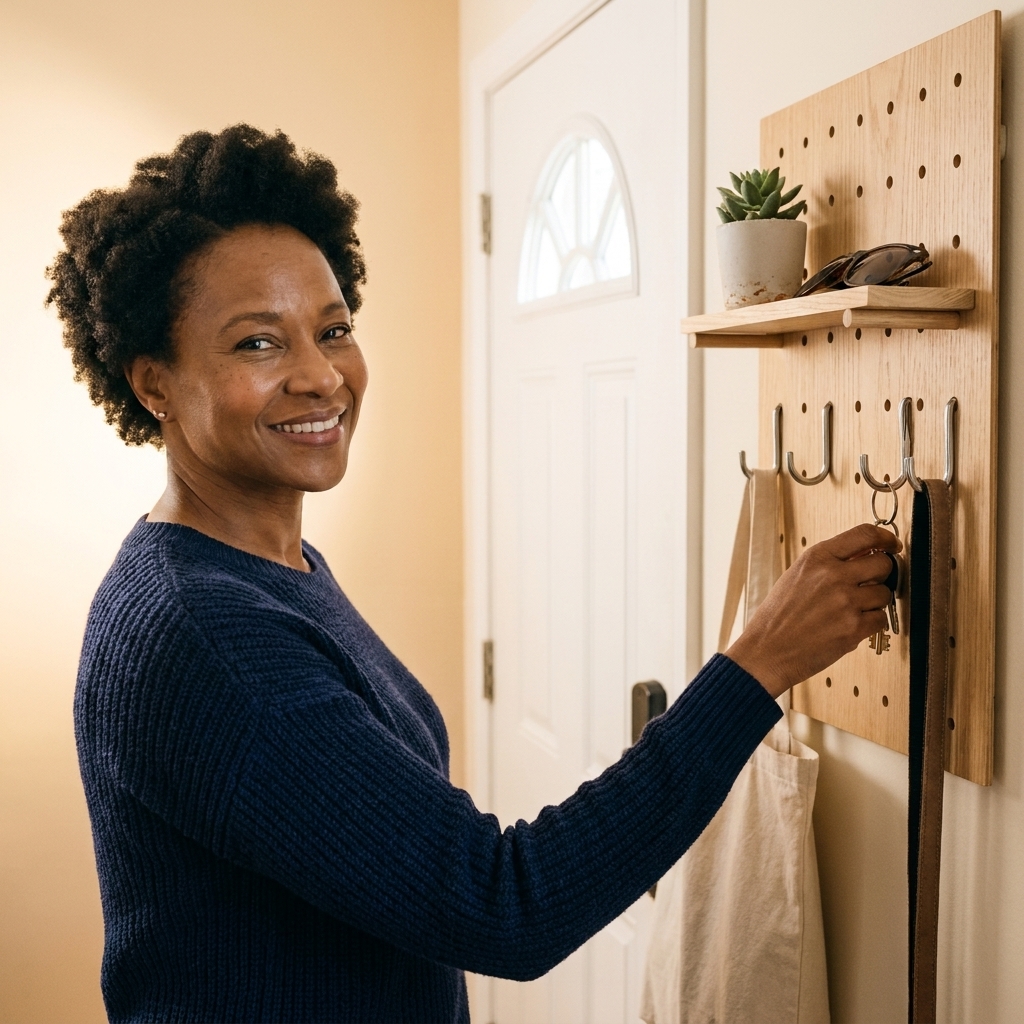
Pegboard is my small-space soulmate because it adapts as your life changes. New job badge? Add a hook. Adopt a dog? Add a leash hanger. Suddenly biking everywhere? Add a helmet hook.
What to hang by the door
- Keys on a carabiner hook
- Leash and poop-bag dispenser
- Small mail sorter or basket
- Sunglasses hook
- Mini shelf for wallet and hand sanitizer
Renter-friendly install: Pegboard typically needs a bit of space behind it for hooks to sit correctly, so plan for spacers. If you can drill, use proper anchors. If you cannot, a smaller lightweight panel can sometimes work with removable heavy-duty strips on a clean, smooth surface, but keep the load very light, follow the strip weight ratings, and know it may damage paint when removed. Do not hang heavy bags or backpacks from an adhesive-mounted pegboard.
3) Try a floating console shelf
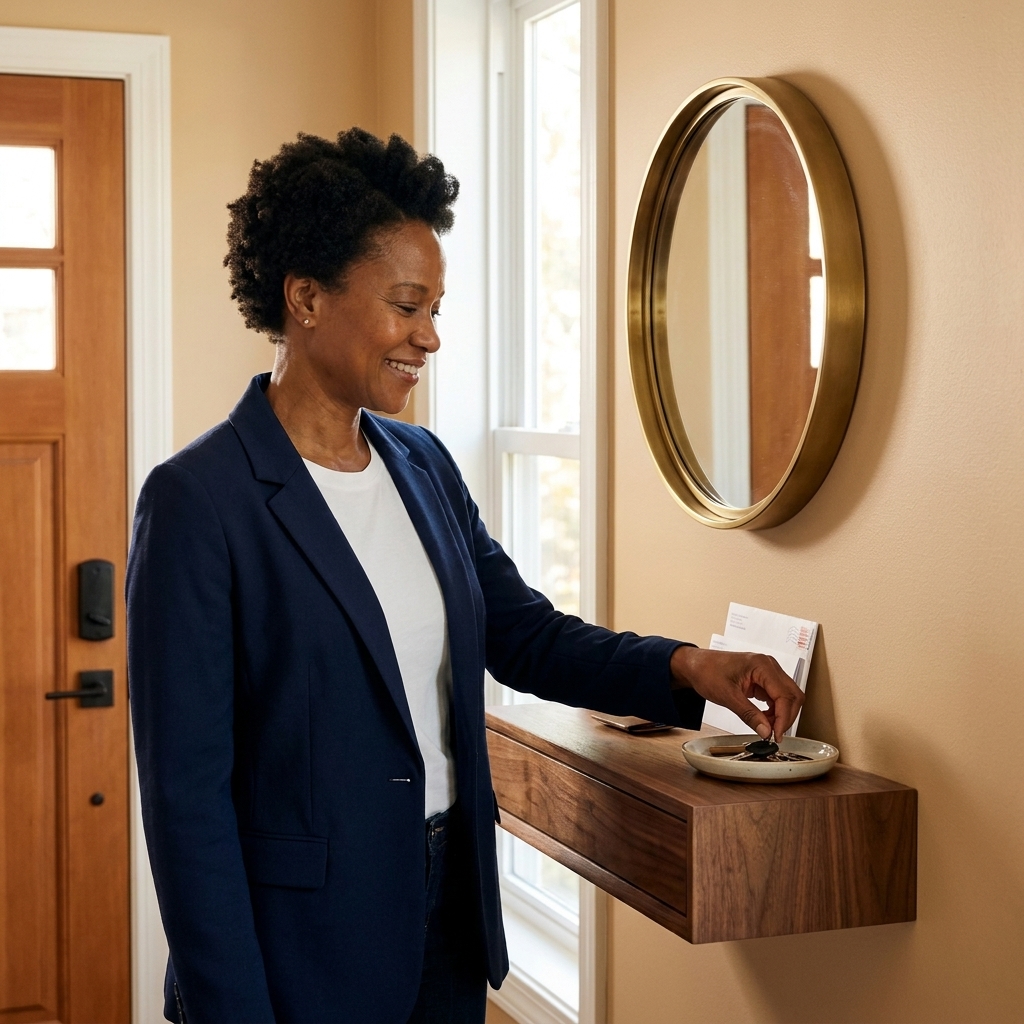
If you constantly set things down the second you walk in, you need a surface, not another hook. A floating console gives you the function of an entry table without the leg footprint.
Make it feel intentional
- Hang it at comfortable drop height. A good starting range is 30 to 36 inches (76 to 91 cm), then adjust for your height, bag length, and nearby outlets.
- Add one catchall tray. A tray prevents the surface from becoming a junk counter.
- Pair with a mirror above. It visually expands the area and gives you a last-look spot before you leave.
Shoe strategy: If you cannot fit a cabinet, park a low-profile boot tray underneath the floating shelf to keep the floor from looking messy.
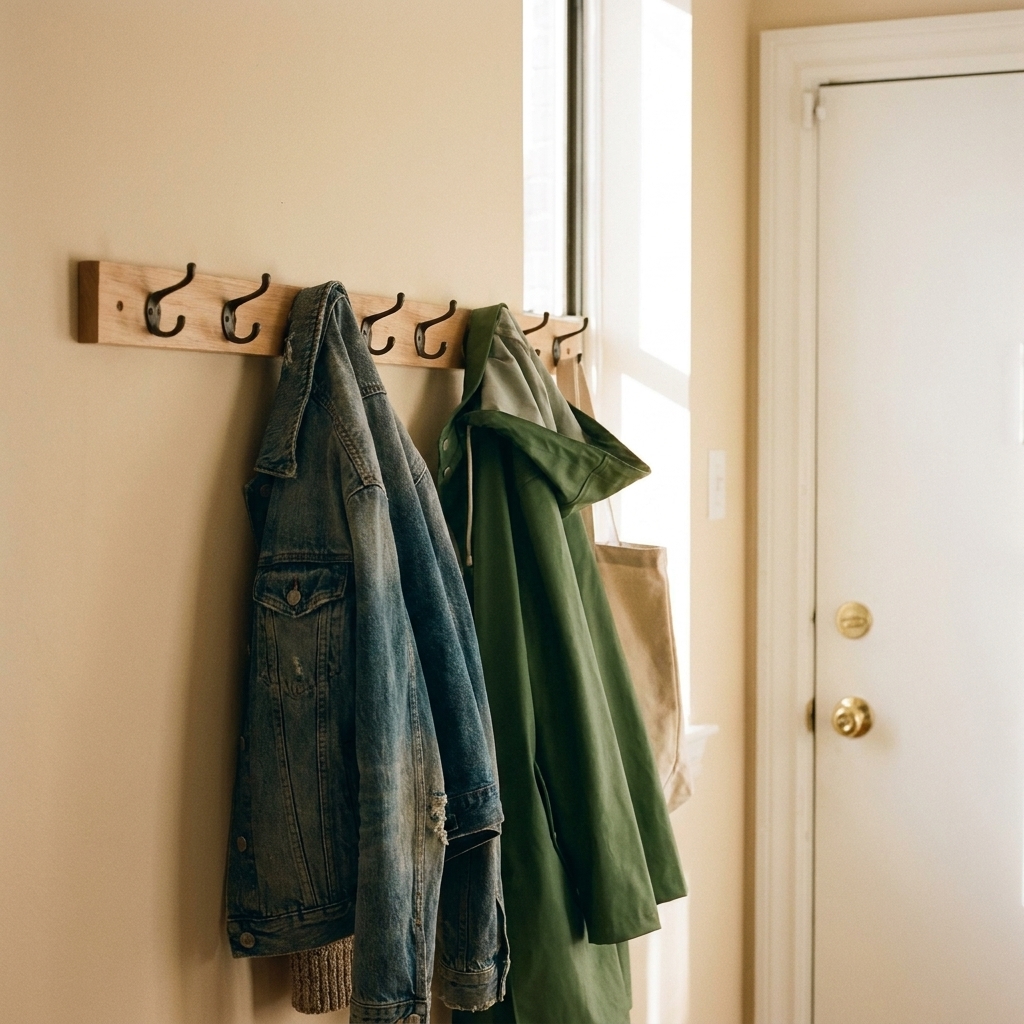
4) Use a hook rail
If single hooks always end up crooked or overcrowded, a rail system is cleaner. You get multiple hanging points in one straight line, which instantly looks more polished.
What this solves
- Bag pile-up: Assign one hook per person.
- Coat creep: A rail contains the sprawl so it does not migrate to chairs.
- Visual clutter: Matching hooks read calmer than a mix-and-match collection.
Pro tip: Add one “ugly hook” at the end for the stuff that never behaves like hats, reusable grocery bags, or a bike lock.
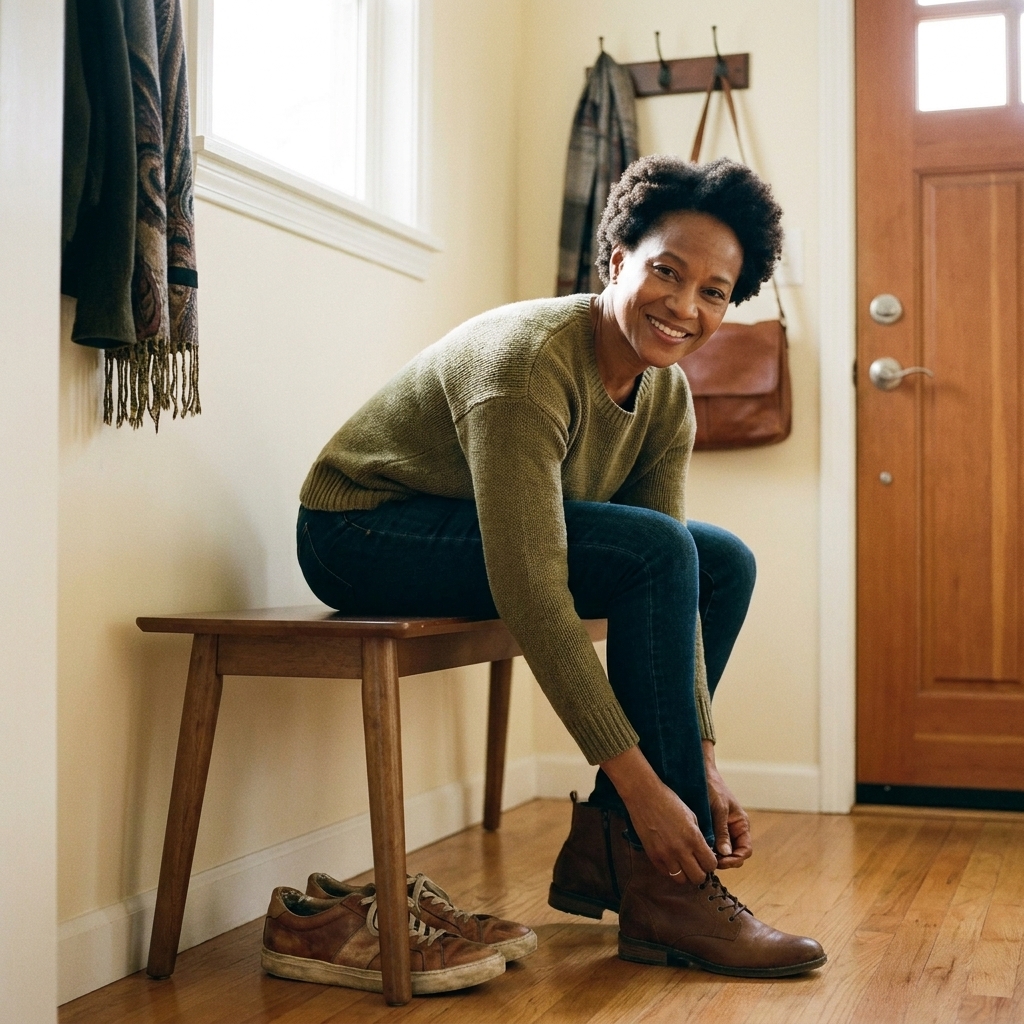
5) Add a narrow bench
If you kick your shoes off standing up, you will leave them wherever they land. A tiny bench changes the habit. Even a narrow perch gives you a cue: sit, remove shoes, put them away.
Small-space bench options
- Shoe bench with cubbies: Great for sneakers and flats.
- Flip-top storage bench: Good for scarves, dog gear, or seasonal accessories.
- Backless narrow bench: Less visually bulky in a tight hall.
If you have zero floor space: Consider a fold-down wall seat, but only if you can install it securely into studs, stay within the product’s weight rating, and you are not placing it in a narrow egress path where it could become a hazard.
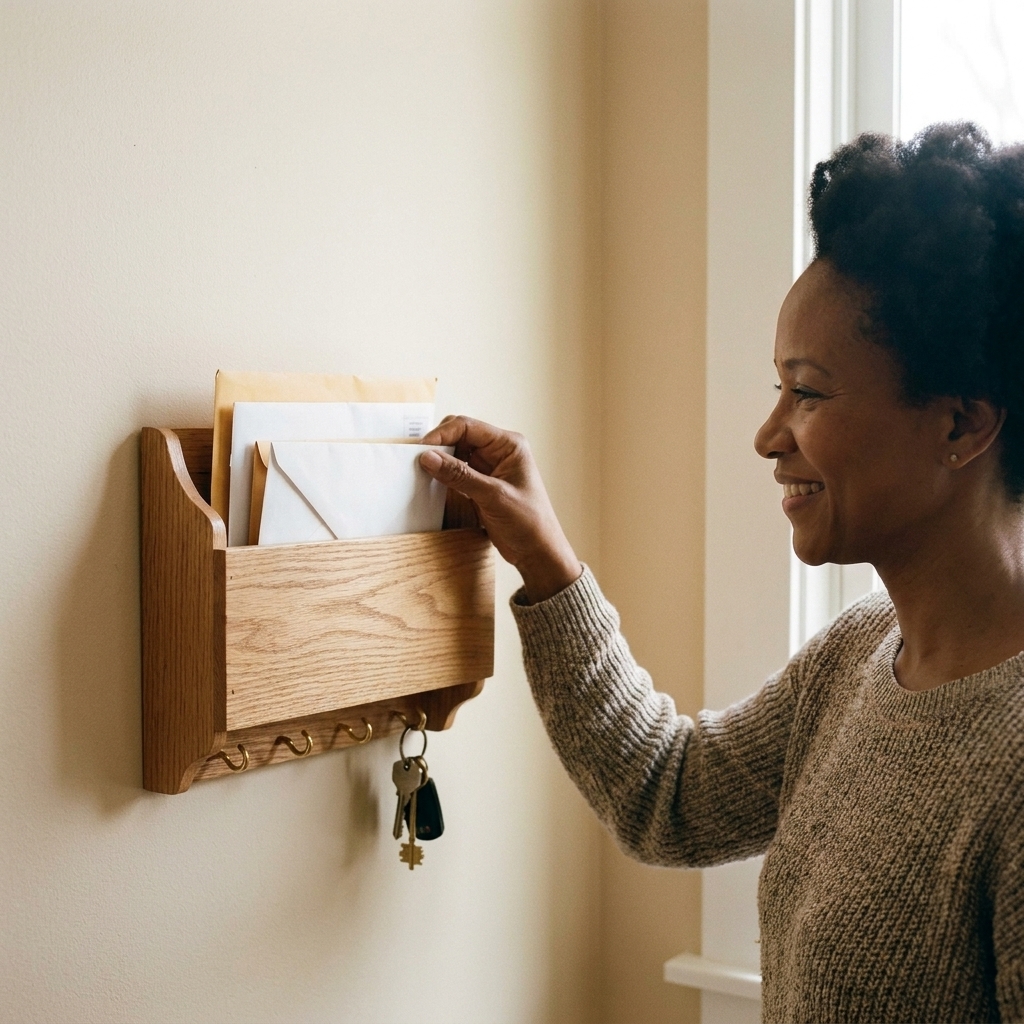
6) Make a micro landing station
The smallest drop zones often work the best because they cannot hold much. A tiny landing station forces you to deal with paper before it becomes a mountain.
A setup that stays tidy
- One key hook or a small bowl
- One mail slot or wall pocket
- One small trash solution nearby for junk mail
The rule: If it does not fit, it does not live there. That includes random receipts from 2022.
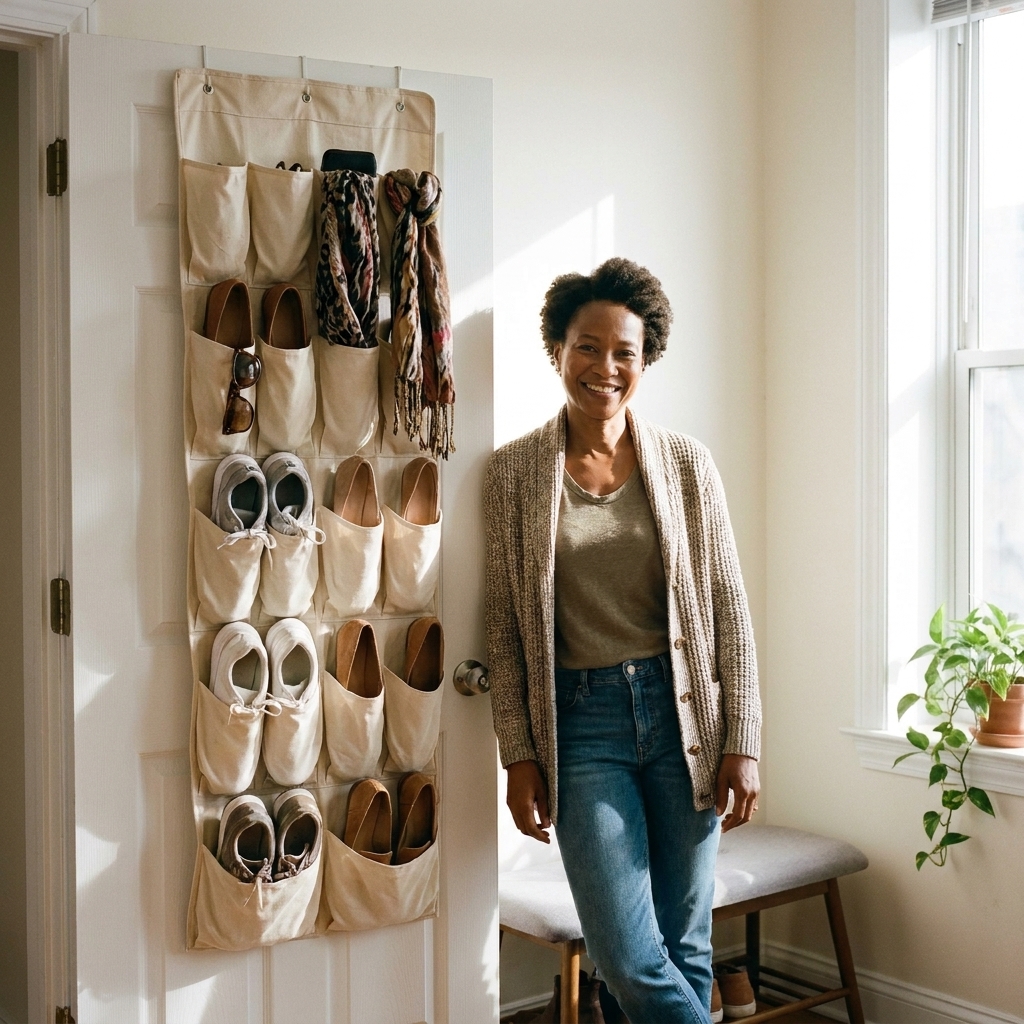
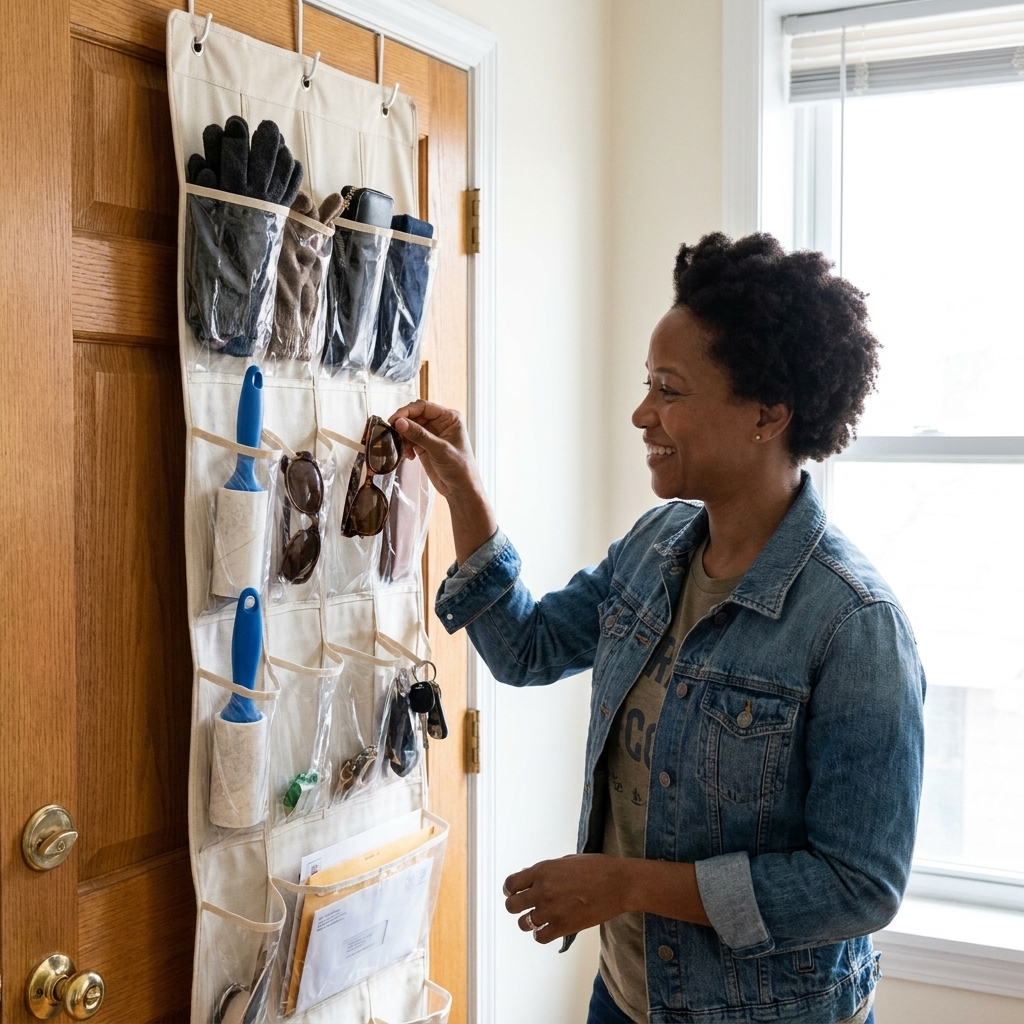
7) Use over-the-door storage
When the wall space is taken, I look to the door itself. Over-the-door racks and organizers can hold surprising amounts without changing your floor plan.
Best uses
- Coat and bag rack: Keep it light so the door still closes smoothly and latches fully.
- Pocket organizer: Great for dog supplies, gloves, sunscreen, and grab-and-go items.
- Umbrella hooks: If you live somewhere rainy, this is a sanity saver.
Noise fix: Add felt pads where the rack touches the door to prevent clanging every time you come home.
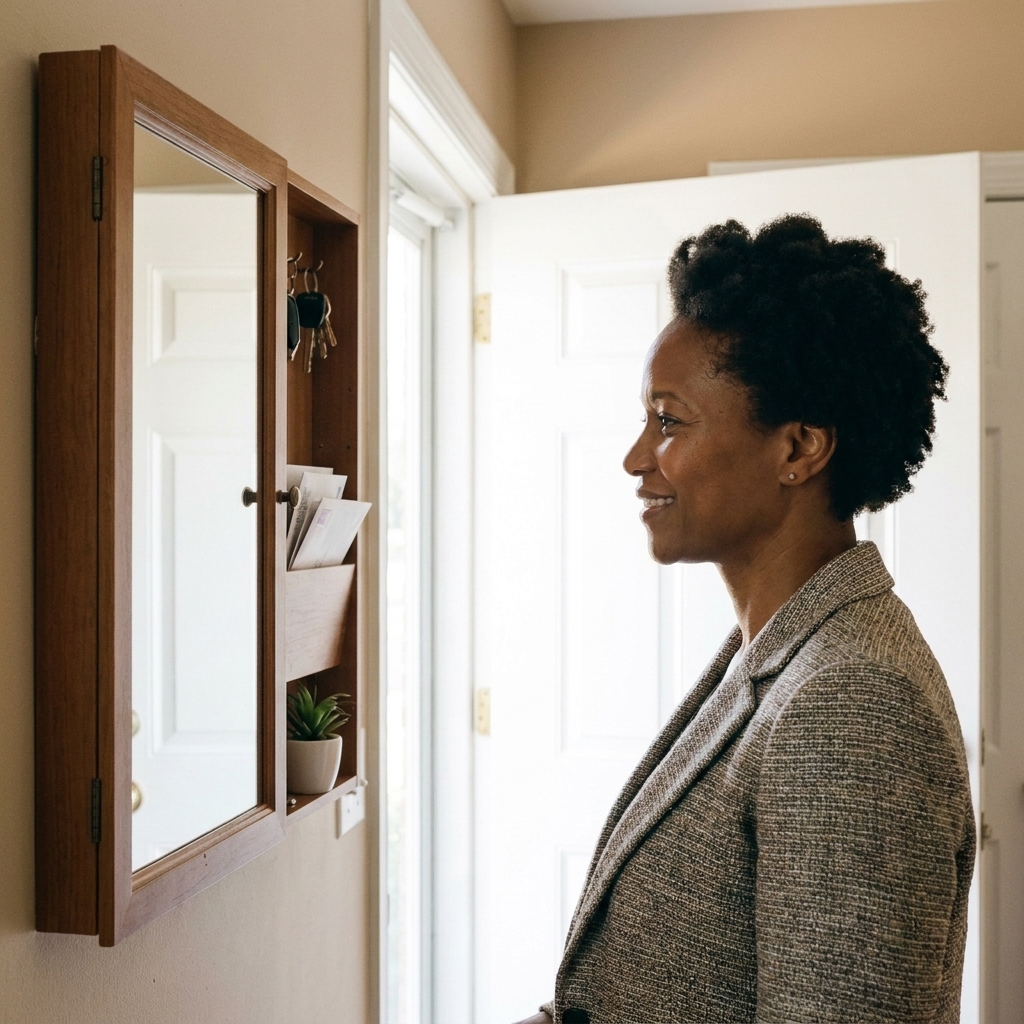
8) Choose a mirror with storage
A mirror near the door is a classic small-space trick because it bounces light and makes the area feel bigger. If you choose one with hidden storage, you also get a stealthy spot for keys, jewelry, or those tiny essentials that vanish.
What to store inside
- Spare keys or building fob
- Small hand cream and sanitizer
- Lint roller
- Jewelry you put on last
Style note: Keep the shelf surface below the mirror mostly clear. A mirror only works its make-it-feel-larger magic when it is not visually crowded.
Bonus: Fix the lighting
A lot of tiny entry zones are weirdly dark, which makes clutter feel worse. If you do not have a ceiling light nearby, add one small upgrade: a motion-sensor night light, a plug-in sconce, or a battery puck light above your drop zone so you can actually use it.
Bonus: Protect walls and floors
Entryway clutter is not just visual. It is scuffs, drips, and mystery grit.
- Put down a washable mat or boot tray. It catches wet shoes, salt, and whatever your sneakers tracked in.
- Add felt pads. Anything that touches the wall, door, or baseboard gets a felt pad to prevent dents and paint rub.
- Remove adhesive the right way. Follow the product directions, pull tabs slowly, and do not rush removal on older paint.
Put it together: 3 combos
If choosing one idea feels overwhelming, steal a combo. These are the setups I use most often in real apartments where every inch is negotiable.
Combo A: Narrow hallway
- Slim shoe cabinet
- Mirror above
- Wall hook rail beside it
Combo B: Door to living room
- Floating console shelf
- Small tray and one light nearby
- Over-the-door rack for coats
Combo C: Tiny corner
- Pegboard panel
- Small boot tray below
- Micro mail holder
Rules that keep it tidy
- One bag per person by the door. The rest go in a closet or under-bed storage.
- Limit shoe parking. Keep daily shoes accessible and store off-season pairs elsewhere.
- Plan for wet and dirty stuff. A boot tray or doormat, plus one hook for damp jackets or umbrellas, prevents the drip trail.
- Do not block the controls. Keep light switches, thermostats, door buzzers, and intercoms easy to reach.
- Make a weekly reset. Five minutes to toss junk mail and return rogue items saves you from the why-is-this-so-chaotic spiral.
- Choose closed storage when possible. In tiny spaces, hiding visual clutter is half the battle.
FAQ
What if my entry is too narrow for furniture?
Go vertical: a hook rail, a small wall shelf (even 4 inches deep), and a boot tray can create a full drop zone without taking up walking space. Over-the-door storage is also your best friend, as long as the door still closes and latches properly.
How do I make an entryway without drilling?
Use over-the-door racks, a freestanding slim shoe cabinet, and removable hooks for lightweight items like keys and caps. For anything that could tip or injure someone, prioritize safety over “no holes” if you can negotiate with your landlord.
How many hooks should I put by the door?
More than you think. One per person plus one for shared items (umbrella, dog leash, reusable bags) is a good baseline. Hooks prevent chair piles, and chair piles are how tiny apartments start to feel smaller.