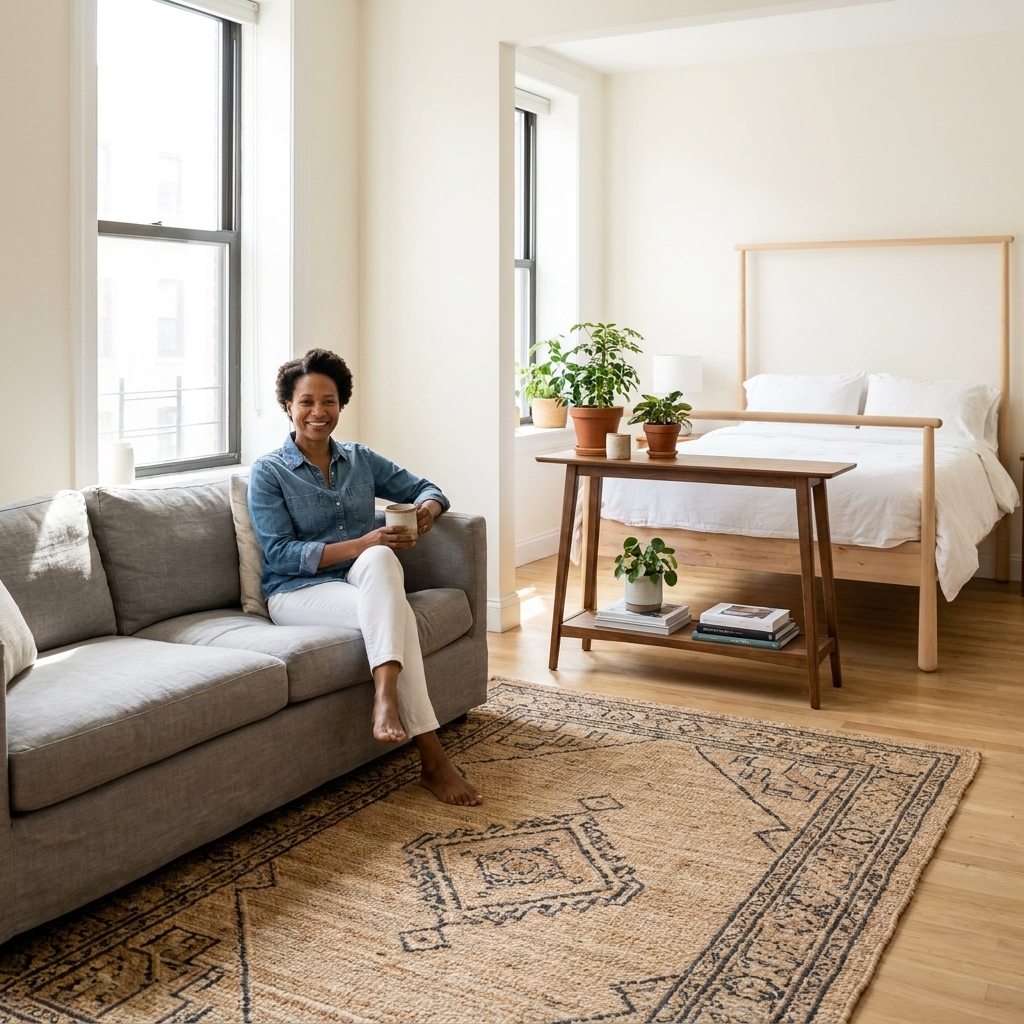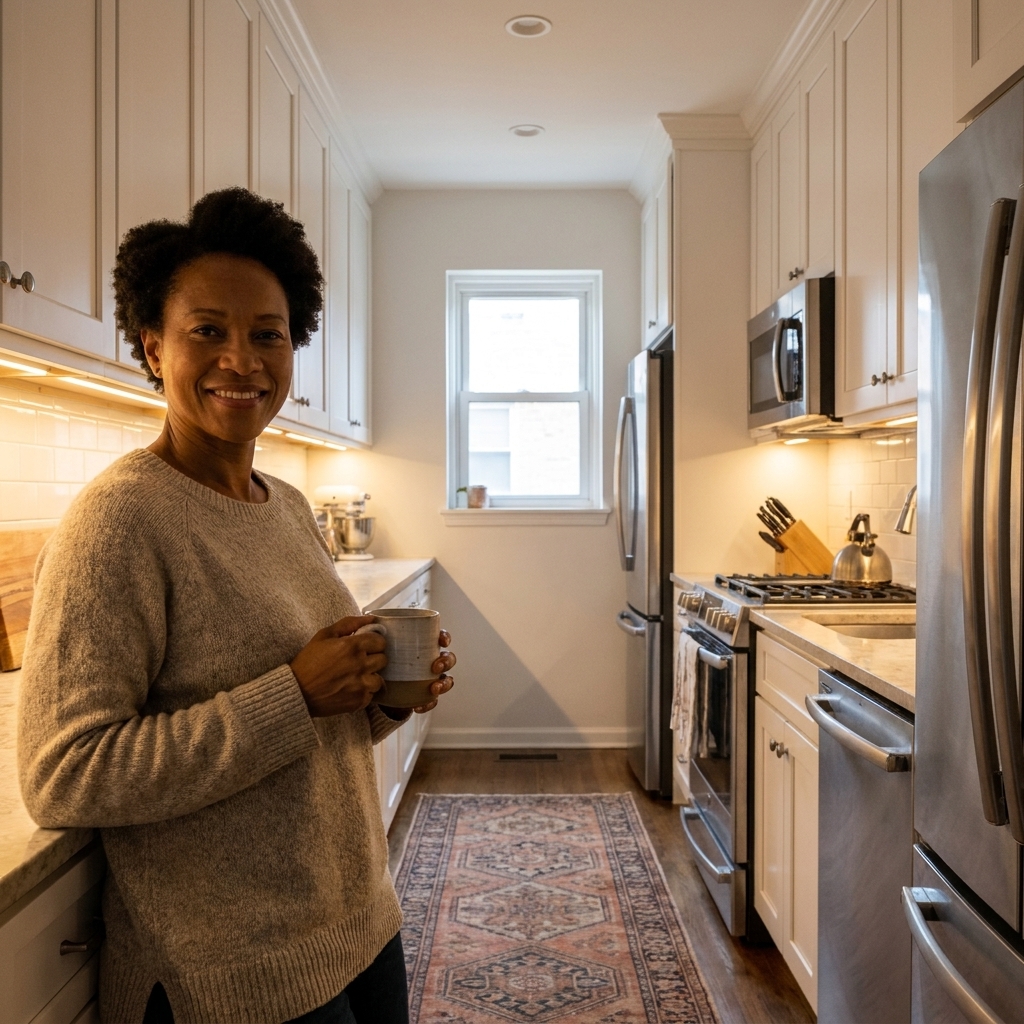
The small-space traffic flow fix: walkway width guidelines, key clearances, and renter-friendly layout tweaks that stop the daily shuffle and make a tight ap...
Space Ovo
Drop-Leaf Tables vs. Nesting Dining Options
Trying to fit a real dining setup into a tight floor plan? Compare drop-leaf tables, nesting options, convertible coffee tables, and narrow bar setups to find the best small-space solution.

Maya Brooks
Maya Brooks is an interior stylist and layout enthusiast who believes square footage should never dictate your home's style. After a decade of navigating cramped city studios, she shares practical, renter-friendly decorating and storage solutions to help others maximize their tiny spaces.
Created October 17, 2026
Updated October 17, 2026
If you have ever tried to squeeze a “normal” dining table into a not-normal apartment, welcome. I have played this game in studios where the “dining area” was also the entryway, the office, and the place where the laundry rack lived full time. The good news is you do not need a big footprint to have a real spot to eat. You just need the right kind of table for your daily rhythm.
This guide breaks down the most space-savvy dining solutions I have used and styled around: drop-leaf tables, nesting dining options, convertible coffee tables, and narrow bar setups. I will help you pick the winner based on how you actually live, not how your apartment wishes you lived.
Start here: 5 quick questions
Before you fall in love with a table online, answer these. They will save you returns, bruised shins, and that trapped feeling where furniture blocks the flow.
- How many people do you feed on a typical weeknight? One or two most nights is a different table than “we host every Sunday.”
- Do you need your dining surface to double as a desk? If yes, stability and legroom matter more than you think.
- Can chairs live somewhere else when not in use? If not, you need a plan for tuck-in seating.
- Where is your tightest pinch point? The entry, the kitchen walkway, or the path to the sofa? Your table should never choke that path.
- Are you allowed to wall-mount anything? Many rentals allow small holes if you patch when you move out, but some leases and wall types are strict. Adhesive solutions also have weight limits and can pull paint. Check your lease and your walls before you commit.
Drop-leaf tables
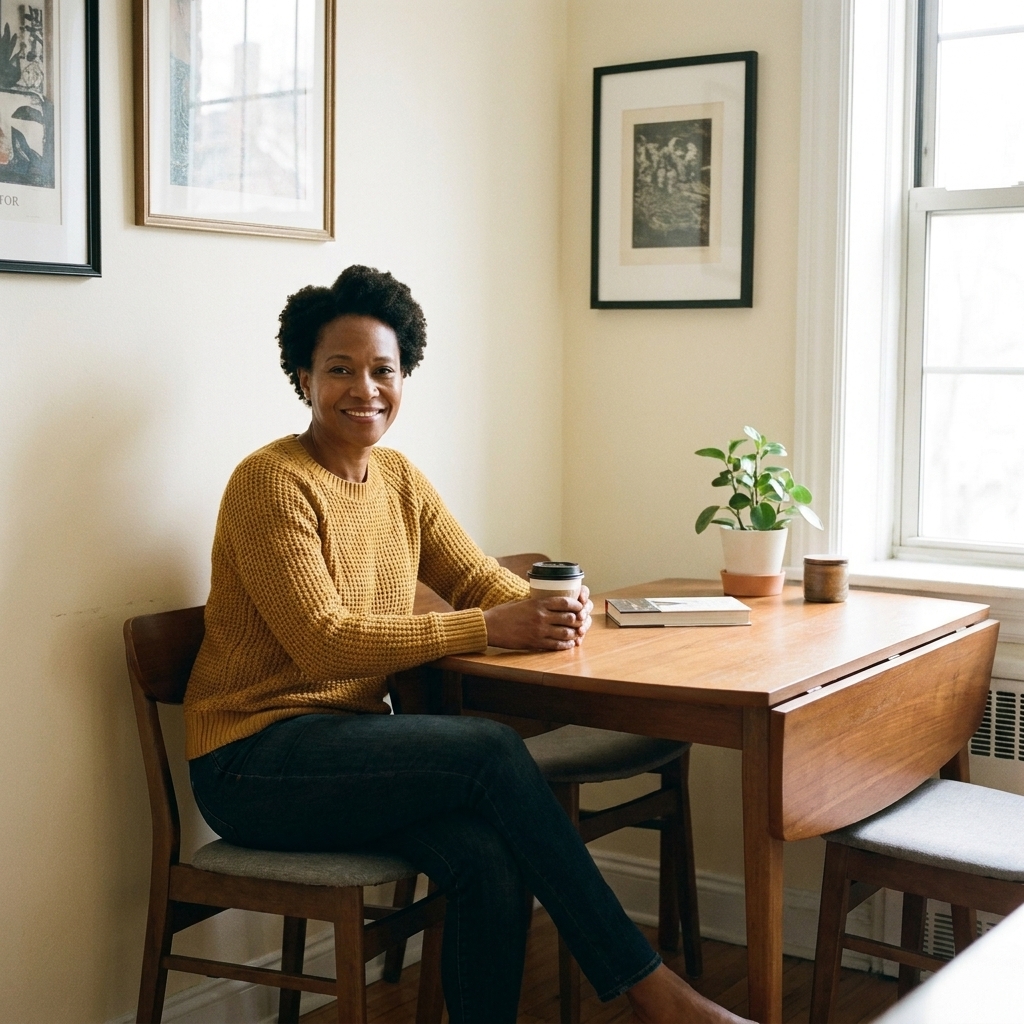
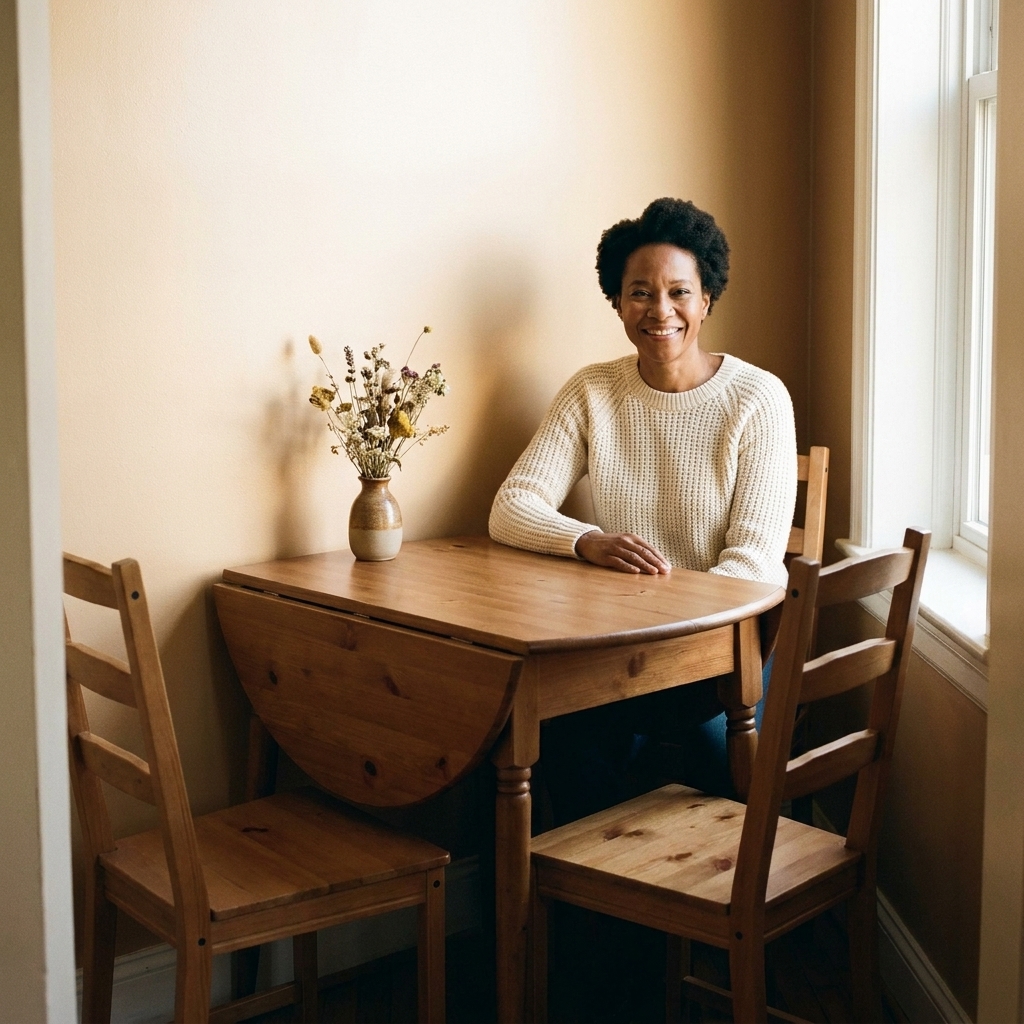
A drop-leaf table is the classic small-space chameleon: it can be a slim console most of the time, then expand when you need a proper dining surface. If you want something that feels like a traditional dining setup without permanently sacrificing floor space, this is often the sweet spot.
Why they work
- Flexible footprint: Keep one leaf up for daily use, both up for guests, both down when you need the room back.
- More comfortable posture than coffee-table dining: You get a normal table height, which is kinder for your back and neck.
- Lots of style options: Warm wood, modern lacquer, vintage pedestal, even compact farmhouse vibes.
Watch-outs
- Leaf supports can steal knee space: Gate-leg supports and swing-out brackets sometimes land right where your legs want to go.
- Chairs still need a home: The table folds, but your seating might not.
- Stability varies: Cheaper hardware can wobble when one leaf is up.
Best setups
- Wall-hugger drop-leaf: Park it along a wall like a console. Perfect for studios where the “dining area” is a hallway-adjacent strip of space.
- Small pedestal drop-leaf: Pedestals can be surprisingly leg-friendly for two-person daily dining.
- Gate-leg drop-leaf: Great expansion potential for hosting, but measure for knee clearance.
Tip: If the table will also be your desk, choose a model that feels solid with just one leaf up. Test the lean test. Put weight on the edge and see if it tips or flexes.
Nesting dining options
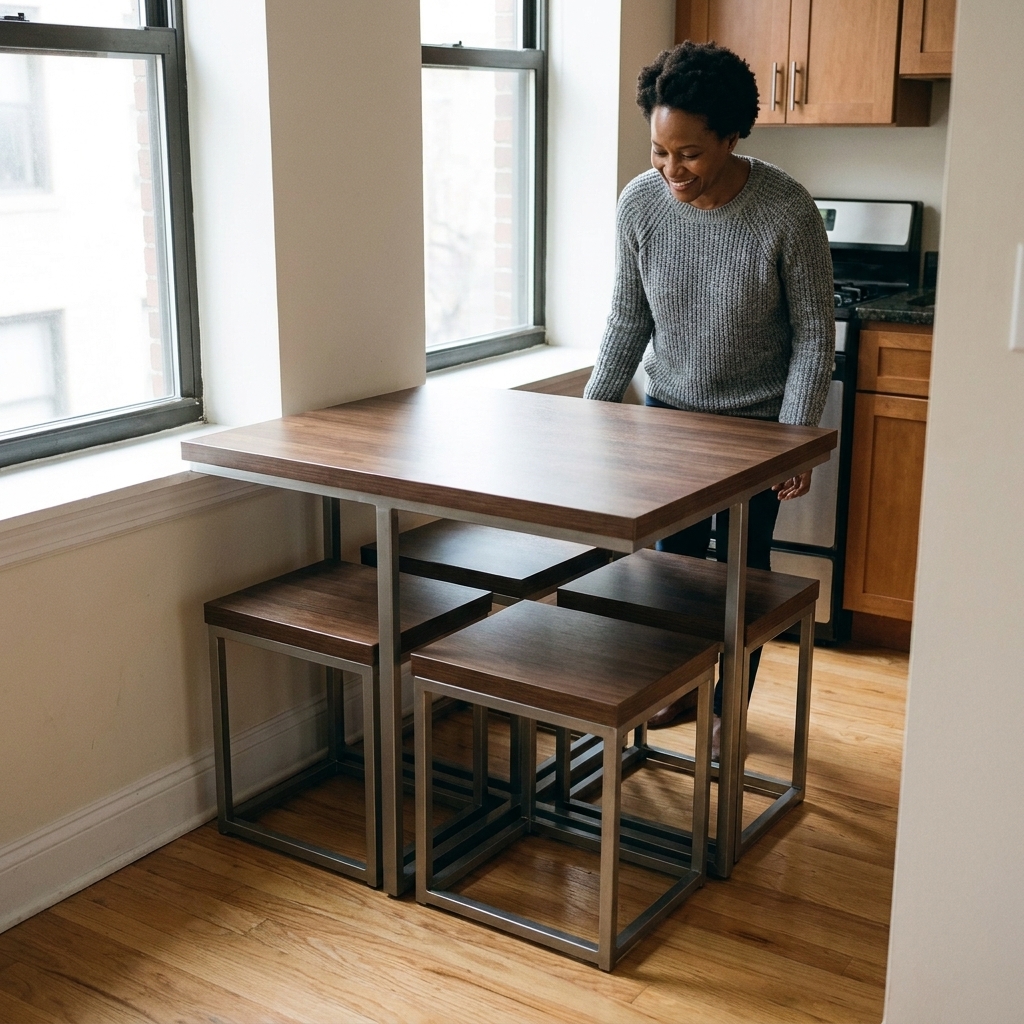
Nesting options are my favorite for apartments where the dining moment comes and goes. Think: nesting tables that can be pulled apart into extra surfaces, or a small nesting dining set where stools slide fully under the table. The vibe is agile, compact, and surprisingly stylish when you pick the right proportions.
What counts as nesting
- Nesting dining table + stools: A small table with 2 to 4 stools that tuck completely under.
- Expandable nesting surfaces: A main table plus smaller tables that slide out for extra place settings.
- C-table add-ons: Not a full dining set, but perfect if you need a second surface so two people can eat without sharing one tiny tabletop.
Why it shines
- Fast reset: The pieces tuck away in seconds, which makes daily cleanup feel easier.
- Great for awkward floor plans: You can spread pieces around the room when needed, then re-stack.
- Extra surfaces for hosting: You can create little stations for food and drinks without one huge table.
Watch-outs
- Stools are not always long-sit friendly: Backless stools store well, but they can get uncomfortable fast.
- Some sets are smaller than they look online: A few are more breakfast perch than real dinner setup.
- Pieces wander: If you hate visual clutter, commit to a storage habit so the extra parts do not drift into corners.
Tip: If you go nesting, look for stools with a footrest and a slightly wider seat. Comfort is what makes you actually use the table instead of defaulting to the couch.
Convertible coffee tables
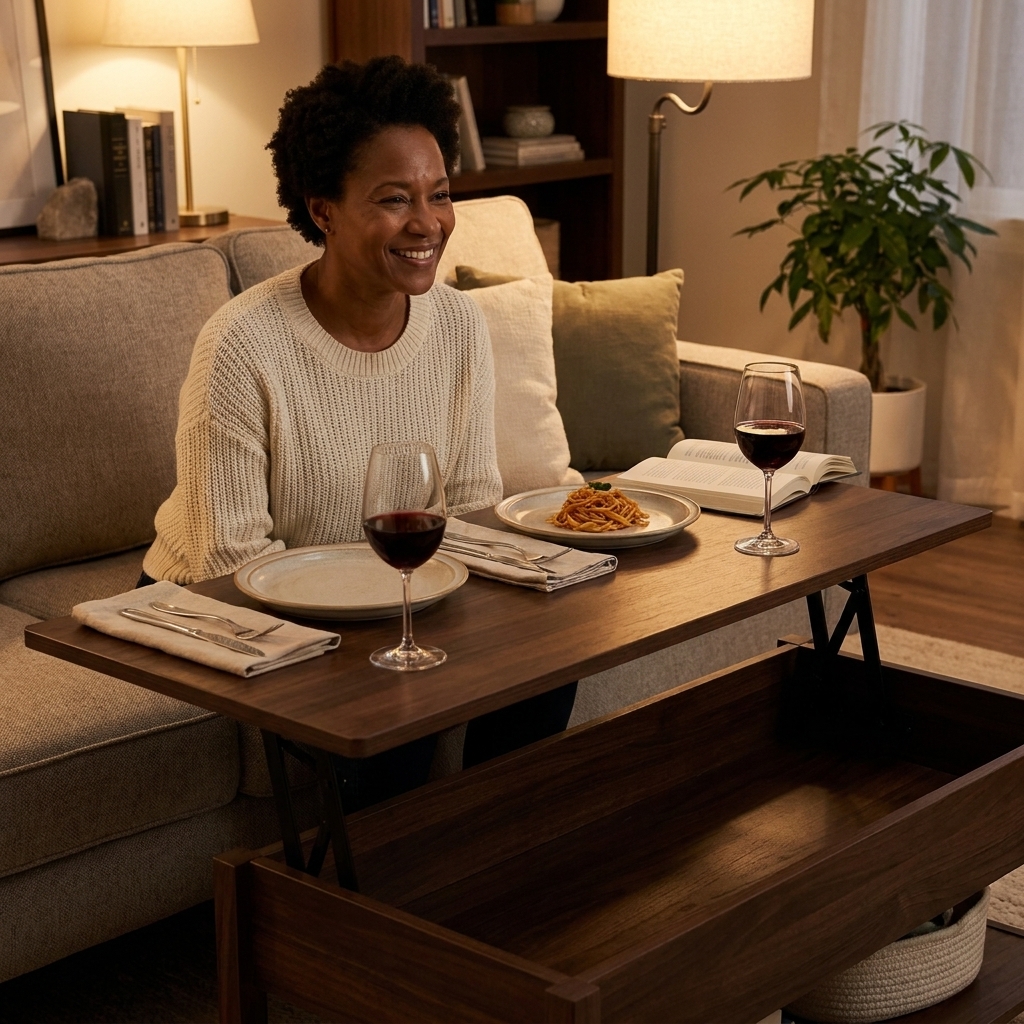
Convertible coffee tables are for the floor plan where a dining area simply does not exist. If your living room is the whole apartment, a lift-top or transforming coffee table can let you eat more comfortably without dedicating space to a separate table.
Types worth considering
- Lift-top coffee table: The top rises toward you, creating a work-and-eat surface at sofa height. Many coffee tables land around 16 to 18 inches tall, and lift tops typically rise several inches above that.
- Rising coffee-to-dining table: A more advanced mechanism that lifts higher, sometimes getting close to dining height. Standard dining tables are usually around 28 to 30 inches tall, so check the product’s max height before you buy. These models also tend to be heavier and pricier.
- Flip-top with storage: Great for hiding placemats, napkins, and the random candle you impulse-bought.
Pros
- No extra footprint: You already need a coffee table, so this is a two-for-one.
- Excellent for WFH: Lift-top surfaces can be much kinder than laptop-on-lap life.
- Hidden storage: Especially helpful in studios where every object needs a home.
Cons
- Sofa dining is not for everyone: If you crave an upright chair, this may not satisfy long term.
- Mechanisms matter: Cheap hinges get wobbly. A smooth, sturdy lift is the difference between clever and annoying.
- Limited group dining: Great for one to two people, trickier for a group unless you add trays and extra surfaces.
Tip: Look at the mechanism like you would a stroller hinge. Watch for pinch points, and make sure it clears your rug when it lifts. If there is a listed weight limit, take it seriously.
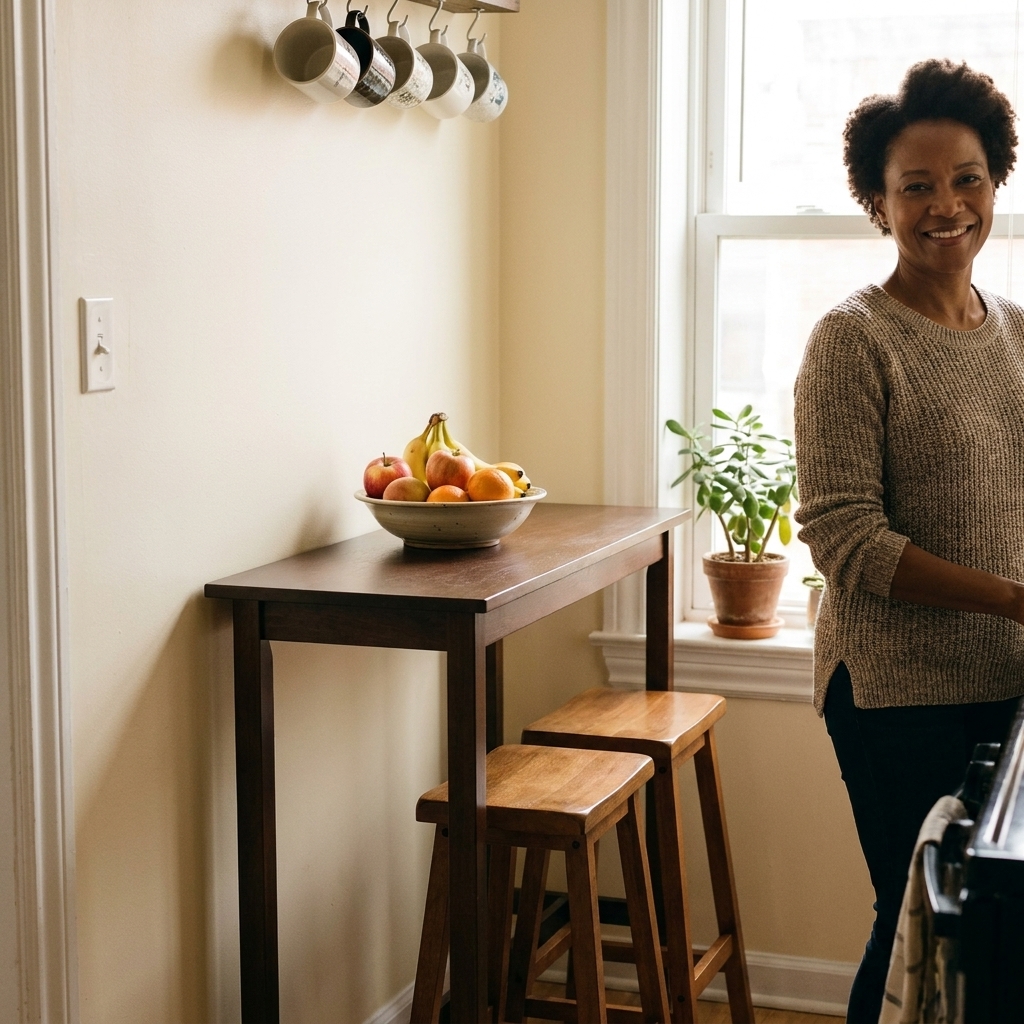
Narrow bar setups
A narrow bar setup is a tiny-space power move: a slim counter-height table or wall-mounted ledge paired with stools that tuck in. This option is especially good when you have a galley kitchen, an underused wall, or a layout where protecting the center of the room is everything.
When it makes sense
- You eat quick meals most days: Breakfast, solo dinners, coffee breaks.
- Your kitchen needs a landing zone: Extra prep space and a spot to set groceries is priceless.
- You are protecting a walkway: Slim depth keeps pathways clear.
What to look for
- Depth that fits your room and your plates: As a general guide, a narrow ledge can start around 12 to 15 inches deep, while 16 to 18 inches often feels more comfortable for real place settings. Measure your dishes if you are picky.
- Stools that truly tuck: Backless stools or low-profile backs usually store best.
- A footrest: Essential for comfort at counter height.
Common mistakes
- Going too deep: A bar that is even a few inches too deep can turn a narrow room into a daily squeeze.
- Blocking outlets: If it covers an outlet you use daily, you will resent it.
- Skipping mounting reality: Wall-mounted ledges need the right anchors for your wall type, and studs matter for heavier loads. Always follow the manufacturer’s weight rating.
Accessibility note: Counter-height seating can be uncomfortable or impractical for some bodies and mobility needs. If that is you, prioritize standard dining height or choose very stable stools with backs and a footrest.
How to choose
Pick a drop-leaf if
- You want the feeling of a true dining table most days.
- You host sometimes and need a surface that expands.
- You want chairs with backs and comfort matters.
Pick nesting if
- Your dining needs change day to day.
- You love the idea of pieces that tuck fully away.
- You want extra surfaces for entertaining without a big table.
Pick a convertible coffee table if
- You do not have space for any dedicated dining footprint.
- You eat in the living room anyway and want it to feel less chaotic.
- You want hidden storage and a flexible WFH surface.
Pick a narrow bar if
- You have an open wall or kitchen edge that can work harder.
- You want to keep the center of the room open.
- You are fine with counter-height seating for everyday meals.
Sizing basics
Even the perfect table can feel wrong if the clearances are off. Here are the guidelines I use when I am tape-measuring a tiny apartment and whispering “please fit.” These are general ranges, not laws. Your layout and your body get the final vote.
Quick measurement targets
- Main walkways: Aim for about 30 to 36 inches where you can, especially on the routes you walk all day.
- Space behind a chair in use: About 24 inches is a helpful starting point so you can sit down without doing a sideways shuffle.
- Table space per person: Roughly 24 inches of width per diner is a comfortable rule of thumb for everyday plates.
- Two-person table minimum: Around 24 to 30 inches wide can work for daily meals, depending on place settings and whether it doubles as a desk.
Small-space seating tricks
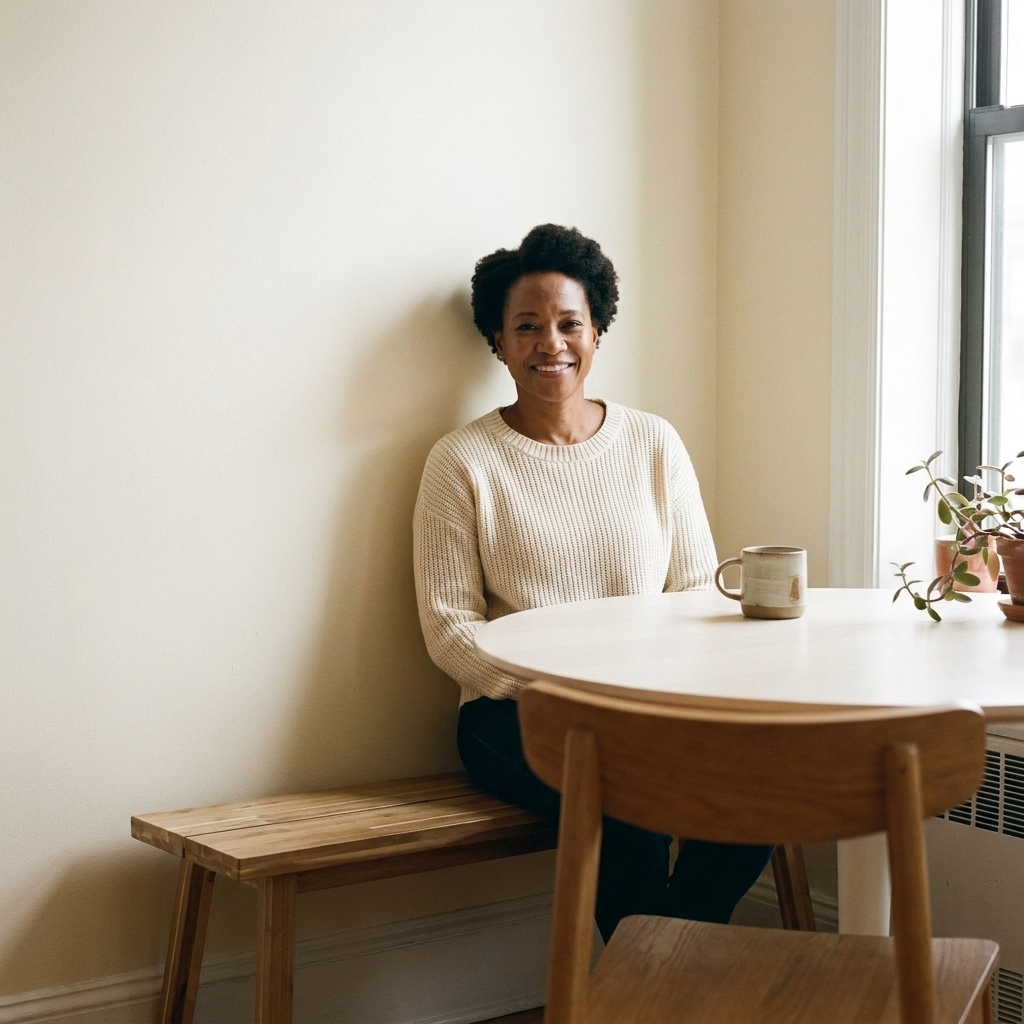
- Bench seating: A bench can slide fully under many tables and reads visually lighter than two bulky chairs.
- One statement chair, one slim chair: Mix a comfy chair on the open side with a slimmer chair on the wall side.
- Foldable guest chairs: Keep one or two in a closet for hosting, then bring them out only when needed.
Make it feel intentional
Small dining areas can look incredibly polished when you give them two things: a visual anchor and a reset routine.
Easy styling moves
- Use a tray as your centerpiece: It corrals clutter and makes clearing the surface fast.
- Add a washable runner or two placemats: Texture makes a tiny table feel styled, not temporary.
- Hang art or a mirror near the dining spot: A mirror can bounce light and make the area feel like a real zone.
- Choose slim, stackable dinnerware: If your cabinet space is tight, your dishes should not be bulky.
The 60-second reset
- Put the centerpiece back on its tray.
- Wipe the surface.
- Tuck stools or chairs fully in.
- Fold down a leaf or nest the pieces back together.
That is it. The whole point is to make your dining setup easy enough that you actually use it.
FAQ
Are drop-leaf tables sturdy enough for daily use?
Yes, if the hardware is solid and the base has good weight. Look for thick hinges, a stable support leg or bracket, and minimal wobble when you press down on the extended leaf. If you plan to use it as a desk, prioritize stability over maximum expansion.
What is best for a studio: nesting or drop-leaf?
If you want a consistent dining spot that looks like a normal table, go drop-leaf. If you need your floor space back frequently for workouts, projects, or just breathing room, nesting usually wins because it clears faster and stores tighter.
Can a narrow bar replace a dining table?
For one to two people, absolutely. The key is choosing stools you can tolerate for more than 10 minutes. Make sure you have a footrest, and choose a depth that fits your plates so everything does not feel perched on the edge.
Is a convertible coffee table actually comfortable for eating?
It can be, especially lift-top designs that bring the surface closer to you. If you hate sofa dining, consider pairing it with one small accent chair you can pull up when you want a more upright posture.
My bottom line
If you want the most normal dining table experience in a small footprint, pick a drop-leaf. If your space needs to shape-shift constantly, go nesting. If you have no dining zone at all, a convertible coffee table is the quiet multitasker. And if you have one long wall begging to be useful, a narrow bar setup can give you daily dining without stealing the room.
Whatever you choose, measure first, protect your walkways, and give your table a simple styling anchor. Tiny spaces are not limiting. They are just honest. They force your furniture to earn its keep, and I love them for it.