The small-space traffic flow fix: walkway width guidelines, key clearances, and renter-friendly layout tweaks that stop the daily shuffle and make a tight ap...
Space Ovo
Will Your Sofa Fit Through the Stairwell?
Before you buy a sofa, measure the boxed dimensions, door clearances, stair width, and landing turns. Sketch the delivery path and get seller confirmation if it’s close.

Maya Brooks
Maya Brooks is an interior stylist and layout enthusiast who believes square footage should never dictate your home's style. After a decade of navigating cramped city studios, she shares practical, renter-friendly decorating and storage solutions to help others maximize their tiny spaces.
Created October 18, 2026
Updated October 18, 2026
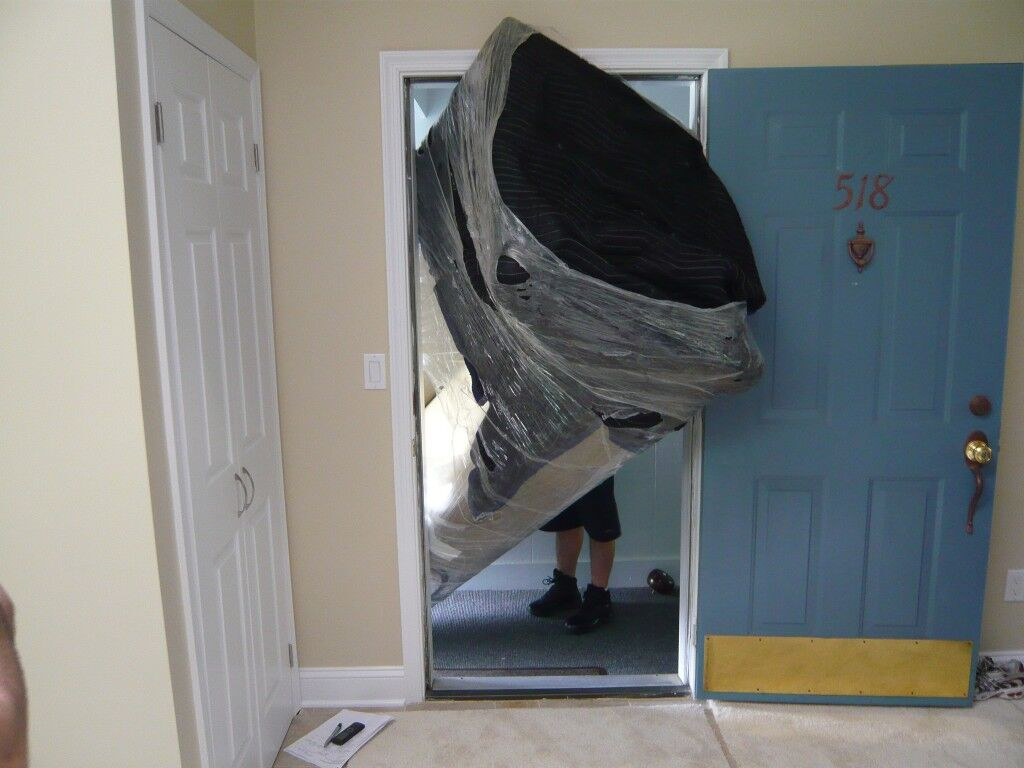
I have lived through the tiny-apartment rite of passage: you fall in love with a sofa online, you picture it in your living room, you click “order”… and delivery day turns into a sweaty group project on a stair landing that suddenly feels the size of a postage stamp.
The fix is not luck. It is measuring the delivery route before you buy, and measuring the sofa the way it will actually arrive: boxed, bagged, or blanket-wrapped.
Use delivery measurements, not listing size
Most people measure their room, then forget the furniture has to get to the room. For deliveries, these are the sofa numbers that matter:
- Boxed (carton) dimensions: the outside size of the carton (length x width x height). This is often larger than the sofa’s assembled footprint because of padding and corner protectors.
- Wrapped dimensions: if the sofa ships unboxed (sometimes the case with local delivery or resale), ask for the measurements after it is wrapped in moving blankets or plastic.
- Heaviest piece weight: especially for modulars and sleeper sofas. A piece that technically fits can still be a no-go if it is too heavy to control on turns.
- Legs removable? Removable legs can often buy you a couple inches of height, and in tight stairwells that can be the difference between “fits” and “stuck.”
- Back removable? Some sofas have a removable back or arms. If so, request the dimensions of the largest single component.
Pro tip from years of tight-space moves: Ask for the maximum outside carton dimensions, including any protrusions (handles, staples, bulges, extra-thick corners). The carton you get is not always the neat rectangle you picture from the product photos.
Measure like a delivery person
Grab a tape measure, a notepad, and if possible a friend who can hold the other end while you mutter “no way” to yourself on the stairs. You are looking for the tightest spots and the hardest turns.
1) Entry and lobby turns
- Main entry door clear opening: measure the narrowest point when the door is fully open. Do not assume the listed door size is the clear opening.
- Vestibule or second door: many older buildings have a double-door setup with a tight space in between.
- Hallway width: note any radiators, mailboxes, door closers, or corners that reduce clearance.
- Threshold lips: a raised threshold can catch the bottom edge of a carton and force you to tilt sooner than you planned.
2) Stairs
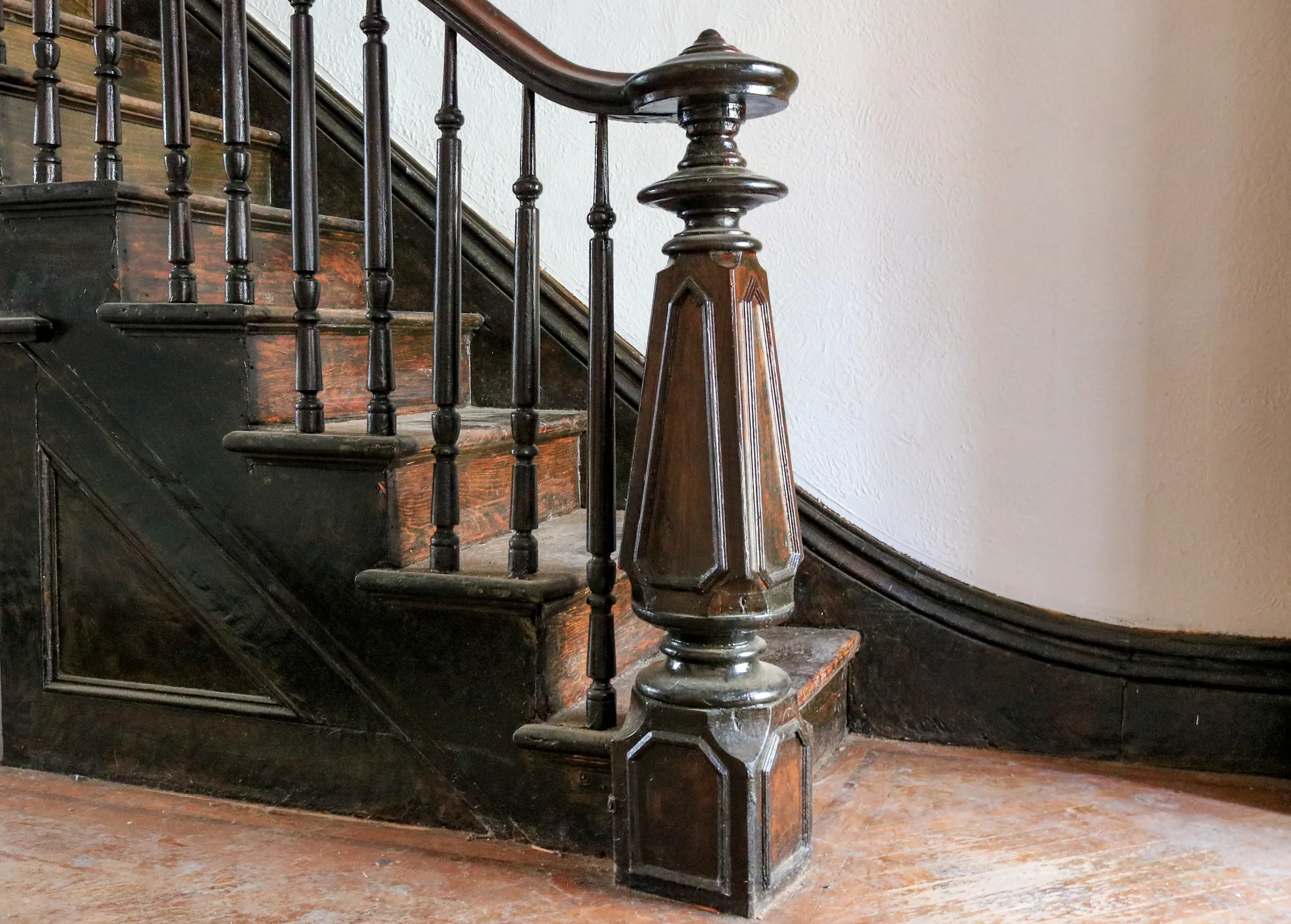
Measure stair width from the narrowest point. Handrails often steal an inch or two. So do trim, a newel post at the bottom, or a radiator hugging the wall.
- Clear stair width: wall to rail (or wall to wall if no rail).
- Ceiling height above stairs: low ceilings can create a pinch point when you tilt a long carton upward.
- Light fixtures: hanging lights and low sconces are easy to forget until you hear the first crunch.
3) Landings and turns
Landings are often the make-or-break moment because you need space to rotate the sofa or carton. For each landing:
- Landing depth and width: measure the usable floor area, not including the stair opening.
- Turn shape: is it a 90-degree turn, a 180-degree switchback, or a spiral-ish curve?
- Obstacles: windowsills, pipes, banisters, or a handrail post that sticks out exactly where you need clearance.
- Corner access: some apartment entries have a tight corner right after the unit door. Measure that jog too.
Door clearances
For every door on the path (building entry, unit door, interior doors if needed), measure:
- Clear opening width: inside edge to inside edge, with the door opened as far as it goes.
- Clear opening height: floor to the bottom of the door frame.
- Diagonal attempt: if the carton is too wide, angling it can sometimes work, but only if height allows it and you have space to swing and pivot on both sides of the doorway.
Important: If the door cannot open fully because it hits a wall, radiator, railing, or door closer, measure the opening at the maximum open angle. That reduced width is what you actually have.
Also worth checking: if your unit door can come off its hinges. Sometimes that extra fraction of clearance saves the day, but do not assume you can do it without permission (or the right tools).
Sketch the route
I am not asking you to become an architect. A quick sketch keeps you from forgetting the second landing, the weird jog in the hallway, or the vestibule door that opens inward.
Your sketch should include:
- All doors with their clear openings
- Hallway widths and pinch points
- Stair clear widths
- Each landing’s usable area
- Number of flights to your unit
Then write the sofa’s boxed (carton) dimensions at the top. You are building a “route vs. object” reality check on one page.
Will it fit?
Deliveries fail at the tightest spot, not the widest hallway. Identify the smallest measurement on the whole route, often:
- a narrow stair width near a handrail,
- a small landing where you have to turn,
- the clear opening of your unit door, or
- a low ceiling where the carton has to tilt.
Rule of thumb I use: if your clearance is under 2 inches at any critical point, treat it as “maybe” and start planning for alternatives. Real life includes handrails, human hands, cardboard that does not stay perfectly square, and the fact that nobody carries a long carton perfectly level. Some movers and retailers also require more clearance than you think, especially for heavier pieces.
Get confirmation in writing
If you are ordering new, contact the retailer or delivery company and ask:
- What are the boxed (carton) dimensions of the exact SKU and color?
- Can legs, arms, or the back be removed before delivery?
- Will the delivery team attempt stairs, and what happens if it does not fit?
- Are there restocking fees or return shipping fees if delivery fails?
If you are buying secondhand, ask the seller for:
- Photos of the sofa next to a tape measure on the longest side
- Confirmation of whether it breaks down (modular connectors, removable legs)
- How it will be transported (blanket wrap, bag, or carton)
When it is marginal, I like to send a single message that summarizes the tightest measurement on my end and the carton measurement on theirs. If something goes sideways, you have a paper trail and a clearer decision point before you spend money.
Elevators: measure more than the cab
If you have an elevator, it can be a lifesaver or a false sense of security. Measure:
- Elevator door clear width and height: the opening is often smaller than you expect.
- Cab interior width and depth: measure between walls at the narrowest points.
- Diagonal: a long carton may only work on a diagonal inside the cab.
- Obstructions: rear handrails, corner guards, control panels, and low ceilings can reduce the usable space.
Then check building policies: reserved elevators, protective padding, required move windows, and whether the delivery team needs a certificate of insurance.
Plan B options
Sometimes the math is simply rude. Here are renter-friendly backup routes:
- Choose modular: a sectional with smaller pieces can be dramatically easier than one long sofa frame.
- Shop “apartment” sizes: look for “apartment sofa,” “condo sofa,” or “small space sofa” lines that ship in shorter cartons.
- Split the seating: two loveseats or a loveseat plus chairs can give you the same seating without one massive delivery gamble.
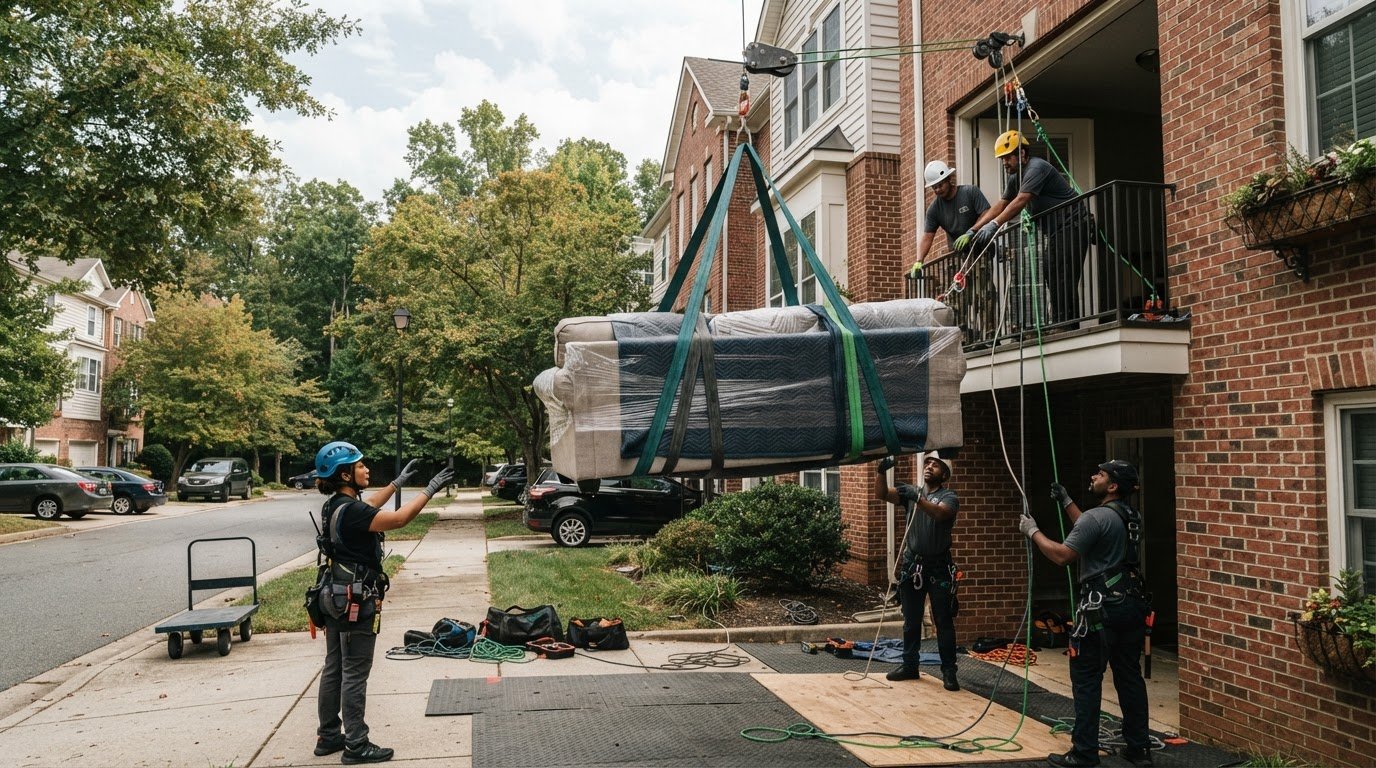
- Window delivery: possible in some buildings, but it typically requires professional movers, building approval, and sometimes a certificate of insurance and permits (especially if the street or sidewalk needs to be blocked). Measure the window clear opening, not the glass size.
Quick checklist
- Record sofa boxed (carton) dimensions (and weight)
- Measure building entry clear opening
- Measure hallway widths and pinch points
- Measure stair clear width (account for handrails and posts)
- Measure each landing size and note turn direction
- Measure your unit door clear opening width and height
- Check common gotchas (door closers, thresholds, light fixtures, tight entry corners)
- Sketch the route and mark the tightest spots
- Get seller or delivery confirmation if clearance is tight
FAQ
Do I measure assembled size or carton size?
Measure the boxed (carton) size whenever possible. If it will arrive unboxed, measure the wrapped size. The delivery route cares about the largest, stiffest thing you have to maneuver.
What is the hardest part of a stair delivery?
Landings and 90-degree turns are often the hardest, but tight doorways, low ceilings, and narrow stair widths can be just as limiting. The failure point is whichever spot gives you the least room to pivot.
Can a sofa fit if it is wider than the door?
Sometimes, if you can angle it diagonally and you have enough height clearance and swing space. For boxed sofas, diagonal maneuvers are less forgiving because the carton does not compress the way upholstery can.
What if the retailer will not provide carton dimensions?
I treat that as a risk flag. Ask for the carton dimensions for your exact model, or choose a retailer that publishes them. In small apartments, unknown carton sizes are how you end up with a very expensive hallway ornament.