
A renter-friendly, step-by-step kitchen refresh: peel-and-stick backsplash, cabinet hardware swaps, and vertical storage tricks that make a small kitchen fee...
Space Ovo
Portable Dishwasher in a Tiny Rental Kitchen: Will It Actually Hook Up?
Before you buy a portable dishwasher for a small rental kitchen, verify faucet compatibility, water connection type, hose routing, power needs, and lease rules. Here’s how to check in minutes.

Maya Brooks
Maya Brooks is an interior stylist and layout enthusiast who believes square footage should never dictate your home's style. After a decade of navigating cramped city studios, she shares practical, renter-friendly decorating and storage solutions to help others maximize their tiny spaces.
Created October 18, 2026
Updated October 18, 2026
If you have ever stood in a tiny kitchen holding a dish sponge like it is a full-time job, I get it. Portable dishwashers can be a total sanity-saver in a rental, but only if your kitchen can actually connect to one. In tiny spaces, hookups are the whole story: faucet style, hose path, power, and whether your lease allows it.
This guide is the connection and compatibility check I wish every renter had before clicking “buy.”
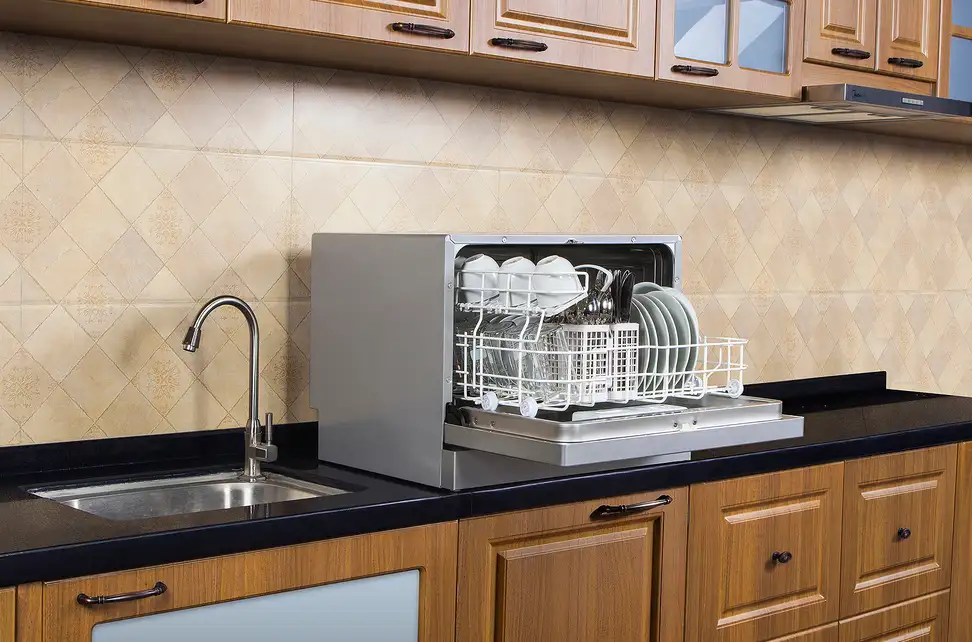
First: what kind of “portable dishwasher”?
People use portable dishwasher to describe two different machines, and they connect in totally different ways.
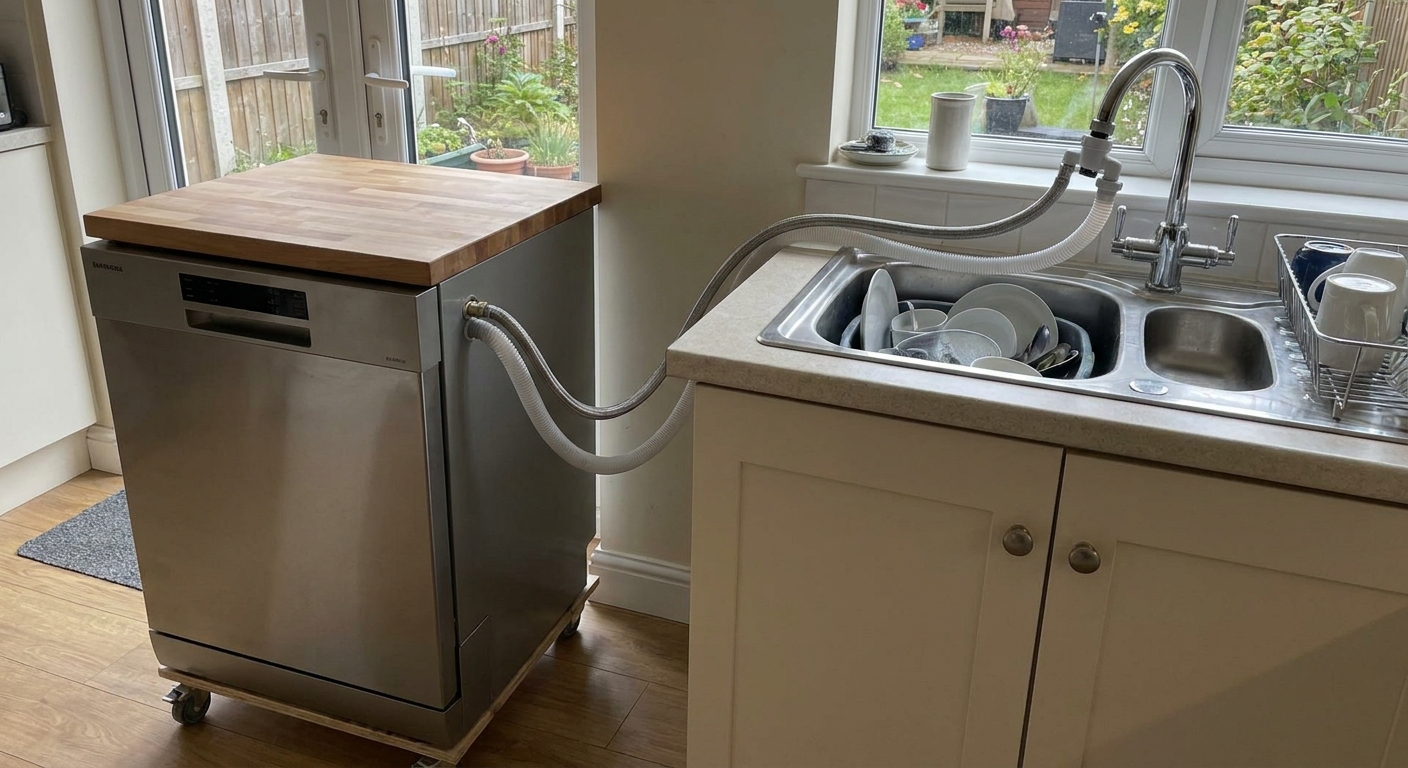
Type A: Faucet-connected portable (usually on wheels)
- How it gets water: A hose snaps onto your sink faucet with a quick-connect adapter.
- How it drains: The same hose assembly usually returns wastewater into the sink.
- What it demands: A compatible faucet, a clear hose route to the sink during use, and the reality that your sink faucet is usually tied up while it runs.
Type B: Countertop “tank” dishwasher (manual fill)
- How it gets water: You pour water into a built-in reservoir (or sometimes connect to a faucet, depending on model).
- How it drains: A drain hose goes into the sink or a bucket.
- What it demands: Counter space and a nearby grounded outlet, but often less faucet compatibility drama if you use the fill tank.
If your faucet situation is tricky (hello, pull-down sprayer), a fill-tank countertop unit can be the easiest renter workaround.
Faucet compatibility: the make-or-break detail
For faucet-connected portables, you are not just checking “does it fit my sink.” You are checking whether the dishwasher’s adapter can physically attach to your faucet threads and seal without leaking.
Step 1: Identify your faucet type
- Standard faucet with removable aerator: Best-case scenario. Many adapters are designed for this.
- Pull-down or pull-out sprayer faucet: Often more difficult. Many are incompatible without a specific adapter, and some are simply not designed to be used with quick-connect appliances.
- Integrated sprayer or non-removable aerator: Sometimes incompatible, sometimes requires a specialty aerator key or a manufacturer-specific adapter.
- Touchless or sensor faucet: May be problematic if it has an auto shutoff timer, needs hands to trigger continuous flow, or throttles flow in a way the dishwasher does not like.
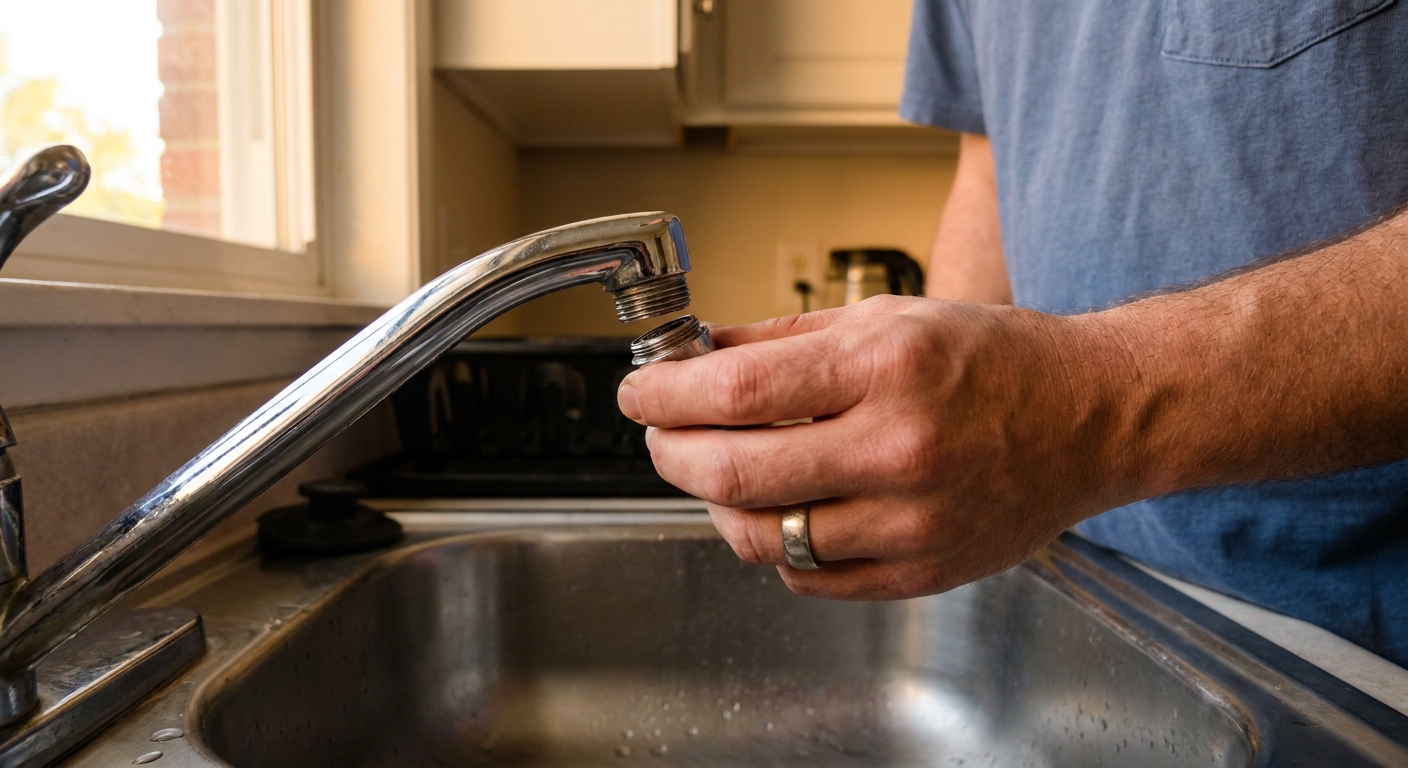
Step 2: Check the aerator threads (the real test)
Unscrew the aerator at the tip of your faucet.
- If it unscrews easily and reveals threads, you have a chance.
- If it does not come off, is recessed, or requires a hidden key, you may be heading toward a countertop tank unit instead.
Most portable dishwasher kits include adapters for common thread sizes, but not all. The goal is to confirm:
- Thread direction: male vs. female threads on your faucet once the aerator is removed
- Thread size: matches one of the included adapters, or an adapter is available from the dishwasher manufacturer
A concrete thing you can check before you shop: many U.S. kitchen faucets use common aerator thread standards like 15/16"-27 (male) or 55/64"-27 (female). Those are common, not guaranteed. If you can, take a clear phone photo of the faucet tip and aerator, and measure the aerator diameter or use an inexpensive thread gauge. It saves a lot of returns.
Manual check: do not assume
Portable models are not all equally “plug and play.” Before you buy, open the manual online and look for:
- “Connect to faucet” plus any faucet restrictions (sprayer faucets are frequently flagged)
- Water pressure and inlet temperature requirements (many faucet-connected units clean best when supplied with hot tap water)
- Electrical requirements (amperage/wattage, and whether the manufacturer bans extension cords)
Also check if the unit specifies a particular adapter type or warns against third-party adapters. In a rental, you want the lowest-drama setup possible, and the manual is your drama forecast.
Hose routing in a tiny kitchen
Even if your faucet is compatible, you still need a realistic hose path that does not kink, pinch, or create a tripping hazard across your only walkway.
Measure these three things
- Distance from where the unit will sit to the faucet: Compare it to the hose length listed in specs.
- Clearance at cabinet corners and drawer fronts: Hoses hate sharp bends.
- Drain hose security at the sink: Make sure the hose can sit deep enough in the basin to stay put, and use the included hook/clip (if provided) so it cannot jump out mid-cycle.
Tiny-space placement options that usually work
- Park it beside the sink: Simplest hose path, but measure door swing and walking clearance.
- Park it in front of the sink only during cycles: Works in a galley, but plan around the faucet being in use while it runs.
- Countertop unit near the sink: Short drain run, minimal floor disruption.
My renter tip: do one “mock cycle” with a measuring tape. Pretend the hose is there. Can you open the fridge? Can you open the dishwasher door fully? Can you step through the kitchen without doing a gymnastics routine?
Power: outlet and circuit reality
Portable dishwashers pull real power, and older rentals can be, let's call them “electrically nostalgic.” Here is what to check:
Outlet basics
- Use a grounded 3-prong outlet. If your kitchen only has 2-prong outlets, pause and talk to your landlord or an electrician. Do not use cheater plugs.
- GFCI matters near water. Kitchens typically require GFCI protection. If your unit trips a GFCI, reset and re-test, and stop using it if the problem repeats.
- Extension cords are a last resort. Many manufacturers explicitly warn against them. Best practice is to avoid them unless the manufacturer specifically allows it and you can use a heavy-duty cord properly rated for the appliance.
Check the draw, not just the outlet
“Dedicated outlet” is not usually the real issue. What matters is whether the circuit is overloaded. Look at the dishwasher nameplate or manual for amperage or watts (portable dishwashers often land in the neighborhood of 10 to 15 amps, but it varies by model). If your microwave and toaster already trip the breaker when you are feeling ambitious with breakfast, a portable dishwasher may join the chaos. Run it on a circuit that is not already loaded, and avoid stacking high-draw appliances at the same time.
Water on the floor risk
In a big kitchen, a drip is annoying. In a tiny rental, a drip becomes a slip hazard and a security deposit nightmare.
Do a quick prevention setup
- Check the gasket and quick-connect seating every time you hook up until you trust it.
- Use the right washer. A missing or pinched washer is a classic cause of faucet-connection leaks.
- Place a washable mat or low-profile tray under the connection area if your layout allows.
- Do not run it unattended at first. Do your first few cycles while you are home.
If you see any leaking at the faucet connection, stop and reassess. Usually it is a thread mismatch, a missing washer, or a not-fully-clicked quick-connect.
Lease and landlord permission
Some leases restrict “additional appliances” or anything that connects to plumbing. Portable dishwashers live in a gray zone because they are not installed, but they do use water and drain into the sink.
Before you buy, it is smart to ask your landlord or property manager one clear question: “Is a portable dishwasher that connects temporarily to the sink faucet allowed?”
Also consider renter’s insurance basics and take a couple quick photos of your sink area before you begin using the unit regularly, especially in older buildings where plumbing is temperamental.
What works best in tiny rentals?
Go faucet-connected (rolling) if…
- You have a standard faucet with a removable aerator and known-compatible threads
- You have enough floor space to park it and still function
- You want larger capacity and you can live with the hookup routine and the faucet being occupied during cycles
Go countertop fill-tank if…
- Your faucet is pull-down or pull-out, touchless, or otherwise adapter-hostile
- You are short on floor space but can spare counter space
- You want minimal lease drama because it can run without touching the faucet
My tiny-apartment bias: if your faucet situation is even slightly questionable, a fill-tank countertop model is often the calmer choice.
5-minute compatibility checklist
- Faucet: Aerator removes easily and exposes threads (yes/no)
- Threads: You know whether your faucet is male or female thread, and you can match an included adapter size or a manufacturer-listed adapter (yes/no)
- Faucet type: Not a pull-down or touchless faucet unless the manufacturer confirms compatibility (yes/no)
- Hose path: Clear route from unit to sink with no tight bends, and a plan to secure the drain hose in the sink (yes/no)
- Outlet: Grounded 3-prong outlet within cord reach, ideally GFCI-protected (yes/no)
- Circuit: The circuit can handle the dishwasher’s amperage without sharing with multiple high-draw appliances (yes/no)
- Lease: Allowed to use a temporary faucet-connected appliance (yes/no)
If you have two or more “no” answers, consider pivoting to a countertop fill-tank unit or hold off until you can get written approval or the right adapter.
FAQ
Can I connect a portable dishwasher to a pull-down faucet?
Sometimes, but it depends on the faucet and whether you can adapt the aerator threads safely. Many pull-down faucets are not designed to accept a dishwasher quick-connect. Check the dishwasher manual for faucet restrictions, then check your faucet brand documentation for aerator thread type and whether adapters are supported.
Do portable dishwashers need hot water?
Many faucet-connected portables perform best when supplied with hot water at the faucet, and some assume it for cycle time and cleaning. Many countertop units have internal heaters, but they still specify inlet temperature ranges. Confirm in the manual so you know what performance to expect.
Will a portable dishwasher damage my faucet?
If the adapter is correct, the washer is seated, and you do not overtighten, it should be fine. Damage risk goes up when renters force mismatched threads or use improvised adapters.
Is a countertop fill-tank dishwasher worth it?
In a tiny rental with a complicated faucet, yes. You trade capacity for easier setup. If your daily dish load is small and your counter can handle the footprint, they can be a great fit.