A renter-friendly how-to for transforming cramped bathrooms with removable wallpaper, floor tile decals, and smart shelf styling that makes small spaces feel...
Space Ovo
Peel-and-Stick vs. Removable Wallpaper for Small Rentals
Peel-and-stick or removable wallpaper: what’s the real difference for renters? Compare materials, removal, price, and small-space pattern tips that make low ceilings look taller.

Maya Brooks
Maya Brooks is an interior stylist and layout enthusiast who believes square footage should never dictate your home's style. After a decade of navigating cramped city studios, she shares practical, renter-friendly decorating and storage solutions to help others maximize their tiny spaces.
Created October 17, 2026
Updated October 17, 2026
If you have ever stood in a rental hallway holding a wallpaper sample like it’s a paint chip and whispering, “Please don’t take my security deposit,” you are in the right place. Temporary wallpaper can be an absolute game-changer in a small apartment, but the labels get confusing fast.
Here’s the truth: people use “peel-and-stick” and “removable” like they mean the same thing. Sometimes they do. Sometimes they really do not. What matters for renters is the adhesive type, your wall texture, and how long you plan to keep it up.
Quick taxonomy so we stay sane: temporary wallpaper is the umbrella term. Under it, you’ll usually find peel-and-stick (built-in adhesive) and pasted/strippable wallpapers marketed as removable (installed with paste, designed to come down easier).

Quick definitions
Peel-and-stick wallpaper
This is wallpaper with adhesive already on the back. You peel off a backing and stick it directly to the wall. Many mass-market peel-and-stick options are made from vinyl or a vinyl blend, but there are also paper and non-woven peel-and-stick products depending on the brand.
Removable wallpaper
“Removable” is a broader claim, not always a specific construction. It can include:
- Peel-and-stick products labeled removable
- Traditional wallpaper marketed as removable because it uses strippable materials or easy-release paste
- Pre-pasted wallpaper that you activate with water and is designed to come down more easily than old-school paper
In other words, peel-and-stick is one type of removable wallpaper, but not all removable wallpaper is peel-and-stick.
Renter reality
In tight spaces, wallpaper is not just decoration. It is a visual tool. The best choice is the one that:
- Does not damage the wall or paint
- Looks good up close (small rooms are viewed from short distances)
- Won’t peel or lift with humidity and seasonal temperature changes
- Is easy to align on short walls and awkward corners
Two renter notes that save real money: check your lease (some landlords treat wallpaper like paint), and know your wall type. Temporary wallpaper is happiest on primed, painted drywall and tends to struggle on unprimed drywall, brick, heavy texture, and anything flaky or chalky.
Peel-and-stick
Why renters love it
- Fast installation: no paste, no water tray, no mess. Great if you are doing this on a Sunday with one free afternoon.
- Great for accent walls: one statement wall in a studio gives you “separate zones” without adding furniture.
- Beginner-friendly: you can lift and reposition as you go, especially in the first few minutes.
Where it can go sideways
- Paint risk is real: peel-and-stick can pull paint, especially on older rentals, bargain paint jobs, or walls painted without proper primer. Leaving it up longer can increase the risk, and so can removal conditions like heat, humidity, and how fragile the paint film is to begin with.
- Texture hates it, especially heavy texture: orange peel, rough plaster, and deeply matte paint can make edges lift or prevent a solid bond.
- Humidity issues: bathrooms and kitchens can loosen adhesive unless the product is specifically rated for those rooms.
- Seams can be unforgiving: vinyl can show overlap and bubbles more easily. In a tiny room, your eye finds every flaw because you’re always close to the wall.
Best for
- Short-term rentals or frequent movers
- Smooth or lightly textured walls
- Accent walls, nooks, and small zones (desk corner, entry wall, behind a headboard)
Pasted removable
This category varies a lot, but the most renter-popular version is a traditional wallpaper with removable paste or a strippable, non-woven wallpaper.
Why it can beat peel-and-stick
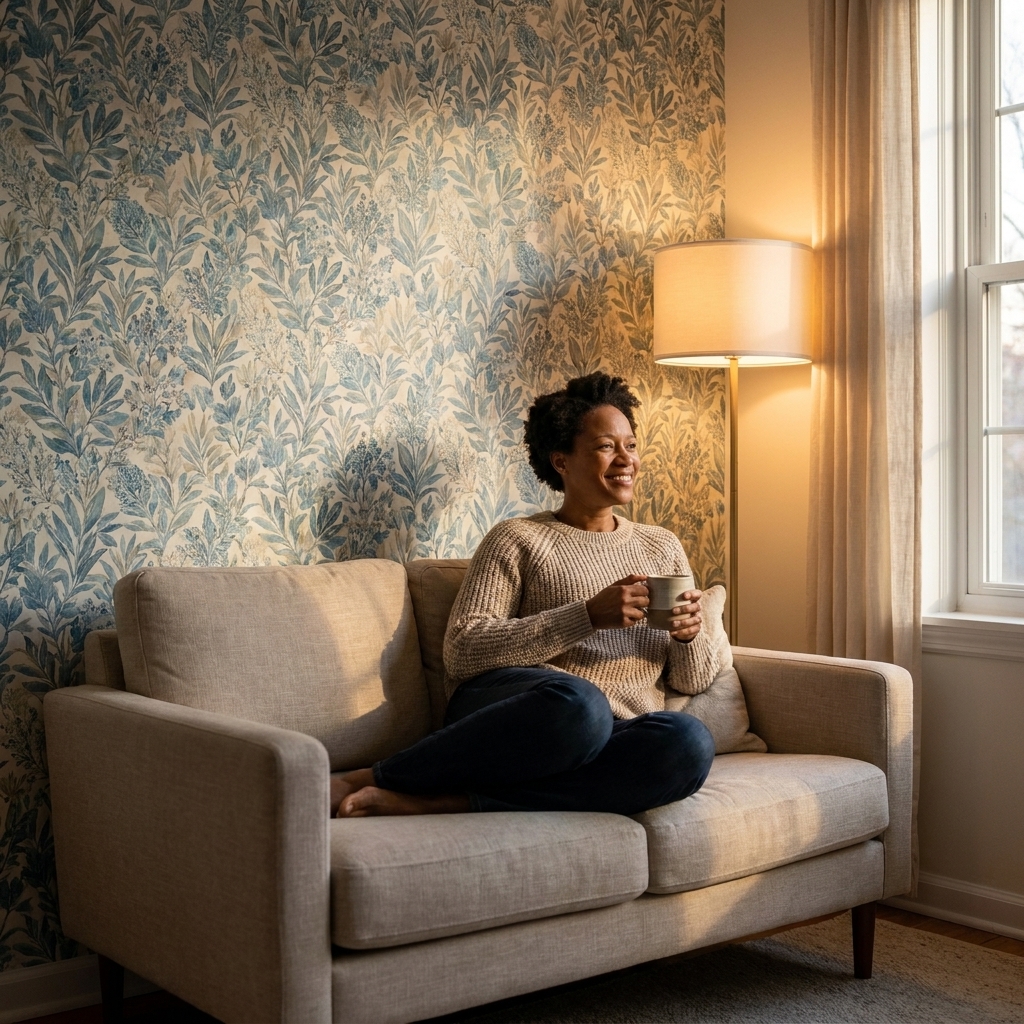
- Smoother, more high-end look: non-woven and paper-style wallpapers can look more like true wallcovering, less like a sticker.
- Often easier on paint: when installed correctly with the right removable paste, removal can be gentler than a strong pressure-sensitive adhesive.
- Less edge drama for some walls: many people find non-woven papers are a bit more forgiving when walls expand and contract slightly over time, which can help reduce minor edge lift.
Tradeoffs
- More prep and mess: paste, smoothing tools, cleanup.
- More commitment: it is still temporary, but it feels more “installation” than peel-and-stick.
- Removal depends on technique: the wrong paste or too much paste can turn it into a scrape-fest.
Best for
- Longer stays (1 to 5 years)
- People who want a higher-end finish
- Feature walls in living rooms or bedrooms where you want fewer visible seams
Renter comparison
1) Wall safety
Winner depends on your wall. Peel-and-stick can remove cleanly, but it is more likely to pull paint on older or poorly prepped walls. Non-woven removable wallpaper with the right paste can be gentler, but only if installed correctly.
My rule: if you suspect your rental paint is fragile (hello, chalky matte), lean away from aggressive adhesives. If you cannot test safely, choose a smaller application area first.
2) Install difficulty
Peel-and-stick wins for speed and simplicity. Pasted removable wallpaper can look smoother, but it is more steps and more tools.
3) Cost
Prices vary wildly by brand and material. As a general pattern:
- Peel-and-stick can be more expensive per square foot for decent quality
- Non-woven or pasted removable may cost a similar amount, but you may add paste and tools
In a small apartment, the bigger “cost” is often waste. Odd wall widths, windows, and doors can force you to buy an extra roll. Always calculate with repeat and pattern matching in mind.
4) Finish
Non-woven removable often wins if you want it to look like a true wallcovering, especially for subtle textures, grasscloth looks, or painterly prints.
5) Repositioning
Peel-and-stick usually wins. Just keep your hands clean and avoid touching the adhesive more than necessary.
Before you buy
I know you want to skip this. Please do not. In small rentals, paint quality is a mystery until it betrays you.
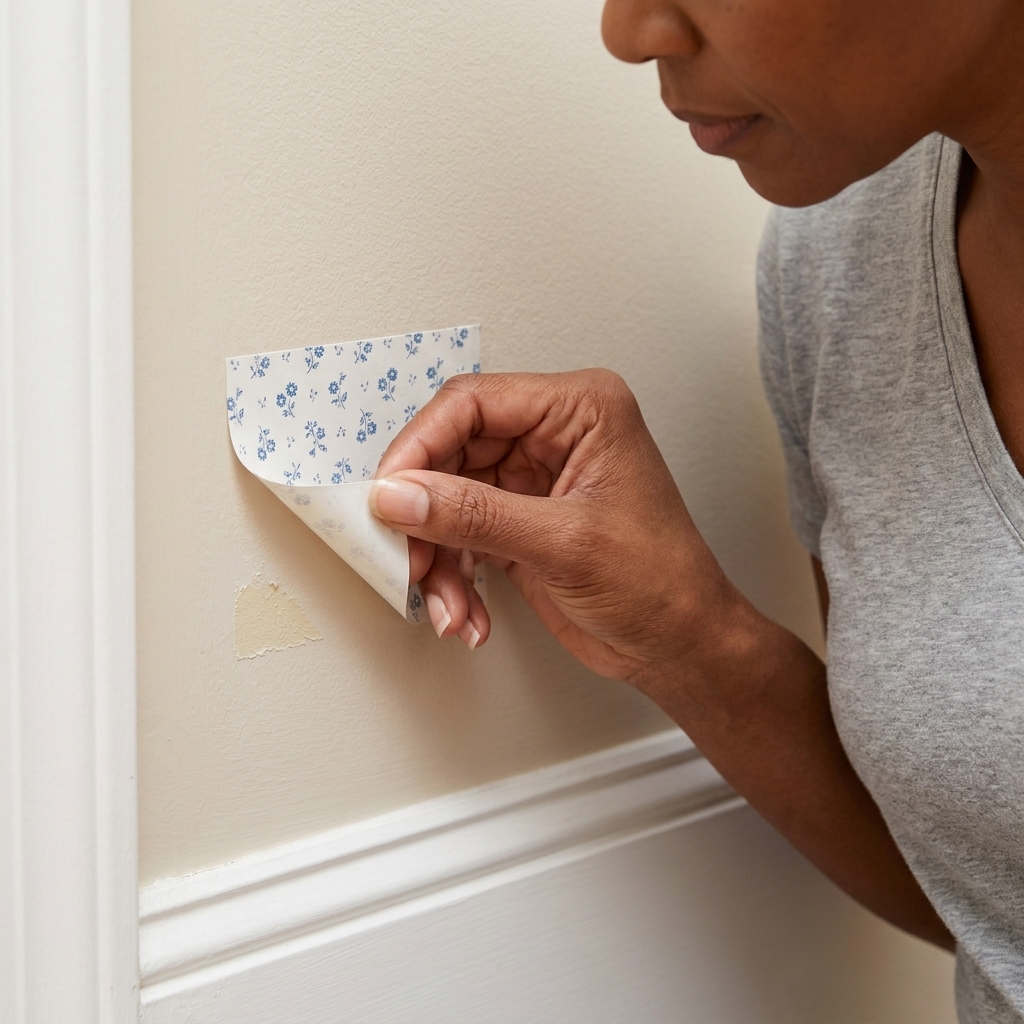
10-minute patch test
- Clean a small area with a damp cloth and let it dry fully.
- Apply a sample or a 6 inch by 6 inch square in an inconspicuous spot (behind a door, inside a closet, above a cabinet).
- Leave it for 24 to 72 hours so the adhesive can settle and you can see early lifting.
- Peel slowly at a low angle (pulling back on itself, not out from the wall).
- Check for paint transfer on the wallpaper and for lifted paint on the wall.
If anything lifts, do not wallpaper that wall. Pivot to a different surface (the back of a bookcase, a wardrobe, a door panel) or use framed fabric or large-scale art instead.
One more common trap: fresh paint is not your friend. If the wall was recently painted, wait until it is fully cured before applying anything adhesive. Cure time varies by paint and conditions, but it is often a couple of weeks. When in doubt, follow the paint manufacturer’s guidance.
Patterns for small rooms
Wallpaper can visually expand a space, but only when the scale and contrast make sense for close quarters.
Go bigger, not louder
In tiny rooms, small busy patterns can read like visual static. Instead, consider:
- Large-scale, low-contrast prints (big shapes, soft color shifts)
- Subtle stripes or textured solids
- Micro patterns only if they are very low contrast and you are doing one small wall
Keep contrast gentle
High-contrast patterns can make walls feel like they are stepping forward. That is great for drama, but not always great for a room that already feels like it is hugging you. If you crave bold, use it on a single wall and keep the other walls quiet.
Low ceilings
This is my favorite kind of design magic because it works immediately. You are basically teaching the eye where to travel.
Vertical stripes
- Thin to medium stripes feel lighter and more continuous
- Low contrast stripes are more “stretch” than “statement”
- Wide, high-contrast stripes can look punchy but may chop up a small wall
Vertical motifs
If stripes feel too nautical or preppy, look for patterns with vertical stems, climbing vines, tall arches, or elongated geometrics. The effect is the same: your eye travels upward.
Soft top
For low ceilings, I like wallpaper that gets lighter toward the top or has more negative space overall. Dark, dense patterns near the ceiling can make it feel lower.
Stop short (sometimes)
This one is counterintuitive, but in some rentals, leaving a small margin at the top can look cleaner than fighting uneven ceilings. If you do this, make it intentional: keep the line straight and consistent.
Trim color
If your rental allows paint, painting trim the same color as the wall can make the room feel taller and calmer. If you cannot paint, choose wallpaper that blends nicely with existing trim to avoid harsh outlines.

Best spots
- Entry wall: instant personality, and you see it every day
- Behind the bed: headboard moment without buying a giant headboard
- Desk zone: creates a “work nook” inside a studio
- Inside a closet or pantry: low-risk practice area, high joy payoff
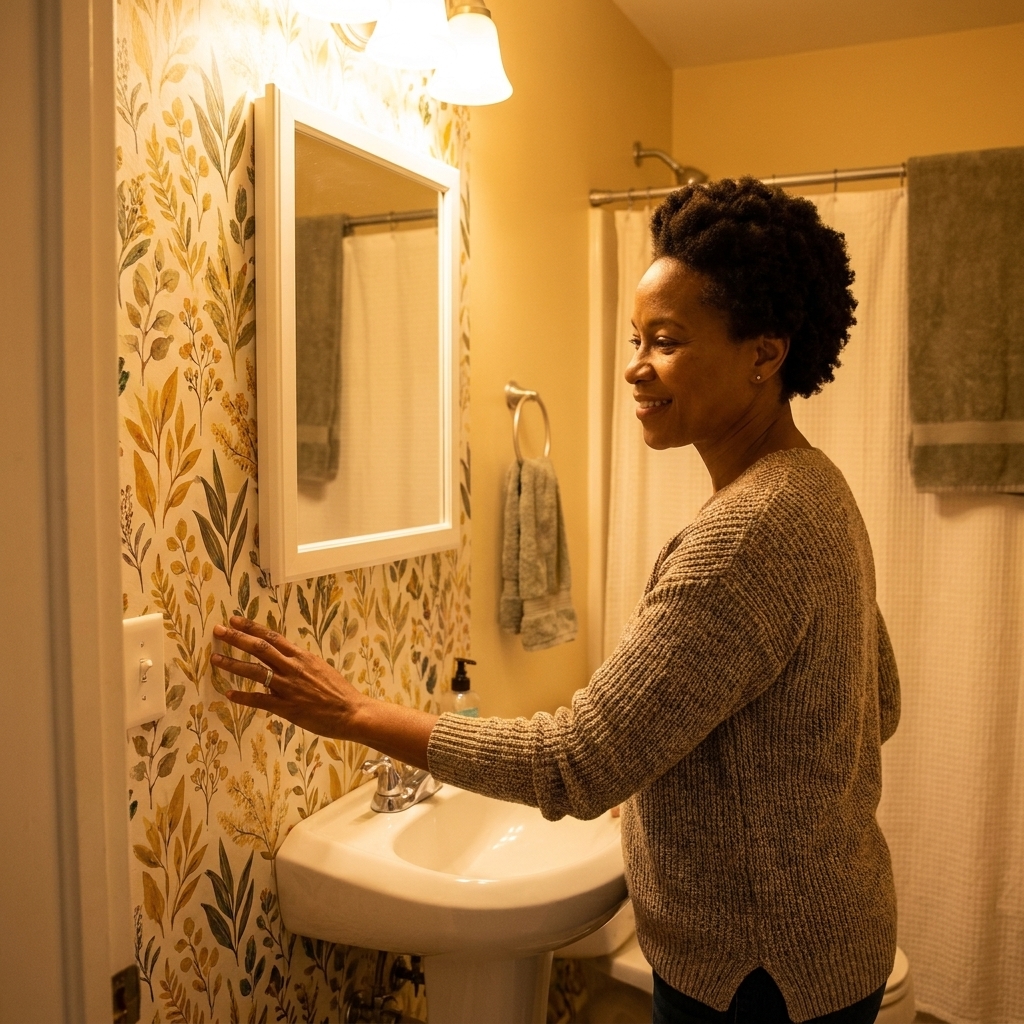
- Bathroom vanity wall: only if the product is humidity-friendly and your fan actually works
Buying and measuring
This is where people lose time and money, especially with patterns.
- Measure the wall height and width, then subtract big openings (windows, doors) only if they remove full strips.
- Check the pattern repeat. The bigger the repeat, the more extra you need for matching.
- Plan for an extra panel if you have lots of corners, odd cuts, or you are new to wallpapering.
If a brand offers a roll calculator, use it. If it does not, overbuy is usually cheaper than trying to match dye lots later.
Install tips
Prep
- Clean walls with a gentle degreaser in kitchens
- Let walls dry fully
- Remove dust, especially on baseboards and near ceilings
Tools
- Smoothing tool (plastic squeegee or wallpaper smoother)
- Sharp snap-blade utility knife
- Metal ruler
- Level or plumb line
Start straight
If the first panel is off, every panel after it will be off, and in a small room you will notice. Use a level and create a vertical guide line. I promise this is faster than fixing drifting seams later.
Top to bottom
Stick a little at the top, smooth downward, and push air outward as you go. If you trap bubbles, lift that section and re-smooth. Do not try to “massage” a big bubble sideways for ten minutes. Ask me how I know.
Removal tips
Warm it up
For peel-and-stick, gently warming the surface with a hair dryer (low heat) can soften adhesive. Keep it moving and do not overheat one spot. If you are working anywhere near water or outlets, keep the cord and dryer well away from sinks, tubs, and damp surfaces.
Peel low and slow
Pull back on itself at a low angle. Slow peeling reduces stress on paint.
Clean residue
If adhesive remains, try warm soapy water on a microfiber cloth. For stubborn residue, a small amount of rubbing alcohol can help, but spot test first so you do not dull the paint.
If it’s pasted removable wallpaper
Try warm water or a wallpaper remover spray to rehydrate the paste, then let it soak a few minutes before peeling. Avoid scoring unless the manufacturer specifically recommends it, because scoring can damage drywall paper and make a small problem much bigger.
So what should you choose?
Here’s my renter-friendly decision shortcut.
Choose peel-and-stick if:
- You want the quickest install with minimal tools
- You are doing a small area or an accent wall
- Your walls are smooth and your patch test comes back clean
Choose pasted removable if:
- You want a more real-wallpaper look and smoother finish
- You plan to stay put for a while
- You are comfortable with a slightly more involved install
If you are still unsure, start with a closet wall or a small nook. It is the design equivalent of buying one chair before you commit to a sofa. Low stakes, high learning.
FAQ
Will peel-and-stick wallpaper damage apartment walls?
It can. Some remove cleanly, but paint type, wall texture, time on the wall, and removal conditions matter. Always patch test, and be extra cautious with older rentals and flat, chalky paint.
Is removable wallpaper the same as renter-friendly wallpaper?
Not always. “Removable” is a marketing term used for different materials. Look for clear guidance on removal, recommended surfaces, and whether the brand specifies safe use on painted drywall.
What patterns make a low ceiling look higher?
Vertical stripes, elongated motifs, and low-contrast patterns that encourage the eye to travel upward. Avoid high-contrast horizontal elements and overly dense prints at the ceiling line.
Can I use temporary wallpaper in a bathroom?
Only if ventilation is good and the product is rated for humid environments. Even then, expect more edge-lifting risk. A powder room with a strong exhaust fan is safer than a steamy shower bathroom.