A renter-friendly, no-panic plan to eliminate drain flies: identify them, confirm the breeding drain with a tape test, remove the biofilm with scrubbing and ...
Space Ovo
Unclog a Shower Drain Without Harsh Chemicals (Rental-Safe)
Clear a slow shower drain without harsh chemicals using a Zip-It tool, a baking soda and vinegar flush, hot water, and a quick drain-cover clean. Plus what to avoid on old rental plumbing and when to call your landlord.

Maya Brooks
Maya Brooks is an interior stylist and layout enthusiast who believes square footage should never dictate your home's style. After a decade of navigating cramped city studios, she shares practical, renter-friendly decorating and storage solutions to help others maximize their tiny spaces.
I learned this the hard way in a 350-square-foot Brooklyn walk-up where the shower drained so slowly I could shave my legs, rinse, and still be standing in an ankle-deep puddle. In a rental, the goal is simple: clear the clog without scorching old pipes, wrecking a finish, or starting a chemical war under your feet.
The good news: most slow shower drains are just hair plus soap scum. You can usually fix that with an inexpensive little tool and a little patience.
Before you start: a 60-second renter-safe checklist
- Turn on the bathroom fan or crack a window, even if you are not using chemicals. Bathrooms get steamy fast.
- Grab gloves and a small trash bag. This job is mostly hair retrieval.
- Remove standing water if the tub is pooling. A cup works in a pinch.
- Know your drain type: a removable cover, a lift-and-turn stopper, a toe-touch stopper, or a push/pull stopper. You may only need to lift the cover to access the clog.
- Do not mix products if someone previously poured a commercial drain opener down there. If you suspect that happened, skip the baking soda and vinegar step and call maintenance.
Method 1: Pull the hair clog (the fastest fix)
If your shower is draining slowly, hair is the prime suspect. Pulling it out beats trying to dissolve it.
Option A: Use a Zip-It tool
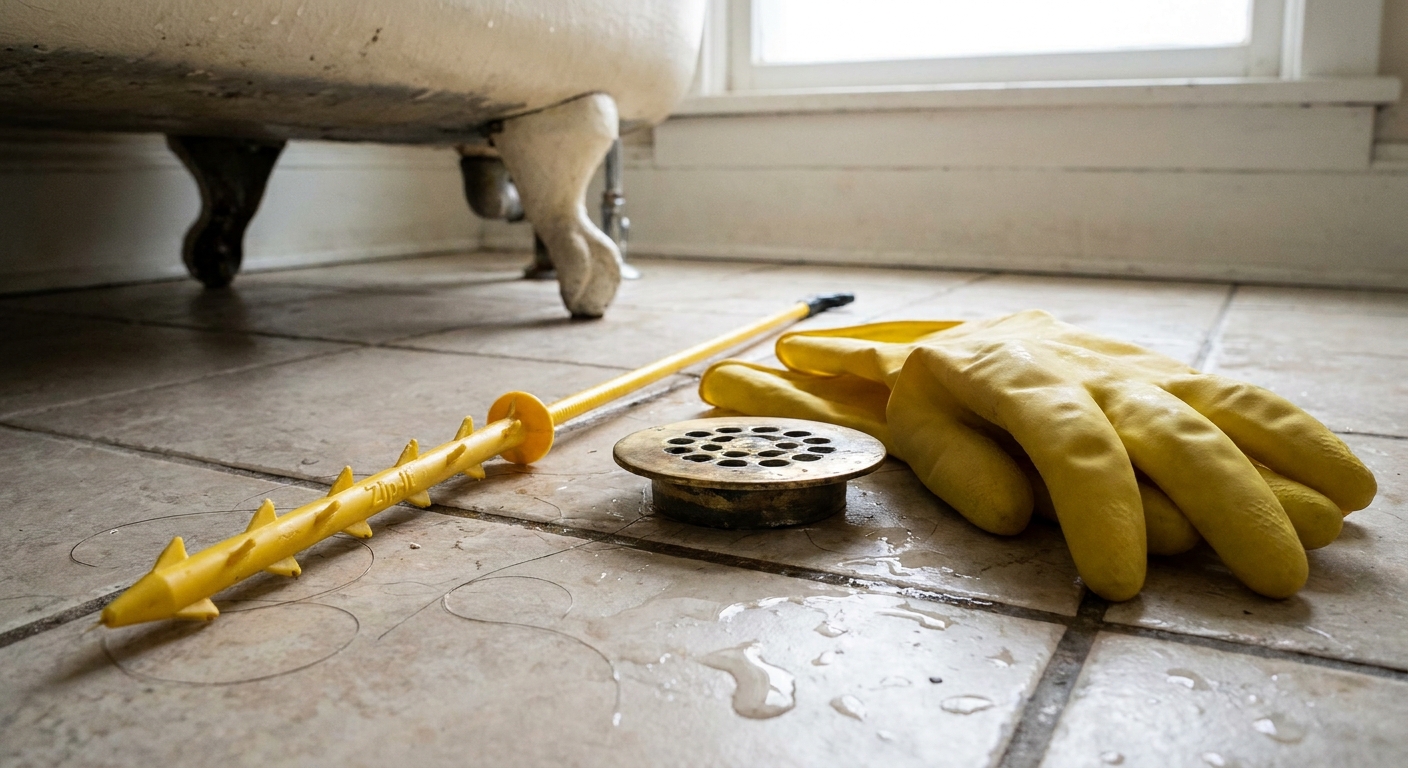
A Zip-It (also sold as a drain cleaning stick) is my favorite rental tool because it is cheap, gentle, and oddly satisfying.
- Remove the drain cover if it lifts off. If it is screwed down, use a screwdriver and set the screw somewhere safe.
- Insert the Zip-It straight down into the drain a few inches.
- Wiggle slightly and pull up slowly.
- Wipe the tool into a trash bag and repeat until it comes up mostly clean.
- Run warm water for 30 to 60 seconds to test the flow.
Option B: Use a small drain snake (manual, not powered)
A small handheld snake can reach a little deeper than a Zip-It. Keep it gentle. Old rental plumbing does not love aggressive cranking.
- Feed the snake down until you feel resistance.
- Rotate lightly to grab hair and gunk.
- Pull out slowly, clean it off, and repeat.
Quick cleanup: When you are done, rinse the tool with hot tap water and a little dish soap, then let it dry. It is a tiny step that makes the next clog feel less gross.
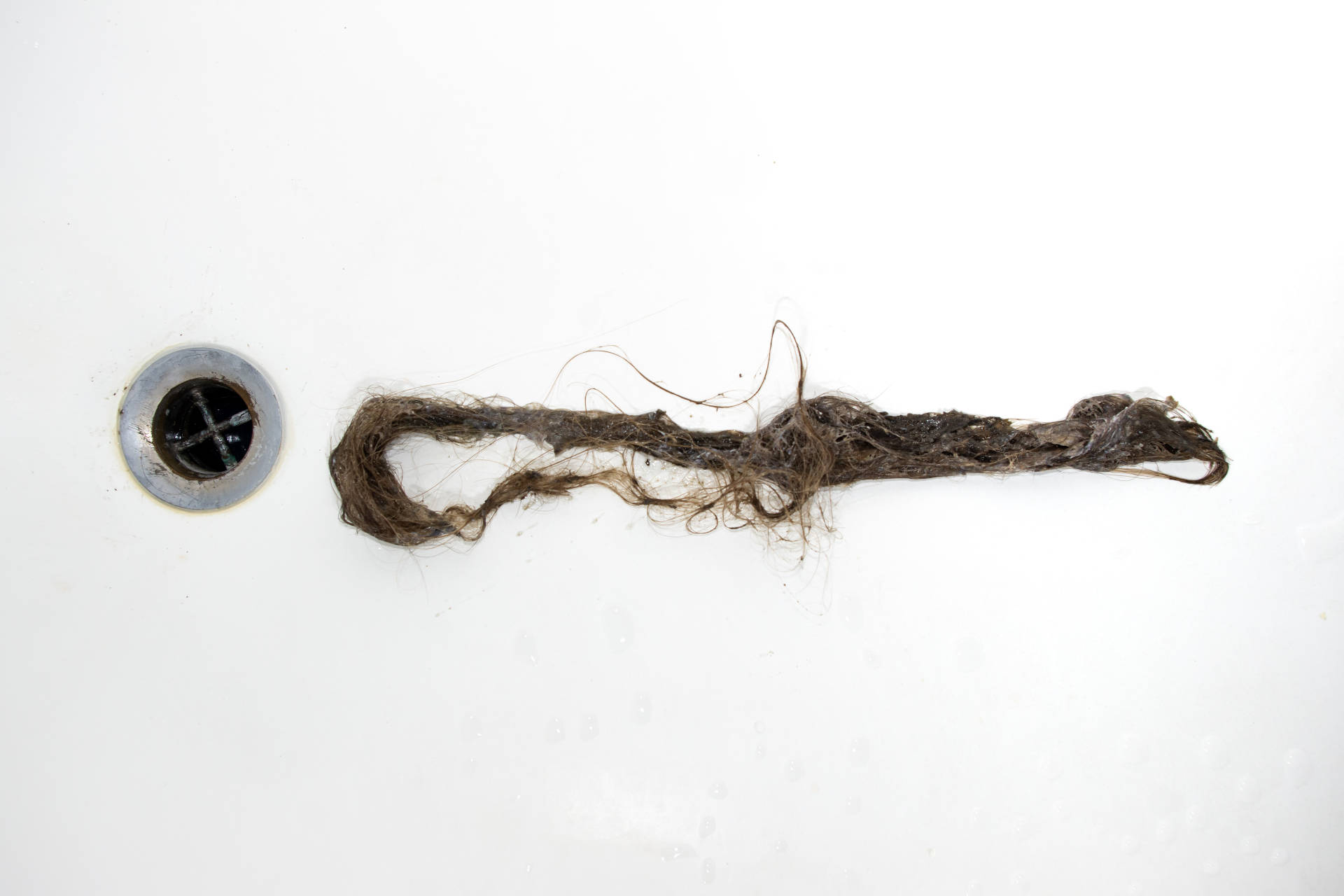
Method 2: Clean the cover and the top gunk
Sometimes the clog is not deep. It is a gross little ring of soap scum and hair right under the cover that narrows the opening like a clogged funnel.
- Lift off the drain cover or unscrew it.
- Scrub the underside with an old toothbrush plus dish soap.
- Wipe the inside edge of the drain opening with a paper towel or rag.
- Rinse with warm water.
Tip from my tiny-apartment life: If your drain cover is crusty and you cannot get it clean, soak it in a bowl of hot water with a few drops of dish soap for 10 minutes, then scrub. No harsh chemicals needed.
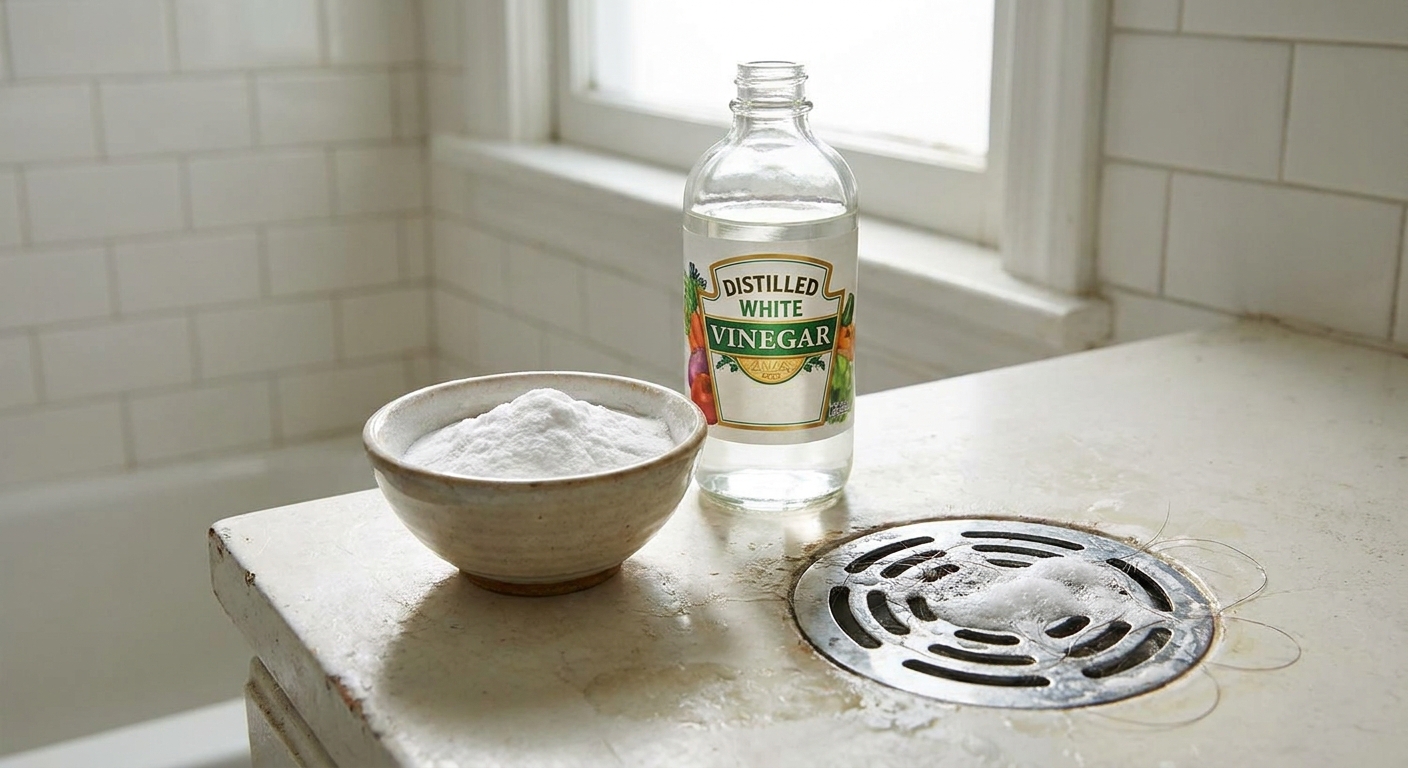
Method 3: Baking soda and vinegar flush (gentle and renter-friendly)
This is best after you have pulled hair out. Baking soda and vinegar are great at loosening light soap scum and deodorizing, but they are not magic on a packed hair wad.
Think of it as a gentle scrub-and-lift step: the fizz helps agitate grime, and the hot-water flush does the real moving.
What you need
- 1/2 cup baking soda
- 1/2 to 1 cup white vinegar
- A rag or stopper to cover the drain
- Hot water to flush
Steps
- Pour baking soda directly into the drain.
- Slowly pour in vinegar. It should fizz.
- Cover the drain with a rag or stopper for 10 to 15 minutes to keep the reaction working in the pipe, not bubbling up into the tub.
- Flush with very hot water for 1 to 2 minutes.
Skip this if: you suspect a commercial drain opener was used recently, you smell strong chemical fumes from the drain, or you are worried about unknown reactions in very old plumbing. When in doubt in a rental, default to mechanical removal and hot water.
Method 4: Hot-water flush (simple, but do it safely)
Heat helps melt and move soap scum and conditioner buildup. For rentals, I keep this step conservative.
- Run the shower on the hottest setting for 2 to 3 minutes to warm the pipes.
- Then switch to your strongest flow setting and let the water run directly over the drain. If you have a handheld showerhead, aim it right at the drain opening.
- If your drain is still slow, carefully pour hot tap water in steady rounds.
What to avoid: Do not pour fully boiling water from a kettle into a tub or shower drain in a rental. Some tubs and drain assemblies do not love thermal shock, and some plastics and seals can warp or weaken under extreme heat. Hot tap water is usually plenty.
Stopper access: what to do and what not to
If a stopper is blocking access to the drain, do the simplest thing first. In a rental, I treat deep disassembly like a last resort.
- Lift-and-turn stopper: Try turning it to the open position and see if the knob unscrews by hand. If it does not budge, stop. Mineral buildup can glue these in place.
- Toe-touch stopper: Often unscrews from the center post, but it is easy to strip or cross-thread. If you are not 100 percent sure, do not force it.
- Push/pull stopper: Usually has a small set screw. If you do not have the right hex key, do not improvise with a knife.
- Renter-safe move: Take a quick photo of how it looks assembled, remove only what comes off easily, and call maintenance if you hit real resistance.
Methods to skip (especially on old rental plumbing)
- Caustic chemical drain cleaners: They can damage older pipes, ruin finishes, and create a hazard for whoever has to open the line later.
- Mixing cleaners: Never combine drain products. Do not mix bleach with other cleaners or drain openers, especially anything acid-based or ammonia-based. If you do not know what is in the pipe, do not add another product.
- Powered augers you are not trained on: A heavy-duty machine snake can scratch or crack lines and turn a minor clog into a landlord-level event.
- Overzealous plunging: A little plunging can help, but aggressive plunging can loosen old connections. If you plunge, use a tub plunger, keep the seal tight, and do short, controlled pushes.
When to call your landlord or maintenance
I am all for DIY, but I am also all for protecting your security deposit. Stop and call maintenance if:
- The drain is fully blocked and water is not going down at all after you remove hair at the surface.
- You see water backing up in another fixture (sink gurgling, toilet bubbling) when you run the shower. That can signal a bigger line issue.
- You smell sewage (not just mild mustiness) or the odor persists after cleaning.
- The tub or shower starts to leak, or you notice water damage nearby.
- You have tried mechanical removal and a hot-water flush and the drain is still slow. This can be buildup deeper in the line.
Renters note: If your lease says you are responsible for “minor clogs,” you can still call. Just explain what you already tried and what you are seeing. Maintenance would rather clear a developing blockage than deal with a flood later.
Prevent the next clog: the $10 habit that saves your sanity
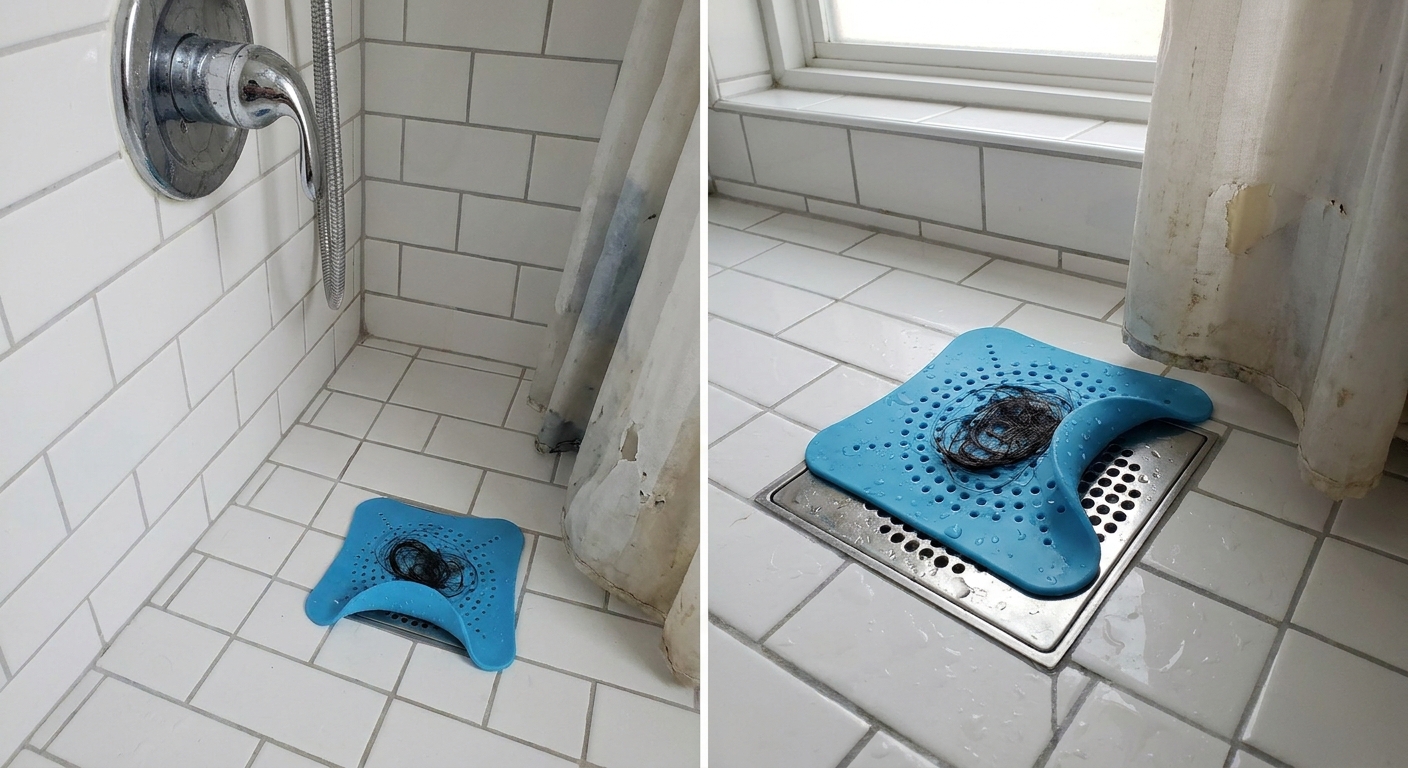
If you do one thing after you unclog the drain, make it this: add a hair catcher. In my experience, it is the difference between “quick rinse” and “why is my shower turning into a kiddie pool again?”
Hair catcher options
- Silicone mushroom catcher: Sits inside the drain and catches hair before it drops into the pipe.
- Flat strainer style: Covers the drain opening, good if you do not want anything inserted into the drain.
- TubShroom-style catchers: Especially effective for long hair, and easy to clean if you are consistent.
Micro-maintenance routine
- After each shower: pull hair off the catcher and toss it.
- Once a week: lift the catcher, wipe the drain opening, and run hot tap water for 30 seconds.
- Once a month: do a quick Zip-It pass if you are a heavy shedder or share the shower.
Quick troubleshooting
The drain is still slow after I pulled hair out
Do a second round with the Zip-It or snake, then do the hot-water flush. If it improves but does not fully fix, try the baking soda and vinegar flush to loosen soap scum stuck to the pipe walls.
I cannot remove the drain cover
Do not force it. Some covers are sealed with mineral buildup or awkward screws. Try cleaning what you can from the top and use a Zip-It through the openings. If you are meeting real resistance, call maintenance.
I see black gunk and it smells funky
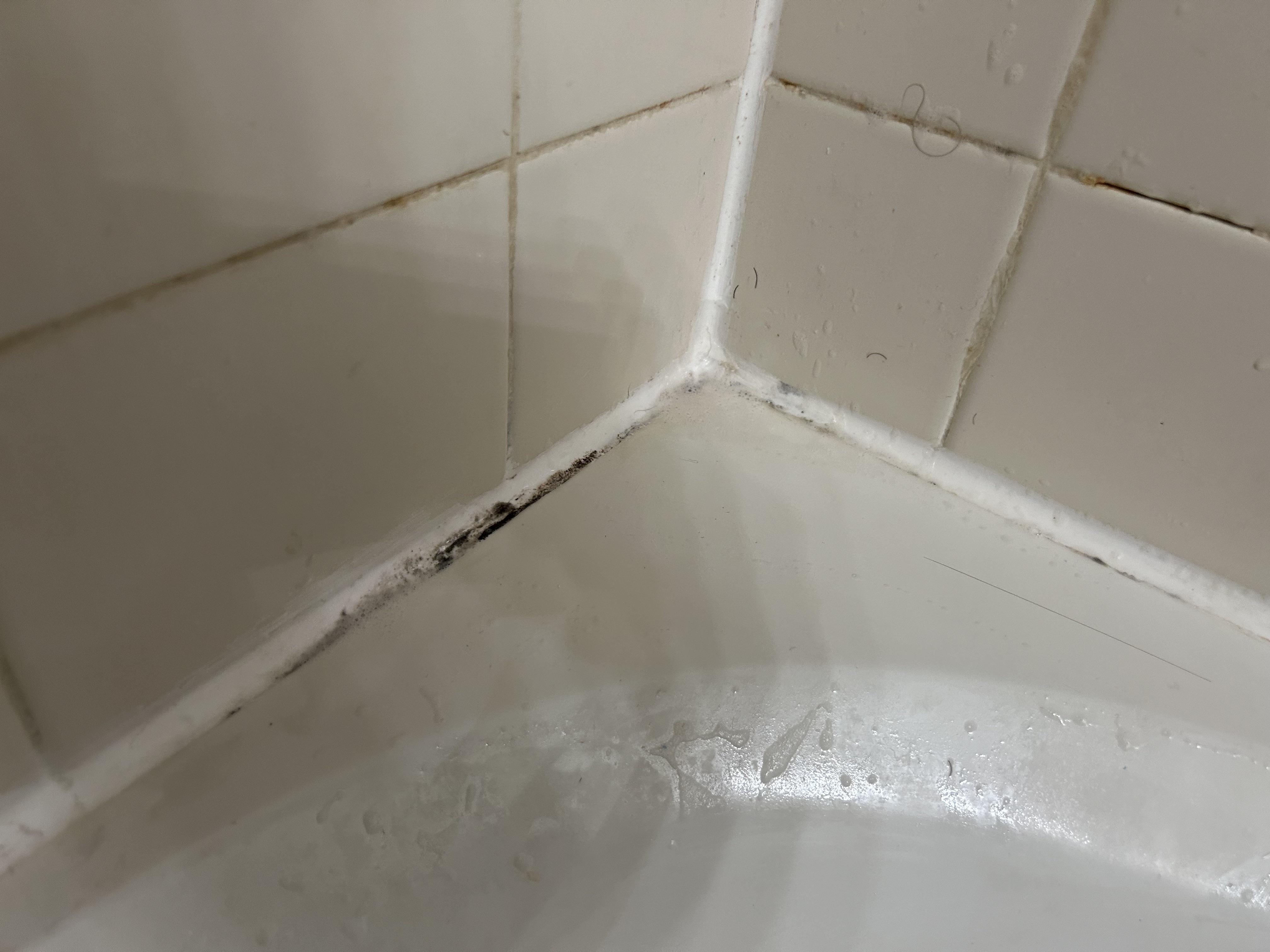
That is usually biofilm, soap scum, and hair. Gloves on, pull what you can, scrub the cover, and flush with hot water. If the smell is sewage-like or persistent, call your landlord to rule out venting or deeper line issues.