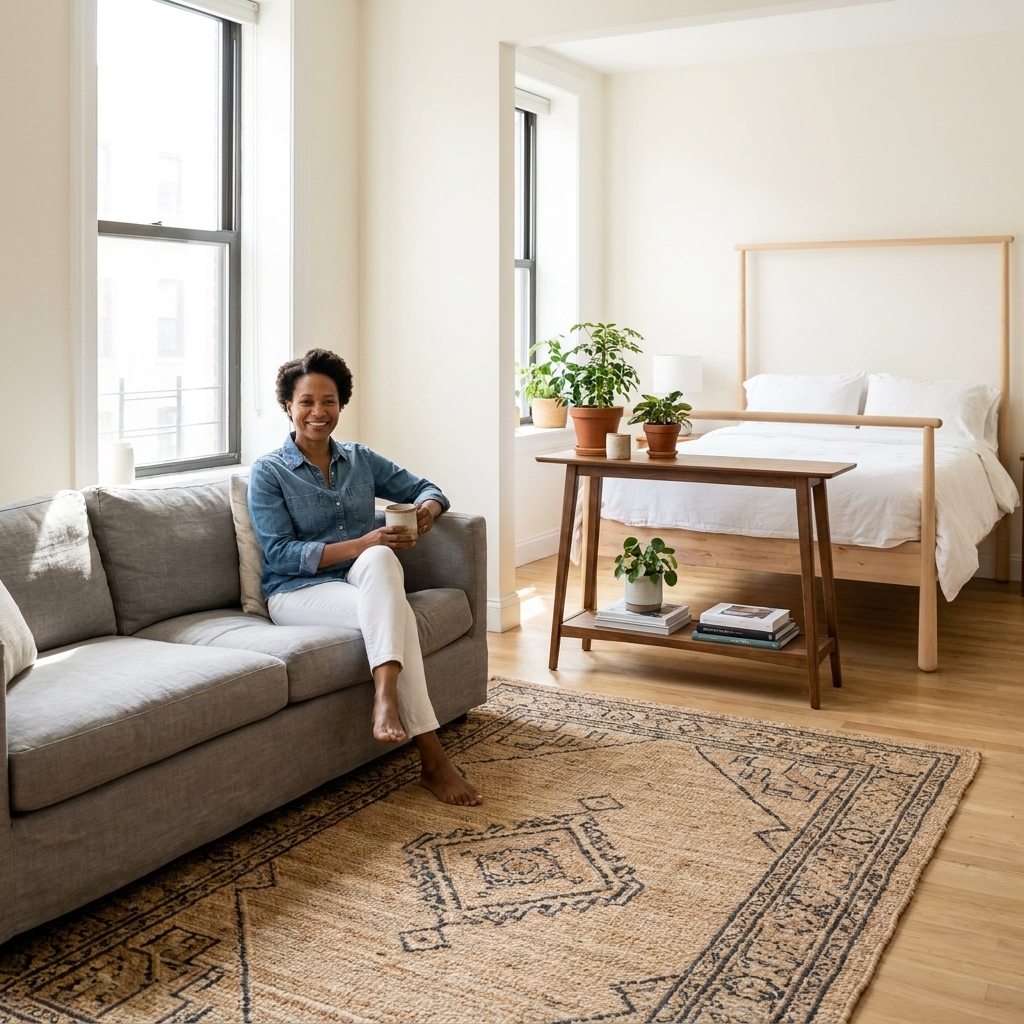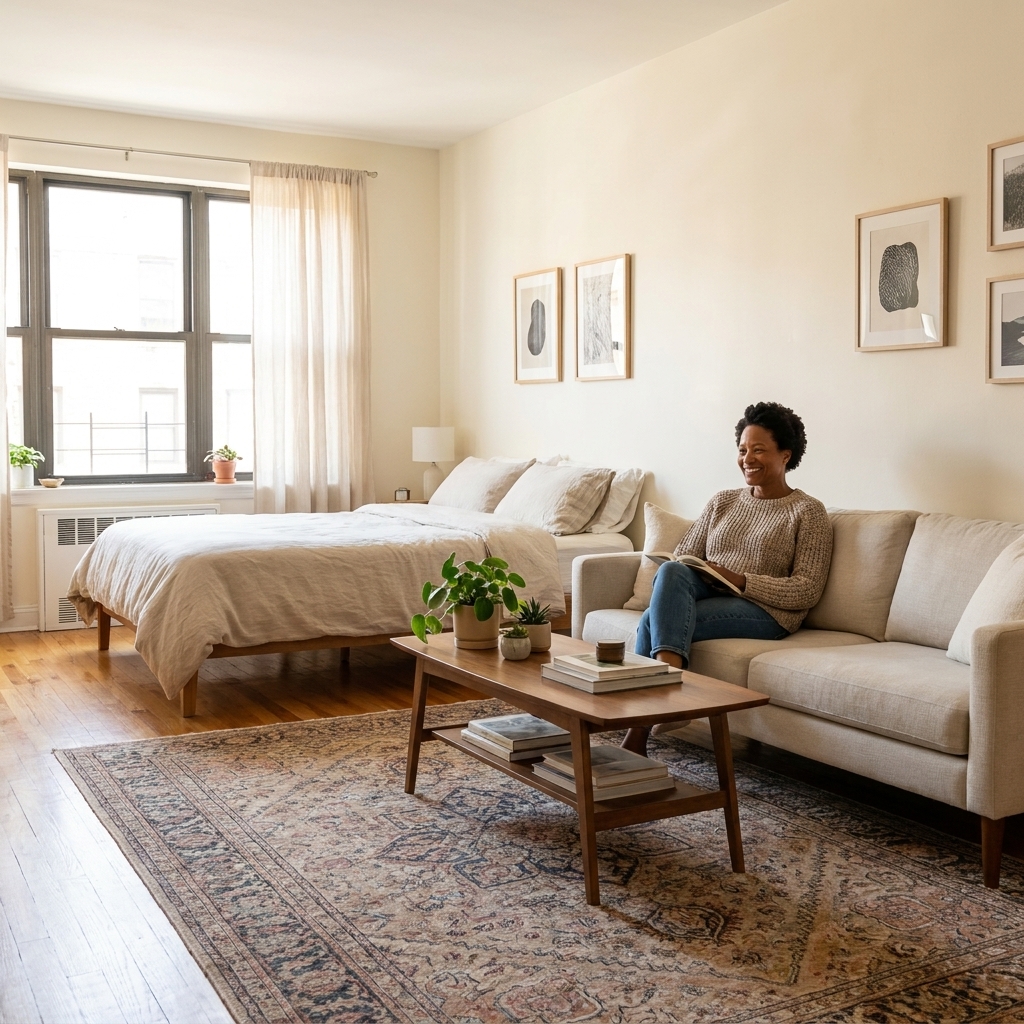
Stop shrinking your space with a postage-stamp rug. Learn the sizing and placement rules that help small rooms look larger and feel more cohesive.
Space Ovo
How to Hide Ugly Rental Carpets and Flooring Temporarily
Cover stained carpet, dated vinyl, or scuffed wood without losing your deposit. Try oversized rugs, click-lock vinyl tiles, and canvas floor cloths with renter-safe prep tips.

Maya Brooks
Maya Brooks is an interior stylist and layout enthusiast who believes square footage should never dictate your home's style. After a decade of navigating cramped city studios, she shares practical, renter-friendly decorating and storage solutions to help others maximize their tiny spaces.
Created October 17, 2026
Updated October 17, 2026
If you have ever toured an apartment and thought, “Cute light, great windows… why is the floor giving abandoned office break room?” welcome. I have lived through mystery beige carpet, peeling faux wood, and vinyl that looked like it had feelings about being mopped.
The good news: you can hide ugly rental flooring temporarily, make it safer and cleaner-feeling, and keep things removable for move-out. Below are my three favorite renter-friendly cover-ups, plus the prep steps that keep everything flat, non-slippery, and more likely to be deposit-safe.
Quick reality check: “Deposit-safe” depends on your lease, your landlord, and the condition of the floor you’re covering. When in doubt, review your lease rules on floor coverings, adhesives, and modifications, and keep receipts and packaging for anything you install.

Before you cover anything: 10-minute prep
Most floor-covering fails come from skipping the boring part. Do these quick steps first and everything looks smoother and stays put.
1) Clean and dry the existing floor
- Carpet: Vacuum slowly in two directions. Spot-clean stains and let them dry fully so odors do not get trapped.
- Hard floors: Sweep, then lightly mop. Let it dry completely before you lay anything down.
2) Measure like a Tetris master
Write down your room size and the “usable rectangle” where furniture actually sits. In tiny spaces, going bigger is usually better because it visually calms the room and hides more of the problem floor.
Helpful rug sizing reality: In many living rooms, an 8x10 is the sweet spot for anchoring a sofa and coffee table. If you have a larger room (or you want maximum floor coverage), 9x12 is the upgrade that makes everything look more intentional.
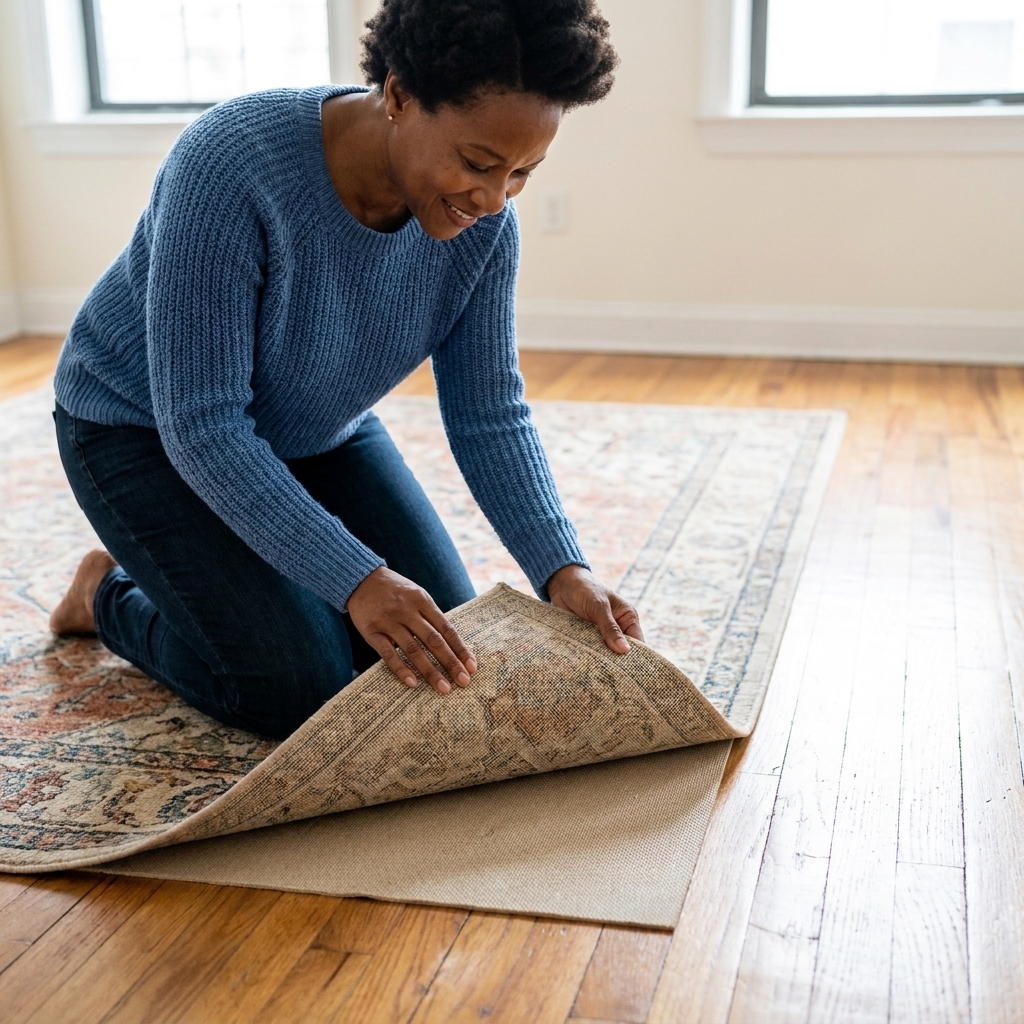
3) Add the right barrier layer
If you are covering carpet, you usually need a thin, firmer gripper system to reduce rippling. If you are covering hard floors, you usually need a non-slip pad to stop skating. I will call out exactly what to use in each option below.
One thing to avoid: hard boards or plywood over carpet. It can damage carpet fibers, create weird pressure points, and may violate your lease.
4) Choose renter-safe grip, not permanent adhesive
Avoid anything marketed as permanent, “industrial,” or “high-bond.” Look for removable rug tape, rug corners, felt pads, and non-slip underlay. If you are unsure, test a tiny hidden spot first.
Also worth checking: If your building has radiant heat floors, confirm compatibility for any vinyl, underlayment, or rug pad you plan to use.
Option 1: Oversized area rugs
If you want the biggest visual upgrade in the least amount of time, start with a rug. A large rug makes a room feel more intentional and hides most of the floor immediately.
What rugs work best for ugly rentals
- Low-pile or flatweave: Easiest to vacuum and less likely to bunch up in a small space.
- Patterned or heathered colors: Better at disguising pet hair and life in general.
- Washable rugs: Great if you are covering old carpet and want a cleaner-feeling surface on top.
How big should you go?
My rule: choose the biggest size that still allows doors to clear and doesn’t block vents or radiators. In a living room, aim for at least the front legs of your sofa and chairs to sit on the rug. In a bedroom, you can either go with a big rug under the bed or do runners on both sides if you are working with a tight budget.
Make it feel flat and secure
- Over carpet: Use a thin pad or grippers rated for carpet-on-carpet and your carpet pile type. Skip thick, spongy pads on plush carpet, since they can bunch or feel slippery underfoot. If your rug still ripples, place heavy furniture partially on it to anchor.
- Over hard floors: Use a non-slip rug pad labeled non-staining and safe for hardwood, cut slightly smaller than the rug. If your floors are newly finished or delicate, avoid natural rubber or latex unless the pad specifically says it is finish-safe.
Mini-apartment trick: If your landlord-grade carpet is especially loud visually, a rug with a subtle border can “frame” the space and make it feel less like you are living inside one big beige blanket.
Option 2: Click-lock vinyl tiles
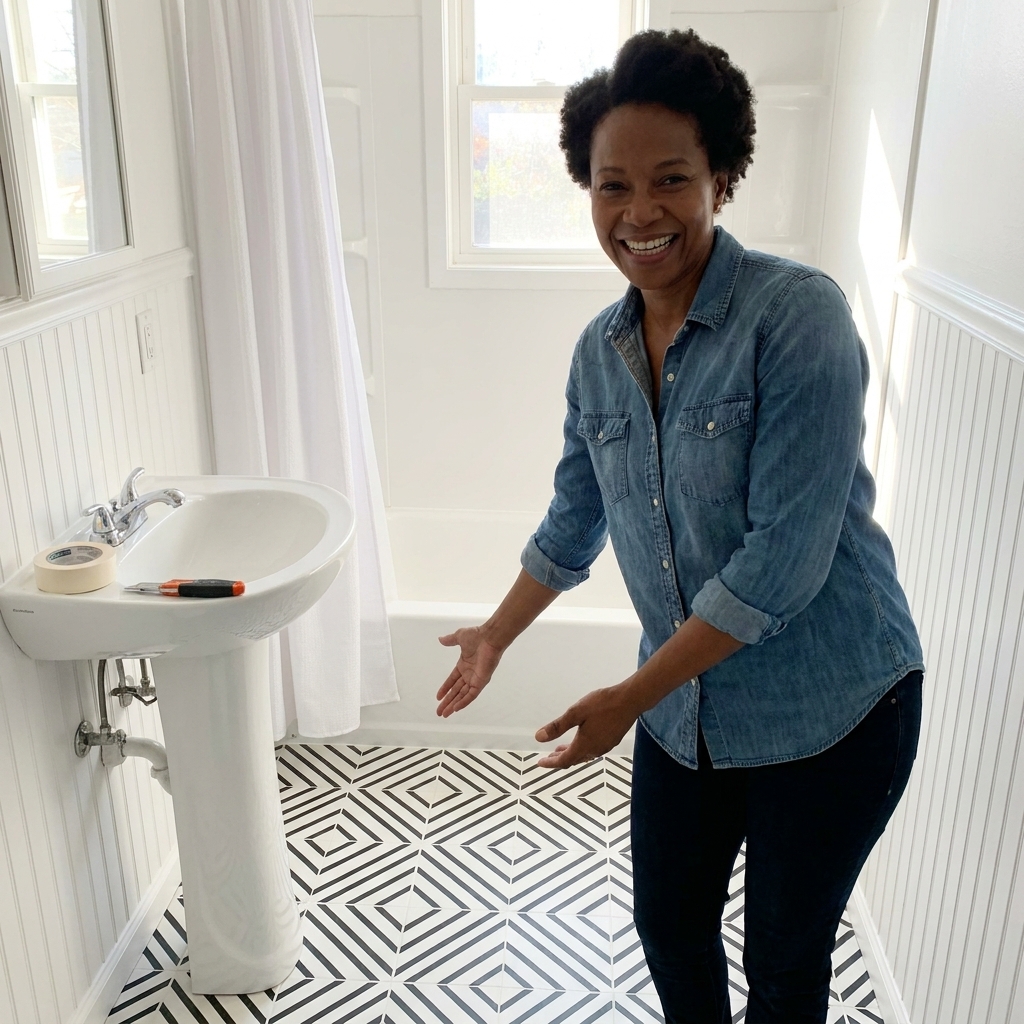
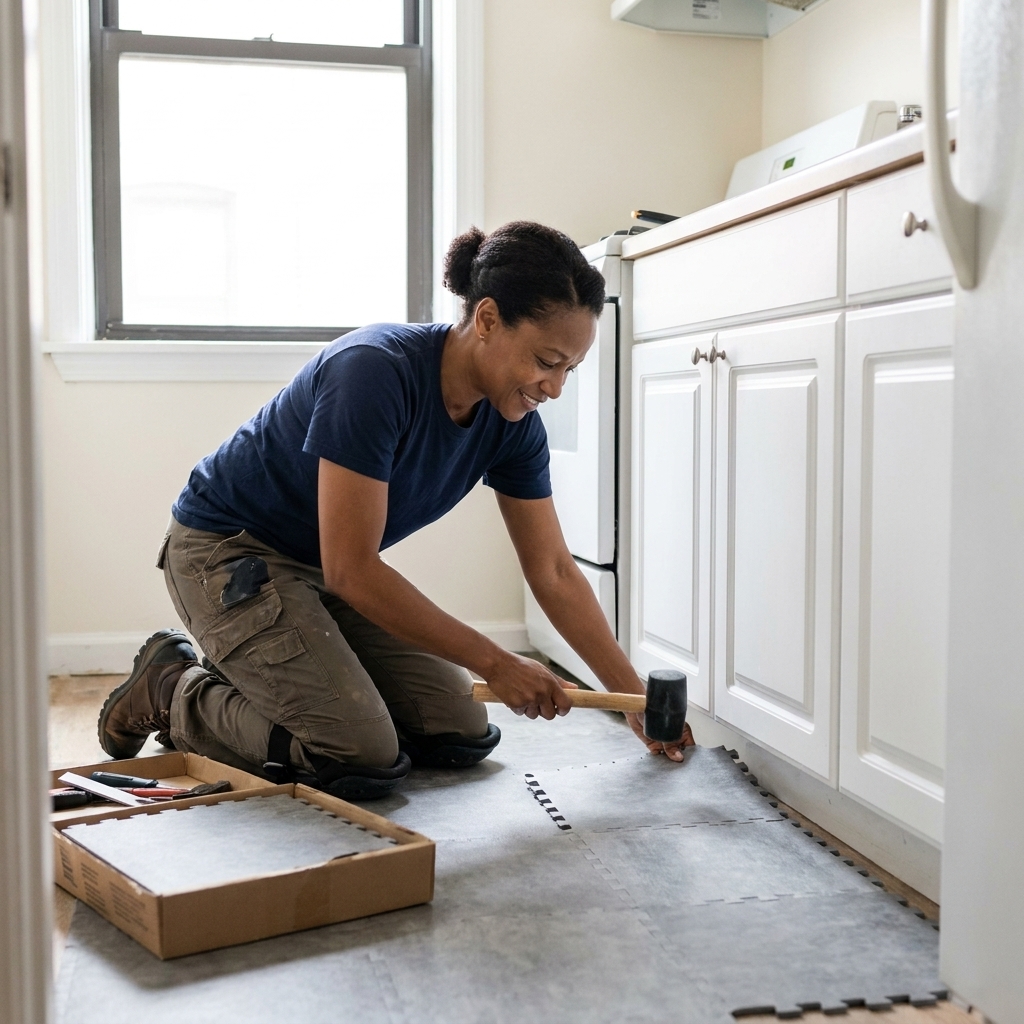
Click-lock or loose-lay interlocking vinyl tiles are my favorite “I cannot look at this floor one more day” solution, especially for kitchens, entryways, or that awkward dining nook where you want something wipeable.
These are floating systems that typically click together like puzzle pieces and create a finished surface without glue. When you move, you disassemble them.
Important: Not every product described as “interlocking” is a floating click-lock system. Some are peel-and-stick or require perimeter tape. Confirm the installation method before you buy.
Where interlocking tiles shine
- Peeling vinyl or dated linoleum: Covers the chaos and gives you a clean, consistent look.
- Concrete or worn wood: Adds warmth and makes the room feel more finished.
- Small kitchens: Easier to clean than a rug and feels more like “real floor.”
What to check before you buy
- Thickness and door clearance: Measure the gap under doors, especially bathroom and closet doors.
- Edges and transitions: Plan how the tile will end at thresholds. A low-profile transition strip or a beveled edge can prevent toe-stubs and make it less of a trip hazard.
- Water exposure: Many vinyl tiles are water-resistant, and some are marketed as waterproof. Even then, seams are seams. Check the manufacturer’s guidance for standing water and seam protection, use a mat by the sink, and wipe spills quickly.
- Heat compatibility: If you have radiant heat, verify the flooring and underlayment are approved for it.
- Heavy stuff: Unless the manufacturer says otherwise, don’t run these under very heavy appliances or permanently placed cabinetry. Weight and vibration can cause locking issues, indentation, or trapped moisture.
Install steps that keep it renter-friendly
- Clean and dry the existing floor.
- Lay a thin protective underlayment if needed. On delicate hardwood or questionable finishes, a thin, non-adhesive underlayment can help prevent scuffs and make removal easier.
- Start from the straightest wall. Dry-fit the first row so you do not end up with a tiny sliver cut at the far edge.
- Stagger seams if the style allows. This looks more natural and helps disguise alignment issues.
- Finish transitions. Add a threshold strip or beveled edge wherever your new surface meets another flooring type.
Important: Avoid peel-and-stick tiles unless your lease explicitly allows adhesive products. They can leave residue or pull up finish on the way out. Click-lock or loose-lay systems are usually the safer temporary route.
Option 3: Canvas floor cloths
Canvas floor cloths are exactly what they sound like: a heavy canvas sheet that functions like a rug but can be easier to clean and easier to fit in weird spaces. Think: the narrow area next to your bed, the strip of floor in front of built-ins, or a studio where you want to define a “living zone” without a bulky pile.
Why I love them for rentals
- They lay flatter than many rugs. Great over low carpet or slightly uneven floors.
- They are wipeable when sealed. Perfect for entryways and under a small dining table.
- They can be custom-sized. Some can be trimmed to fit, but follow the maker’s instructions. If cutting is allowed, you will typically need to finish and reseal the edge to prevent fraying.
How to use a floor cloth without sliding
- Put a non-slip rug pad underneath, cut smaller than the cloth.
- If corners curl, use removable rug corners or small pieces of removable rug tape on the underside.
- Anchor at least one edge with furniture when possible, like the front legs of a console or a bench.
Style tips so it looks intentional
Because floor cloths are often solid colors or simple patterns, they look best when you repeat that color somewhere else, like throw pillows, art, or a kitchen towel. That repetition makes it read like a design choice, not a cover-up operation.

Room-by-room plan
Living room
- Start with an oversized area rug to anchor the seating zone.
- If the rug shifts, add a pad and make sure at least the front legs of your sofa sit on it.
Bedroom
- If the carpet is rough or stained, use a large rug under the bed so you step onto something soft and clean-feeling.
- On a budget, do two runners on either side of the bed instead of one giant rug.
Kitchen
- If you want wipeable and seamless: click-lock or loose-lay vinyl tiles (confirm heat and appliance guidelines first).
- If you want softer underfoot: a flatweave rug with a non-slip pad, or a sealed canvas floor cloth.
Entryway
- Use a canvas floor cloth or a tough flatweave rug.
- Add a boot tray or small mat on top if your area gets wet, so moisture never sits on the underlying rental floor.
Common mistakes
- Going too small with rugs: A tiny rug floating in the middle makes the room feel smaller and leaves the ugly perimeter exposed.
- Skipping the pad: Pads are not optional if you want fewer slips, fewer ripples, and less wear on both the rug and the rental floor.
- Trapping moisture: If you cover a damp floor, you can create odors or even mildew. Always let everything dry first.
- Using aggressive adhesives: If it says permanent, it will behave permanently. Choose removable products and test first.
- Blocking vents or radiators: Keep airflow clear for safety and efficiency.
- Ignoring transitions: Anywhere one floor covering meets another is a trip hazard waiting to happen. Use a beveled strip or threshold where needed.
Quick FAQ
Will covering carpet make my apartment smell?
It can if the carpet underneath is dirty or damp. Vacuum thoroughly, spot-clean stains, and let everything dry before covering. A breathable pad can help, and cracking a window for a day after cleaning does wonders.
Can I put vinyl tiles over carpet?
Usually, no. Click-lock and loose-lay vinyl tiles need a firm, flat surface to lock together correctly. Over carpet they can separate, flex, and become a trip hazard. If you are trying to cover carpet, stick to rugs or a floor cloth.
What is the most budget-friendly option?
An oversized rug can be surprisingly affordable if you shop sales, consider indoor-outdoor flatweaves, or layer a large natural-fiber style with a smaller patterned rug on top. Canvas floor cloths can also be cost-effective for odd sizes where a standard rug does not fit.
How do I protect hardwood floors under a rug or tiles?
Use a pad labeled non-staining and safe for hardwood, and avoid pads that can react with certain finishes. For click-lock tiles, consider a thin, non-adhesive underlayment to prevent scuffs and make removal easier. When in doubt, test in a closet corner first.
3-step checklist
- Want instant cozy and maximum style? Choose an oversized area rug.
- Want a wipeable, real-floor look in a kitchen or entry? Choose click-lock or loose-lay interlocking vinyl tiles and confirm the product install method.
- Need something flat, custom-feeling, and easy to clean? Choose a canvas floor cloth.
Ugly rental flooring is annoying, yes. But it is also oddly empowering, because once you learn how to cover it well, you stop designing around what you hate and start designing around how you want to live.