Follow the trail, erase scent tracks, use bait the right way, and seal entry points after activity drops. Practical, renter-friendly steps plus when to call ...
Space Ovo
How to Get Rid of Fruit Flies in the Kitchen
Fruit flies love tiny kitchens because everything they need is within a few feet: ripe produce, a drain film snack bar, and a trash can. Here’s how to find the breeding spot, trap the adults, and break the cycle for good.

Maya Brooks
Maya Brooks is an interior stylist and layout enthusiast who believes square footage should never dictate your home's style. After a decade of navigating cramped city studios, she shares practical, renter-friendly decorating and storage solutions to help others maximize their tiny spaces.
I have lived in kitchens where the sink, trash, and fruit bowl were basically in a straight line. Cozy, sure. Also the perfect fruit fly amusement park. The good news is fruit flies are not mysterious. They are just fast. If you treat this like a tiny-space problem (identify the one square foot causing the issue, then simplify your system), you can clear them out in a few days and keep them gone.
Why fruit flies show up (and why they multiply so fast)
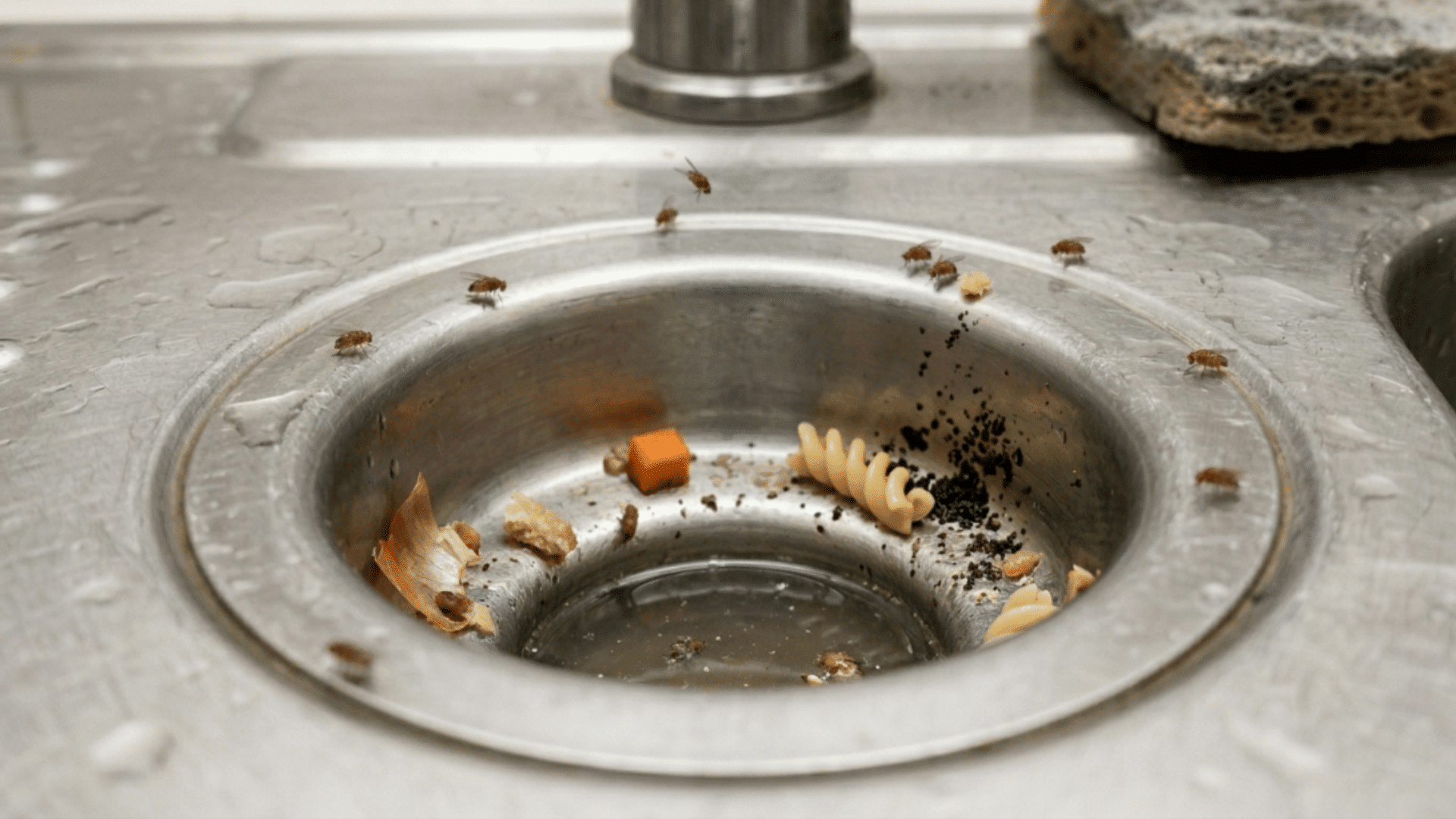
Fruit flies are drawn to fermenting sugars. That can be obvious, like overripe bananas, or sneaky, like the sticky ring under a kombucha bottle.
Here is the life-cycle problem in plain terms: adults lay eggs on moist, sugary or organic gunk, eggs hatch quickly, and you go from “two flies” to “why is the air moving?” before you have time to finish unloading the dishwasher.
In most small kitchens, they are breeding in one (or more) of these places:
- Produce: ripening fruit, onions, potatoes, tomatoes, or anything with a soft spot
- Drains: the slimy biofilm inside the sink drain, garbage disposal, or overflow hole
- Trash and recycling: sticky cans, wine bottles, fruit scraps, compost, or a leaky bag
- Cleaning tools: damp sponges, mop heads, or a dish brush sitting in murky water
- Hidden spills: under the toaster, behind the coffee machine, inside a cabinet where a potato went rogue
First, find the breeding spot (this is the real fix)
Traps catch adults, but if you skip the source, you will be running traps forever. In a tiny kitchen, I like a quick “zone audit” that takes 10 minutes.
Do this fast check tonight
- Clear counters: Move fruit, oil bottles, and appliances just long enough to wipe underneath.
- Inspect produce one by one: Anything soft, leaking, or smelling sweet goes in a sealed bag and out immediately.
- Open the trash and recycling: If flies rush out, that is a major clue. Rinse sticky bottles and cans.
- Sniff the sink drain: A sour or swampy smell usually means drain biofilm.
- Check the compost container: Even “closed” lids often have gaps. Fruit flies only need a tiny opening.
If you are unsure, do a simple test: place a small piece of ripe banana in a cup covered with plastic wrap and poke a few holes. Set it near the sink for an hour. If the cup attracts the most flies, your problem is likely near the sink (drain, trash, recycling). If flies cluster elsewhere, follow them like a very annoying breadcrumb trail.
Break the cycle in 48 hours: traps + deep clean
The winning combo is (1) remove breeding material, (2) clean likely egg sites, (3) trap the adults that are already flying around.
Step 1: Set a vinegar trap that actually works
My favorite trap is small-kitchen friendly because it is cheap, compact, and you can make a few without clutter.
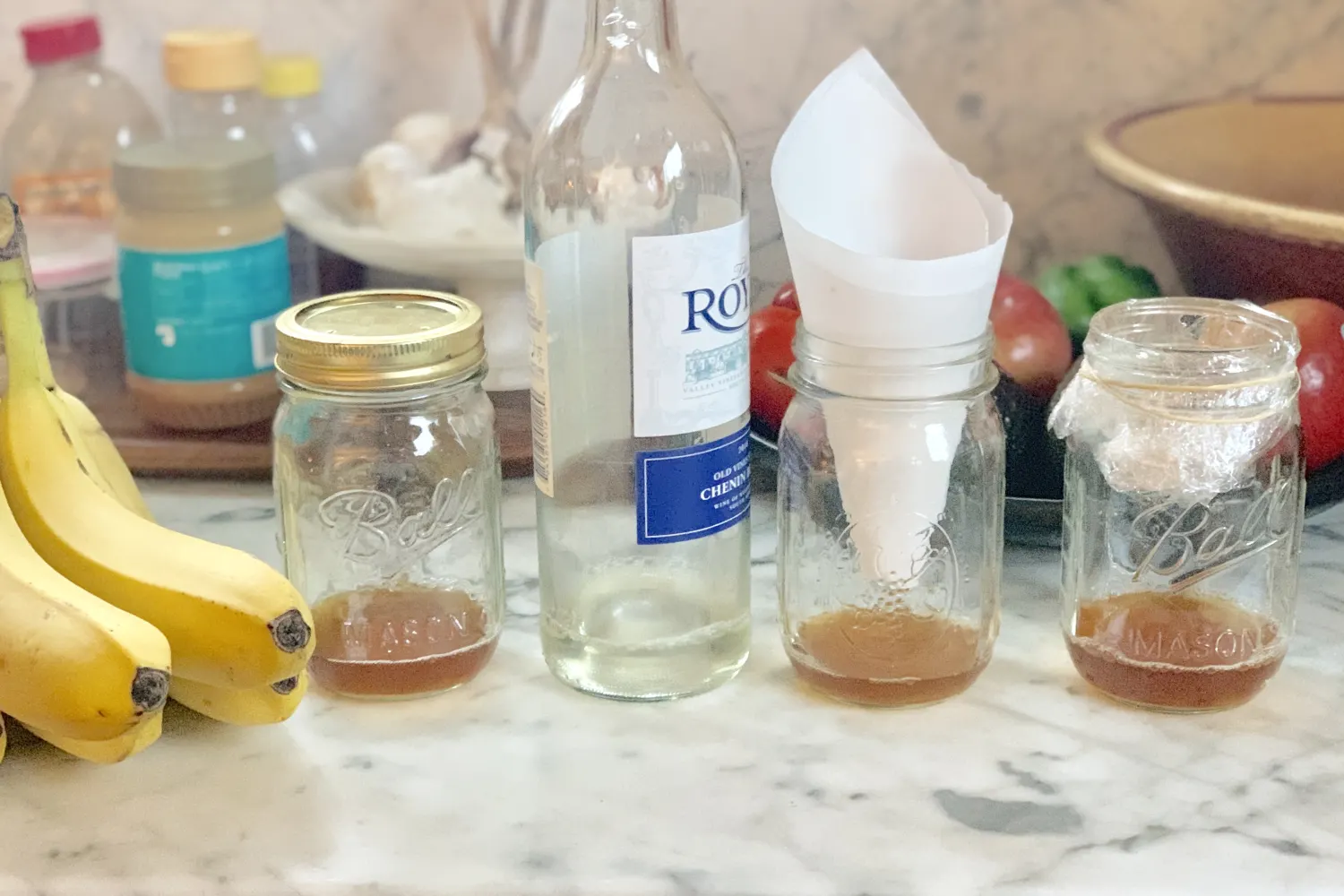
- Fill a small bowl or jar with apple cider vinegar (white vinegar can work, but apple cider vinegar tends to attract better).
- Add 1 to 2 drops of dish soap and gently swirl. The soap breaks surface tension so they sink.
- Place it right where you see flies: next to the fruit bowl, by the trash, or beside the sink.
If you have curious pets or you want a neater look, use a jar with plastic wrap over the top and poke a few small holes.
Step 2: Clean the drain like it is a tiny compost bin
Fruit flies love the film inside drains. You want to remove the gunk, not just deodorize it.
- Very hot water flush: Run very hot tap water for a minute or two. If you know your plumbing is metal, you can use hotter water, but be cautious with boiling water in apartments where PVC pipes are common.
- Scrub the drain opening: Use an old toothbrush or a small bottle brush around the rim and just inside the pipe where grime collects.
- Garbage disposal (if you have one): With the power off, scrub the rubber splash guard and the underside where slime builds up.
- Optional foam cleaner: A foaming drain cleaner or enzyme drain gel can help if you suspect heavy biofilm. Follow the label.
Skip the temptation to rely only on baking soda and vinegar. It fizzes and feels productive, but the real win is physical removal of that drain film.
Step 3: Reset trash and recycling (tiny kitchen edition)
- Take out trash and recycling nightly for 3 to 5 days, even if the bag is not “full.”
- Wipe the inside of the bin with hot soapy water or a disinfecting spray, then dry it.
- Rinse bottles and cans before they go in recycling. Fruit flies can live off a teaspoon of leftover cider.
- If you compost, keep a container in the freezer for fruit scraps during the outbreak. It stops breeding completely.
Step 4: Wipe the invisible snack zones
- Under the coffee machine and toaster
- Around the sink edges and faucet base
- The drip tray under a drying rack
- Inside the cabinet where you store onions or potatoes
- Any sticky bottle bottoms (syrups, wine, cooking oils)
Store produce so fruit flies have nothing to work with
This is where small-space habits make a huge difference. When your kitchen is compact, “out of sight” often means “forgotten until it liquefies.”
Make these swaps for the next week
- Fridge the ripe stuff: Once bananas, peaches, avocados, or tomatoes are ripe, move them to the fridge to slow fermentation.
- Use sealed containers: Berries and cut fruit should be in lidded containers, not open clamshells.
- Hang what you can: A hanging fruit basket keeps produce off the counter and away from sink splash zones.
- Do a two-minute produce check daily: If something is getting soft, either eat it now or move it to the fridge.
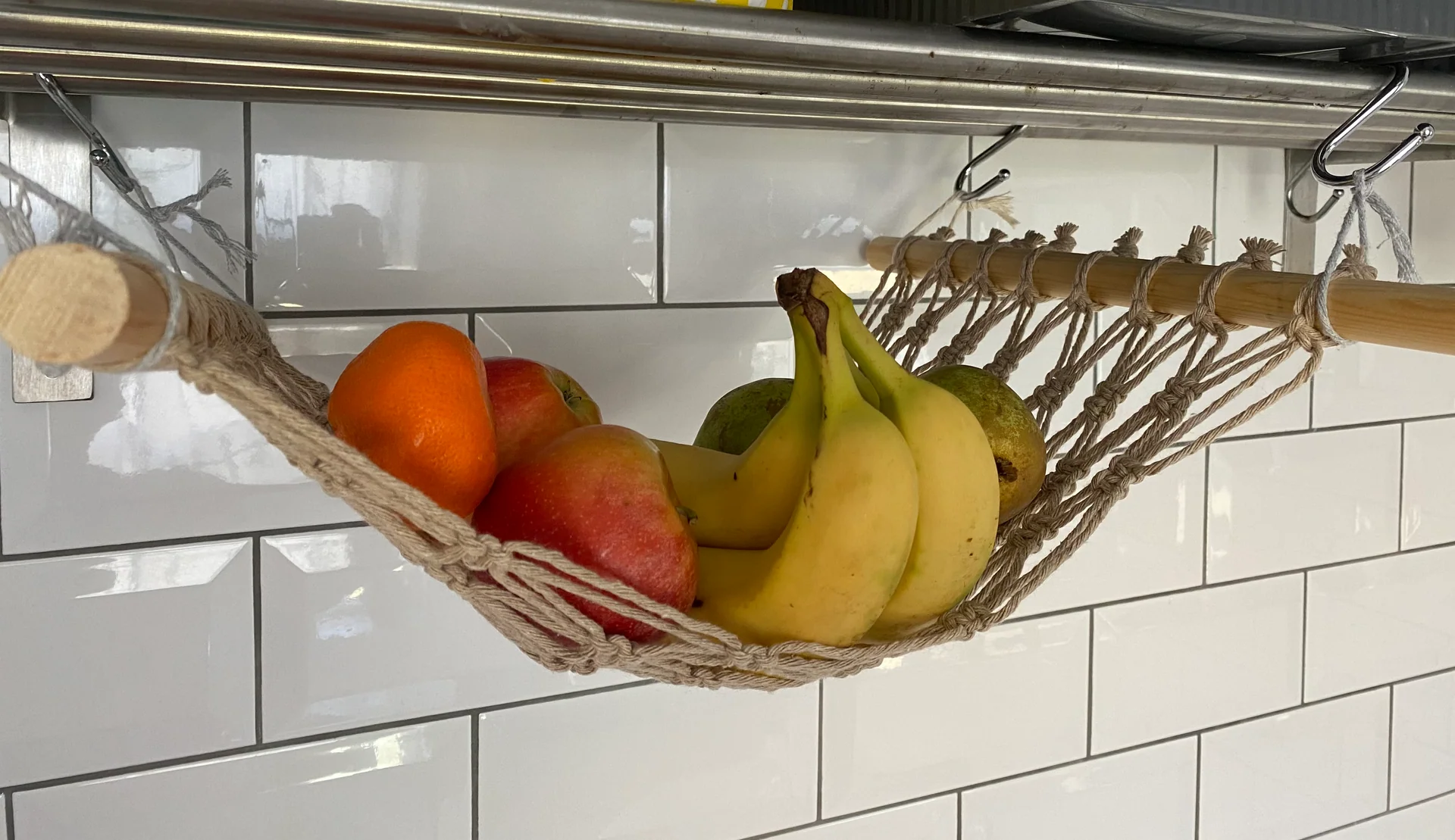
When you have fruit flies but no fruit on the counter
This is almost always one of three things: the drain, the trash, or a hidden food source.
Hidden spots people miss
- The sink overflow hole (that little opening near the top of some sinks)
- The dishwasher filter or standing water at the bottom edge
- A forgotten onion or potato in a cabinet or pantry bin
- A sticky recycling bin even if it “looks clean”
- A mop bucket or damp sponge that never fully dries
If you keep seeing flies hovering at the sink even after cleaning, cover the drain overnight with a stopper or tape for a day or two. If the fly count drops fast, you have confirmed the drain as a breeding site and you should repeat the scrub-and-flush routine.
How long does it take to get rid of fruit flies?
If you remove the breeding source and keep traps out, you usually see a big drop in 24 to 48 hours. A full reset can take 3 to 7 days depending on how established they are and whether more than one spot is breeding.
If a week passes and you still have lots of flies, you are probably dealing with a missed source (often the drain, compost, recycling, or a forgotten produce item).
Keep them from coming back (tiny kitchen routines that stick)
- Nightly sink reset: Quick rinse, wipe the basin dry, and do not leave wet sponges in the sink.
- Countertop rule: Only keep a small “ready to eat” amount of fruit out. Everything else goes fridge or sealed container.
- Trash rhythm: In warm months, take trash out every 1 to 2 days. Small bins fill faster, but they also go sour faster.
- Drain maintenance: Once a week, do a very hot water flush and a quick scrub around the drain rim.
- Compost strategy: Store scraps in the freezer, then dump into your compost drop-off or outdoor bin.
FAQ
Will bleach kill fruit flies in the drain?
Bleach can kill what it touches, but drains are tricky and the bigger issue is the biofilm that protects eggs and feeds larvae. Scrubbing the drain opening and splash guard, then flushing with hot water, is usually more effective than pouring chemicals and hoping for the best. If you use any drain product, follow the label and ventilate well.
Do vinegar traps eliminate them completely?
Vinegar traps remove adults, which helps fast, but traps alone rarely solve the problem if eggs are still hatching in a drain, trash, or hidden produce. Pair the trap with a source clean-out for a real finish.
Are fruit flies the same as drain flies?
Not always. Fruit flies tend to be tan and quick, often around produce and trash. Drain flies are often fuzzier and moth-like, and they hang out right on the sink or shower drain. The fix overlaps, but drain flies usually require even more focus on removing drain film.
My quick “no-clutter” game plan
If you want the simplest approach for a small kitchen, do this:
- Take out trash and rinse recycling.
- Move all produce into the fridge or sealed containers.
- Scrub the drain opening and disposal splash guard, then flush with very hot water.
- Set two apple cider vinegar traps: one by the sink, one near where fruit usually sits.
- Repeat the drain scrub and nightly trash for three days.
Fruit flies thrive on chaos and crumbs. Your goal is to make your kitchen boring. Once it is boring, they leave.